
1 min walk
Storkyrkan
- Must see · Heritage site
- Place of worship
Historic monument · Stockholm
Axel Oxenstiernas palats
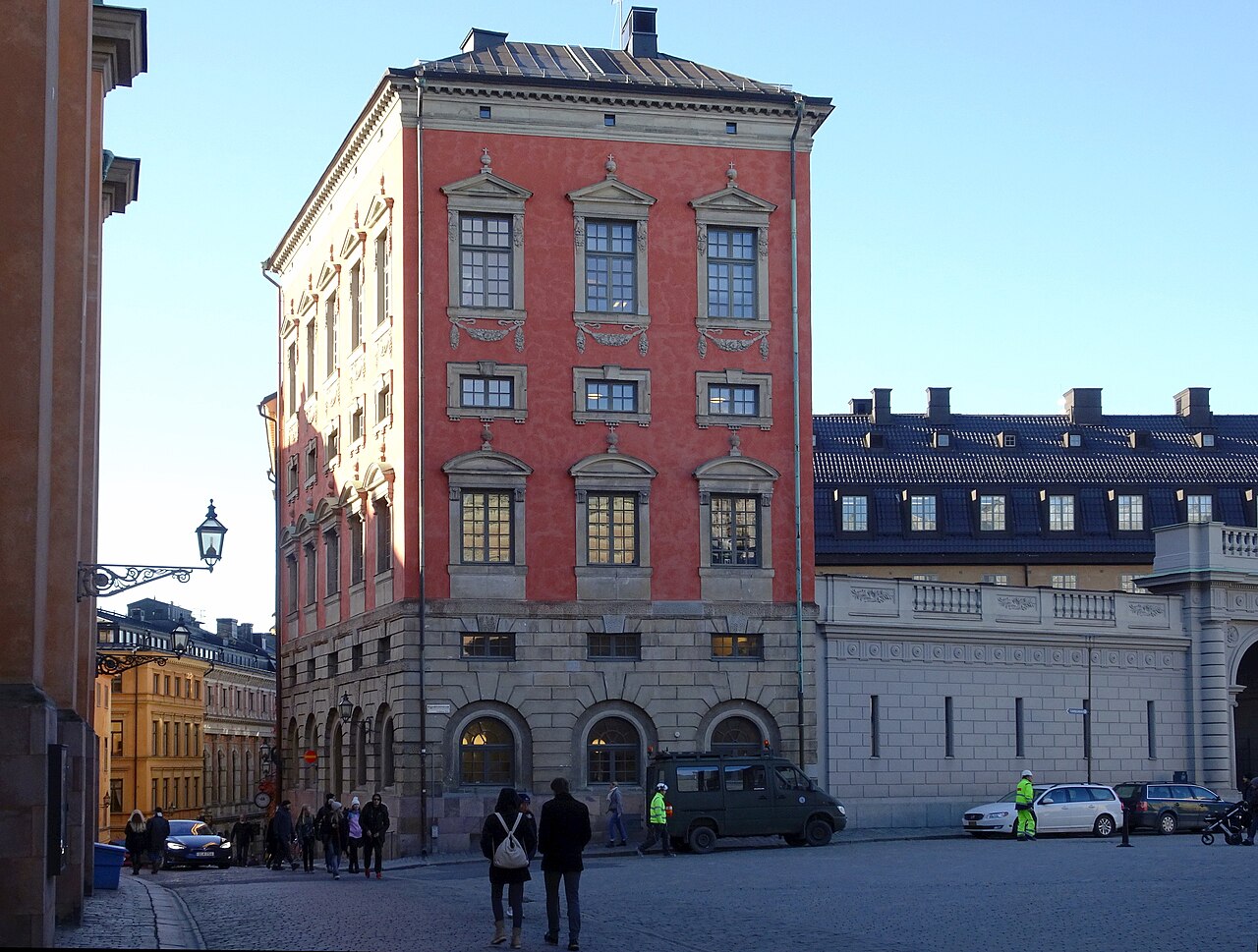
Axel Oxenstierna Palace is a historic Stockholm building named for Axel Oxenstierna, the Swedish statesman who served as Lord High Chancellor during the reigns of Gustavus Adolphus and Queen Christina. Its identity is tied to a powerful seventeenth-century political figure and to the city’s Age of Greatness, when noble residences expressed rank, influence, and proximity to government. The palace is best understood as a heritage landmark in Stockholm’s historic central quarters. Its significance lies in the named person, period, and urban setting, rather than in an assumed museum programme or guaranteed interior visit. The building offers a concise way to connect Stockholm’s streets with the political history of Sweden’s great-power era.
Checked 2026-09-02 · Source
The available description confirms the palace’s connection with Oxenstierna and seventeenth-century Stockholm, but it does not establish a public interior route, permanent exhibition, named rooms, collection, or visitor facilities. Plan the dependable experience around the building’s exterior and its position among the surrounding historic streets. If access is arranged by the responsible authority, follow the instructions given for that occasion and expect the visit to depend on the terms of the arrangement. Do not build the stop around interiors that have not been described for visitors.
Checked 2026-09-02 · Source
Allow about twenty to thirty minutes for an exterior-focused stop. This gives you time to identify the palace, view it from suitable public space, notice how it relates to the surrounding streets, and take a few photographs. The estimate is useful for itinerary planning, not a published visiting duration. A longer stay only makes sense if access or a guided activity has been arranged. Because no regular public programme is established, pair the palace with nearby central sights instead of reserving a large part of the day exclusively for this landmark. Its compact format makes it useful between larger museums, civic buildings, or walking sections in central Stockholm.
Checked 2026-09-02 · Source
Daylight is the most dependable choice for an exterior visit, since it makes architectural details and the surrounding streets easier to read. Late spring through early autumn will usually feel more comfortable for a short outdoor stop in Stockholm, although that is a seasonal planning consideration rather than a statement about access. Winter darkness, snow, or ice may make the approach less comfortable. Place the palace within a broader walking route and leave flexibility for the rest of the day. A daytime visit also makes it easier to understand the building’s relationship with the historic central quarters instead of treating it as an isolated façade.
Checked 2026-09-02 · Source
No admission price or routine ticket arrangement is recorded for the palace. Plan the dependable experience as an exterior visit from public space and do not include a ticket cost in the trip budget. If a responsible authority later offers an appointment, tour, or special opening, that arrangement may have its own instructions and price. Such an event would be separate from the ordinary landmark visit. The palace should not be described as either a free museum or a routinely ticketed attraction. This approach keeps the practical plan aligned with the building’s documented status as a historic landmark rather than assigning it a price category without evidence.
Checked 2026-09-02 · Source
Set the mapped feature as your destination and approach through Stockholm’s public streets. The palace fits naturally into a walking sequence through the city’s historic central quarters, while bus or metro travel can shorten the approach from elsewhere in Stockholm. The supplied map identifies the building but does not provide a verified stop, route number, entrance, or viewing point. Use navigation for orientation, then follow public access routes and confirm the final approach locally without treating the map as proof of interior entry. Because the palace is most reliably experienced from outside, an adaptable walking route is more useful than planning around a presumed visitor entrance.
Checked 2026-09-02 · Source
The main point to remember is that historical importance does not automatically mean dependable walk-in access. The building may have controlled entry or another use that limits visitors, so keep to public space and avoid disturbing occupants. Give the stop a flexible place in your day, with another nearby sight available if the exterior viewpoint is inconvenient. If an authorised visit is arranged, follow its arrival and on-site instructions precisely. No regular schedule is recorded, but that absence alone does not establish permanent closure. Treat the palace respectfully as a historic building in an active urban setting, and keep alternative plans nearby rather than expecting museum-style facilities.
Checked 2026-09-02 · Source
Exterior photography from public space is the clearest low-risk option, provided you do not obstruct pedestrians or concentrate on sensitive security arrangements. No photography policy is recorded for interiors, so ask permission before photographing rooms, using flash, setting up a tripod, or making commercial images. If an authorised visit permits photography, follow the instructions given on site. The strongest subject is the palace’s relationship with Stockholm’s historic street pattern and its association with seventeenth-century political history, rather than an assumed interior collection. Look for compositions that include the building and its surrounding urban context, which explains why this particular palace matters.
Checked 2026-09-02 · Source
The palace has no recorded regular public-access arrangement. Treat exterior viewing from public space as the dependable experience, while any interior entry should be regarded as conditional on an arrangement made by the responsible authority.
No regular opening schedule is recorded for the palace. Plan an exterior visit in daylight, and treat any arranged opening or tour as dependent on instructions provided by the responsible authority for that occasion.
No admission price is recorded. Do not label the palace as a free or paid museum; plan around the exterior landmark, while any special access arranged by a responsible authority may have separate terms.
Exterior photography from public space is the safest option, provided you do not obstruct pedestrians or focus on sensitive security arrangements. Ask permission before photographing interiors, using flash, tripods, or commercial equipment.
Use the mapped feature as your destination and approach through Stockholm’s public streets. Bus, metro, and walking networks can form the journey, but no verified stop, route number, or exact entrance is recorded in the available description.
The landmark is associated with Chancellor Axel Oxenstierna and seventeenth-century Stockholm’s political and architectural history. The available description does not confirm interior rooms, furnishings, collections, or visitor facilities, so plan around the exterior and historic setting.
Loading the interactive map…
The interactive map could not be loaded.
Last updated:
Source: OpenStreetMap contributors, Wikidata ·