6 min walk
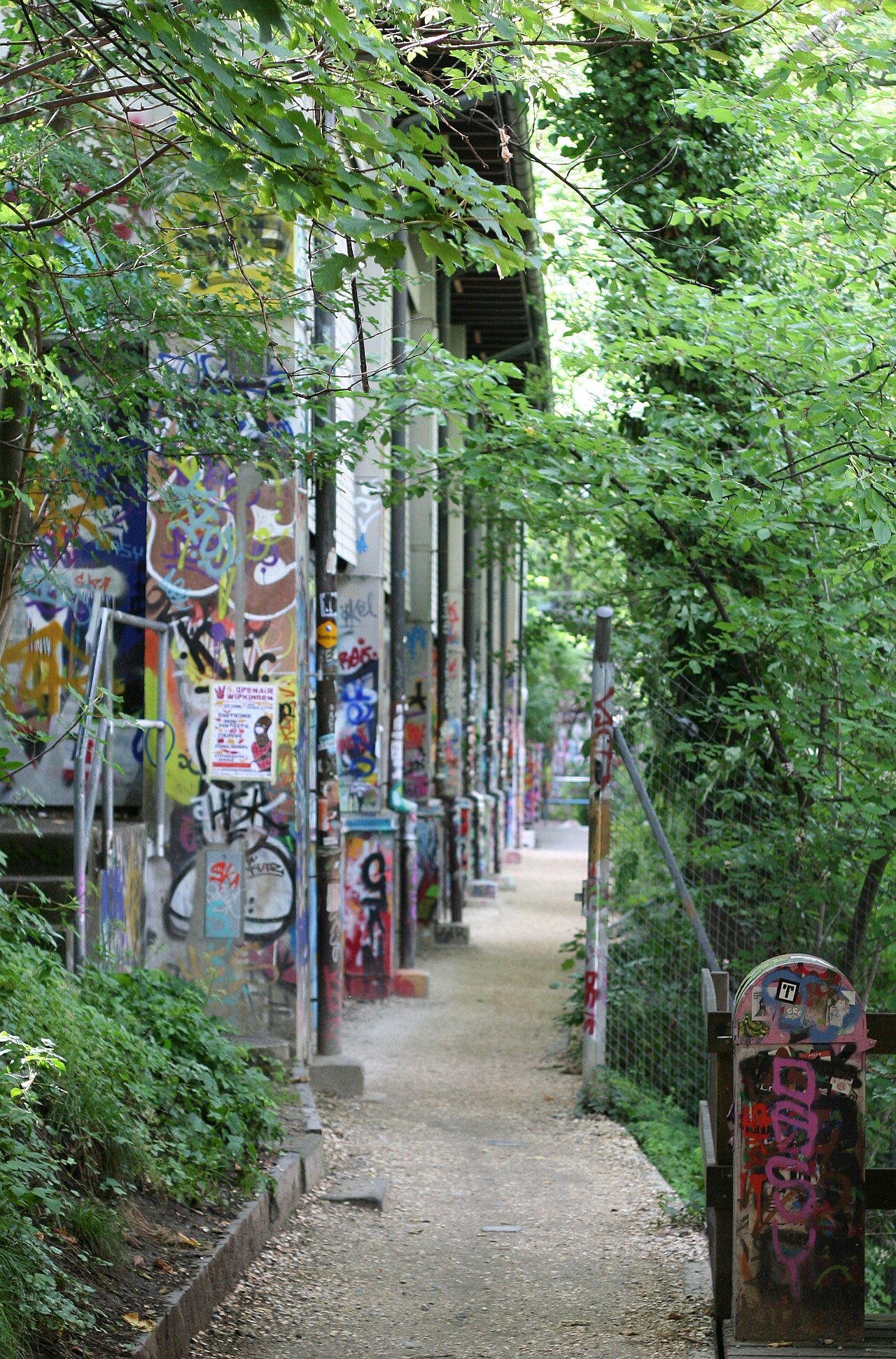
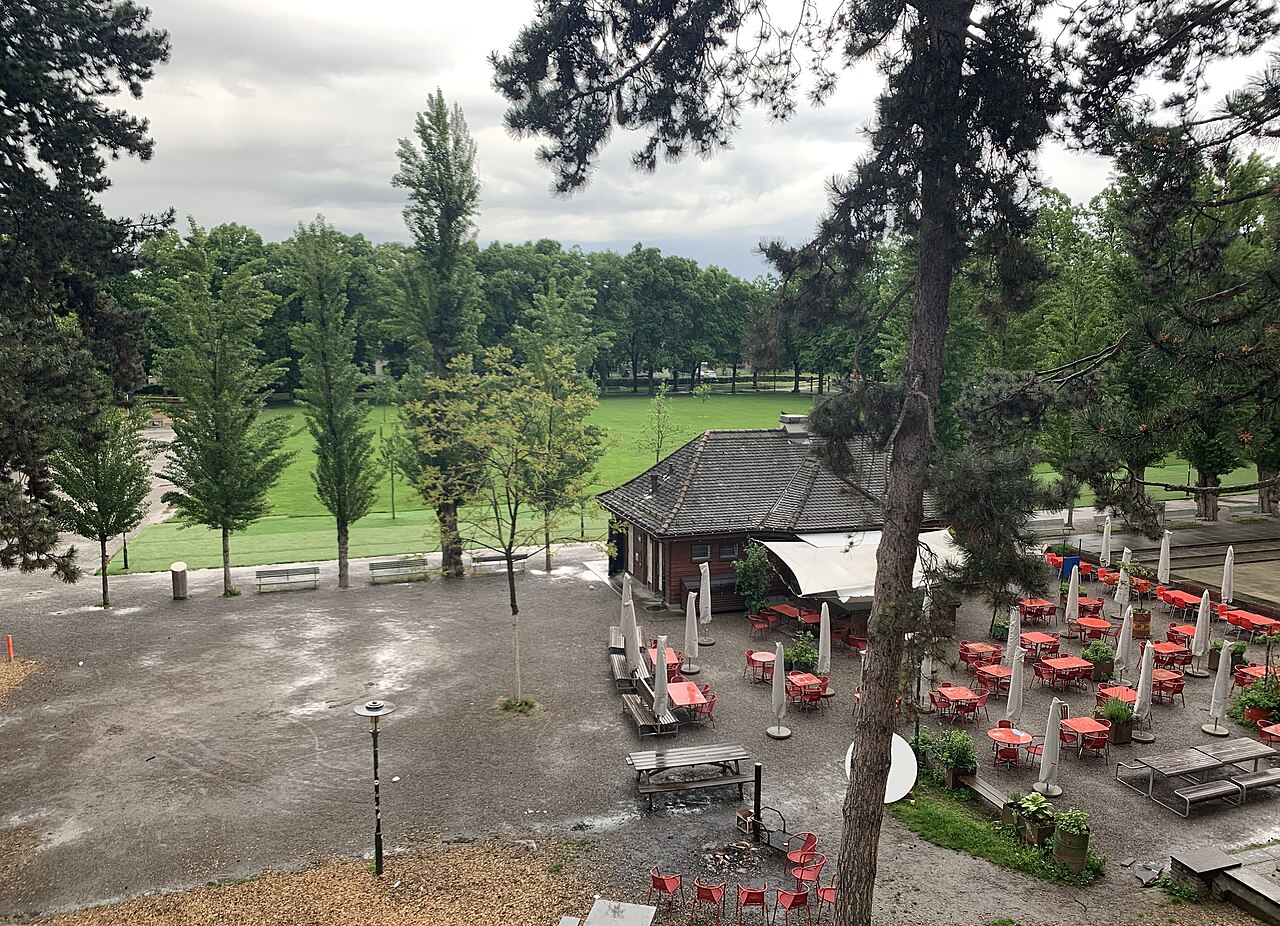
Josefwiese
- Must see
- Nature site
Museum · Zurich
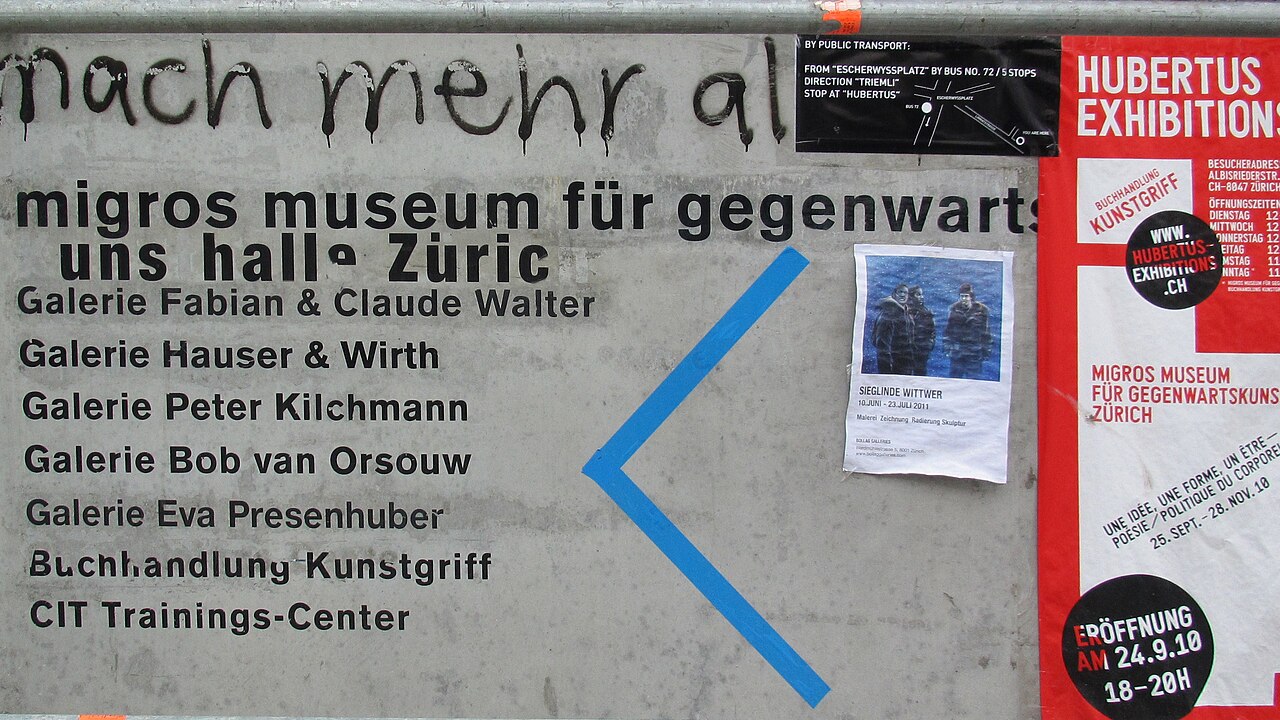
Migros Museum für Gegenwartskunst
Closed today, Monday. Next open Tuesday at 11:00 — the planner will not place a stop here on a Monday.
Plan around it| Monday | Closed |
|---|---|
| Tuesday | 11:00 – 18:00 |
| Wednesday | 11:00 – 18:00 |
| Thursday | 11:00 – 20:00 |
| Friday | 11:00 – 18:00 |
| Saturday | 11:00 – 18:00 |
| Sunday | 11:00 – 18:00 |
Checked 2026-08-31 · Source
| Per person | Free entry |
|---|
Checked 2026-08-31 · Source
Read from the OpenStreetMap access tags; anything not listed has no tag recorded.
Set the group type to family in the planner and the day window contracts to about three quarters of a solo day.
Migros Museum of Contemporary Art is a Zurich museum focused on international contemporary art. Known locally as Migros Museum für Gegenwartskunst, the institution is operated by the Migros Culture Percentage, a cultural initiative of the Swiss retail cooperative Migros. The museum presents art that often tests the boundaries between object, idea, process, space, and performance. Its programme gives visitors a chance to encounter established and emerging artists within a setting shaped by experimentation and curatorial change. This is a good choice for travellers who want a concentrated contemporary-art visit rather than a broad survey of European art. The museum also adds a different tone to Zurich’s cultural landscape: the emphasis is on current artistic practice, conceptual questions, and changing exhibitions, so the experience depends strongly on the works presented during the visit.
Checked 2026-08-26 · Source
The museum presents rotating exhibitions across media such as painting, sculpture, installation, video, and performance. The collection and programme favour conceptual, experimental, and process-oriented practices, so visitors may encounter works built around an idea, a material process, a spatial arrangement, or an event rather than a conventional image. Current exhibitions change with the curatorial programme, making each visit distinct. Move through the galleries slowly enough to understand how scale, sound, movement, and placement influence the work. The museum’s contemporary focus means that the room itself can form part of the artwork, while labels and exhibition texts help frame the artist’s approach. Visitors should come ready for variety: one gallery may feel visually spare, another immersive, and another centred on video or performance. The collection’s international scope broadens the visit beyond Zurich’s local art history.
Checked 2026-08-26 · Source
Allow about ninety minutes to three hours for Migros Museum of Contemporary Art, depending on the size of the exhibitions and your interest in individual works. A shorter visit can cover the principal galleries, while a slower visit gives installations, video pieces, and conceptual works the attention they need. Contemporary art often rewards pauses: the meaning may depend on a work’s position in the room, its materials, or the relationship between several pieces. Visitors who enjoy reading curatorial texts should add time, especially when exhibitions use unfamiliar techniques or ideas. The museum can fit naturally into a wider Zurich cultural day because its scope is concentrated rather than encyclopedic. Plan the length around the current exhibition programme, remembering that a large installation or performance-oriented presentation can change the pace of the visit.
Checked 2026-08-26 · Source
Migros Museum of Contemporary Art works well on a day when Zurich’s weather makes outdoor sightseeing less comfortable. Choose a quieter period if you want to spend time with installations, video works, and exhibition texts without competing with heavy visitor flow. The most important timing factor is the exhibition programme: rotating displays mean that the museum’s content changes, and a return visit can offer a different group of artists and themes. Summer and holiday periods can make Zurich’s cultural attractions busier, while a weekday visit may feel more measured. The supplied place record does not state public hours, seasonal variations, or holiday closures, so this guide gives no timetable. The museum remains a useful year-round cultural stop because the core experience is indoors and its contemporary programme is designed around changing presentations.
Checked 2026-08-26 · Source
The supplied place record does not state admission prices, concessions, free-entry periods, membership arrangements, or booking requirements for Migros Museum of Contemporary Art. This guide therefore does not give a ticket amount. The museum’s relationship with the Migros Culture Percentage is part of its cultural identity, but it does not establish a specific entry policy for an individual visit. Visitors can plan the attraction as a focused contemporary-art stop, with rotating exhibitions providing the main value. A longer visit may be worthwhile when the programme includes installation, video, or performance-based work, while a shorter visit suits travellers combining several Zurich museums. Treat any special event or performance as part of the exhibition programme rather than as an ordinary gallery circuit, since the visitor experience can depend on the format of the presentation.
Checked 2026-08-26 · Source
Migros Museum of Contemporary Art is part of Zurich’s urban cultural network. The city’s trams, buses, and suburban rail services provide the main approach from Zürich Hauptbahnhof, central neighbourhoods, and accommodation areas. Walking can suit visitors who are already moving through Zurich’s cultural districts, while cycling is another city option. The supplied place record does not identify the nearest stop or give a street address, so route planning should use the mapped museum position together with the visitor’s starting point. Public transport is usually more practical than a private car for a central Zurich museum, where traffic and parking can complicate a short cultural stop. Leave time for the final walk and for locating the entrance, particularly when the museum is being combined with other appointments or exhibition visits.
Checked 2026-08-26 · Source
Migros Museum of Contemporary Art can include challenging subjects, mature themes, unusual materials, sound, video, or installations that require visitors to move through the space carefully. Contemporary works may not resemble conventional paintings or sculptures, and the intended experience can depend on distance, sequence, silence, or audience participation. Keep away from artwork boundaries and follow gallery instructions about touching, seating, bags, and movement. Exhibition content changes, so a work remembered from an earlier visit may not be present. The place record does not describe wheelchair access, toilets, food rules, bag storage, or other amenities, so no such feature is included here. Visitors who prefer traditional collections should allow time to read the exhibition framing and approach the museum as a place for ideas and experiments as well as visual objects.
Checked 2026-08-26 · Source
The museum’s changing exhibitions provide varied photographic subjects, from geometric compositions and sculpture to large installations, video displays, and carefully arranged rooms. Wide images can record the relationship between artwork and architecture, while closer views reveal materials and construction. Photography rules can differ between exhibitions because artists, lenders, and curators may place different conditions on image capture. The supplied place record does not define permissions, flash rules, tripod use, or video recording. Follow signs and staff directions, keep clear of installations, and avoid blocking another visitor’s view. When photography is permitted, quiet and unobtrusive use of a phone or camera suits the gallery environment. Do not touch an artwork to improve a composition, and remember that an installation’s empty space may be an intentional part of the work.
Checked 2026-08-26 · Source
The museum is known locally as Migros Museum für Gegenwartskunst.
The museum is operated by the Migros Culture Percentage, a cultural initiative of the Swiss retail cooperative Migros.
The museum presents international contemporary art, with emphasis on experimental, conceptual, process-oriented, and innovative artistic practices.
Allow about ninety minutes to three hours, depending on the number of galleries and the time you give to installations, videos, and exhibition texts.
Yes. The museum presents rotating exhibitions, so the artists, works, themes, and gallery experience change with the curatorial programme.
Expect a focused contemporary-art experience that may include painting, sculpture, installation, video, performance, conceptual ideas, and process-based work.
Loading the interactive map…
The interactive map could not be loaded.
Last updated:
Source: OpenStreetMap contributors, Wikidata ·