
32
45 min
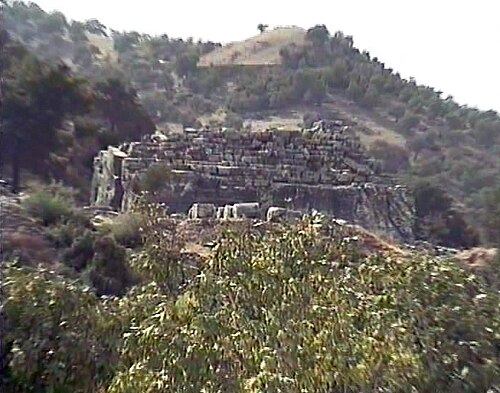
Belevi Mausoleum
Belevi Mausoleum is an Early Hellenistic monumental tomb on a hillside near Belevi, in Selçuk district of İzmir.
- High
- Historic monument
- Selçuk
City guide · Türkiye
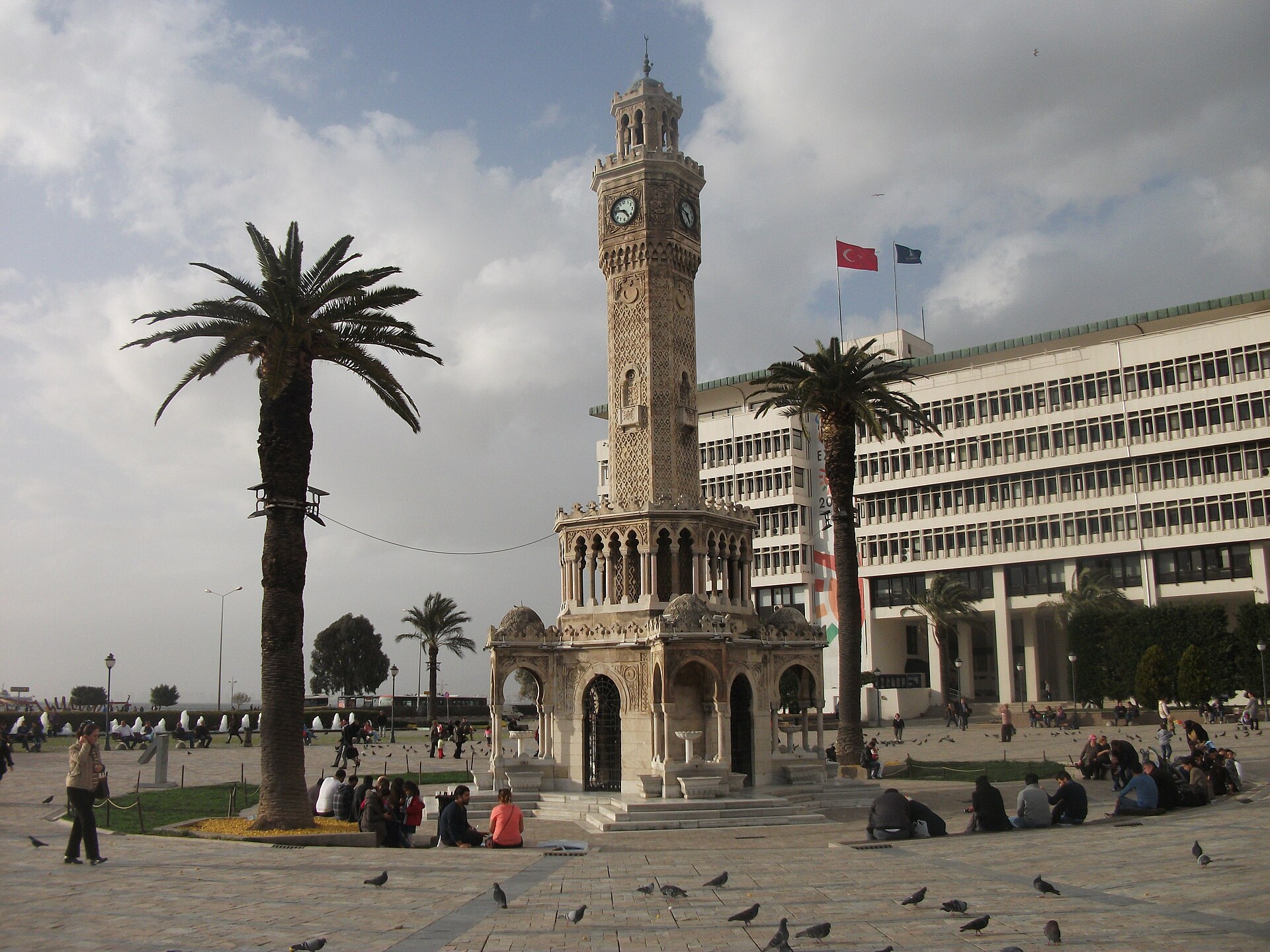
İzmir begins in Konak, where the İzmir Clock Tower stands beside Konak Square and the gulf waterfront. From here, Kemeraltı’s historic market streets lead inlan...
Photograph · Anonymous · CC0
Set your days, your pace and the hours you actually want to be out. The planner works around closing days and travel time, and leaves room to eat.
Reviewed by Elena Voss · Roavina Travel Editor
İzmir begins in Konak, where the İzmir Clock Tower stands beside Konak Square and the gulf waterfront. From here, Kemeraltı’s historic market streets lead inland through hans, shops, mosques and food stalls, while the coast opens into the broad Gulf of İzmir and the Kordon promenade. The city is also the natural base for western Türkiye’s major excursions: Selçuk and Ephesus to the south, Bergama and Pergamon to the north, and Çeşme, Urla and the peninsula coast to the west. İzmir therefore works as both an urban destination and a launch point for archaeology, villages, beaches and Aegean coastal landscapes.
Checked 2026-09-02
September · The Turkish State Meteorological Service records a 29.3°C mean high and 18.8°C mean low for İzmir in September; this is among the most comfortable periods for long outdoor sightseeing days.
Ranked by importance — sitelinks, pageviews and heritage status, not editor preference.
65 places match
Category
Typical visit duration
Belevi Mausoleum is an Early Hellenistic monumental tomb on a hillside near Belevi, in Selçuk district of İzmir.
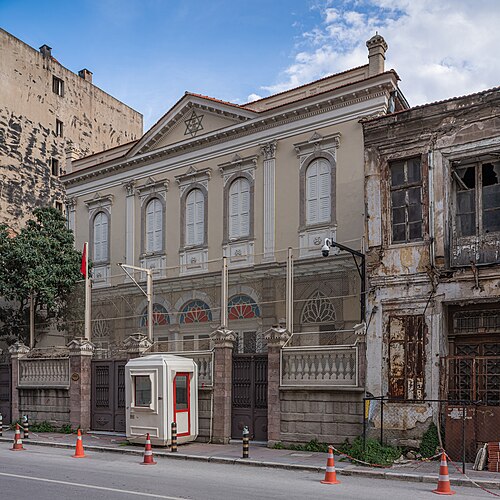
Bet Israel Sinagogu
Bet Israel Synagogue is an active historic place of worship in Karataş, within Konak, İzmir. Construction began in 1905, and the synagogue opened for worship in 1907.
Teleferik is Balçova’s enclosed cable-car attraction, with its lower facility on Sakarya Caddesi opposite İzmir University of Economics.
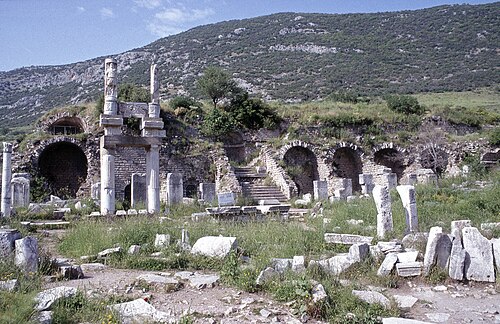
Domitian Tapınağı
The Temple of the Emperors is an imperial-cult monument within ancient Ephesus, standing on the west side of the State Agora. Its large terrace and altar identify a ceremonial complex set directly into the city’s civic landscape.
Yeşilova Höyüğü
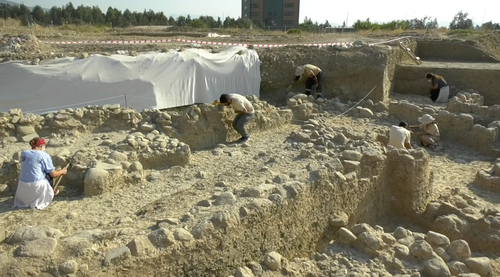
Yeşilova Mound is an archaeological settlement in Bornova, İzmir, where evidence of human occupation reaches back about 8,500 years, to around 6500 BCE.
Çandarlı Kalesi
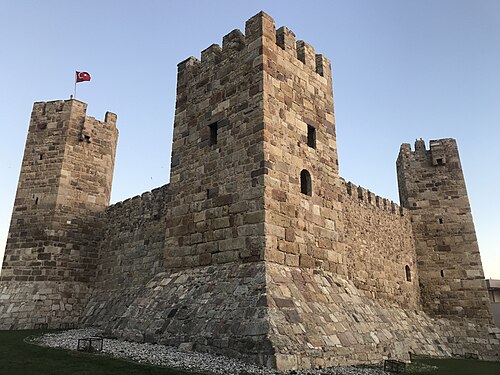
Çandarlı Castle is a compact fortified landmark in Çandarlı Mahallesi, within İzmir’s Dikili district.
Çeşme Deniz Savaşı
Battle of Chesma is a historical display within İzmir Çeşme Museum, set inside Çeşme Castle and specifically located on the lower floor of Umur Bey Tower.
Kolophon
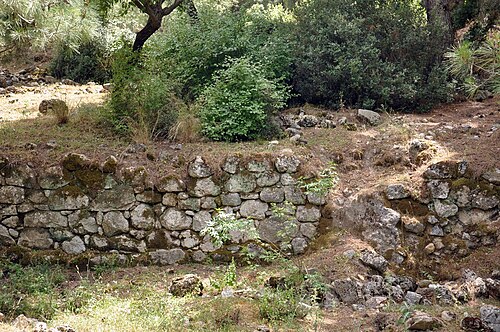
Colophon is an archaeological settlement landscape in Menderes, İzmir, between present-day Değirmendere and Çamönü. It was one of the oldest and most important cities of Ionia, but it is not a compact museum or a single monumental ruin.
Lebedos
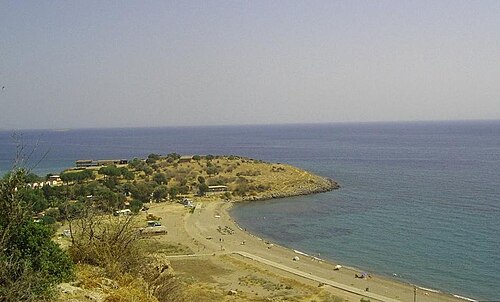
Lebedus is a small open-air archaeological landscape on the Kısık Peninsula beside Ürkmez, between Gümüldür and Ürkmez on İzmir’s coast.
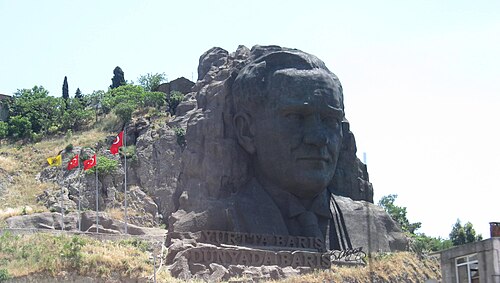
Atatürk Maskı
Atatürk Mask is a monumental outdoor portrait of Mustafa Kemal Atatürk built directly into the Yeşildere hillside in İzmir’s Çaldıran area, between Buca and Konak.
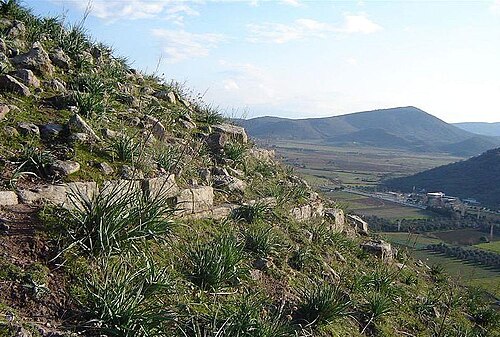
Atarneus is an ancient settlement at Ağılkale, on a hill near Dikili in İzmir. Local heritage information dates its history to approximately 4000 BCE.
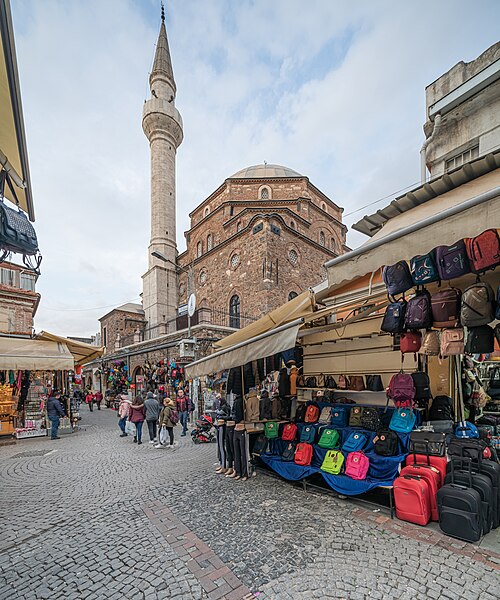
Başdurak Camii
Başdurak Mosque is a functioning Ottoman-era mosque at the meeting of Anafartalar Caddesi and Kemeraltı 863 Sokak in Konak, İzmir.
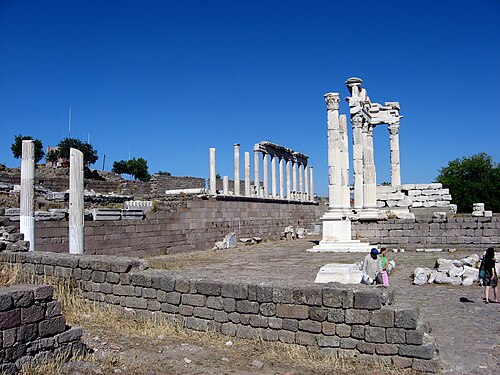
Trayan Tapınağı
The Temple of Trajan occupies the highest terrace of the Pergamon Acropolis on Kale Hill above Bergama, İzmir.
Gate of Magnesia
Magnesian Gate is the surviving city gate identified within the ancient city of Ephesus at Selçuk.
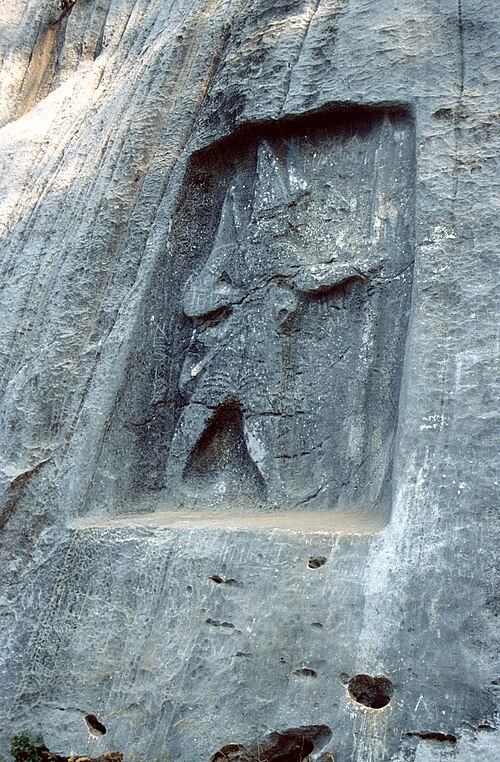
Karabel Kaya Kabartması
Karabel relief is a Hittite-Luwian rock monument carved into the south-facing slope at Karabel Pass near Kemalpaşa.
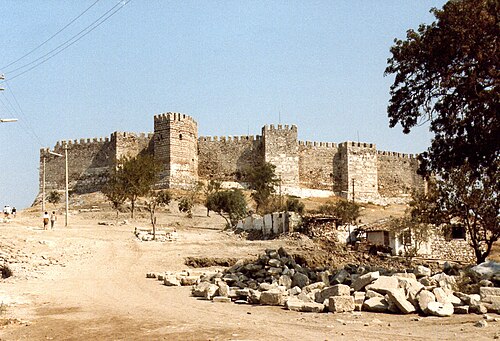
Ayasolouk
Ayasuluk Citadel occupies the summit of Ayasuluk Hill in Selçuk, where the town’s central heritage landscape rises into a defended archaeological enclosure. Its surviving walls belong to a layered setting associated with Byzantine, Aydınoğlu and Ottoman periods.
Larisa
Larissa is an ancient settlement near Buruncuk in Menemen district, north of İzmir. It belonged to the Aeolis region and occupied an elevated landscape rather than surviving as one compact monument.
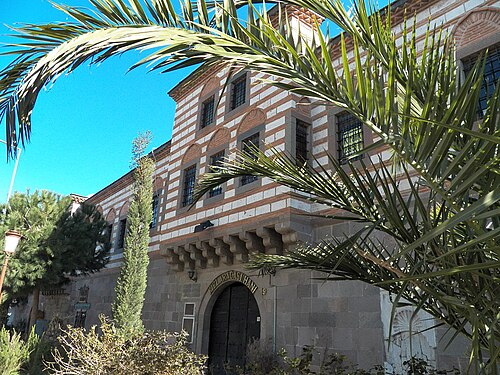
Kızlarağası Hanı
Kızlarağası Han is an eighteenth-century Ottoman commercial inn in İzmir’s Konak district, embedded in the working lanes of Kemeraltı rather than set apart as a museum.
![Acropolis of Erythrae [Erythrai]](/media/commons/d/db/500/Erythrai_DSC_0113.jpg)
The Acropolis of Erythrae, also written Erythrai, is the elevated part of the ancient settlement associated with modern Ildırı in Çeşme, İzmir.
Teuthrania is an archaeological site identified with Kalerga Tepe, also written Kalarga Tepe, in İzmir’s Bergama district. The remains occupy an elevated rural hill rather than a formal museum building or a compact visitor complex.
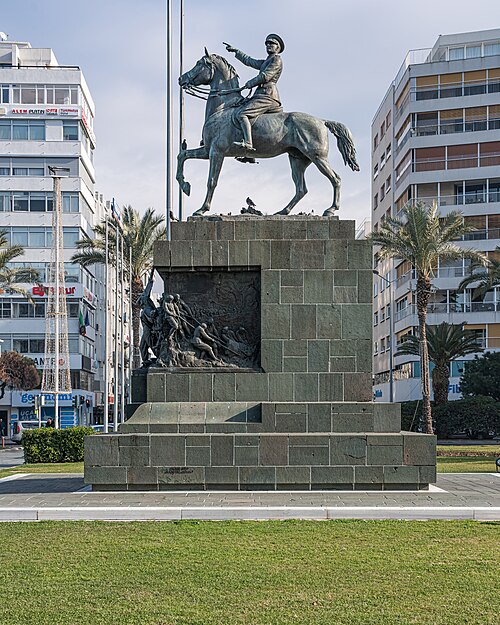
Atatürk Anıtı
Atatürk Monument is the equestrian civic sculpture in İzmir’s Cumhuriyet Meydanı, on Kordon at Atatürk Bulvarı, in front of Swissôtel. Its subject is Mustafa Kemal Atatürk as a commander, giving the waterfront square a distinctly republican and military memorial character.
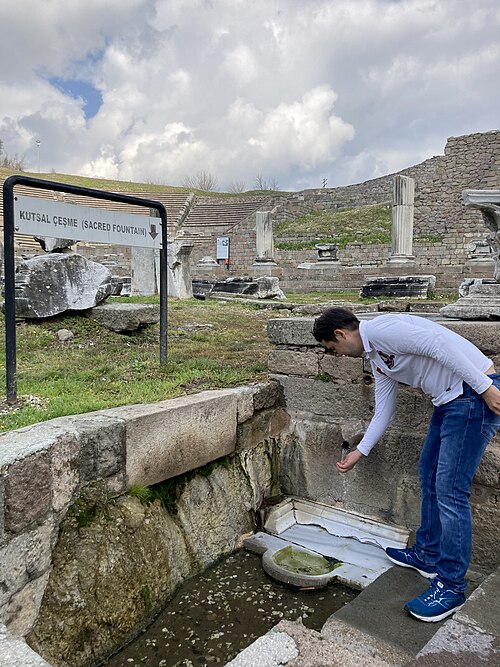
Asklepion is a healing sanctuary near Bergama, arranged as a connected landscape of approach, worship, public gathering and treatment. The long Via Tecta leads towards the monumental propylon and the principal sacred area.
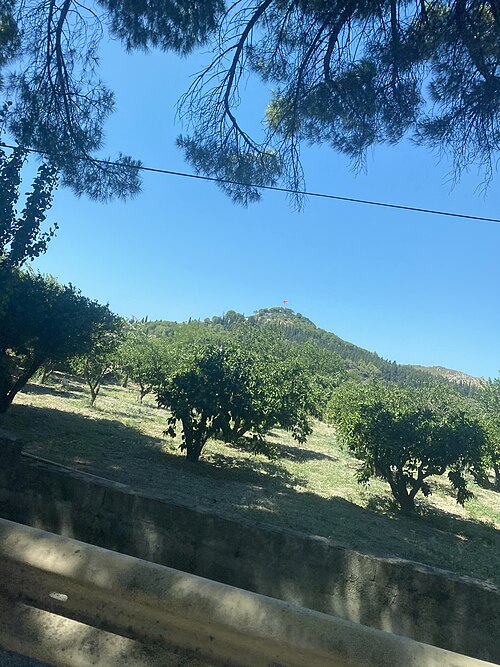
Yıldıztepe Şehitliği
Yıldıztepe Military Cemetery is a small memorial site in İskele Mahallesi, within İzmir’s Urla district.
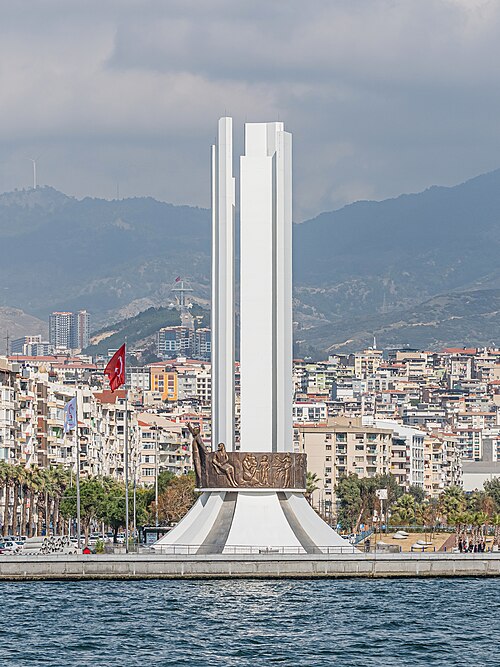
Atatürk, Annesi ve Kadın Hakları Anıtı
Atatürk, His Mother and Women's Rights Monument is a landmark in Anayasa Meydanı, Tuna, on Karşıyaka’s İzmir waterfront. Its present structure reopened in 2018 after the original 1972 monument was rebuilt.
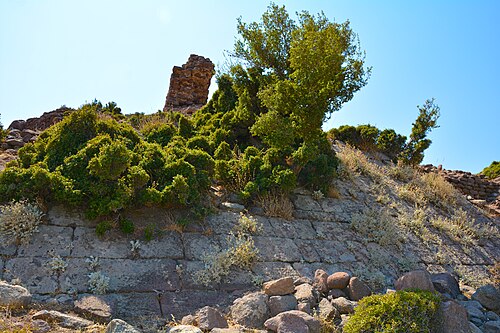
Neonteikhos
Neonteichos is an archaeological settlement in the mountainous landscape around Yanıkköy, within İzmir’s Menemen district.
District boundaries come from OSM administrative relations, so a district page holds exactly the places inside it — plus, for the islands and the coast, the nearest district by proximity.
Use Konak as the central reference point. The Clock Tower, Konak Square, Yalı Mosque, government buildings and the entrance to Kemeraltı are concentrated here; the market continues inland and north-east, while the waterfront route runs towards Konak Pier, Alsancak and Kordon. The Gulf of İzmir divides the metropolitan area, with districts such as Karşıyaka on the northern shore and Balçova, Narlıdere and Güzelbahçe along the western shore. The province extends much farther than the centre. Selçuk and Ephesus lie south, Bergama lies north, and Çeşme and Urla lie west on the peninsula. Treat these outlying places as separate day-trip areas rather than neighbourhoods of the centre.
Checked 2026-09-02
İzmir’s integrated public-transport system combines İZBAN suburban rail, İzmir Metro, trams, ESHOT buses and İZDENİZ ferries, with İzmirim Kart used across the network. The Clock Tower, Konak, Kemeraltı and the central waterfront are easiest to experience as a walking circuit, with buses, rail and ferries extending the journey around the gulf. İZBAN is particularly useful for the airport and the southern corridor towards Selçuk; Ephesus itself is then reached from Selçuk using current local connections. Bergama, Çeşme, Urla and peninsula beaches require separate intercity or municipal transport planning. Check the relevant operator before travelling because routes and service frequencies can change.
Checked 2026-09-02
Begin at the İzmir Clock Tower in Konak, look across Konak Square towards the gulf, then walk through Kemeraltı and continue north along the waterfront towards Kordon. This route introduces İzmir’s principal historic, commercial and seaside settings in one connected visit.
İzmir is a practical base for a southern excursion to Selçuk and Ephesus. The Ministry of Culture and Tourism lists Ephesus as an archaeological site in Selçuk, İzmir Province. Check the current İZBAN and local transport information before travelling, and confirm the site’s current visitor information on the Ministry page.
Bergama is a substantial northern excursion centred on Pergamon. UNESCO describes the acropolis as the capital of the Hellenistic Attalid dynasty and part of a wider cultural landscape that includes the Asclepieion and later layers around modern Bergama. Plan it as a separate outing and verify current transport and site information before departure.
The main western options are Çeşme and Urla, together with the peninsula’s smaller coastal settlements and beaches. İzmir’s official destination material presents the province as a destination for Aegean coast, swimming and relaxation as well as history. Choose one coastal area for a day rather than trying to cover the entire peninsula.
Use İzmirim Kart with the city’s integrated buses, metro, suburban rail, trams and ferries. Walk between the central Konak sights, then use rail or sea transport for longer gulf-side journeys. For Bergama, Çeşme, Urla and beach areas, check the current intercity or municipal connection separately.
No official recommended stay length is recorded. Your duration depends on whether the plan covers only Konak, Kemeraltı and the gulf waterfront or adds separate excursions to Ephesus, Bergama, Çeşme or Urla. Those destinations are spread across the province, so each requires its own travel time and itinerary space.