
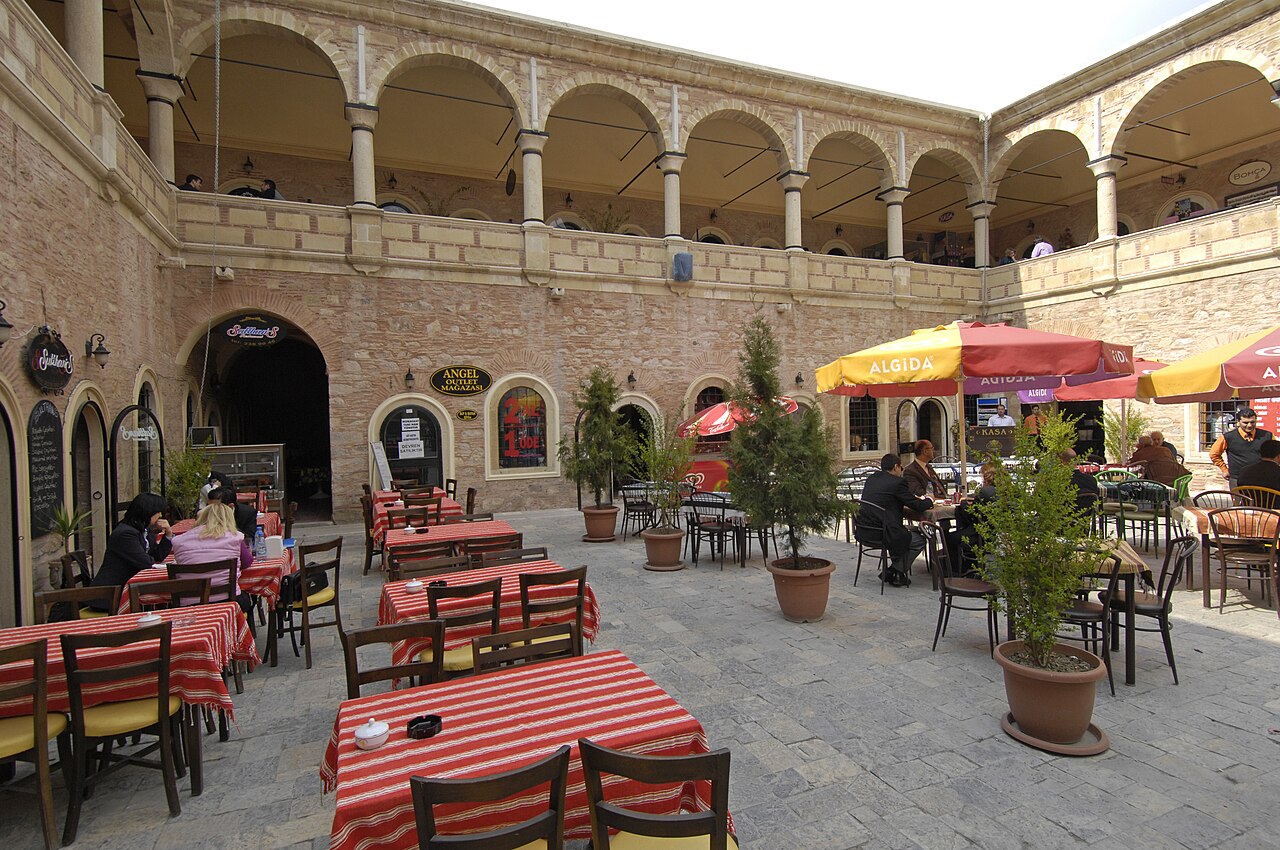
1 min walk · Şehzadeler
Kurşunlu Hanı
- Notable
- Historic monument
Language · 11 published
Place of worship · Şehzadeler, Manisa
Hatuniye Cami
Reviewed by Elena Voss · Roavina Travel Editor
Read from the OpenStreetMap access tags; anything not listed has no tag recorded.
Set the group type to family in the planner and the day window contracts to about three quarters of a solo day.
This place is a Place of worship. It was built in the Ottoman architecture style.
The Hatuniye Camii was built in 1490–91 by Şehzade Şehinşah, a son of Bayezid II, in honour of his mother Hüsnüşah Hatun. It is a prince's mosque for a prince's mother, which is the pattern Manisa keeps repeating — the Sultan Mosque thirty years later was the same gesture from Süleyman's mother.
The külliye originally held a madrasa and an imarethane, a soup kitchen. Neither survives.
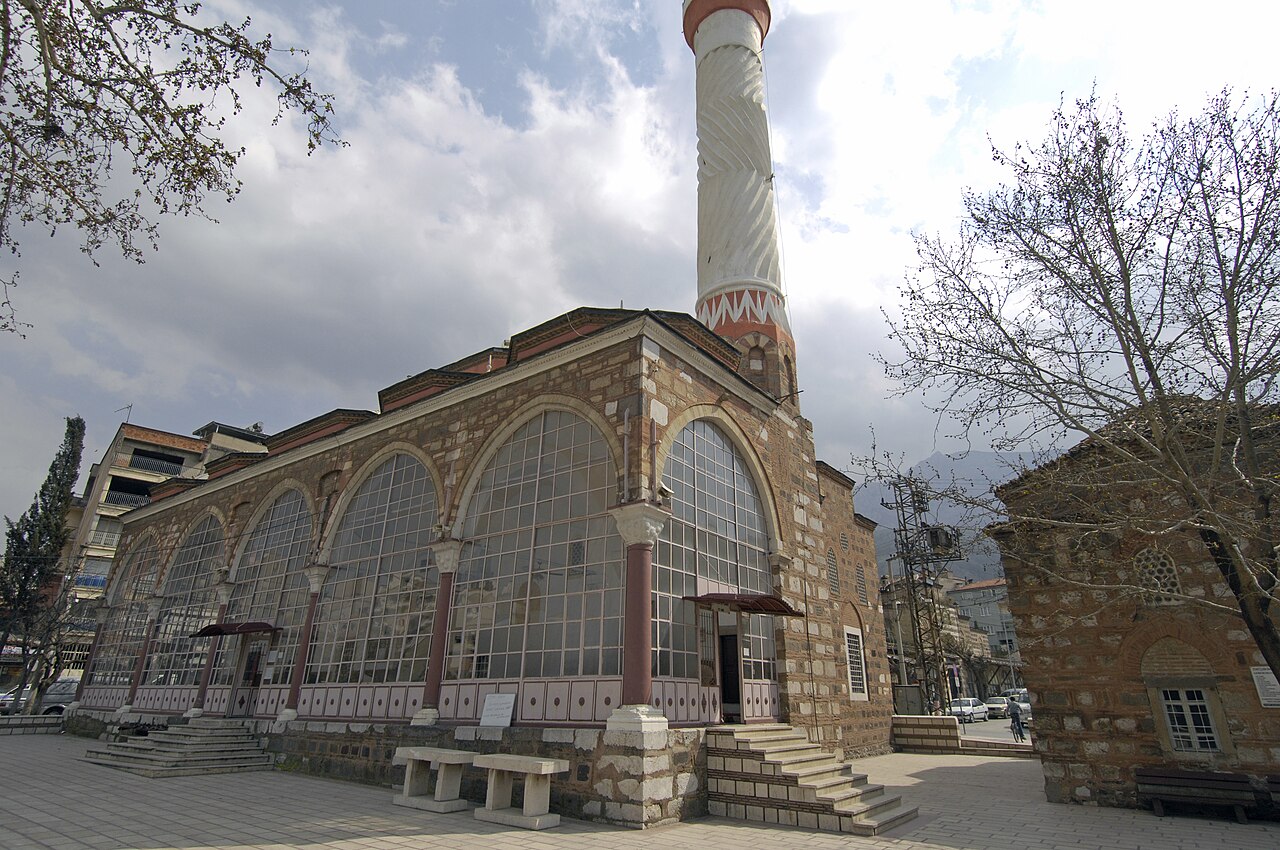
The mosque stands in Şehzadeler, the historic half of Manisa, in stone masonry with a single minaret.
Manisa was where Ottoman princes were sent to govern before they took the throne, and the buildings their households endowed are most of what the city has. The Hatuniye belongs to that pattern twice over: a prince's foundation, dedicated to a prince's mother.
Checked 2026-08-24 · Source
What is here is the mosque; what is not here is most of the complex.
The building is kâgir — stone masonry — in Ottoman style, with one minaret. It carries the scars of a hard history: a 1611 earthquake caused substantial destruction and forced extensive seventeenth-century repair and rebuilding.
The madrasa and the soup kitchen that stood beside it were lost to fire during the Turkish War of Independence, in the Manisa fires of 1922. What you walk around is a fifteenth-century foundation that has been broken and mended twice.
Checked 2026-08-24 · Source
Twenty minutes. It is a single building on a walking route, not a visit in itself.
Because the madrasa and imaret are gone, there is no complex to circle. The mosque, its minaret and the immediate ground are all that remain to see.
Put it in a Şehzadeler walk with the Ulu Camii, the Sultan Mosque and the Muradiye and it earns its place; visited alone it will feel thin.
Checked 2026-08-24
Outside prayer times, mid-morning or mid-afternoon. Not Friday at noon.
The historic quarter is on a slope with little shade and spring or autumn is the comfortable time to walk it. In the last week of March the city turns toward the Sultan Mosque for the Mesir festival, which leaves the smaller mosques quieter than usual.
Nothing about the building is seasonal.
Winter rain makes the slope's streets slippery and the mosque has no covered approach, which matters more here than at the larger complexes with their courtyards.
Checked 2026-08-24
Free. This is a working mosque and there is no admission charge, no ticket desk and no guide service.
The madrasa and the soup kitchen that would once have stood beside it no longer exist, so there is nothing else on the site to charge for.
The only paid admission among Manisa's Ottoman buildings is the museum in the Muradiye complex.
Checked 2026-08-24
On foot, in Şehzadeler, the historic half of Manisa on the lower slope of Mount Spil.
It sits among the streets that hold the city's other Ottoman mosques, so it is a stop on a walk rather than a journey. Town buses cover the rest of Manisa.
The intercity options — the İzmir Basmane train, the road buses, Adnan Menderes airport — are the same for every sight in this part of town; the Sultan Mosque page has the timings.
Checked 2026-08-24 · Source
Dress and prayer-time rules match every working mosque in Şehzadeler — full detail is on the Sultan Mosque page — and the same courtesy applies here as anywhere else in the Ottoman core.
What is different at the Hatuniye is how little is left to see beyond the mosque itself: the madrasa and imarethane burned in 1922, so this is a single building rather than a walled compound, and it can feel thin visited alone rather than as a stop on a longer walk.
It is a genuine neighbourhood mosque rather than a monument on a tour route — no ticket desk, no guide, nobody expecting visitors. If the door is locked outside prayer, there is no one on site to ask, and Manisa carries none of the guide touts or scam economy a bigger Turkish city would.
Checked 2026-08-24
Stone masonry and a single minaret against the slope is the shot, and it is a plain one — this is a fifteenth-century neighbourhood mosque, not a monument built to be photographed.
The seventeenth-century repairs after the 1611 earthquake are visible in the fabric if you look for changes in the stonework, and that is the more interesting picture.
Inside, nothing stops a camera, but keep it to a quiet moment rather than a prayer, the same courtesy that holds in every mosque in the city.
Checked 2026-08-24
Şehzade Şehinşah, a son of Bayezid II, in 1490–91, in honour of his mother Hüsnüşah Hatun.
The madrasa and the imarethane — the soup kitchen — did not survive. They were lost to fire during the Turkish War of Independence, in the Manisa fires of 1922.
Twice over. A 1611 earthquake caused substantial destruction and forced extensive seventeenth-century repairs, and the 1922 fires took the rest of the complex.
Twenty minutes. It works as a stop on a walk through Şehzadeler with the Ulu Camii, the Sultan Mosque and the Muradiye.
No. It is a working mosque and admission is free.
In Şehzadeler, the historic half of Manisa, among the streets that hold the city's other Ottoman mosques.
Loading the interactive map…
The interactive map could not be loaded.
Last updated:
Source: OpenStreetMap contributors, Wikidata ·