6 min walk · Salihli
Sardis Acropolis
- Must see
- Historic monument
Historic monument · Salihli, Manisa
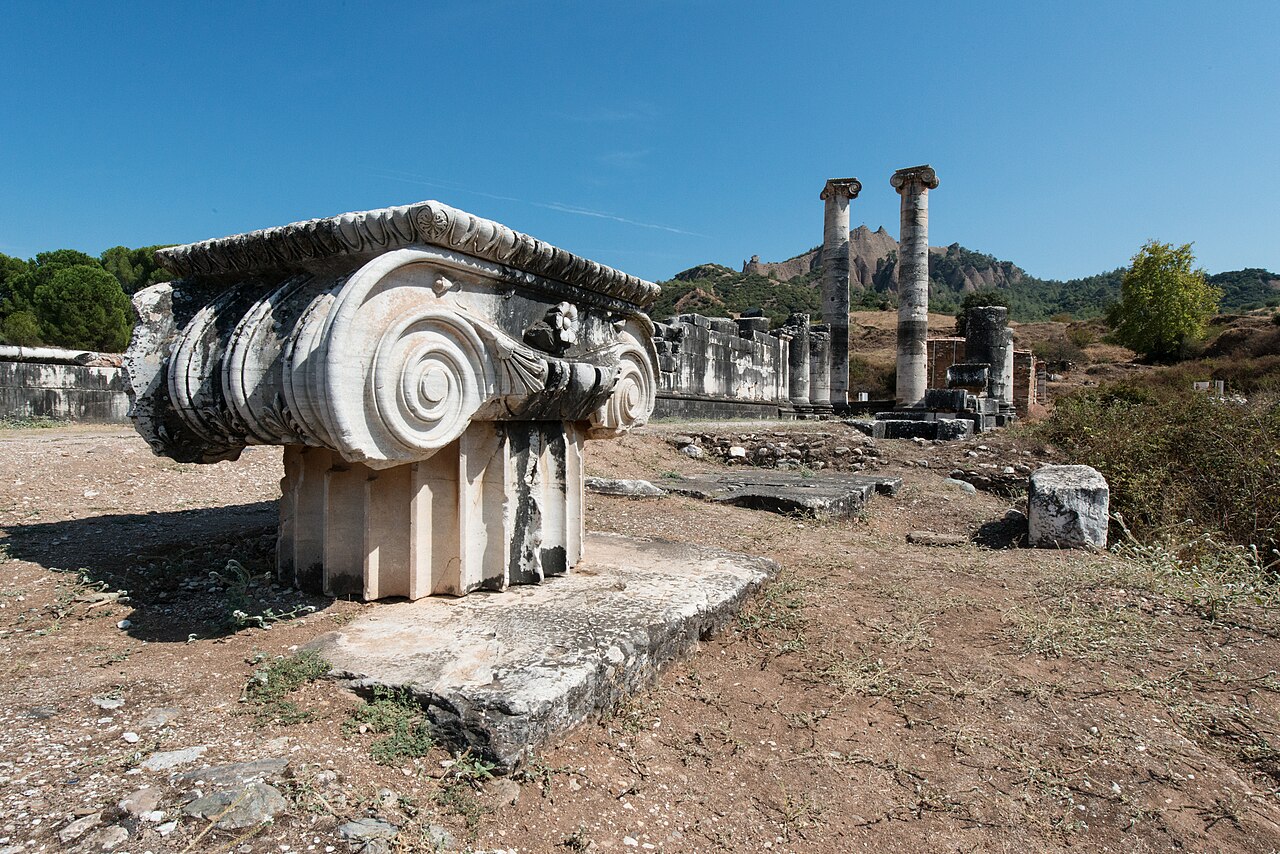
Mushroom-like ruins is a small, distinctive remnant near Sart in Salihli district of Manisa, within the wider archaeological landscape of Sardes. Its unusual silhouette gives the feature its name, but its strongest appeal is contextual: it sits among traces of the ancient Lydian capital. Sardes was the capital of the Lydian Kingdom, so even a modest surviving fragment belongs to a historically exceptional setting. Read the ruins as one detail in a larger settlement rather than as a standalone museum or monumental building. The feature is most meaningful when viewed as part of Sardes’s broader archaeological story.
Checked 2026-09-02 · Source
The exact feature is best understood as surviving masonry in an open archaeological environment, not as an interior attraction with rooms or an independent exhibition route. Around it, the Sardes heritage landscape brings together remains associated with an acropolis, gymnasium, synagogue, baths, courthouse, houses and tombs. These traces broaden the visit from one curious ruin to a view of civic, religious, domestic and funerary life. The Mushroom-like ruins are therefore most rewarding when included in a wider walk through the Sardes area. Allow time to compare the fragment’s unusual form with the more extensive architectural remains nearby.
Checked 2026-09-02 · Source
Allow a short stop for the Mushroom-like ruins themselves, then reserve additional time for the surrounding Sardes remains. The exact feature can be appreciated quickly, but the wider archaeological area rewards a slower visit because its surviving traces are spread across different parts of the ancient settlement. If you want to see the acropolis, gymnasium, synagogue, baths, courthouse, houses and tombs, plan the day around the broader site rather than treating this fragment as the only destination. Your final duration will depend on walking pace, photography and how many remains you include. A rushed visit can miss the relationship between the isolated masonry and the ancient city around it.
Checked 2026-09-02 · Source
The Mushroom-like ruins are encountered in the broader Sardes archaeological landscape near Sart, so the experience is most comfortable when daylight, weather and ground conditions suit outdoor exploration. Morning or later afternoon can make a walk across exposed remains more pleasant, especially during hot weather, while softer light can help the unusual masonry stand out in photographs. Choose sturdy footwear for uneven archaeological ground and leave enough daylight to orient yourself among separated traces. No operator-confirmed hours or closure schedule is recorded for this exact feature. Seasonal comfort matters because shade and shelter cannot be assumed across an open archaeological setting.
Checked 2026-09-02 · Source
No admission price is recorded for the Mushroom-like ruins as an individual feature. The available cultural-tourism material describes the wider Sardes archaeological area, but it does not establish a separate tariff for this named remnant. Plan around the broader heritage landscape and avoid assuming that a general archaeological-site price, free entry, concession, Museum Card or separate ticket automatically applies to this exact location. This guide therefore records no supported admission charge for the fragment itself. The absence of a recorded price should not be read as confirmation that the wider Sardes area is free.
Checked 2026-09-02 · Source
The official Manisa cultural-tourism guidance places the Sardes area near Sart and identifies the İzmir–Ankara highway as the practical approach. The archaeological area is approximately 9 kilometres from Salihli centre. Once you arrive in the wider Sardes landscape, allow time to orient yourself before looking for this smaller feature, because it is part of a broader archaeological setting rather than a separately described visitor complex. Wear footwear suited to outdoor heritage ground and keep your route flexible for nearby remains. The location is therefore best combined with a broader Sardes visit instead of approached as an isolated urban landmark.
Checked 2026-09-02 · Source
Treat the Mushroom-like ruins as fragile archaeological masonry. Keep your feet and equipment off the stonework, do not climb or lean on the remains, and take care on uneven ground while moving through the surrounding landscape. The feature may be small compared with the major Sardes monuments, so it is easy to rush toward it without noticing the wider terrain. Slow down, protect the surviving fabric and give other visitors room to observe the ruins respectfully. Because the feature lies in an archaeological landscape, avoid moving stones, collecting fragments or using the masonry as a seat or support.
Checked 2026-09-02 · Source
Use the Mushroom-like ruins’ unusual profile as the subject of a contextual photograph rather than isolating it from Sardes. A wider frame can place the fragment against the open archaeological landscape, while a closer composition can show the surviving masonry and its distinctive form. Visit in angled daylight if possible, when texture and shadow can make the silhouette easier to read. Photograph from the path or firm ground, keep equipment away from the stones, and leave the ancient setting exactly as you found it. Including the surrounding landscape helps explain why this small remnant matters within Sardes rather than presenting it as an unrelated object.
Checked 2026-09-02 · Source
They are near Sart in Salihli district of Manisa, within the wider Sardes archaeological landscape.
They are associated with the archaeological heritage area around Sardes, the ancient Lydian capital near Sart.
Sardes was the capital of the Lydian Kingdom.
Official cultural material describes Sardes as the place where money was first minted in known history and associates it with the beginning of the Royal Road.
The wider Sardes area includes remains of an acropolis, gymnasium, synagogue, baths, courthouse, houses and tombs.
Sardes and the Bin Tepeler Lydian Tumulus landscape were added to the UNESCO World Heritage List in 2025.
Loading the interactive map…
The interactive map could not be loaded.
Last updated:
Source: OpenStreetMap contributors ·