.jpg)
.jpg)
.jpg)
.jpg)
.jpg)


16 min walk · Salihli
Sardis
- Must see · Heritage site
- Historic monument
Historic monument · Salihli, Manisa
Temple of Artemis
| Per person | TRY 200.00 |
|---|
Checked 2026-09-02 · Source
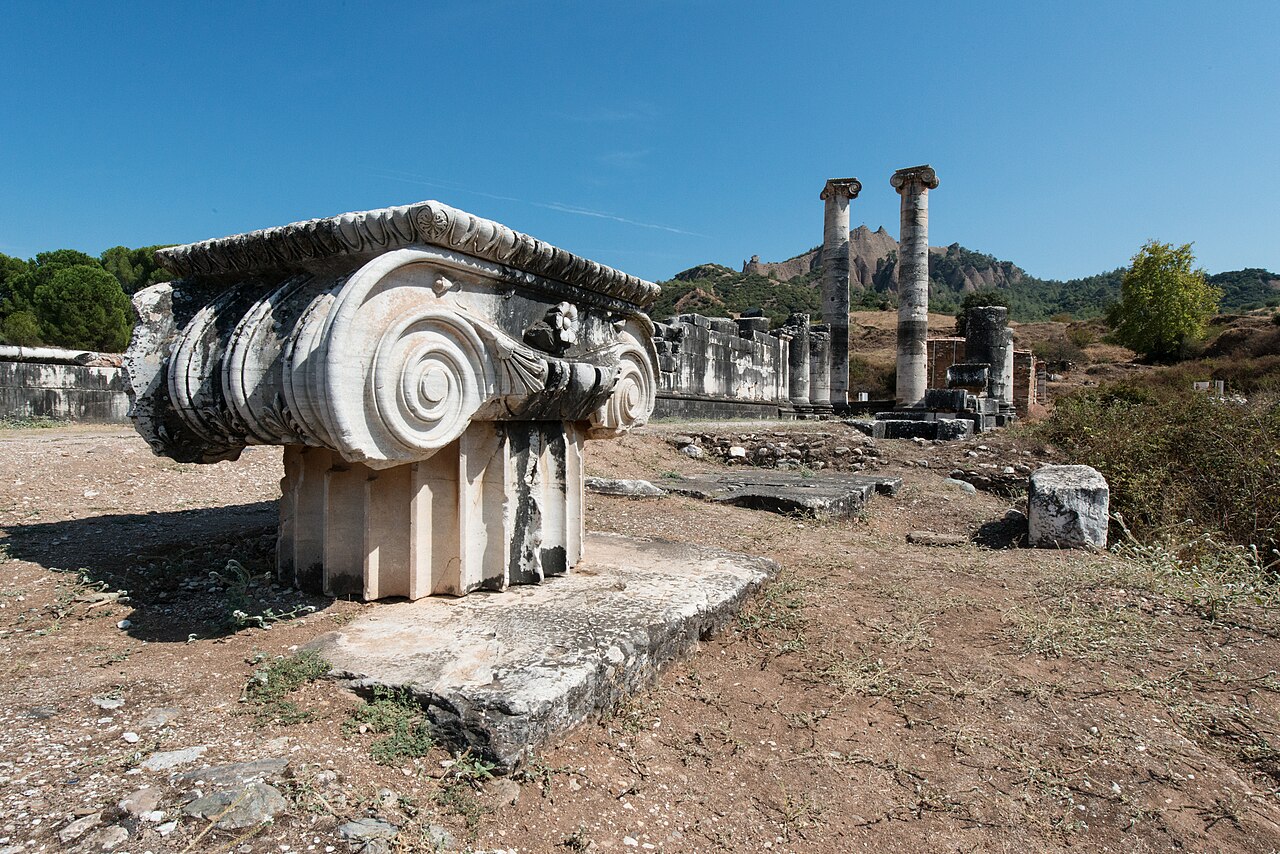
The Temple of Artemis at Sardis is an unfinished sanctuary within the Sardes Archaeological Site at Sart Mahallesi in Salihli, Manisa. It stands beside the modern Sart Stream, identified with the ancient Pactolus, and remains a landscape monument rather than a reconstructed building. Two ancient columns dominate the view, while foundations and scattered architectural remains preserve the footprint of a temple whose long history continued through Hellenistic and Roman periods. Its setting makes the ruin legible as part of Sardis, not as an isolated museum object. The monument is especially valuable for showing how a major sanctuary can remain historically important despite its incomplete state and exposed archaeological form.
Checked 2026-09-02 · Source
The surviving monument is read from outside, across open archaeological ground. Two complete columns still stand and have not been restored; around them are foundations, column drums and other low architectural remains. The broad footprint helps visitors understand the intended scale even though the sanctuary was never completed. Later layers remain visible in its story: during the Roman period, part of the temple was enclosed for the imperial cult, and a chapel was subsequently added at the southeast corner. These changes show how the site was adapted rather than abandoned to a single period.
Checked 2026-09-02 · Source

Allow about 45 minutes for a focused look at the Temple of Artemis. This gives enough time to walk around the visible footprint, compare the two standing columns from different viewpoints and examine the foundations without reducing the stop to a quick photograph. The estimate applies to the temple itself, not to every part of Sardes Archaeological Site. A wider Sardes visit needs additional time for movement between archaeological areas, orientation and pauses at other remains. Because the temple is outdoors, walking pace and conditions can affect how long the stop feels. Visitors interested in architectural detail may want longer for close observation and photography.
Checked 2026-09-02 · Source

No operator opening schedule was supplied for this guide, so no opening or closure claim is made here. The temple is an outdoor ruin within the wider Sardes Archaeological Site, and the standing columns, foundations and open ground are easiest to inspect in clear daylight. A morning stop can leave more time for combining the monument with other Sardis remains, while a later visit may change the quality of shadows across the columns. Choose a period that suits your route and daylight; these are viewing considerations, not operator hours. The open setting also means that the visual experience changes with the direction and strength of sunlight.
Checked 2026-09-02 · Source
The operator lists general admission at 200 TRY for Turkish adult visitors aged eight and over, and €3 for foreign adult visitors aged eight and over. Turkish citizens aged from 0 through 18 and Turkish citizens aged 65 and over are listed as free. These are admission details for Sardes Archaeological Site, where the Temple of Artemis is an outdoor stop within a larger archaeological visit. The price categories should therefore be read as site entry information, not as a separate charge for the temple’s columns or foundations. The operator also lists a WC and shop at the wider site, useful context for planning a visit around this open-air monument.
Checked 2026-09-02 · Source
The archaeological site address is Sart Mahallesi, Kenan Evren Caddesi No:2, Salihli, Manisa. Manisa Metropolitan Municipality’s official timetable identifies line 108 as Kapancı–Sart–Salihli. Travellers using public transport can use a Sart stop and then continue to the Sardes site entrance. The Temple of Artemis lies inside that wider archaeological area, so reaching the stop or entrance does not put you beside the columns. Allow for the onward walk across outdoor ground and for locating the temple among Sardes’ other remains. The site address is therefore the useful destination for navigation, while the temple itself is an internal stop after entry.
Checked 2026-09-02 · Source

Expect an exposed archaeological ruin, open surfaces and uneven ground around the Temple of Artemis. The sanctuary was used for more than 800 years but was never fully completed; missing elements and unfinished areas are therefore part of the historical remains. Plan for outdoor conditions and take care around the foundations and architectural fragments while moving between viewpoints. The distinction between surviving ancient fabric and later additions matters here, because the site’s incomplete appearance is part of its history rather than a temporary construction problem.
Checked 2026-09-02 · Source
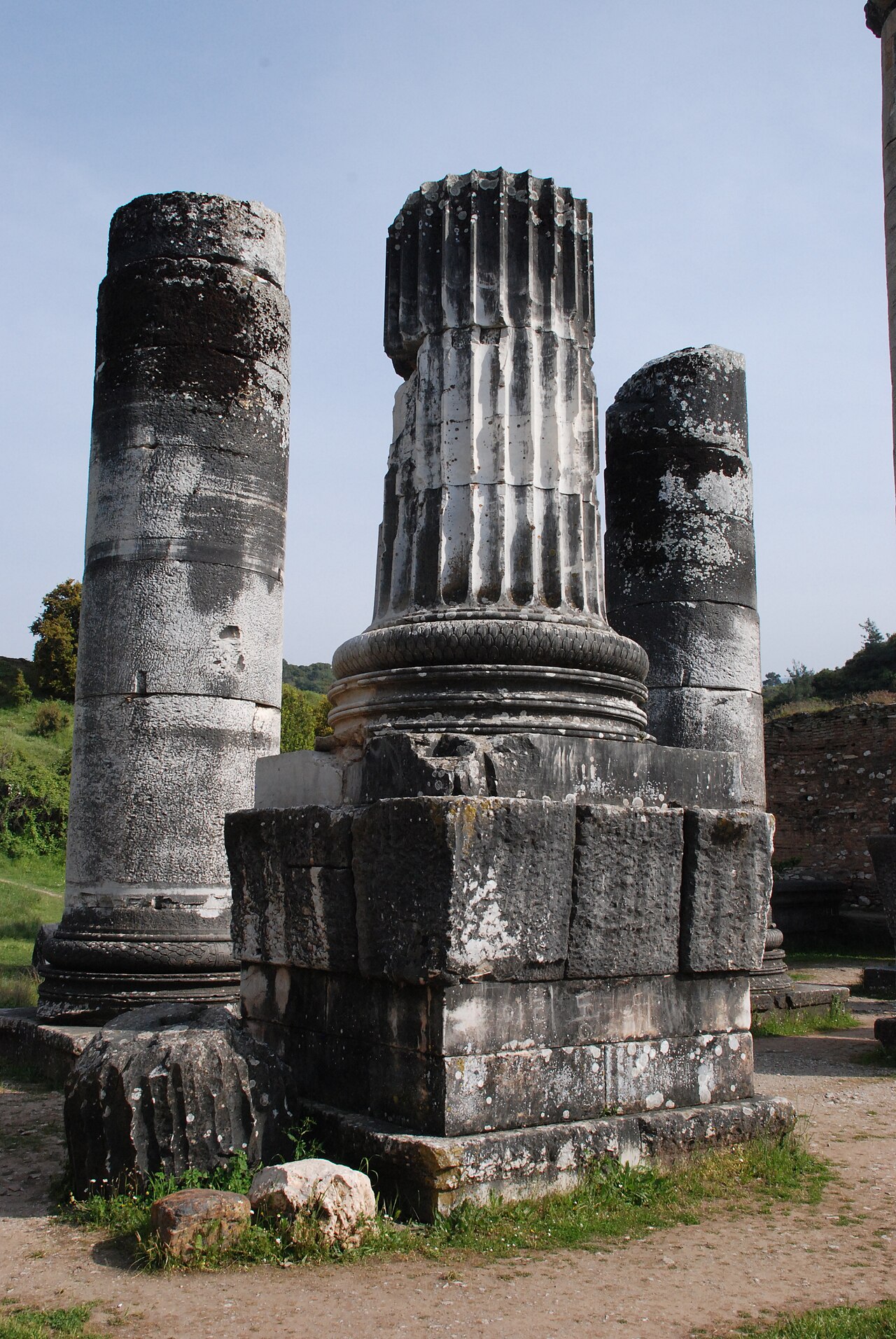
Frame both standing columns with the low foundations and the open temple footprint to show how the surviving vertical elements relate to the wider ruin. Then change position for a view that places the columns against the sky and reveals their height without hiding the incomplete ground plan. Detail photographs can focus on weathered architectural pieces, while a wider image connects the monument to the Sardes landscape near the Sart Stream. Keep the unfinished character visible: the contrast between two complete columns and the dispersed remains is the site’s defining visual fact. A sequence of wide, medium and close views can communicate both the sanctuary’s scale and its fragmentary survival.
Checked 2026-09-02 · Source
It is within Sardes Archaeological Site in Sart Mahallesi, Salihli, Manisa, near the modern Sart Stream, identified with the ancient Pactolus.
Two complete columns have remained standing since antiquity and have not been restored.
Construction began in the Hellenistic period, and the building was expanded during the Roman Imperial period.
The temple was originally dedicated to Artemis, associated with the Anatolian Artemis of Ephesus.
Although it was used for more than 800 years, the Temple of Artemis was never fully completed.
During the Roman period, part of the temple was enclosed for the imperial cult, and a chapel was later added at the southeast corner.
Loading the interactive map…
The interactive map could not be loaded.
Last updated:
Source: OpenStreetMap contributors, Wikidata ·