
10 min walk
Ancient Theatre of Halicarnassus
- Must see
- Historic monument
Language · 11 published
Historic monument · Muğla
Myndos Kapısı
Reviewed by Elena Voss · Roavina Travel Editor
This place is a Archaeological site.
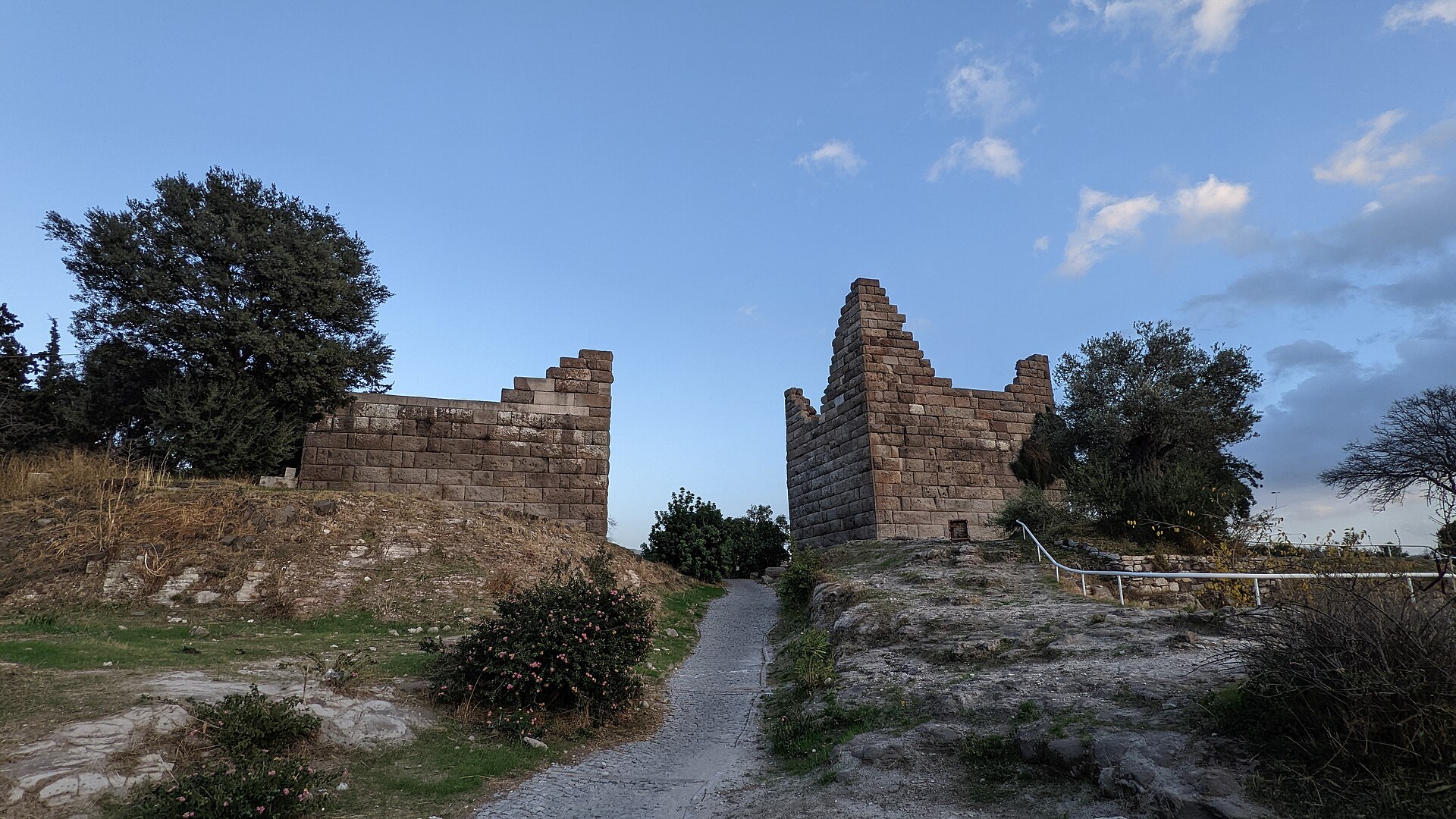
Myndos Gate is a surviving western entrance to ancient Halicarnassus, at the western exit of modern Bodrum on the road toward Gümbet. Bodrum Municipality places its construction broadly in the 360s BC, during the rule of Mausolus. The gateway formed part of the city’s defensive wall system and controlled the western approach. Two substantial towers and the space behind the entrance still make its purpose easy to understand. Visit for a concentrated encounter with the fortified edge of the Carian city rather than a large enclosed archaeological complex. Myndos Gate is a surviving western entrance to ancient Halicarnassus, at the western exit of modern Bodrum. This was not an isolated gateway: it belonged to the city’s defensive wall system and controlled the western approach. The monument is especially legible because two substantial towers and the space behind the entrance still define its form. Bodrum Municipality dates Myndos Gate broadly to the 360s BC, during the rule of Mausolus. It was one of the main western entrances to Halicarnassus and formed part of the city walls.
Checked 2026-09-02 · Source
The main remains are two monumental towers and an inner courtyard behind the gate. A defensive ditch from the fourth century BC strengthened the western approach. Nearby archaeological elements include vaulted tombs thought to date from the fourth century BC and burial structures from the Hellenistic and Roman periods. Read the gate together with the surviving wall line instead of viewing the towers in isolation. Restored masonry north of the entrance adds a modern conservation layer, with Bodrum Municipality stating that the first restoration phase was completed in 1999.
Checked 2026-09-02 · Source
Allow roughly 30 to 45 minutes for the gate and its immediate remains. That gives enough time to study both towers, enter the courtyard area, understand the defensive ditch and look toward nearby tombs and wall fragments. Add time if you are walking from the Gümbet Değirmenler area or taking a slower route along the historic remains. The estimate suits a focused stop, not a complete exploration of the Halicarnassus Walls. Myndos Gate fits naturally into a broader Bodrum history walk.
Checked 2026-09-02 · Source
Visit in daylight, when the towers, courtyard, ditch and wall line are easiest to read. Municipal material does not give a daily timetable for Myndos Gate, so plan it as a daylight outdoor heritage stop rather than around a published admission schedule. Bodrum Municipality has documented cleaning and maintenance around the gate and the Halicarnassus Walls, and a municipality-hosted programme on 22 April 2026 shows that the monument can form part of organised heritage activity. Those occasions are separate from ordinary daily access.
Checked 2026-09-02 · Source
Experience it as an open-air heritage place, but do not use that description to assign a price. Ticket information for separately operated museums or archaeological attractions in Bodrum does not establish a charge for this monument. The practical value of the stop lies in its location, surviving towers, courtyard, ditch and wall remains, allowing you to include it in a walking day without treating it like a ticketed museum visit.
Checked 2026-09-02 · Source
Muğla Governorate places Myndos Gate at Bodrum’s western exit, beside the Turkish cemetery on the old Gümbet road. This position places it west of the waterfront centre and on the route toward Gümbet. Bodrum Municipality identifies the gate in its official Bodrum 360 panorama and links MUTTAŞ public-transport information through its services. The municipality has also used the Gümbet Değirmenler area as the starting point for a guided walk to Myndos Gate, giving travellers a clear walking context for reaching the monument.
Checked 2026-09-02 · Source
Expect historic masonry, wall fragments, a defensive ditch and burial remains rather than a fully level modern attraction. Stones and changes in ground level call for careful walking, particularly around the archaeological remains. Use maintained routes, do not climb or handle the masonry, and keep your movement low-impact. The site has an open-air character, so bring the level of comfort appropriate for outdoor weather and uneven historic ground. Its scale is manageable, but the remains deserve the same care as a larger archaeological site.
Checked 2026-09-02 · Source
Start with a wide composition showing both monumental towers, then include the inner courtyard and surviving wall line to explain the gate’s role in Halicarnassus. The western approach and defensive ditch add depth, while nearby vaulted tombs and later burial structures broaden the archaeological setting. Restored masonry north of the gate introduces the monument’s conservation history. Photograph from the routes available on the ground, keep away from fragile remains and avoid climbing.
Checked 2026-09-02 · Source
Bodrum Municipality dates it broadly to the 360s BC, during the rule of Mausolus.
It was a major western entrance to ancient Halicarnassus and formed part of the city’s defensive walls.
The principal remains are two monumental towers and an inner courtyard behind the entrance.
A defensive ditch dating from the fourth century BC stood in front of the western approach.
The surrounding area contains vaulted tombs thought to date from the fourth century BC and burial structures from the Hellenistic and Roman periods.
The first restoration phase of the walls and towers north of the gate was completed in 1999.
Loading the interactive map…
The interactive map could not be loaded.

Last updated:
Source: OpenStreetMap contributors, Wikidata ·