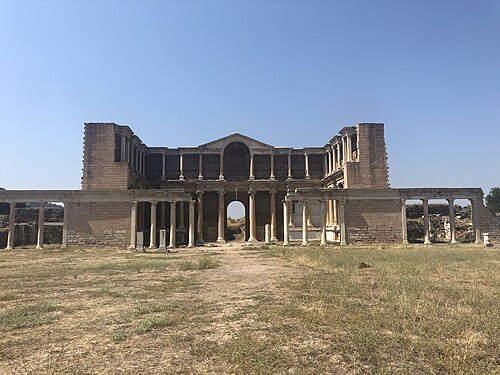
Bath-Gymnasium Complex
The Bath-Gymnasium Complex is one of the major surviving architectural groups at Sardes, the ancient city known today as Sardis, near Sart in Manisa Province.
- Notable
- Historic monument
- Manisa
Country guide
Türkiye is 783,562 km² across 81 provinces, most of it Anatolia in West Asia with East Thrace on the European side of the straits. It has three coasts to choose...
Photograph · Benh LIEU SONG · CC BY-SA 4.0
Reviewed by Elena Voss · Roavina Travel Editor
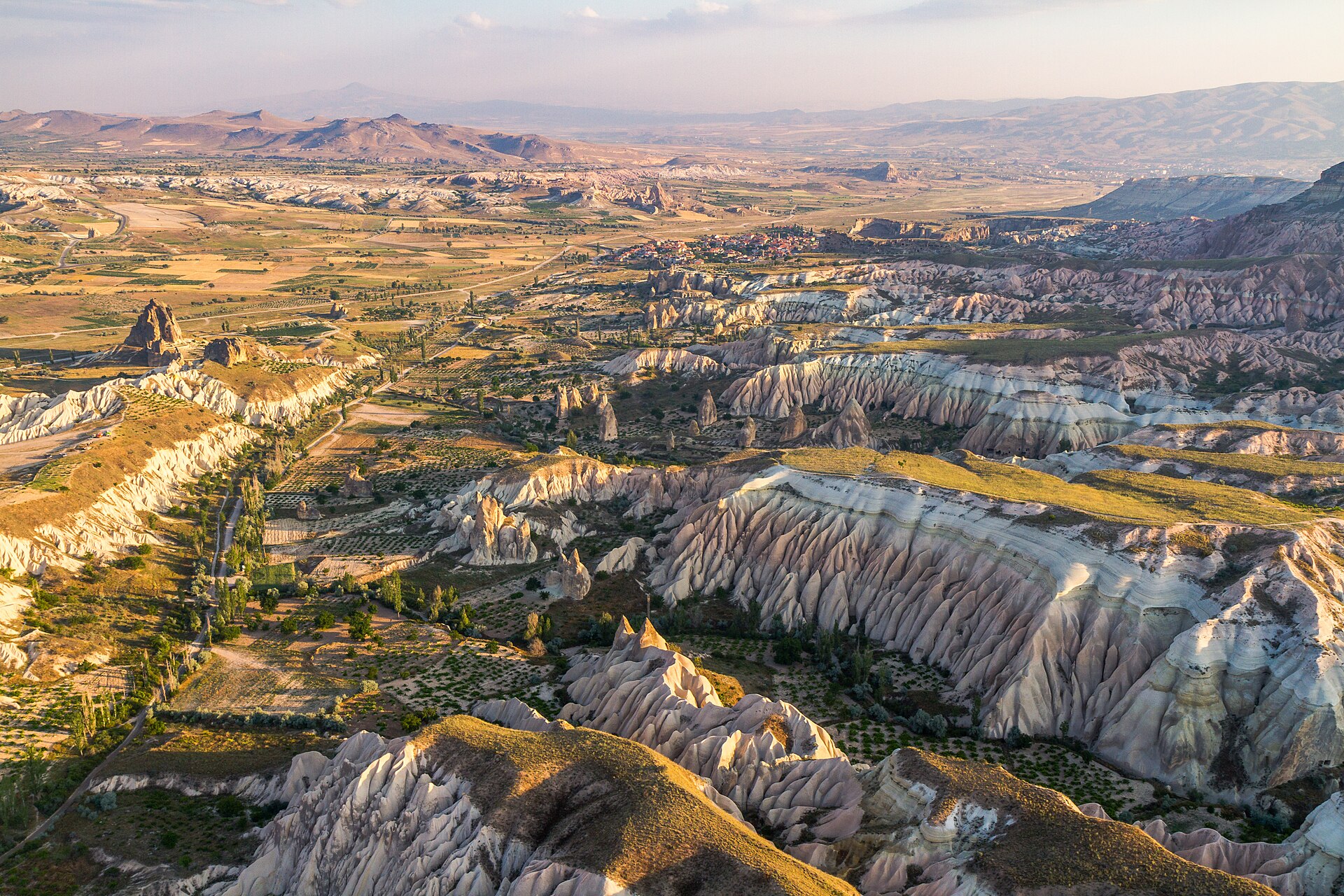
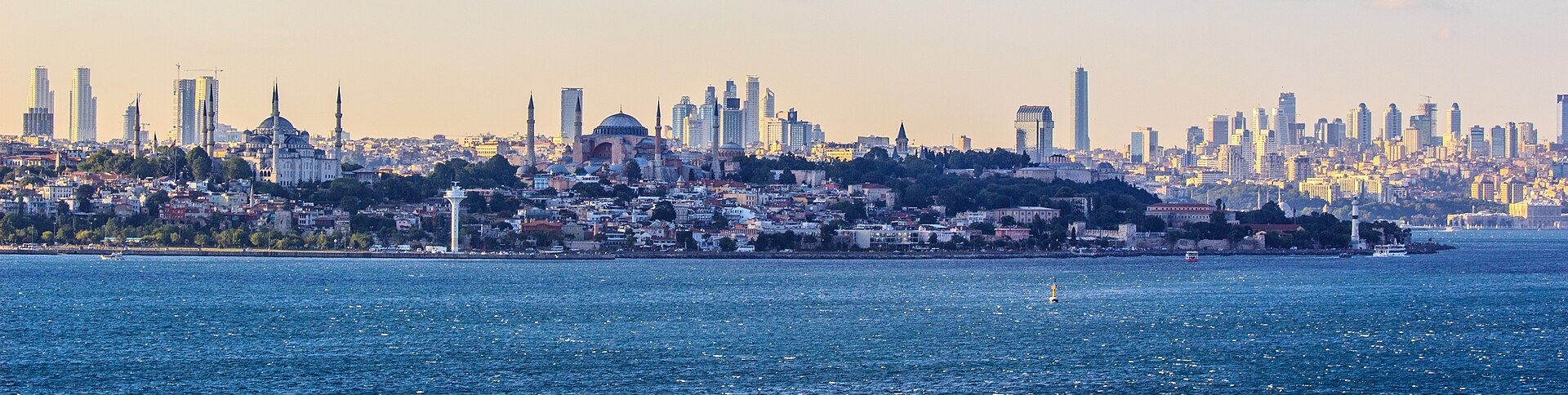
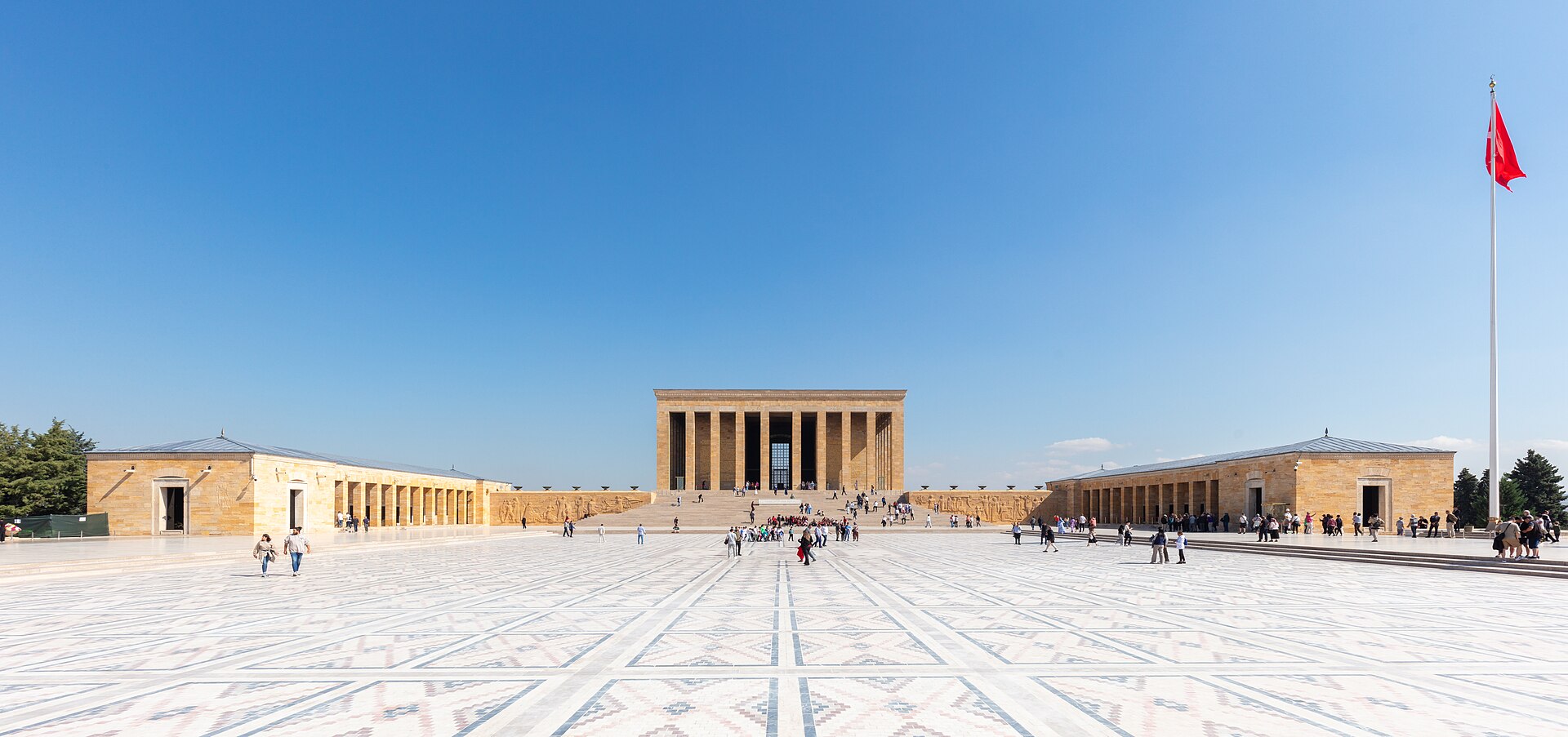
Türkiye is 783,562 km² across 81 provinces, most of it Anatolia in West Asia with East Thrace on the European side of the straits. It has three coasts to choose between — the Black Sea to the north, the Aegean to the west, the Mediterranean to the south — and an interior plateau that behaves like a different country in winter. Istanbul is the largest city and the economic centre, Ankara the capital and the second-largest, and the December 2025 population of 86,092,168 is weighted heavily to the west. A first trip is usually Istanbul and one coast; the plateau is the second trip.
Checked 2026-08-25
Every city catalogued in this country so far, ranked by how much there is to see.
Photograph · Ben Morlok · CC BY-SA 2.0
Photograph · Diego Delso · CC BY-SA 4.0
Photograph · REHBER0770 · CC BY-SA 4.0
Photograph · Anonymous · CC0
Photograph · Dan Taylor · CC BY 2.0
Photograph · Dogaaunlu · CC BY-SA 4.0
Photograph · Egemenakgul · CC BY-SA 4.0
Ranked by importance — sitelinks, pageviews and heritage status, not editor preference.
432 places match
Category
Typical visit duration
The Bath-Gymnasium Complex is one of the major surviving architectural groups at Sardes, the ancient city known today as Sardis, near Sart in Manisa Province.
Turistik Demirciler Çarşısı
Turistik Demirciler Çarşısı is a historic market quarter in Beypazarı district centre, around İrfan Gümüşel Caddesi.
Beçin Kalesi
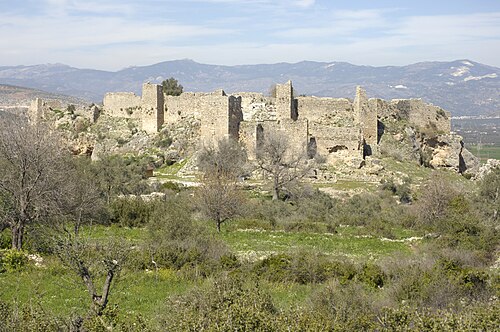
Beçin Kalesi is a fortified archaeological settlement on a plateau roughly 200 metres above the plain, about 5 km south of Milas in Muğla Province.
Bektaş Efendi Türbesi is a compact memorial building in Bala Mahallesi, at the centre of Hacıbektaş in Nevşehir Province. Its inscription records construction in Hijri 1012, corresponding to 1603.
Churche and rooms for pigeons
Churche and rooms for pigeons identifies a small group of carved spaces in the Üzengi Valley near Ürgüp, Nevşehir. Its distinctive subject is the meeting of two uses cut into Cappadocia’s rock landscape: churches and dovecotes.
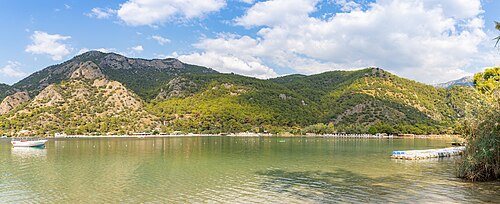
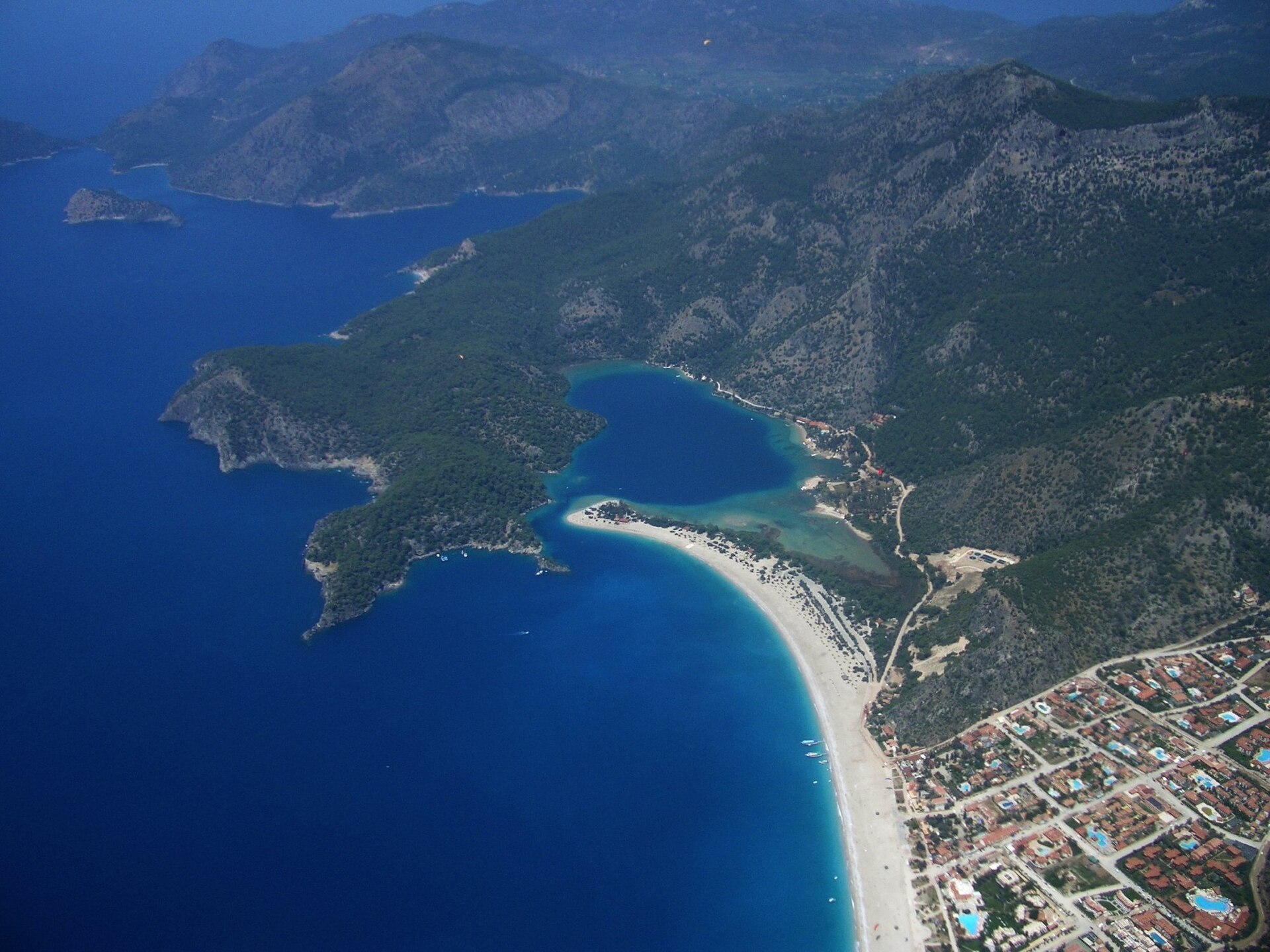
Blue Lagoon is the lagoon landscape within Ölüdeniz–Kıdrak Nature Park in Ölüdeniz, Fethiye, Muğla.
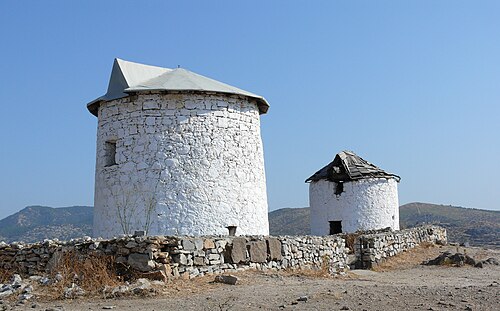
Bodrum Windmills are eight historic stone structures on Değirmenburnu ridge, arranged in a north–south line between Bodrum and Gümbet in Eskiçeşme. They are remnants of local grain-milling infrastructure, not an operating museum or a modern attraction built for display.
Çakallar is a protected open-air heritage locality on a volcanic hillside near Sindel, also called Akçeşme, in Salihli district, Manisa. Its defining evidence is a group of fossilised human and animal footprints preserved as impressions in volcanic tuff.
Çakırca Basalt Columns are a natural volcanic formation in Çakırca village, within Manisa’s Kula district. The dark rock belongs to the landscape of the Kula Volcanic Geopark and is associated with first-stage lava flows of the Burgaz volcanites.
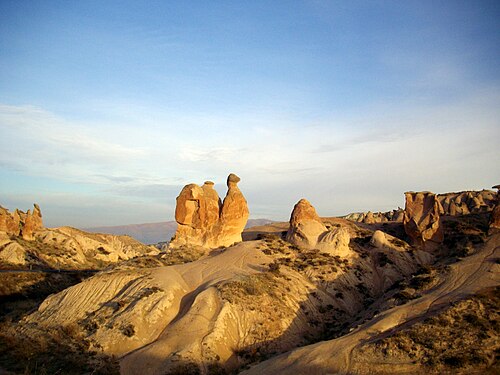
Camel Rock is a natural volcanic formation at the entrance to Devrent Valley, the Cappadocian landscape also known as Imagination Valley. Its profile is recognised as a kneeling camel: the hump, sloping neck and head emerge from weathered tuff.
Canyon path is the marked walking line through Kızılçukur Valley, beginning at the Kızılçukur sunset viewpoint above Ortahisar and continuing toward Çavuşin. Its identity is defined by a one-way valley crossing rather than by a single building or viewpoint.
Çatal Höyük is a registered archaeological site in Küllüce Village, within Kozaklı district of Nevşehir Province. Its identity is tied to a protected rural settlement landscape rather than to a museum building, excavation gallery, or staffed attraction.
Çat Vadisi is a volcanic-tuff valley in Çat Beldesi, within Nevşehir Merkez, where fairy chimneys, sculpted rock formations, natural caves and rock-cut pigeon houses appear together in one open landscape.
Cave is a small mapped rock feature in Nevşehir’s Cappadocia landscape, where a hollowed opening is the attraction itself. Its character comes from the meeting of an intimate stone detail with the wider volcanic terrain around it.
Cave Beehive is a small cave-like historic remain in the rock landscape near Göreme, in Nevşehir Province’s Avanos district area.
Cave Beehive is a small outdoor rock-cut remnant in Avanos district, at approximately 38.6556686, 34.8542411. Its defining subject is the surviving carved form, encountered among Cappadocia’s volcanic-rock valleys rather than inside a museum or a fully enclosed cave complex.
Cave House is a hotel in Uçhisar, Nevşehir, offering accommodation in cave-and-stone suites. It is a place to stay rather than a museum or separately ticketed cave attraction.
Local Cave House is a twelve-room hotel built into the rock-carved hillside above Göreme. The operator describes a traditional family home restored in 1998, bought by the Kocaturk Family in 2004, and transformed into a cave hotel.
Cave house is an exterior cave-house landmark mapped in Nevşehir province. Its interest lies in the visible relationship between local rock, carved or adapted cave space, and the surrounding settlement landscape.
Cave House is a small historic monument in Göreme, Nevşehir, positioned within the district’s distinctive cave-and-valley landscape.
Cave House (entrance up through bottom chimney) is a small, distinctive rock-cut landmark in Güllüdere Valley, between Göreme and Çavuşin in Nevşehir Province.
Cave pigeon-loft is a small rock-cut pigeon house in the Göreme Archaeological Site area of Göreme, Nevşehir. Its carved openings belong to Cappadocia’s working landscape, alongside the better-known churches and chapels.
Cave Tomb is a specific rock-cut burial feature marked in the Güllüdere walking area of Nevşehir’s Cappadocia landscape. Its identity comes from the carved tomb itself, rather than from a museum collection, fortress, church complex or staffed visitor building.
Cave village is the historic outdoor settlement landscape of Çavuşin, in Avanos district of Nevşehir Province, rather than a single museum building.
Çavuşin Kalesi
Çavuşin Kalesi is the prominent rock settlement rising above Çavuşin village in Avanos district of Nevşehir.
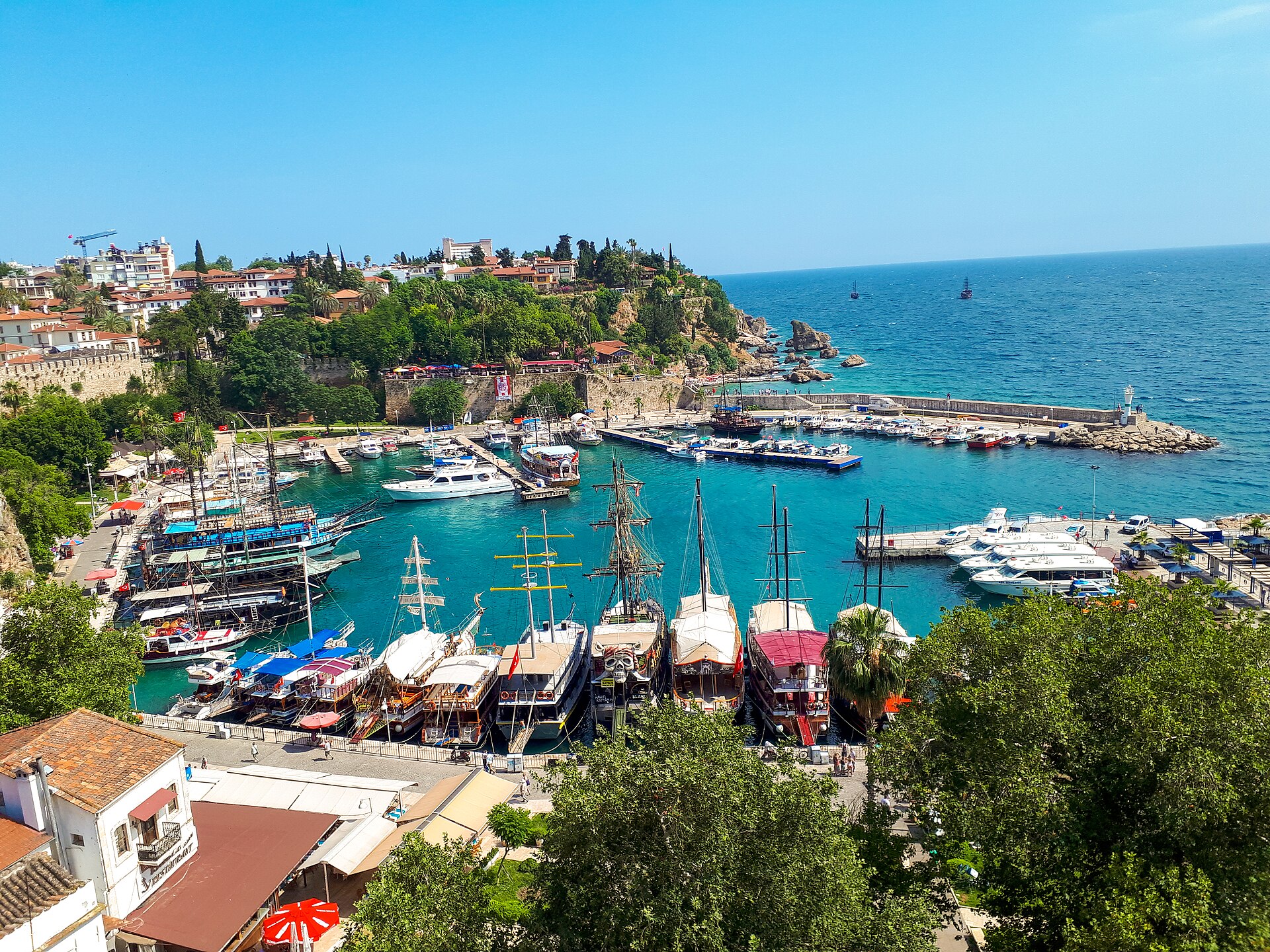
Ten to fourteen days allows about four days in İstanbul and at least three around Antalya when coastal archaeology is included. Cappadocia needs its own regional stay, and a one-way coastal route is more workable than returning to the same city each night.
Türkiye's visa position varies by passport and purpose. Verify the rule through the Ministry of Foreign Affairs and, when eligible, use only the official e-Visa service rather than an intermediary.
İstanbul's two airports and Antalya are the principal gateways for this itinerary. Domestic flights cover long cross-country legs, coaches serve many city pairs, and high-speed rail is most useful on the İstanbul-Ankara axis rather than as a universal substitute.
April to May and September to October are broad choices for combining İstanbul with the Mediterranean coast. Cappadocia nights, inland heat, and Antalya's coastal conditions differ, so confirm weather for each overnight base.
Türkiye uses the Turkish lira (TRY). Keep lira available for smaller transport and market transactions even when cards are accepted, and review the displayed amount in TRY before agreeing to any card conversion.
Dial 112 for emergencies in Türkiye. Electricity is 230 V through Type C and F sockets; tap-water safety is not recorded here, so obtain current local advice at each stop.