
_-_geograph.org.uk_-_6367793.jpg)

52 min walk
Edinburgh Zoo
- Must see
- Family attraction
Language · 11 published
Art and culture venue · Edinburgh
Reviewed by Elena Voss · Roavina Travel Editor
This place is a Artwork.
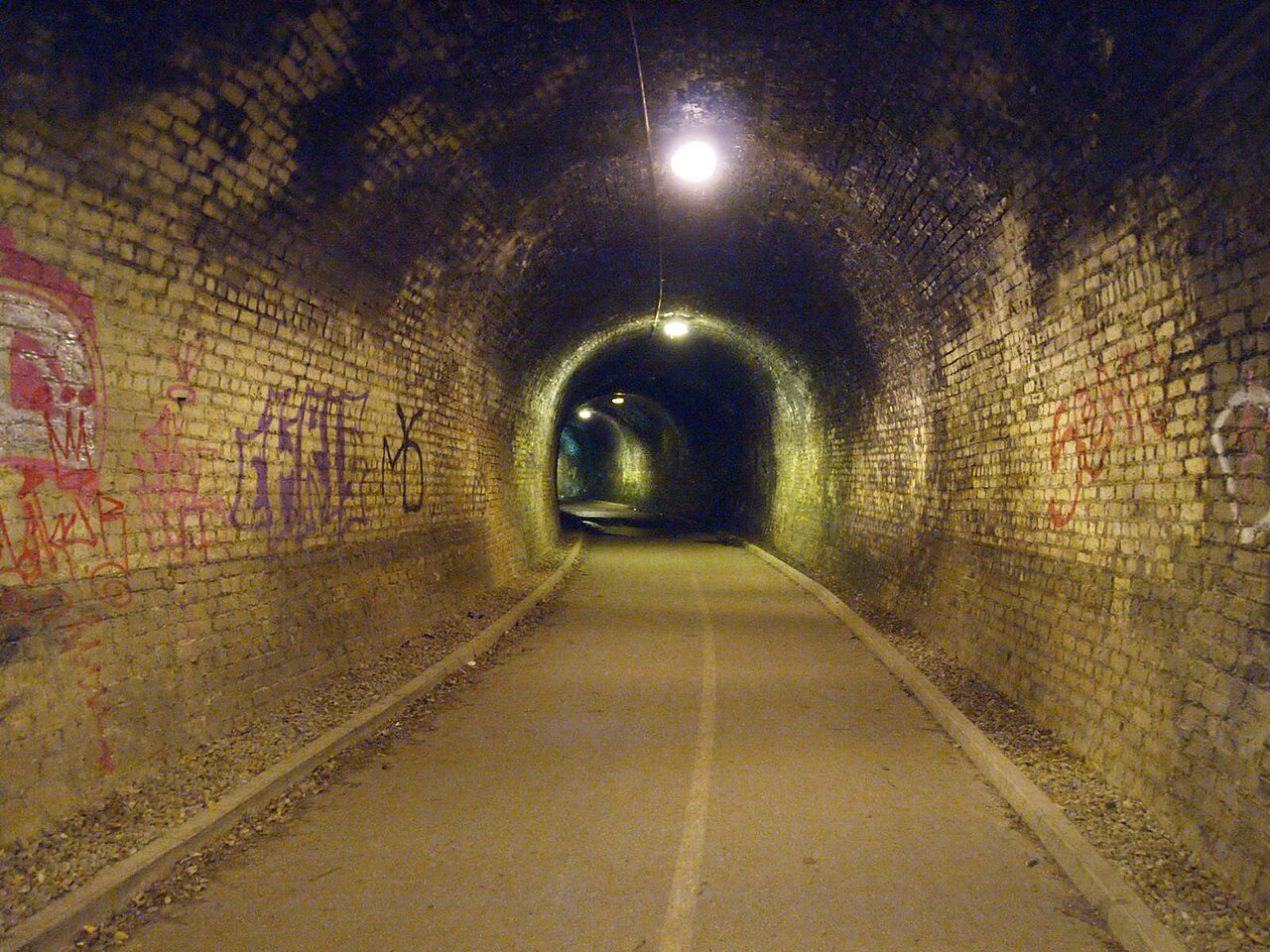
Colinton Tunnel is a historic transport structure in Edinburgh's Colinton district. The tunnel formed part of the former Edinburgh and Glasgow Union Canal route before later railway use, and its brick-lined construction reflects Victorian transport engineering. Today the interior is known for extensive murals that turn the passage into a community art experience. The paintings connect Robert Louis Stevenson with Colinton, and also depict local wildlife, village life and canal heritage. Colinton Tunnel therefore joins industrial history, literary association and public art in one walkable route. Visitors do not need to treat the tunnel as a static monument: the artwork changes the experience of moving through the structure. The combination of brick, lighting and painted scenes gives the tunnel a distinct atmosphere within Edinburgh's wider network of paths. It is especially rewarding for visitors who enjoy local stories presented directly in the places where they developed.
Checked 2026-08-26 · Source
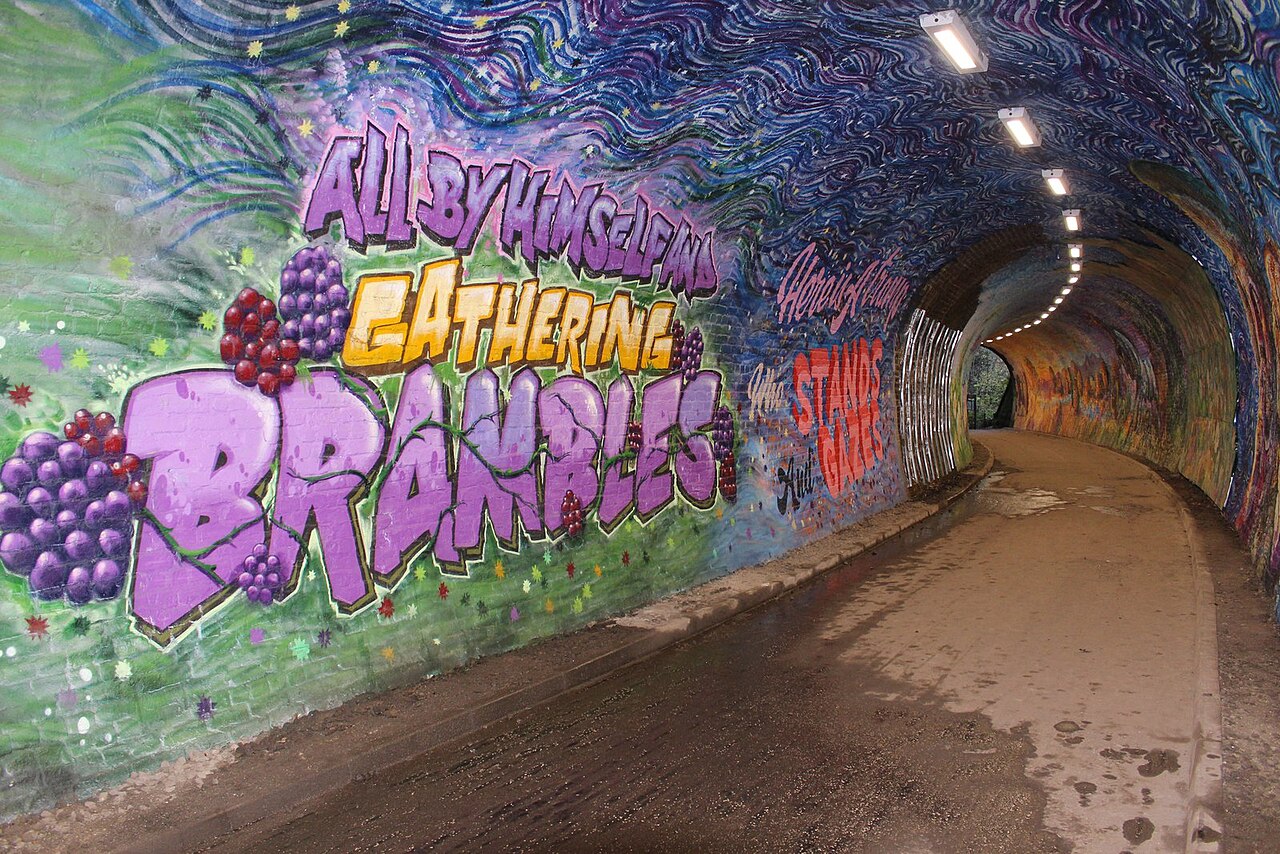
The tunnel interior contains a substantial mural sequence created through community collaboration. The artwork includes scenes and figures linked to Robert Louis Stevenson, who spent part of his childhood in Colinton, together with local wildlife, village life and the area's canal heritage. Artificial lighting illuminates the painted walls and supports safe movement through the passage. The floor provides a level walking surface, and the tunnel functions as a route for pedestrians and cyclists rather than as a staffed gallery. There are no facilities, seating, retail areas or refreshment services inside. Walk slowly enough to see how the murals transform the brick-lined engineering structure into an immersive local-history display. The changing views from one section to the next create a narrative journey: literature, nature, community memory and transport history share the same walls. Look back towards the portals as well as forward, because the light transitions add depth to the artwork.
Checked 2026-08-26 · Source
Walking through the tunnel takes several minutes at a moderate pace, but mural photography and close reading make the visit longer. Allow extra time at both portals and along the walls if you want to follow the local scenes, Robert Louis Stevenson references, wildlife imagery and canal history in detail. Colinton Tunnel can be a short stop within a wider walk, or one section of a longer route along the Water of Leith Walkway and connected cycle paths. Comfortable footwear helps when the tunnel is combined with paths beyond its entrances. The route is linear, so visitors should allow time for the approach as well as the passage itself. A quick crossing reveals the scale and colour of the artwork; a slower walk shows how the murals use the tunnel's length to build a connected story. Cyclists may pass during the visit, so pause at the side when studying a panel.
Checked 2026-08-26 · Source
Colinton Tunnel is a public pedestrian and cycle route, so the visit fits naturally into a daytime walk through Colinton. Artificial lighting illuminates the interior, while natural light enters from the portals and changes how the murals look at each end. Rain affects the approach paths more than the tunnel itself, making the passage a useful sheltered section within an outdoor route. The shared path can be busier when walkers and cyclists are using it, so a quieter period gives more room to stop and study the artwork. The tunnel's combination of local history and weather protection makes it worthwhile in changeable Edinburgh conditions. Daylight also helps with the approaches and with the transition between the bright portals and darker centre. Include the tunnel as part of a Water of Leith or neighbourhood walk rather than isolating it from the paths that give the structure its present public role.
Checked 2026-08-26 · Source
Colinton Tunnel is a public access route with no ticketing infrastructure, staffed entrance or payment station. Passage through the tunnel is free, and the tunnel connects with wider pedestrian and cycling paths. Visitors should budget only for their journey to Colinton and for any separate activities elsewhere on the route. The murals are part of the public environment rather than a timed exhibition, which means a visitor can pause, walk through and continue without a formal admission process. The absence of a ticketed entrance also makes the tunnel easy to add to a local walk. Treat the artwork respectfully because the walls are the subject of the visit and the passage remains shared infrastructure. A slow, considerate circuit gives the murals the attention of a gallery while preserving space for people using the tunnel to travel.
Checked 2026-08-26 · Source
Colinton Tunnel lies in southwest Edinburgh, within the Colinton district. Lothian Bus services connect Colinton with central Edinburgh and nearby neighbourhoods, while vehicle access is available through the area's main roads. The tunnel portals connect with the Water of Leith Walkway and National Cycle Network routes, making approach on foot or by bicycle a direct way to reach the murals. Nearby railway stations are not immediately beside the tunnel, so rail arrivals need a further bus or walking connection. On-street parking in Colinton is subject to local restrictions. Plan the route using the tunnel's mapped position and choose the portal that fits the wider walk. Visitors arriving by bicycle should remember that the tunnel is shared with pedestrians. Those walking can extend the experience along the connected paths beyond the brick-lined passage.
Checked 2026-08-26 · Source

Colinton Tunnel is a narrow shared passage used by pedestrians and cyclists. Walk to one side, keep speed low on a bicycle and leave room for people travelling in the opposite direction. Moisture can enter from the portals and make parts of the surface slippery after rain, so steady footwear helps. Artificial lighting illuminates the tunnel, but an independent light is useful if visibility falls. The enclosed space amplifies sound and may feel uncomfortable for visitors who dislike confined places. Mobile signal can weaken inside, and the tunnel has no visible staff presence or refreshment facilities. Parents should keep children close when cyclists are passing. The tunnel provides shelter from rain, but the approaches remain exposed. Pause at the side rather than in the centre when viewing a mural, and take particular care at the transition between the tunnel floor and the outdoor paths.
Checked 2026-08-26 · Source
The murals make Colinton Tunnel a strong photography stop, with painted scenes extending through the brick-lined passage. Interior lighting can produce mixed colour and uneven brightness, so hold the camera steady and expose for the painted surfaces rather than the brighter portals. The entrances offer useful transition shots where natural daylight meets the illuminated tunnel. A tripod can obstruct the shared path, and a large setup may create difficulty for cyclists and pedestrians, so keep equipment compact. Flash can create harsh reflections on painted sections and may disturb other users. Photograph the artwork without touching the walls, and give people a clear route through the frame. Wider images show the scale of the tunnel, while closer details reveal the references to Robert Louis Stevenson, local wildlife, village life and canal heritage. Respect the community character of the murals by documenting the work without blocking the passage.
Checked 2026-08-26 · Source
The tunnel has a level walking surface without steps, although its shared width, lighting and surface conditions require care when pedestrians, cyclists and pushchairs meet.
The interior contains murals about Robert Louis Stevenson, local wildlife, village life and canal heritage, illuminated within the brick-lined tunnel.
The tunnel interior provides shelter from rain, while the approaches remain exposed. The passage connects with the Water of Leith Walkway and other outdoor paths.
Walking through the tunnel takes several minutes at a moderate pace. Allow longer if you want to study and photograph the murals.
The structure formed part of the former Edinburgh and Glasgow Union Canal route before later railway use, and it now connects with walking and cycling paths.
Yes. The tunnel is a public pedestrian and cycle route with no ticketing infrastructure or staffed admission point.
Loading the interactive map…
The interactive map could not be loaded.
Last updated:
Source: OpenStreetMap contributors ·