.jpg)
2 min walk
Museum on the Mound
- Must see
- Museum
Language · 11 published
Historic monument · Edinburgh
Reviewed by Elena Voss · Roavina Travel Editor
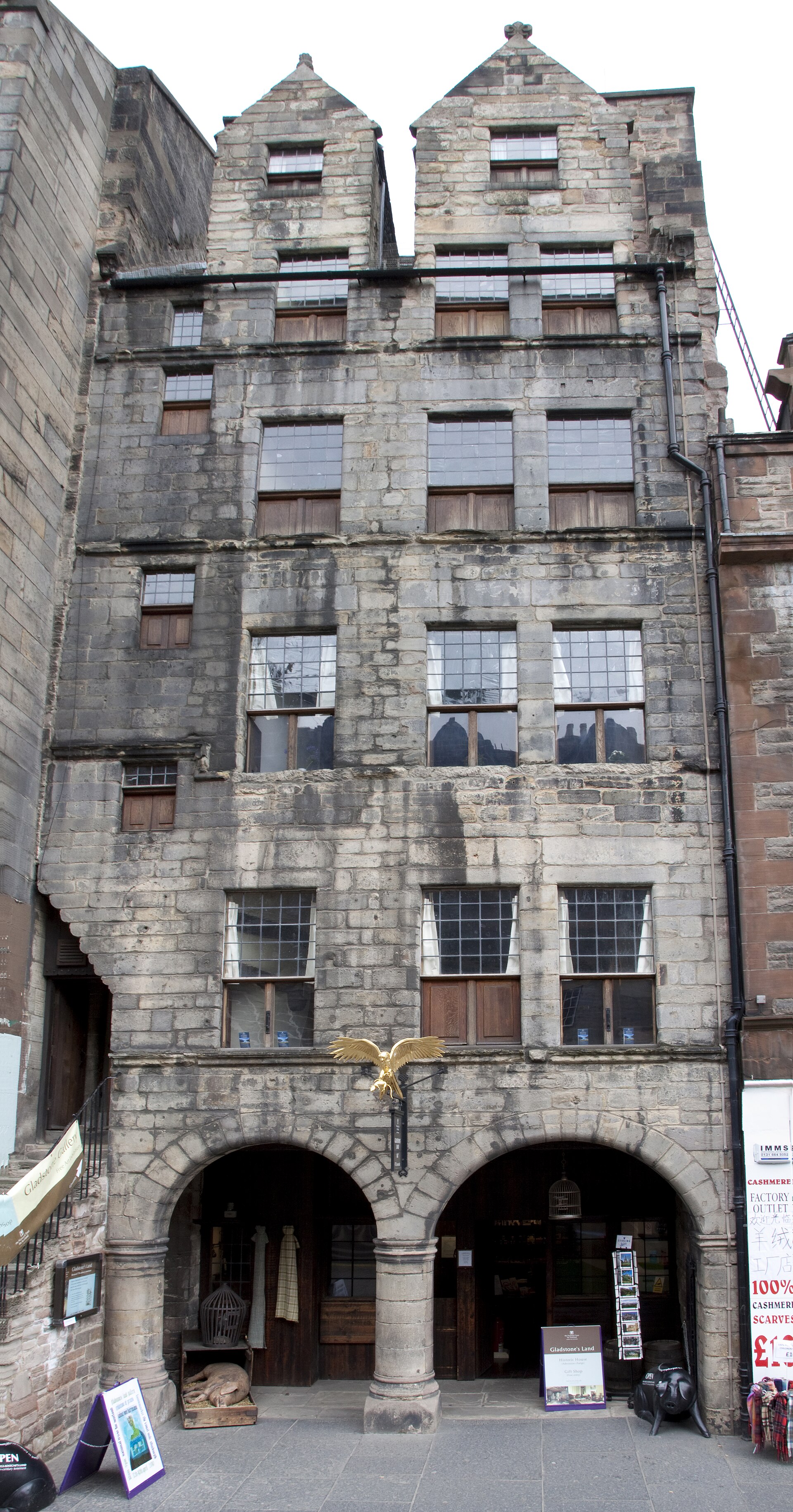
This place is a Attraction. It was established in 1617. It carries the category A listed building heritage designation. It is run by National Trust for Scotland.
Gladstone’s Land is a preserved seventeenth-century tenement on Edinburgh’s Royal Mile. The tall, narrow building shows how Old Town residents and merchants used vertical space in a crowded medieval city. The name comes from a former proprietor, not the Victorian prime minister William Gladstone. Its significance lies in the combination of domestic rooms, commercial history and surviving architectural details within one compact building. Gladstone’s Land gives a more intimate view of historic Edinburgh than the city’s large castles and museums, with the Royal Mile continuing directly outside the entrance.
Checked 2026-08-26 · Source
The interior presents period rooms furnished to evoke seventeenth-century domestic and commercial life. Visitors move through recreated living spaces, painted ceilings, historic fixtures and architectural details shaped by the building’s narrow footprint. Lower levels relate to trade, while higher rooms reflect the social separation built into a vertical tenement. Painted beams are among the most memorable details. The National Trust for Scotland operates Gladstone’s Land as a heritage property, preserving the rooms as an interpretation of early modern Edinburgh. Look at the ceilings, thresholds and room proportions as carefully as the furniture, because the building itself explains how people lived above the Royal Mile.
Checked 2026-08-26 · Source
Allow approximately forty-five minutes to one hour for a complete visit. The building is compact, but the narrow staircase and multiple floors encourage a measured pace. Visitors interested in social history, painted interiors or conservation can spend longer studying the rooms and surviving details. Gladstone’s Land works well as part of a Royal Mile walk, especially between Edinburgh Castle and Holyrood Palace. The confined interiors are easier to enjoy when you do not hurry behind a group. Leave time for the façade and the surrounding Old Town street after the interior visit.
Checked 2026-08-26 · Source
Morning is generally the most comfortable time to visit Gladstone’s Land, before Royal Mile foot traffic reaches its afternoon intensity. Summer and the August Festival Fringe bring heavy movement through the Old Town, which can make the approach and entrance busier. Winter offers a quieter street atmosphere, although daylight is shorter. The interior is sheltered from Edinburgh weather, but visitors may queue outside. Pairing the property with a Royal Mile walk creates a natural route through the Old Town, while a calmer visit gives the painted ceilings and small rooms more impact.
Checked 2026-08-26 · Source
Gladstone’s Land is operated by the National Trust for Scotland, so admission is part of that organisation’s heritage-visit system. The property is suited to travellers interested in a focused historic interior rather than a large open complex. Trust membership can be relevant for visitors touring several Scottish properties. The compact building makes a visit easy to add between other Royal Mile stops. Plan the property as a short, structured heritage experience: the rooms are small, the staircase controls the route, and the main reward comes from the period interiors and surviving painted decoration.
Checked 2026-08-26 · Source
Gladstone’s Land stands prominently on the Royal Mile between Edinburgh Castle and Holyrood Palace. From Edinburgh Waverley railway station, the walk takes roughly ten minutes uphill or downhill depending on your direction along the Old Town. The Royal Mile itself is pedestrian-focused, so vehicles cannot reach the entrance directly. Buses serve surrounding streets such as North Bridge and South Bridge, while taxis and rideshares use nearby drop points. Cobblestones, slopes and steps make the approach physically demanding, even before entering the historic building.
Checked 2026-08-26 · Source
Gladstone’s Land has a steep, narrow historic staircase, uneven floors, raised thresholds and low beams. The building has no lift, so movement between its floors depends on the stairs. Pushchairs and visitors with limited mobility may find the route difficult. Small rooms can feel crowded when several visitors arrive together, and capacity controls may slow entry during busy periods. Move carefully, especially around original floor levels and painted features. The compact layout is central to the experience, but it leaves little room for overtaking or turning around. Stable footwear and patience are valuable here.
Checked 2026-08-26 · Source
The painted ceilings, timber details, period rooms and narrow vertical spaces make Gladstone’s Land especially rewarding for quiet architectural photography. Small historic windows create subdued light and strong atmosphere, but the confined rooms limit angles and working space. Compose around the relationship between ceiling, beams, furniture and thresholds rather than trying to capture everything at once. Keep equipment compact so other visitors can pass through the staircase and rooms. Flash, tripods and commercial photography may be restricted in heritage interiors. Follow the property’s posted guidance and protect the fragile historic surfaces by keeping a respectful distance.
Checked 2026-08-26 · Source
No. The name comes from a former proprietor of the tenement rather than the nineteenth-century prime minister.
No. Visitors move between the building’s floors using a historic narrow staircase.
The visit includes recreated seventeenth-century rooms, painted ceilings, timber details, historic fixtures and spaces connected with domestic and commercial life.
A complete visit usually takes about forty-five minutes to one hour, with extra time useful for visitors studying the painted interiors and architectural details.
Gladstone’s Land is on Edinburgh’s Royal Mile, between Edinburgh Castle and Holyrood Palace, and roughly ten minutes on foot from Waverley railway station.
Gladstone’s Land preserves a compact historic tenement, so visitors experience domestic rooms, commercial history, painted ceilings and the building’s narrow vertical layout at close range.
Loading the interactive map…
The interactive map could not be loaded.

Last updated:
Source: OpenStreetMap contributors, Wikidata ·