.jpg)
15 min walk · Royal Borough of Greenwich
Fairy Hill Park
- Notable
- Nature site
Language · 11 published
Historic monument · Royal Borough of Greenwich, London
Reviewed by Elena Voss · Roavina Travel Editor
Read from the OpenStreetMap access tags; anything not listed has no tag recorded.
Set the group type to family in the planner and the day window contracts to about three quarters of a solo day.
This place is a Attraction. It was established in 1933. It was built in the Art Deco style. It carries the Grade I listed building heritage designation. It is run by English Heritage.
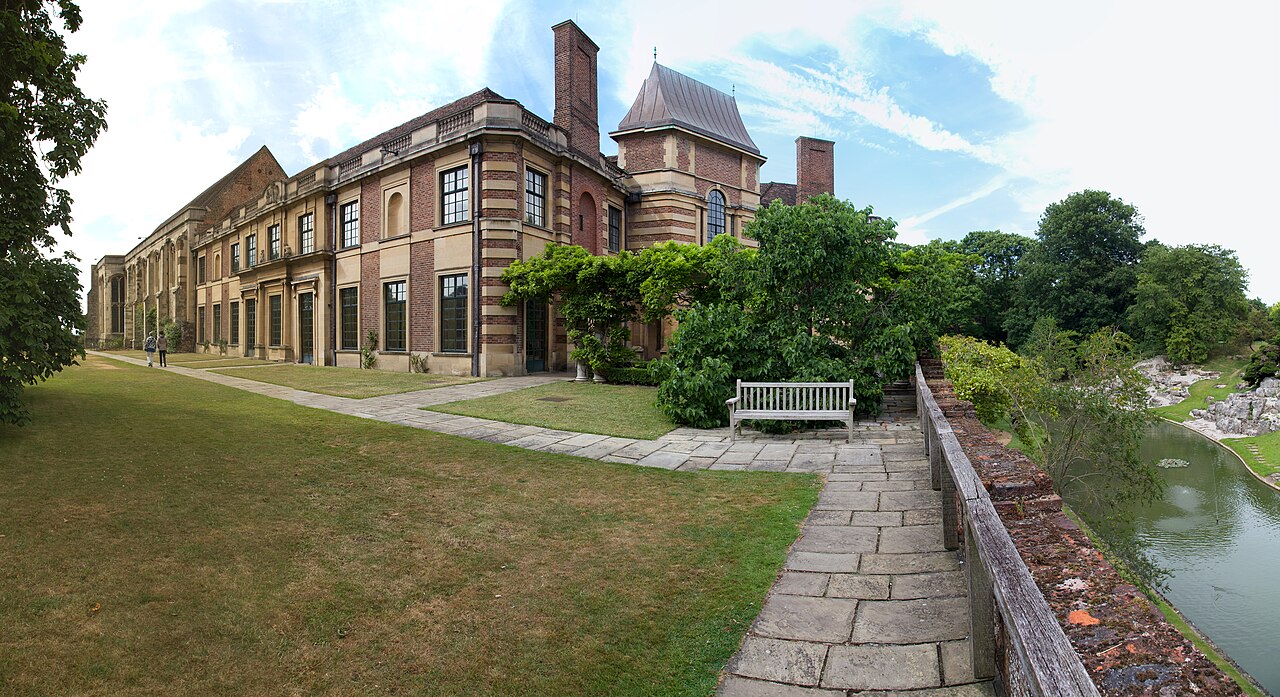
Eltham Palace is a distinctive historic site in southeast London, where a medieval royal great hall stands beside a 1930s Art Deco mansion. The medieval residence was associated with the royal court and Henry VIII’s childhood, while the twentieth-century house was created for the Courtauld family. English Heritage manages the property. The appeal is the deliberate meeting of two very different periods: Tudor associations and interwar luxury share one estate. Visitors who enjoy architecture, interiors, gardens, or unusual contrasts will find more variety here than at a single-period house. Children can engage with the spacious gardens and the dramatic medieval great hall. The Art Deco interiors may appeal less to younger visitors. Family-friendly activities vary by season and should be checked with English Heritage.
Checked 2026-08-26 · Source
Begin with the medieval great hall, whose hammerbeam roof gives the space its strongest architectural identity. The adjacent 1930s house leads through Art Deco interiors, including the entrance hall with its domed glass roof, entertaining rooms, bedrooms, and domestic spaces fitted with period conveniences. Furnishings and displays explain the Courtaulds’ lifestyle and the site’s earlier royal associations. Outside, paths lead through formal and informal gardens, while the moat remains a visible reminder of the older palace layout. The experience is strongest when the medieval and modern sections are visited together.
Checked 2026-08-26 · Source
Plan on roughly two to three hours for the main house, great hall, and gardens. The interior route rewards a steady pace because the Art Deco details are easy to miss when moving quickly. Add time for the outdoor paths, especially in good weather or when garden design is part of your interest. Families may spend longer outside than inside, while visitors focused on architecture and decorative arts may linger in selected rooms. A half-day allocation gives the site room to feel complete without forcing a long full-day commitment.
Checked 2026-08-26 · Source
The house interiors provide a worthwhile visit in any season, while the gardens benefit most from dry weather and longer daylight. Spring and summer make outdoor exploration more comfortable, but autumn can bring strong colour around the estate. Weekends and school holidays are more suitable for visitors who enjoy a livelier family atmosphere; a weekday may feel calmer. Seasonal events can change the character of the visit. Leave enough flexibility for both indoor and outdoor areas, since the contrast between them is central to Eltham Palace.
Checked 2026-08-26 · Source
Entry covers a heritage site with several connected experiences: the medieval great hall, the Art Deco house, and the surrounding gardens. English Heritage membership may provide entry benefits under its membership terms. Non-members use the property’s standard admission arrangements, with possible categories for families, concessions, or children. The price and booking conditions belong to the visit date and can vary with events or seasonal operation. Treat Eltham Palace as a substantial heritage stop rather than a quick exterior sight, because the value lies in seeing both architectural periods.
Checked 2026-08-26 · Source
Eltham Palace is in the Royal Borough of Greenwich, southeast of central London. Eltham station is served by Southeastern trains from London Charing Cross and Cannon Street, and Mottingham station also serves the surrounding area. Local buses connect the stations and neighbourhood roads with the palace area. The journey from central London takes planning because this is an outer-London excursion rather than a Westminster stop. Drivers should account for local road conditions and parking arrangements. Walking and cycling are possible, but the final approach is through residential streets and estate surroundings.
Checked 2026-08-26 · Source
The medieval areas and gardens include uneven surfaces, steps, and changing ground conditions. The moat edge requires care, especially with children. Rain can make garden paths wet and less comfortable, so shoes suited to outdoor walking are useful. Historic interiors contain delicate furnishings and narrow passages; keep children close and follow the route through the rooms. Conservation work can affect individual spaces. The combination of old masonry, stairs, and garden terrain means the visit demands more physical movement than a conventional gallery, particularly when the whole estate is explored.
Checked 2026-08-26 · Source
Eltham Palace offers two clearly different photographic subjects: the dramatic medieval great hall and the geometric Art Deco interiors. Garden paths and the moat provide wider outdoor compositions, especially in soft daylight. In the house, follow the signs and staff directions around photography, flash, tripods, and selfie sticks. Confined rooms are easier to photograph with a phone or small camera than with bulky equipment. For commercial or posed photography, separate permission is required. Give other visitors room, and avoid touching furnishings while composing close views.
Checked 2026-08-26 · Source
Yes. Children can enjoy the spacious gardens, moat setting, and dramatic medieval great hall. The Art Deco rooms are more detail-focused, so the visit works well when indoor exploration is balanced with time outside.
The principal highlights are the medieval great hall, the 1930s Art Deco house, the domed entrance hall, period rooms, and gardens surrounding the palace and moat.
Allow approximately two to three hours for the interiors, great hall, and gardens. Add time if you want to study the decorative details or walk extensively outdoors.
The site combines a medieval royal great hall with a 1930s Art Deco mansion. The contrast between the hammerbeam roof and interwar interiors is the defining feature of the visit.
Travel by Southeastern train to Eltham station or use Mottingham station, then continue through the local streets by walking or bus. The journey is an outer-London excursion and needs more time than a central landmark stop.
Wear comfortable shoes suitable for uneven paths and outdoor walking. Rain can make the garden routes wet, while the moat and historic surfaces require attentive footing.
Loading the interactive map…
The interactive map could not be loaded.
Last updated:
Source: OpenStreetMap contributors, Wikidata ·