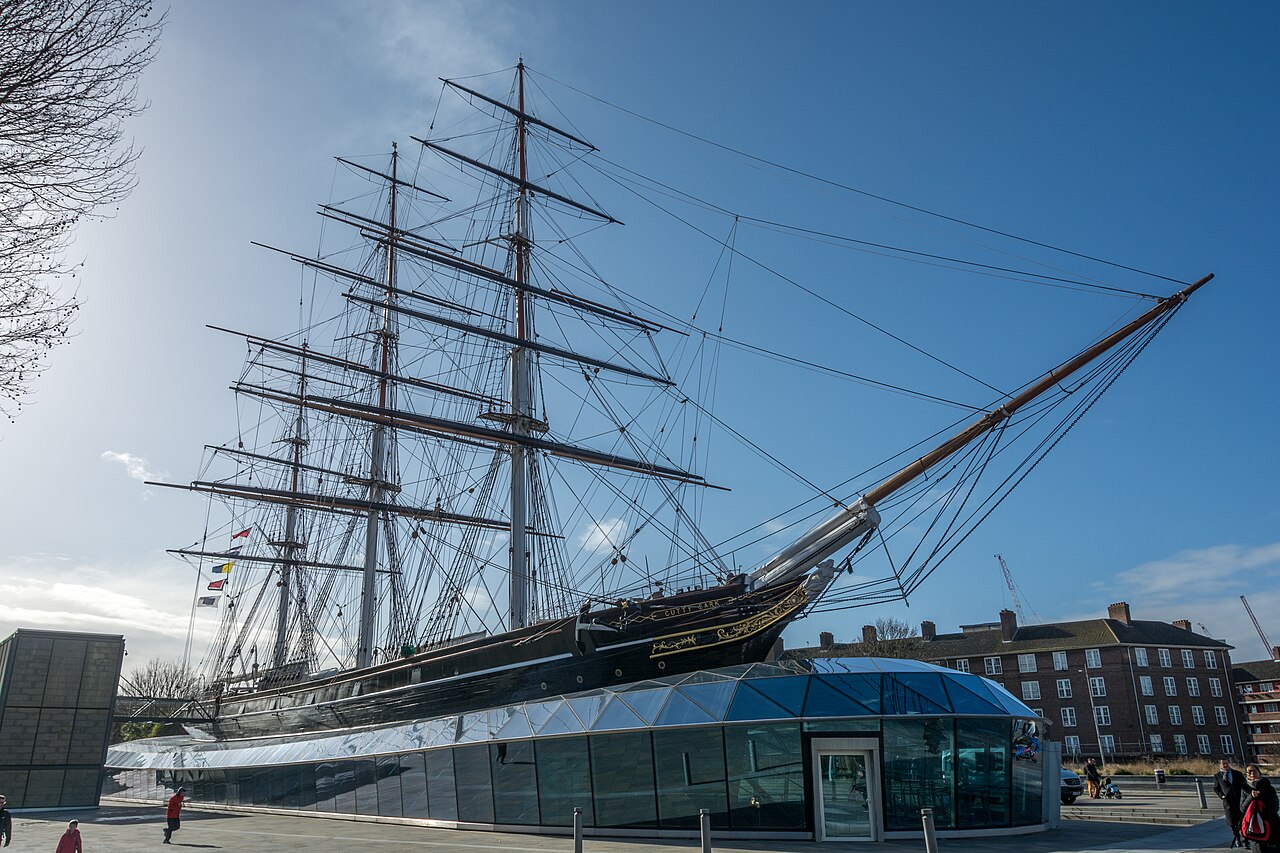
Cutty Sark is a preserved nineteenth-century clipper ship in Greenwich. Launched in 1869, she was built for the fast tea trade between China and Britain and later carried wool from Australia. The vessel represents the final great period of commercial sailing ships before steam became dominant. Her name comes from the witch Nannie Dee, known as Cutty Sark, in Robert Burns’s poem Tam o’ Shanter. Cutty Sark is a historic British clipper ship preserved in Greenwich, London. Launched in 1869, she was among the fastest tea clippers built for the China trade route. Named after a character in Robert Burns's poem Tam o' Shanter, the vessel represents the pinnacle of sailing ship design before steam power dominated maritime commerce. Now permanently dry-docked and elevated, she serves as a museum ship commemorating Britain's merchant navy heritage and the global tea trade that connected London to Asia. Cutty Sark is an original vessel launched in 1869, though she has undergone extensive conservation and restoration work throughout her preservation history, including significant reconstruction following fire damage.
The visitor route moves through the main deck, tween deck, and lower hold. Exhibits explain the ship’s cargo, crew life, navigation, voyages, and construction. Original and restored elements help show how a working clipper operated, while displays interpret the tea and wool trades that shaped her career. A gallery beneath the elevated hull lets visitors study the copper-sheathed underside, an unusual perspective on a historic ship. Visitors board the three-masted vessel to explore multiple decks including the main deck, tween deck, and lower hold. Original features and restored elements illustrate life aboard a working clipper. Exhibits cover cargo handling, crew quarters, and navigation equipment. The ship's figurehead collection and hull structure demonstrate nineteenth-century shipbuilding techniques.
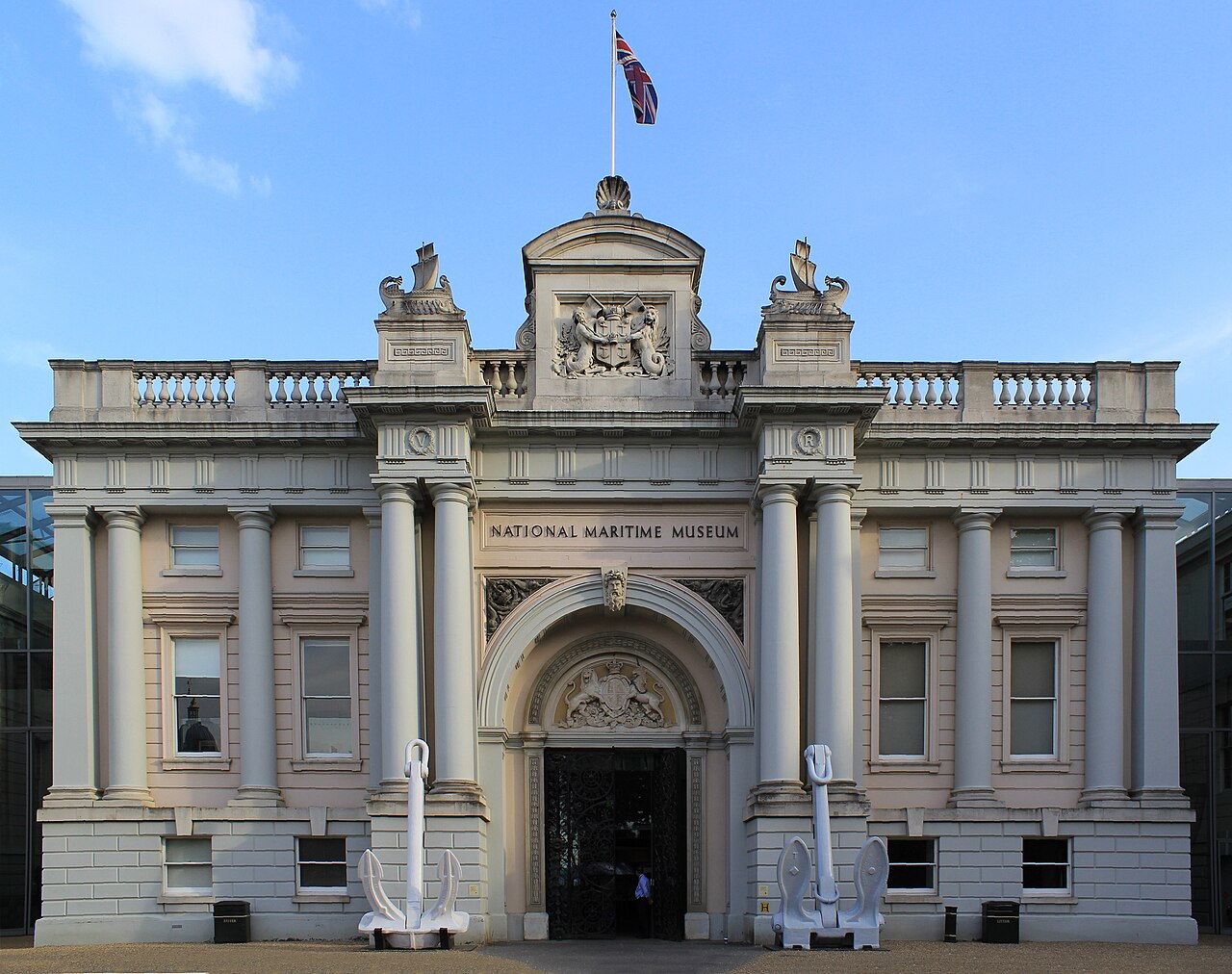
Allow one to two hours for the ship itself. The route contains several decks and a substantial amount of historical interpretation, so a quick circuit and a careful visit feel very different. Narrow passages and steep companionways can slow movement. Greenwich offers enough nearby to build a longer outing, including the National Maritime Museum and Royal Observatory. Combining the ship with those attractions turns Cutty Sark into the centre of a full Greenwich day.
Weekday mornings outside school holidays can feel calmer than peak weekend periods, when Greenwich attracts visitors from across London and beyond. The ship is dry-docked, but the approach and any queue outside remain exposed to rain and wind. Summer brings strong demand, while the surrounding maritime district stays active throughout the year. A quieter visit gives more room on the narrow decks and makes it easier to pause beside the exhibits.
Cutty Sark operates as a paying museum attraction. Visitors may encounter individual admission as well as combination arrangements connected with other Royal Museums Greenwich sites. The ship offers enough to justify a dedicated ticket, particularly for visitors interested in maritime history, sailing technology, or historic cargo routes. Family and concession arrangements may be part of the attraction’s ticket structure. The dry-docked ship and the gallery beneath the hull are included in the core experience described here.
Cutty Sark for Maritime Greenwich DLR station is the closest transport stop. Greenwich and Maze Hill provide National Rail alternatives, while Greenwich Pier is beside the riverside attraction and serves boats on the Thames. Bus routes reach the surrounding streets. The Thames Path connects the ship with Greenwich’s wider walking and cycling network. Public transport and river travel suit the location well; driving is less attractive because central Greenwich has congestion and limited convenient parking.
This is a historic ship, so expect steep staircases, low headroom, narrow passages, and confined spaces below deck. Those features can restrict movement for wheelchair users and visitors who find stairs difficult. Crowds are harder to navigate on the ship’s narrow decks. Children need close supervision near edges, drops, and the elevated hull viewing area. Original and restored surfaces are protected, so keep to the visitor route and do not touch restricted objects.
The ship’s profile, rigging, deck details, and elevated copper-sheathed hull all offer distinctive photographs. The exterior can be photographed from the surrounding public paths, while the interior provides changing light and close views of maritime construction. Personal photography is generally part of the visitor experience, but flash and equipment rules can differ between galleries. Tripods and commercial equipment may not suit the confined spaces. Follow signs and keep narrow walkways open for other visitors.

.jpg)