

28 min walk · London Borough of Southwark
The Gardens
- Notable
- Nature site
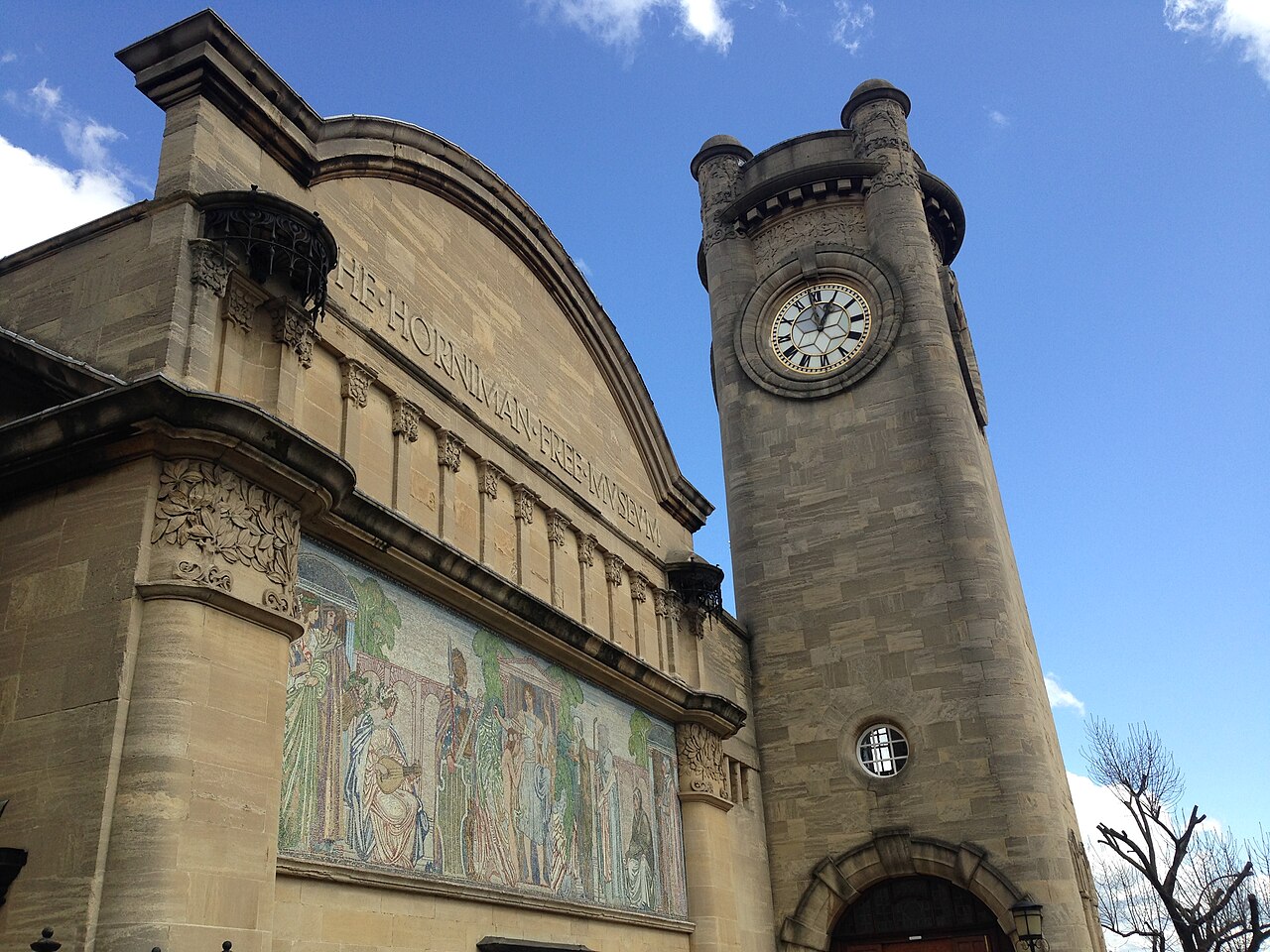
Museum · London Borough of Lewisham, London
Horniman Museum
| Monday | 10:00 – 17:30 |
|---|---|
| Tuesday | 10:00 – 17:30 |
| Wednesday | 10:00 – 17:30 |
| Thursday | 10:00 – 17:30 |
| Friday | 10:00 – 17:30 |
| Saturday | 10:00 – 17:30 |
| Sunday | 10:00 – 17:30 |
Parsed from OpenStreetMap opening hours on 2026-09-09.
Read from the OpenStreetMap access tags; anything not listed has no tag recorded.
Set the group type to family in the planner and the day window contracts to about three quarters of a solo day.
Horniman Museum and Gardens is a museum, aquarium and landscaped garden complex in Forest Hill, south London. Founded by the Victorian tea trader and collector Frederick Horniman, it brings together natural history, anthropology and music collections with outdoor spaces, a conservatory and an animal enclosure. The site sits on elevated ground, giving the gardens a distinctive relationship with the surrounding city and views across London. It works particularly well for families and travelers who want several kinds of experience in one destination: museum galleries for focused discovery, an aquarium for a shorter enclosed visit, and gardens for fresh air and movement. The hilltop setting also gives the visit a sense of departure from central London, even though the museum remains within the capital's urban transport network.
Checked 2026-08-26 · Source
The galleries cover natural history, anthropology and musical instruments from cultures around the world. The natural history collection includes the famous overstuffed walrus, whose unusual appearance has made it the museum's best-known object. The aquarium presents aquatic environments from different global ecosystems, while the music gallery brings instruments from many traditions into the same visit. Outside, the gardens include a bandstand, animal enclosure and the Grade II listed conservatory. Temporary exhibitions add changing subjects to the permanent displays, and educational activities connect the collections with family and school audiences. Plan the visit as a sequence of contrasts: begin with the museum's objects and stories, move to the aquarium, then use the gardens and conservatory to slow the pace. The hilltop grounds are not simply an afterthought; they are a major part of the Horniman experience.
Checked 2026-08-26 · Source
A full visit usually takes several hours. Allow ninety minutes to two hours for the main galleries if you want to engage with both permanent and temporary displays. The aquarium adds roughly thirty to forty-five minutes, while the gardens, conservatory and animal enclosure can add another hour or more. Families may stay longer because outdoor areas and interactive elements create natural pauses between galleries. Visitors with a narrower interest can create a shorter visit by choosing the walrus and natural history displays, the aquarium or the music gallery as their main focus. A relaxed half-day plan leaves room for the gardens and for a break after the indoor collections. The site rewards an unhurried rhythm, especially when weather allows time outside on the hilltop. Avoid treating the museum as a quick gallery stop if you want to experience the grounds as well.
Checked 2026-08-26 · Source
Choose the season according to the balance you want between indoor collections and outdoor gardens. Mild weather makes the hilltop paths, conservatory and London views especially enjoyable, while the indoor museum and aquarium provide shelter when conditions are poor. Weekends and school holidays bring more families and a livelier atmosphere, particularly around interactive displays and the aquarium. A weekday visit can make it easier to move slowly through the galleries and spend time with individual objects. The gardens change character through the year, from spring growth to autumn colour, so repeat visits can feel different even when the permanent collections remain familiar. Because weather affects a substantial part of the destination, allow flexibility in the order of indoor and outdoor areas. The elevated site can feel exposed, making a coat or sun protection useful when you plan to stay outside.
Checked 2026-08-26 · Source
The museum has historically offered free general admission, while the aquarium and some special exhibitions may use separate charges. Treat the main museum, aquarium and temporary displays as distinct elements when planning the cost of the day. Donations support the institution, and family activities or educational programming can add another structured part to the visit. The destination's combination of free-access areas and potentially ticketed features suits travelers with different budgets, but the main value does not depend on seeing every component. If time is limited, the galleries and gardens still create a complete outing. A longer stay can add the aquarium, conservatory and animal enclosure. The hilltop location also makes the museum a destination rather than a brief stop between central attractions, so plan for the journey and for the time needed to move between indoor and outdoor areas.
Checked 2026-08-26 · Source
Forest Hill station provides the nearest named rail connection, with London Overground and Southern services. The museum is within walking distance of the station, although the elevated position becomes noticeable during the final approach. Bus routes serve the surrounding streets and are useful when you want to reduce the uphill walk. The area has limited parking, so public transport is the simplest choice for most visitors. Cycling is feasible on local routes, but the approach includes hilly terrain. Build a little extra time into the journey if traveling with young children, a pushchair or bulky equipment. Once you reach the museum, the gardens and hilltop setting make the walk part of the transition into the destination. The site is in Forest Hill rather than central London, so combine it with nearby south London places instead of trying to fit it between closely spaced central attractions.
Checked 2026-08-26 · Source
The hilltop position exposes the gardens to wind, sun and rain, and gradients on the paths can be demanding for visitors with limited mobility. The indoor galleries and aquarium offer a useful change of pace, but moving between them and the outdoor spaces requires attention to weather and terrain. The overstuffed walrus reflects Victorian taxidermy practices, while other objects connect with colonial-era collecting histories that are addressed through modern interpretation. Some displays may prompt difficult questions about how collections were formed. Children's zones can be noisy, especially during busy family periods. Food and drink restrictions apply in gallery spaces, and personal belongings need attention in crowded areas. Plan pauses between the museum, aquarium and gardens rather than expecting one continuous indoor route. The destination is broad and varied, so a realistic visit includes time for orientation and rest.
Checked 2026-08-26 · Source
The museum, aquarium, conservatory and gardens offer very different photographic opportunities. In the galleries, follow the signs for each space because photography rules can differ between permanent collections and temporary exhibitions. Flash is restricted around sensitive objects, and commercial equipment requires institutional authorisation. Tripods and selfie sticks can obstruct narrow routes or disturb other visitors, especially near popular displays such as the walrus. Outside, the gardens, listed conservatory, bandstand, animal enclosure and London skyline provide varied subjects. Weather can change the quality of the hilltop view and the character of the grounds, so outdoor photographs benefit from a flexible pace. Keep people moving through shared paths and give animals appropriate space. The best record of the visit usually combines one or two memorable objects with the broader relationship between museum, garden and city.
Checked 2026-08-26 · Source
The overstuffed walrus in the natural history gallery is the museum's best-known exhibit and an emblem of the institution.
Travel to Forest Hill station on London Overground or Southern services, then walk to the museum. Bus routes also serve the surrounding area.
Children can explore natural history displays, the aquarium, gardens, an animal enclosure and interactive educational elements.
The collections cover natural history, anthropology and musical instruments, with permanent galleries and temporary exhibitions.
The grounds include gardens, a bandstand, an animal enclosure, a Grade II listed conservatory and views across London from the elevated site.
Plan several hours for the galleries, aquarium and gardens; a comprehensive visit can fill a relaxed half day.
Loading the interactive map…
The interactive map could not be loaded.
Last updated:
Source: OpenStreetMap contributors, Wikidata ·