.jpg)

8 min walk · London Borough of Lambeth
Vauxhall Gardens
- Must see
- Nature site
Language · 11 published
Art and culture venue · City of Westminster, London
Reviewed by Elena Voss · Roavina Travel Editor
| Monday | 10:00 – 18:00 |
|---|---|
| Tuesday | 10:00 – 18:00 |
| Wednesday | 10:00 – 18:00 |
| Thursday | 10:00 – 18:00 |
| Friday | 10:00 – 18:00 |
| Saturday | 10:00 – 18:00 |
| Sunday | 10:00 – 18:00 |
Parsed from OpenStreetMap opening hours on 2026-09-09.
Read from the OpenStreetMap access tags; anything not listed has no tag recorded.
Set the group type to family in the planner and the day window contracts to about three quarters of a solo day.
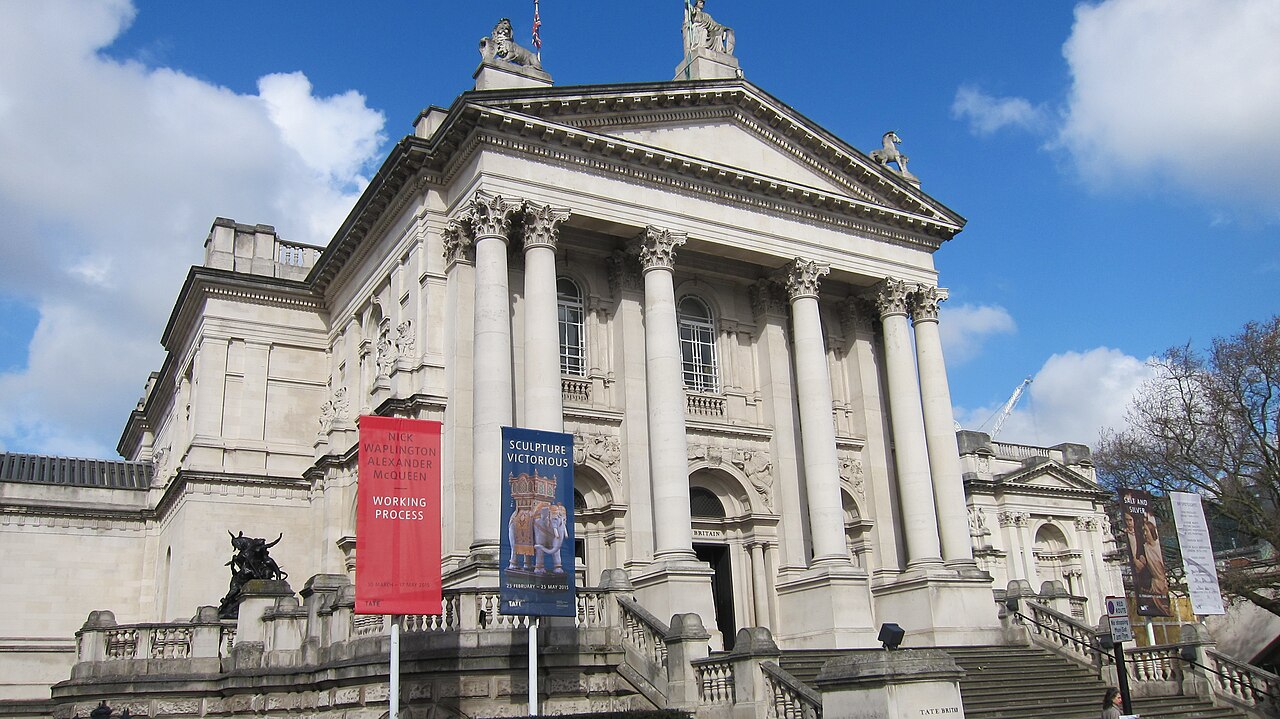
This place is a Art gallery. It opened in 1897. It was designed by Sidney R. J. Smith. It carries the Grade II* listed building heritage designation.
Tate Britain is London’s national gallery of British art, with works dating from the sixteenth century to the present. The gallery stands beside the Thames on Millbank, in a building associated with the original Tate Gallery. Its programme combines displays from the permanent collection with temporary exhibitions, making it useful for both first-time visitors seeking an overview and returning visitors following a particular artist, period, or theme. Tate Britain is the national gallery of British art in London. It houses a substantial collection spanning from the 1500s to the present day. The institution occupies a prominent riverside position on Millbank, facing the Thames. The building itself is a notable piece of architecture that has been adapted and expanded over time. It serves as one of four Tate galleries across the United Kingdom. The venue presents both permanent holdings and temporary exhibitions dedicated to British artistic traditions. No. Tate Britain and Tate Modern are separate institutions. Tate Britain focuses on British art from 1500 to the present and occupies the original Tate Gallery building on Millbank. Tate Modern, located at Bankside in a former power station, specialises in international modern and contemporary art.
Checked 2026-08-26 · Source
The galleries contain paintings, sculpture, works on paper, and other forms of British art across several centuries. Visitors can move from Tudor and later historical works toward modern and contemporary practice. J.M.W. Turner has a particularly important presence, including displays in the Clore Gallery. The building also includes exhibition rooms, learning spaces, and visitor facilities. Temporary exhibitions add focused presentations alongside the broad chronological and thematic collection displays. The gallery contains British art across multiple centuries, including paintings, sculptures, and works on paper. Visitors encounter pieces from the Tudor period through contemporary creations. The collection includes significant works by J.M.W. Turner, displayed in the Clore Gallery. Historical and modern British artists are represented throughout. The building contains various display spaces, learning areas, and facilities for visitors. Temporary exhibitions rotate through dedicated galleries.
Checked 2026-08-26 · Source
Two to four hours gives most visitors time to explore selected collection displays without rushing. A visit centred on Turner or another specific artist can be shorter, while the full collection and a temporary exhibition may fill much of a day. The gallery’s scale rewards choosing a few priorities before entering. Leave room for slower viewing: paintings and works on paper often need more attention than a quick room-by-room walk allows.
Checked 2026-08-26 · Source
Weekends, school holidays, and the opening period of major temporary exhibitions usually bring more visitors. Morning visits can provide calmer rooms, while weekday periods outside school breaks may suit visitors who want longer pauses before popular works. Tate Britain is an indoor attraction that works in every season. Its riverside setting also makes it easy to combine with a walk toward Westminster or other parts of central London after the galleries.
Checked 2026-08-26 · Source
Tate Britain’s permanent collection and temporary exhibitions can follow different admission arrangements. Some temporary exhibitions require separate tickets, while the collection displays provide a substantial visit in their own right. Visitors interested in a particular exhibition should include its ticket in the day’s planning. The gallery’s broad permanent holdings also make it possible to spend a rewarding afternoon without building the entire visit around one paid display.
Checked 2026-08-26 · Source
Pimlico is the nearest Underground station, served by the Victoria line. Bus routes run along the surrounding central London streets, and the riverside position makes walking from Westminster practical for many visitors. Victoria is another useful rail and Underground connection, though the walk is longer. Cycling can be combined with nearby docking facilities. Central London traffic and limited parking make public transport or walking more convenient than arriving by car.
Checked 2026-08-26 · Source
Tate Britain occupies an older, multi-level building, so visitors who need step-free movement should plan around the available lift routes. Security restrictions can affect bags, and food and drink belong outside the display spaces. Photography rules may change between collection rooms and temporary exhibitions. Weekday school groups can make some galleries lively. The art spans difficult historical periods and themes, so individual works may contain material that some visitors find challenging.
Checked 2026-08-26 · Source
Some permanent collection rooms permit non-flash photography for personal use, while temporary exhibitions can impose tighter restrictions because of loan agreements and artist rights. Check the signs in each room before taking a photograph. Tripods, selfie sticks, and professional equipment may interfere with visitor movement and are not suitable for every gallery. Commercial photography needs separate permission. The architecture, long gallery views, Turner displays, and varied British collection make the visit rewarding even when photographs are limited.
Checked 2026-08-26 · Source
Tate Britain presents British art from the sixteenth century to the present, including paintings, sculpture, works on paper, and contemporary pieces.
No. Tate Britain focuses on British art, while Tate Modern at Bankside focuses on international modern and contemporary art.
Two to four hours suits the main collection displays. A temporary exhibition or a detailed visit focused on Turner can extend the stay.
Pimlico is the nearest Underground station, served by the Victoria line. Walking from Westminster is also practical for many visitors.
Yes. J.M.W. Turner has a particularly important presence at Tate Britain, including displays in the Clore Gallery.
Some permanent collection rooms permit non-flash personal photography, but temporary exhibitions can have stricter rules. Room signage takes priority.
Loading the interactive map…
The interactive map could not be loaded.
Last updated:
Source: OpenStreetMap contributors, Wikidata ·