
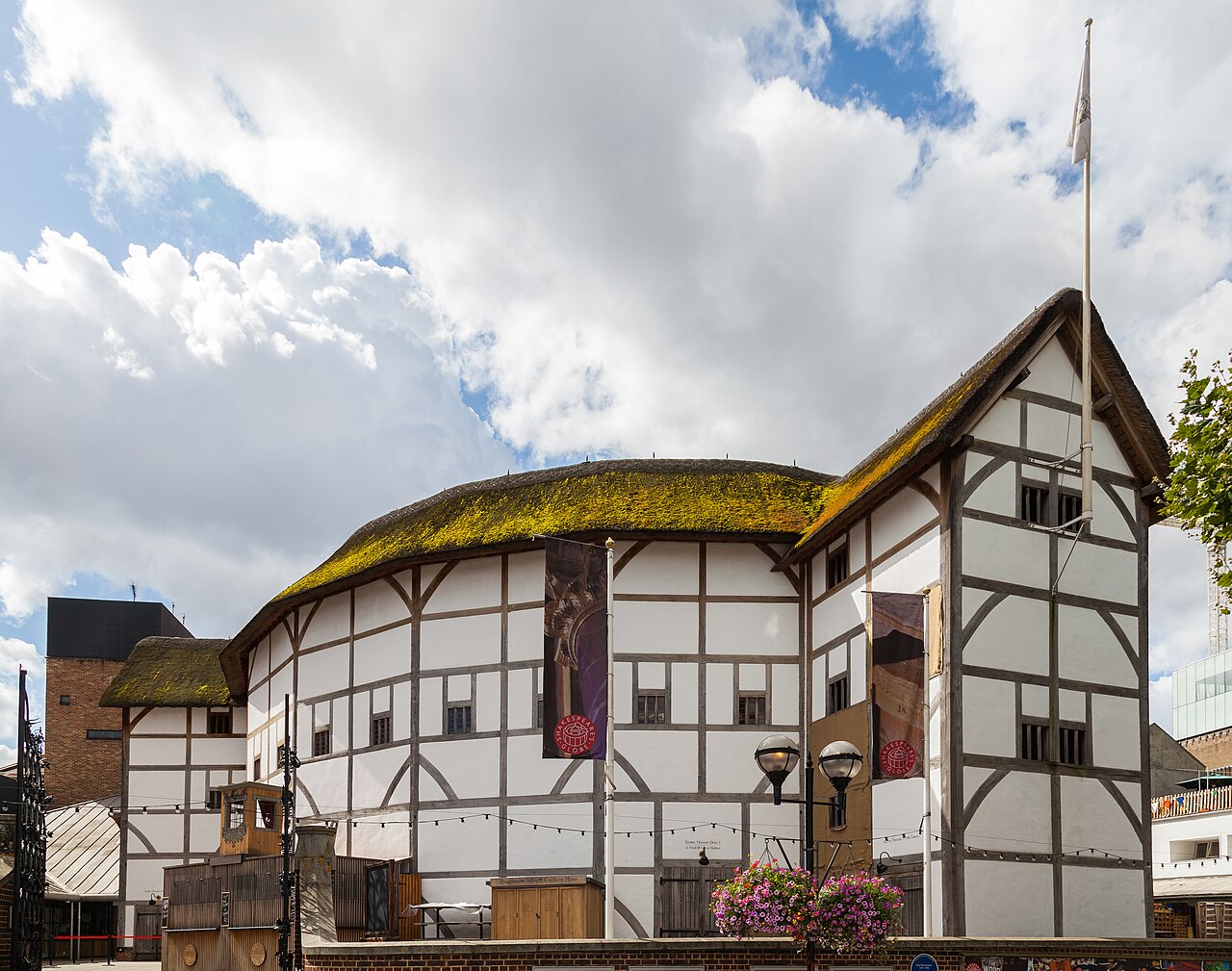
3 min walk · London Borough of Southwark
Shakespeare's Globe
- Must see
- Historic monument
Language · 11 published
Art and culture venue · London Borough of Southwark, London
Editorial responsibility: Elena Voss · Roavina Travel Editor

| Monday | 10:00 – 18:00 |
|---|---|
| Monday |
Closed
Valid 2026-12-24 – 2026-12-26 |
| Tuesday | 10:00 – 18:00 |
| Tuesday |
Closed
Valid 2026-12-24 – 2026-12-26 |
| Wednesday | 10:00 – 18:00 |
| Wednesday |
Closed
Valid 2026-12-24 – 2026-12-26 |
| Thursday | 10:00 – 18:00 |
| Thursday |
Closed
Valid 2026-12-24 – 2026-12-26 |
| Friday | 10:00 – 21:00 |
| Friday |
Closed
Valid 2026-12-24 – 2026-12-26 |
| Saturday | 10:00 – 21:00 |
| Saturday |
Closed
Valid 2026-12-24 – 2026-12-26 |
| Sunday | 10:00 – 18:00 |
| Sunday |
Closed
Valid 2026-12-24 – 2026-12-26 |
Checked 2026-09-25 · Source
Read from the OpenStreetMap access tags; anything not listed has no tag recorded.
Set the group type to family in the planner and the day window contracts to about three quarters of a solo day.
This place is a Art gallery. It opened in 2000. It was designed by de Meuron.
Tate Modern occupies the former Bankside Power Station, converted into an art gallery by Herzog & de Meuron. The conversion is part of the reason to visit: the building tells a story about changing uses for London's industrial architecture, alongside the art displayed inside.
Tate's project archive records how the power station was stripped back to its steel structure and brickwork during the 1990s. The transformation included removing machinery, rebuilding the roof and bringing light into the Turbine Hall from above. Artworks began arriving in January 2000, and Queen Elizabeth II formally opened the gallery on 11 May that year. Looking at the Turbine Hall before entering the exhibition rooms gives the visit a useful starting point: this was a working industrial interior before it became a setting for art.
Checked 2026-09-25 · Source
Start with a few works from Tate Modern's own collection highlights, then choose which kinds of art to explore further. The museum's selection ranges from painting and screenprints to installations made with sound and moving images; it offers several different ways into modern art.
Mark Rothko's Seagram paintings and Andy Warhol's Marilyn Diptych appear in the In the Studio displays. Duchamp's Fountain, a 1964 replica of the 1917 work, provides a different starting point: an ordinary manufactured object presented as sculpture. Cildo Meireles's Babel builds a tower from radios tuned to different stations, making listening part of looking. Tate's highlights page gives the display and room for each work. Use that list to locate your priorities on the day rather than treating every name in the wider collection as a promise of something on view.
Checked 2026-09-25 · Source
Choose a small number of works before deciding how long to spend at Tate Modern. A visit built around close looking will feel different from a quick walk through many rooms, even when both use the same amount of time. Tate's own slow-looking guide suggests ten minutes with an artwork as a starting exercise, with shorter or longer periods equally possible.
For a first visit, try that exercise with Rothko's Red on Maroon, which Tate includes among its slow-looking suggestions and identifies as part of In the Studio at Tate Modern. Notice its material, colour and shape before reading more, then look again to see what has changed in your response. Leave room in your plan for this pause instead of measuring success by the number of rooms completed. This is a way to structure your time, not an official minimum or a promise that the whole gallery can be covered in a fixed duration.
Checked 2026-09-25 · Source
Friday and Saturday offer Tate Modern's longest regular visiting window: 10.00–21.00. The main visitor page lists 10.00–18.00 for Sunday through Thursday, with building entry ending 30 minutes before closing. An evening visit can therefore fit after daytime sightseeing on either of the two later-opening days.
Check the main visitor page again before travelling, particularly when planning around its final admission time. The building schedule and a booked exhibition slot are different parts of the plan; arriving shortly before the gallery closes leaves little time to look at art.
Checked 2026-09-25 · Source
Tate Modern's collection can be visited without paying or reserving a free entry slot. Temporary exhibitions require their own booking unless an applicable membership benefit covers admission. Decide whether your visit is for the collection or for a particular exhibition before choosing a ticket.
Exhibition bookings have 15-minute entry windows. Tate says visitors cannot enter before the time printed on the ticket; once inside, they can remain within gallery opening hours, but leaving ends the visit because re-entry is not allowed. Exhibition admission normally finishes one hour before the gallery closes. Complete any food or toilet break before entering, and check the chosen exhibition's booking page for its price and available slots.
Checked 2026-09-25 · Source
Tate Modern is on Bankside, London SE1 9TG. For rail arrivals, Tate gives a distance of 300 metres from Blackfriars station's south exit, compared with 800 metres from its north exit. Check the exit as well as the station name when planning your approach.
Southwark Underground station on the Jubilee line is about 600 metres away. Blackfriars Underground, served by the District and Circle lines, is about 800 metres away. Consult Transport for London for service changes before setting out.
Checked 2026-09-25 · Source
Arrange storage before arriving with luggage larger than 55 × 40 × 20 centimetres: Tate does not allow oversized bags into the building. Expect a bag check and leave time for it before a booked visit. Paid lockers are in the Blavatnik Building on Level 0; the former Natalie Bell Building cloakroom has closed.
Inside the galleries, keep food and drink packed away and do not touch the artworks. In busy exhibitions staff may ask you to carry a backpack instead of wearing it. Photography also has equipment restrictions, so check the rules before bringing a camera support.
Checked 2026-09-25 · Source
Personal photography is generally permitted at Tate Modern unless a sign says otherwise. Switch off flash and leave selfie sticks and camera supports behind; Tate prohibits all three. Read any restriction beside an individual work before taking the picture.
Professional equipment and commercial shoots require advance permission. The gallery also asks visitors to obtain consent before photographing or filming other people. Keep the route clear while composing a shot, especially where someone else is stopping to view the same work.
Checked 2026-09-25 · Source
The collection is free and needs no reservation. Book separately for a temporary exhibition; Tate Members do not need an exhibition booking.
No. Tate does not allow re-entry after you leave a ticketed exhibition. Once admitted, you may stay within gallery hours.
Yes. Tate's visual visitor guide lists 24–26 December as closure dates.
Yes. Tate welcomes buggies in the galleries and says every entrance is accessible with a buggy.
Tate's visual guide identifies quiet rooms on Levels 2 and 4 of the Natalie Bell Building. Ask a Visitor Engagement Assistant to help you find one; staff can also provide ear defenders.
Tate's visual guide places toilets opposite the escalators in the Natalie Bell Building and around the corner from the lifts in the Blavatnik Building.
Loading the interactive map…
The interactive map could not be loaded.
Last updated:
Source: OpenStreetMap contributors, Wikidata ·