
2 min walk · City of Westminster
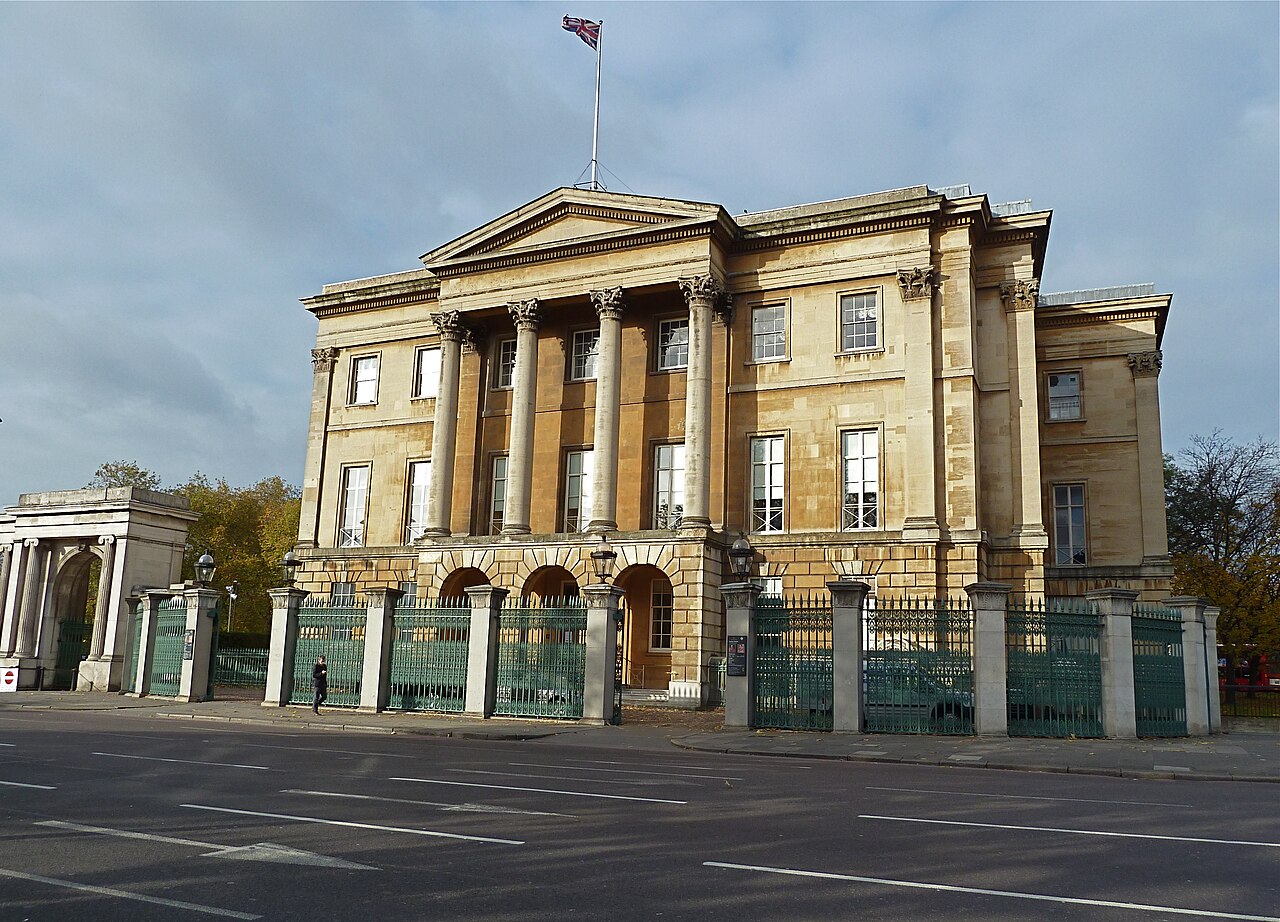
Apsley House
- Notable · Heritage site
- Museum
Historic monument · City of Westminster, London
| Monday |
Closed
Valid 2026-04-01 – 2026-10-31 |
|---|---|
| Monday |
Closed
Valid 2026-11-01 – 2027-03-31 |
| Tuesday |
Closed
Valid 2026-04-01 – 2026-10-31 |
| Tuesday |
Closed
Valid 2026-11-01 – 2027-03-31 |
| Wednesday |
10:00 – 17:00
Valid 2026-04-01 – 2026-10-31 |
| Wednesday |
10:00 – 16:00
Valid 2026-11-01 – 2027-03-31 |
| Thursday |
10:00 – 17:00
Valid 2026-04-01 – 2026-10-31 |
| Thursday |
10:00 – 16:00
Valid 2026-11-01 – 2027-03-31 |
| Friday |
10:00 – 17:00
Valid 2026-04-01 – 2026-10-31 |
| Friday |
10:00 – 16:00
Valid 2026-11-01 – 2027-03-31 |
| Saturday |
10:00 – 17:00
Valid 2026-04-01 – 2026-10-31 |
| Saturday |
10:00 – 16:00
Valid 2026-11-01 – 2027-03-31 |
| Sunday |
10:00 – 17:00
Valid 2026-04-01 – 2026-10-31 |
| Sunday |
10:00 – 16:00
Valid 2026-11-01 – 2027-03-31 |
Parsed from OpenStreetMap opening hours on 2026-09-09.
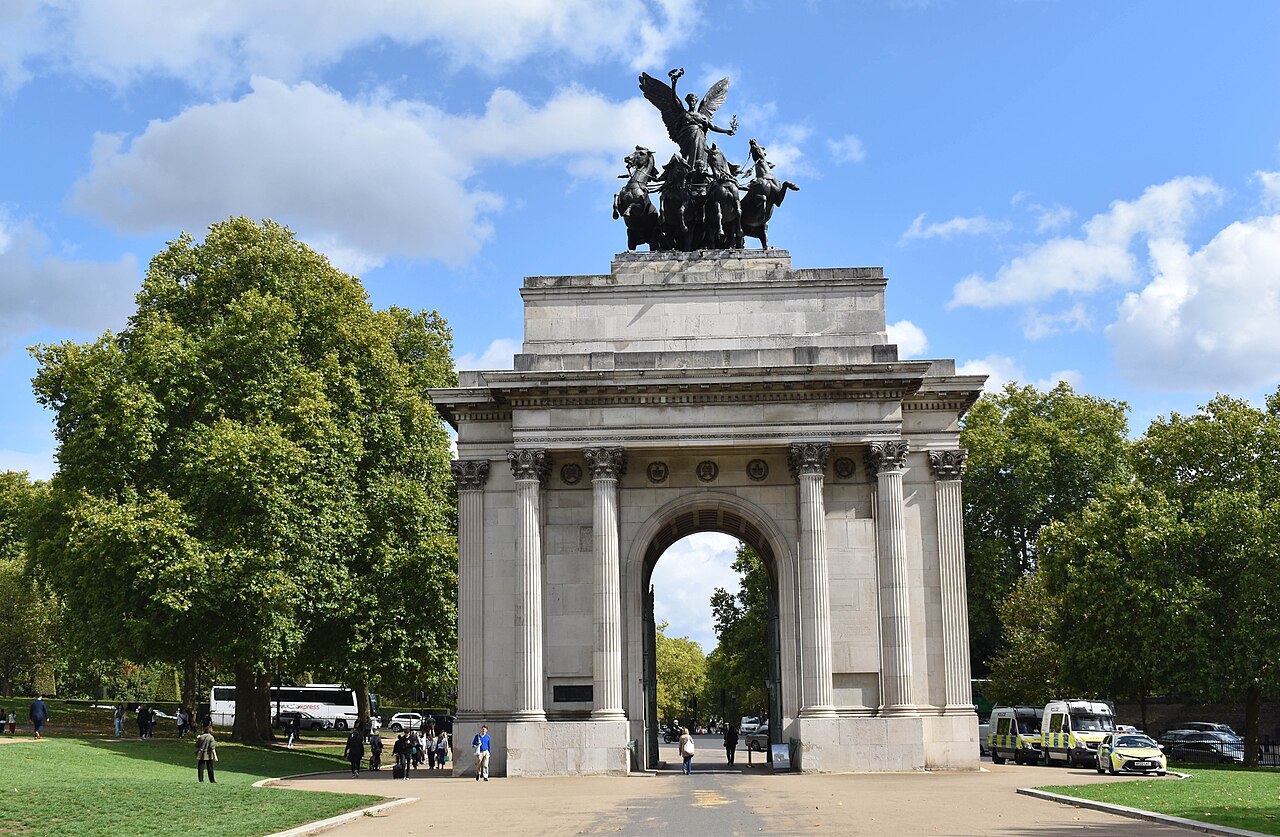
Wellington Arch is a triumphal arch at Hyde Park Corner in central London. Built to commemorate victories in the Napoleonic Wars, it was first conceived as an outer gateway to Buckingham Palace before being moved to its present position in 1882. A bronze quadriga crowns the structure: Peace descends in a chariot of War. Green Park, Constitution Hill, Hyde Park and Buckingham Palace surround this busy landmark. Wellington Arch is a triumphal arch located in central London, at Hyde Park Corner. It was originally conceived as an outer gateway to Buckingham Palace but was repositioned in 1882. The arch commemorates victories in the Napoleonic Wars and is topped by a bronze quadriga sculpture depicting Peace descending on the chariot of War. It stands as a significant London landmark at a busy traffic intersection, with Constitution Hill to one side and Green Park to the other. The exterior is visible without charge from surrounding streets.
Checked 2026-08-26 · Source
The arch contains exhibition spaces on several levels and balconies with elevated views over the surrounding streets and parks. Interior displays explain the monument’s construction and historical significance, while the quadriga remains the most striking feature outside. The compact rooms make this a focused heritage stop rather than a large museum visit. Pair the interior with an external circuit around Hyde Park Corner to understand how the arch sits within London’s ceremonial landscape. The arch contains exhibition spaces across multiple levels, including balconies offering views of the surrounding area. Visitors can access interior rooms that display historical information about the monument's construction and significance. The quadriga sculpture by Adrian Jones, featuring a winged figure of Peace, is a notable external feature. A flexible visit lets travellers connect Wellington Arch with the rest of the day without treating one room, viewpoint or photograph as the whole experience.
Checked 2026-08-26 · Source
Allow thirty minutes to one hour for the interior, balconies and historical displays. Travellers interested mainly in the exterior can photograph the arch more quickly, while visitors who want to read the displays and take in the elevated views should use the longer estimate. Its brief duration makes Wellington Arch easy to combine with Buckingham Palace, Green Park, Constitution Hill or Hyde Park without taking over the whole day.
Checked 2026-08-26 · Source
The exterior can be seen from the surrounding streets at any time, while the indoor visit fits best into daylight sightseeing around Hyde Park Corner. Clear weather improves the balcony views across central London, and quieter periods make the small interior spaces easier to enjoy. Traffic remains heavy around the junction, so allow time for designated crossings. A morning or late-afternoon route can combine the arch with Green Park and Constitution Hill.
Checked 2026-08-26 · Source
The outside of Wellington Arch is visible without charge from the surrounding public streets. Entering the exhibition spaces and balconies is a separate heritage visit associated with English Heritage, with admission arrangements and concessions applying to the interior. The monument’s compact scale means an exterior viewing stop still gives you the essential silhouette, quadriga and position at Hyde Park Corner even when you are following a short central London itinerary.
Checked 2026-08-26 · Source
Hyde Park Corner Underground station on the Piccadilly line is the nearest Tube station. Bus routes stop around the major interchange, and the arch is walkable from Buckingham Palace, Green Park, Constitution Hill and Knightsbridge. Use designated pedestrian crossings because the monument stands within a complex traffic junction. Cycling through the surrounding roads requires attention to fast-moving traffic. Public transport and walking are more convenient than driving in this central location.
Checked 2026-08-26 · Source
Wellington Arch stands amid a major traffic roundabout, with moving vehicles on every side. Cross only at designated points and keep children close while approaching. The internal route uses narrow staircases between levels, and the balconies are exposed to wind and rain. Street noise continues throughout the visit. Crowds can gather around the monument, so take time with the crossing and do not treat the road layout as a simple open square.
Checked 2026-08-26 · Source
The quadriga gives Wellington Arch its most distinctive photographic subject, especially when framed against the sky from the surrounding pavements. Exterior viewpoints reveal the full stone structure, while the balconies offer raised views towards Constitution Hill, Green Park and central London. Traffic can interrupt compositions, so patience helps. Morning and evening light change the appearance of the stone and bronze. Interior photography and tripod use should follow the conditions in force inside the monument.
Checked 2026-08-26 · Source
It stands at Hyde Park Corner in central London, between Green Park, Constitution Hill and Hyde Park.
A bronze quadriga crowns the arch, showing Peace descending in a chariot of War.
Yes. The monument has exhibition spaces on several levels and balconies with views over central London.
Hyde Park Corner on the Piccadilly line is the nearest Underground station.
The arch was repositioned at Hyde Park Corner in 1882.
Buckingham Palace, Green Park, Constitution Hill, Hyde Park and Knightsbridge are all within the surrounding central London area.
Loading the interactive map…
The interactive map could not be loaded.


Last updated:
Source: OpenStreetMap contributors, Wikidata ·