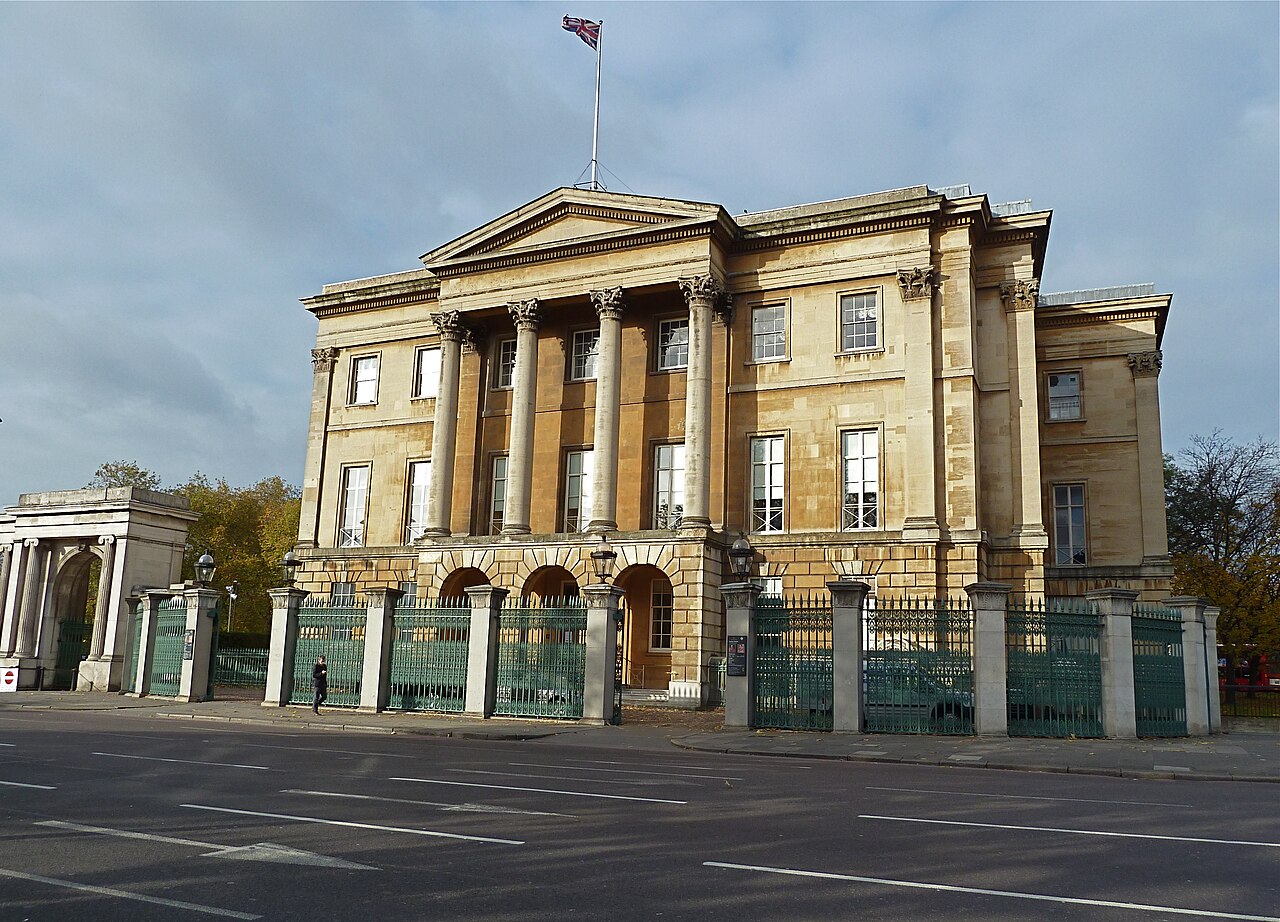
This place is a Museum.
It was built in the Georgian architecture style.
It was designed by Robert Adam.
It is built of Bath Stone.
It carries the Grade I listed building heritage designation.
It is run by English Heritage.
Apsley House is a Georgian townhouse at Hyde Park Corner, also known as Number One, London. It became the London home of Arthur Wellesley, the first Duke of Wellington, whose military career included victory over Napoleon at Waterloo. The house now presents Wellington’s life, status, and connections through its architecture and collections. Its central location makes it an easy addition to a walk between Hyde Park, Green Park, Buckingham Palace, and Knightsbridge. The experience is intimate and focused, with the character of a preserved aristocratic residence rather than a large museum.
The rooms contain paintings by Old Masters, silver, porcelain, military memorabilia, gifts from European monarchs, and personal objects connected with Wellington. Period interiors show how an influential nineteenth-century aristocrat lived and entertained. The collections also reveal the political and cultural relationships surrounding his military career. Look for the relationship between the townhouse rooms and the objects displayed within them: decorative arts, portraits, and military material together build the story. Apsley House is compact, so individual works and furnishings can receive closer attention than they might in a larger national collection.
Most visitors need around one to two hours for the townhouse rooms and collections. The visit is compact, but the objects reward close looking, particularly for travellers interested in military history, European diplomacy, portraiture, or decorative arts. Move more slowly if you want to examine the Old Master paintings, silver, porcelain, and Wellington memorabilia in detail. Because the house is concentrated rather than extensive, it combines well with Hyde Park or Buckingham Palace. Allow extra walking time if you continue through the surrounding parks after leaving.
Apsley House works in every season because the main experience is indoors. A weekday morning may provide a calmer atmosphere in the compact rooms, while weekends and school holidays can bring more activity around Hyde Park Corner. Seasonal operation and occasional closures can affect the visit. The central position makes timing easy to combine with nearby landmarks, but the traffic around Hyde Park Corner remains busy throughout the day. Choose a time that leaves room for a measured interior visit rather than treating the house as a quick photograph from outside.
Admission provides access to a compact historic townhouse and its Wellington collections. Standard visitor categories may include adults, children, and concessions, with membership or reciprocal arrangements depending on the relevant organisation. Special events or guided experiences can have separate conditions. The house is most worthwhile for visitors who want to enter the rooms and study the objects, since the exterior alone cannot convey the collection. Treat the admission as part of a central London heritage walk, pairing it with the royal parks and nearby monuments rather than allocating an entire day to the property.
Apsley House stands at Hyde Park Corner in central London, with Hyde Park Corner Underground station immediately serving the area. Bus routes run along Piccadilly, Knightsbridge, and the roads around the park. The house is within walking distance of Green Park, Buckingham Palace, and the western edge of Mayfair. Cycling is possible using nearby London cycle-hire facilities. Driving is inconvenient because traffic is heavy and central-road restrictions and limited parking add difficulty. On foot, use the crossings carefully around the busy junction and allow time for the surrounding pedestrian traffic.
The townhouse format brings staircases, narrow passages, and historic surfaces rather than the open circulation of a modern gallery. Rooms can feel confined when visitor numbers rise, so move steadily and keep clear of doorways. Do not touch furniture, artwork, porcelain, silver, or architectural finishes. Bag restrictions and room-by-room photography rules may apply. Children need supervision around delicate objects. The preserved sequence of rooms is central to the experience, so follow the intended route and staff directions. Plan realistically if anyone in your group finds stairs or tight spaces difficult.
Apsley House offers photographs of Georgian interiors, Wellington memorabilia, portraits, silver, porcelain, and paintings by Old Masters. The compact rooms make a phone or small camera easier to use than large equipment. Follow every room’s signs and staff directions regarding flash, tripods, selfie sticks, and restricted objects. Soft natural light can help reveal furnishings without harsh reflections, but interior conditions vary. Commercial photography requires separate permission. Keep moving when a room is busy, avoid blocking narrow passages, and place preservation requirements above the desire for a particular image.
Apsley House became the London home of Arthur Wellesley, the first Duke of Wellington, the military commander associated with victory over Napoleon at Waterloo.
What can I see inside Apsley House?
The collections include Old Master paintings, silver, porcelain, military memorabilia, gifts from European monarchs, period rooms, and objects connected with Wellington’s life and career.
How long should I spend at Apsley House?
Allow approximately one to two hours. The townhouse is compact, but visitors interested in military history, fine art, or decorative objects may prefer a slower visit.
Where is Apsley House?
It stands at Hyde Park Corner in central London, near Green Park, Buckingham Palace, Knightsbridge, and the western edge of Hyde Park.
Can I combine Apsley House with other London landmarks?
Yes. Its position makes it convenient to combine with Hyde Park, Green Park, Buckingham Palace, Knightsbridge, and nearby central-London streets on the same walking day.
What makes Apsley House different from a large museum?
It is a compact Georgian townhouse where the rooms, furnishings, and Wellington collections remain closely connected. The focused scale allows careful attention to individual objects and interiors.
Nothing non-essential is set before you choose, in regions where consent is required. If you decline, ads still appear and analytics is switched off entirely.