.jpg)
3 min walk
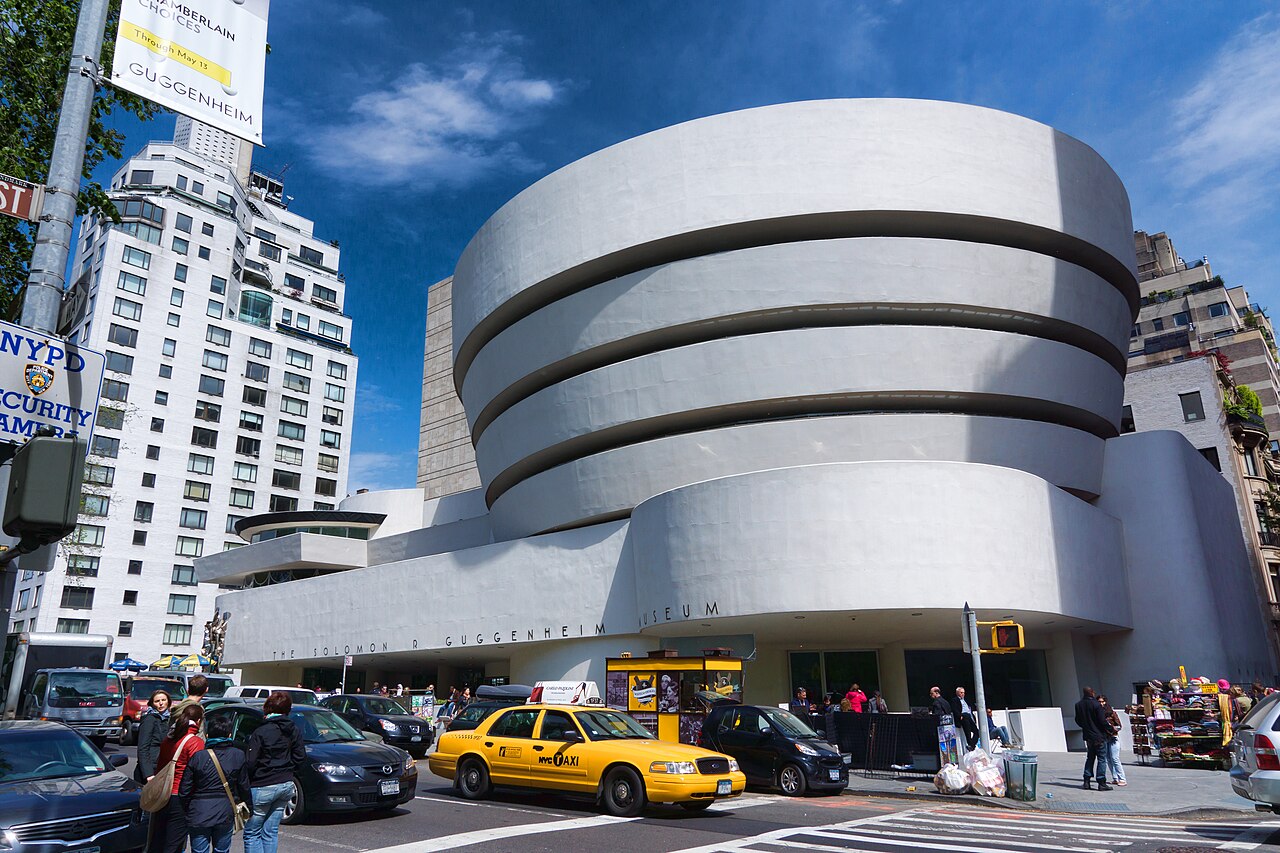
Solomon R. Guggenheim Museum
- Must see · Heritage site
- Museum
Museum · New York
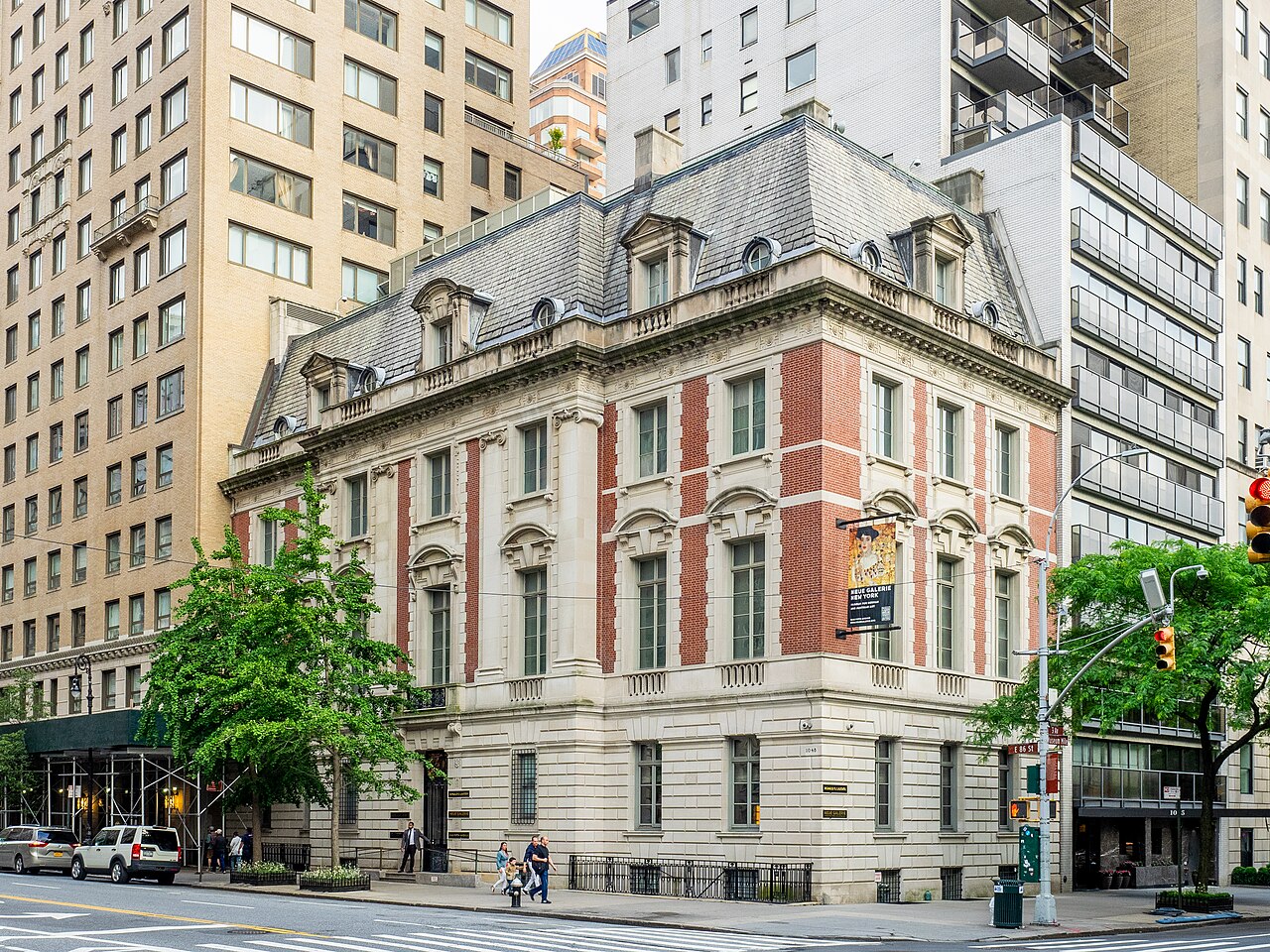
Neue Galerie New York
| Monday | 10:00 – 18:00 |
|---|---|
| Tuesday | Closed |
| Wednesday | 10:00 – 18:00 |
| Thursday | 10:00 – 18:00 |
| Friday | 10:00 – 18:00 |
| Saturday | 10:00 – 18:00 |
| Sunday | 10:00 – 18:00 |
Parsed from OpenStreetMap opening hours on 2026-09-09.
Neue Galerie New York is a museum devoted to early twentieth-century German and Austrian art and design. It occupies a historic mansion on Manhattan's Museum Mile. The institution was established by Ronald S. Lauder and the late Serge Sabarsky. Its collection emphasizes works from the Wiener Werkstätte, Vienna Secession, and related movements. The museum's name reflects its German-language identity within an English-speaking city. It stands as a specialized cultural destination rather than a comprehensive encyclopedic museum, focusing its programming and acquisitions on a defined geographic and temporal scope.
Checked 2026-08-26
The collection encompasses painting, sculpture, decorative arts, and works on paper. Major holdings include paintings by Gustav Klimt and Egon Schiele. The museum also presents furniture, metalwork, and textiles from the Wiener Werkstätte. Period rooms and gallery installations contextualize objects within their original aesthetic frameworks. Special exhibitions rotate through dedicated spaces. A design shop offers reproductions and publications related to the museum's focus. The ground-floor café serves Viennese-style cuisine in an atmospheric setting. Archival materials and study collections support scholarly research into the museum's core territories.
Checked 2026-08-26
Visitor duration varies considerably based on individual engagement patterns. Casual observers typically allocate one to two hours for the permanent collection and any concurrent special exhibitions. Enthusiasts of Austrian and German modernism may extend their stay to examine decorative arts and period installations in greater detail. The compact scale of the museum relative to encyclopedic institutions permits thorough visitation without exhausting multiple days. Combining Neue Galerie with neighboring Museum Mile institutions requires strategic scheduling. Visitors should assess their own depth of interest in the specific period and region represented.
Checked 2026-08-26
Prospective visitors must consult the museum's official communications for current opening schedules, including any seasonal variations or special arrangements. Museum Mile institutions generally experience heavier foot traffic during summer months and holiday periods. Morning arrival typically offers quieter conditions for viewing. Weather considerations affect New York City travel throughout the year. The museum's interior environment maintains climate controls appropriate for delicate works on paper and decorative objects. Advance planning remains advisable given the specialized nature of this destination and its finite capacity. Check the operator's own site for the travel date before relying on a schedule or fare.
Checked 2026-08-26
Admission structures for New York museums commonly distinguish general entry from special exhibition surcharges. Some institutions participate in reciprocal programs or citywide pass schemes. The museum may offer reduced rates for specific demographic categories, though verification requires direct inquiry. Membership programs typically provide unlimited access and preview opportunities. Visitors should consult official channels for current fee schedules, online purchase options, and any timed-entry requirements. Budget-conscious travelers might investigate free-admission periods if publicly announced, though such programs vary by institution and season. Check the operator's own site for the travel date before relying on a schedule or fare.
Checked 2026-08-26
The museum occupies a Fifth Avenue address within the Upper East Side. Multiple subway lines serve the surrounding area with walking connections. Bus routes operate along Fifth Avenue and cross-town corridors. Taxi and rideshare services provide door-to-door alternatives. Bicycle infrastructure exists though Manhattan cycling requires confidence. Walking from nearby attractions along Museum Mile is feasible. The institution's specific street address and cross-street location should be verified before departure. Accessibility accommodations for mobility-impaired visitors require direct confirmation with the museum. Traffic and transit conditions in Manhattan fluctuate dramatically by time of day and ongoing construction.
Checked 2026-08-26
The museum's compact physical plant may limit circulation during popular exhibitions. Staircase navigation is required between floors; elevator availability should be confirmed directly. Photography policies vary by gallery and loan conditions; signage indicates restrictions. Bag size limitations may apply for collection protection. Coat check availability fluctuates seasonally. The café operates independently with its own queue and seating constraints. Nearby institutional density on Museum Mile creates competitive demands on visitor attention and stamina. Weather-protected waiting areas are limited. Personal belongings require secure management throughout the visit. Crowd density peaks correlate with major exhibition openings and tourist seasonality.
Checked 2026-08-26
Photography policies within the museum are governed by loan agreements, copyright considerations, and conservation requirements. Flash photography is typically prohibited across museum contexts due to cumulative light damage to sensitive materials. Specific galleries or individual works may carry absolute photography bans. Visitors should observe posted signage and staff instructions without assumption of uniform permissibility. Tripods, selfie sticks, and auxiliary equipment generally require explicit advance authorization. Commercial or promotional photography demands formal arrangements. Respect for fellow visitors' viewing experience should inform all image-making decisions. When uncertain, verbal confirmation from gallery attendants provides definitive guidance for specific locations and objects.
Checked 2026-08-26
The museum's specialized focus on early twentieth-century German and Austrian art appeals most strongly to visitors with developed interest in this period. Families should assess children's capacity for quiet observation in compact gallery spaces.
Tour programming varies by institutional scheduling. Visitors should consult official communications for current offerings, including any audio guide availability or scheduled docent-led options.
Historic mansion conversion presents inherent accessibility challenges. Visitors requiring specific accommodations must contact the museum directly to verify current facilities and any limitations.
Stroller policies depend on spatial constraints and collection protection protocols. Direct inquiry with visitor services provides authoritative guidance before arrival.
Storage availability varies seasonally and by institutional capacity. Visitors should verify current services and any associated restrictions or liability terms.
Café access policies may operate independently of gallery admission. The museum's official communications clarify whether restaurant entry requires ticket purchase or permits separate patronage.
Loading the interactive map…
The interactive map could not be loaded.

Last updated:
Source: OpenStreetMap contributors, Wikidata ·