
5 min walk
Grand Army
- Notable
- Nightlife venue
Museum · New York
| Monday | Closed |
|---|---|
| Tuesday | Closed |
| Wednesday | Closed |
| Thursday | 10:00 – 16:00 |
| Friday | 10:00 – 16:00 |
| Saturday | 10:00 – 16:00 |
| Sunday | 10:00 – 16:00 |
Parsed from OpenStreetMap opening hours on 2026-09-09.
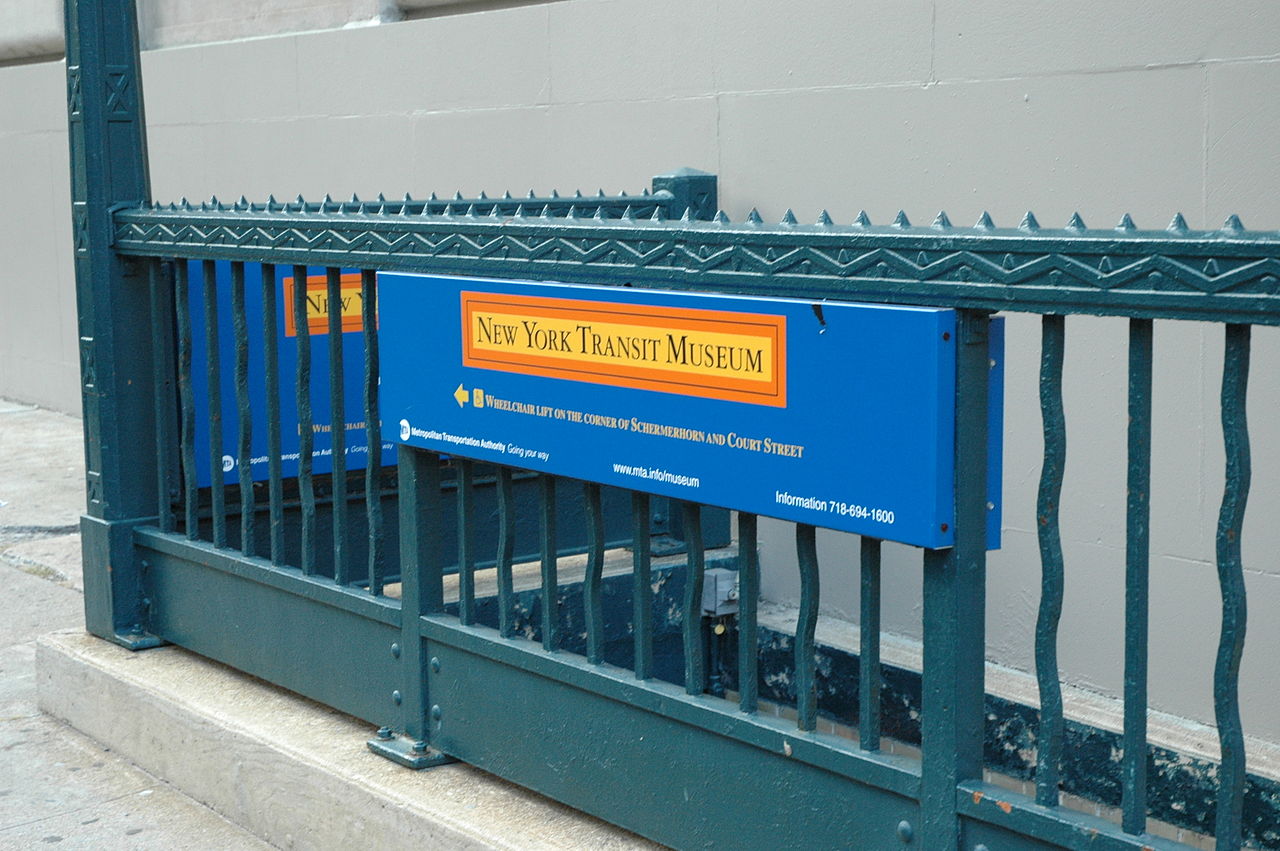
The New York Transit Museum occupies a decommissioned 1936 subway station in Downtown Brooklyn. It serves as the largest museum in the United States devoted to urban public transportation history. The institution preserves and interprets the heritage of New York City transit systems, including subways, buses, and commuter railways. Its underground location provides an authentic setting that distinguishes it from conventional museums, allowing visitors to experience historical transit environments directly within the original infrastructure. A flexible visit lets travellers connect New York Transit Museum with the rest of the day without treating one room, viewpoint or photograph as the whole experience. The useful pace depends on personal interest and conditions on arrival.
Checked 2026-08-26
The museum features vintage subway cars spanning multiple eras, displayed on original platform tracks. Exhibits include historical signage, turnstiles, and station architectural elements. Interactive components allow visitors to operate bus controls and explore conductor cabins. Rotating exhibitions examine topics such as transit expansion, labor history, and technological evolution. Educational programs and archival materials support research into regional transportation development. The collection encompasses photographs, documents, and artifacts representing over a century of New York City transit operations.
Checked 2026-08-26
Visitors typically allocate approximately two hours for a comprehensive experience, though individual pacing varies considerably. The museum's layout extends through multiple platform levels and mezzanine galleries, requiring navigation of stairs throughout the underground station structure. Enthusiasts of transportation history or industrial design may extend their visit to examine detailed exhibits thoroughly. Families with children often incorporate hands-on interactive elements, potentially lengthening engagement time. School groups and guided tours follow structured schedules determined by educational programming. The strongest visit keeps attention on what is distinctive here while leaving room for the next stop. That approach makes New York Transit Museum useful in both a focused first visit and a slower return to the city.
Checked 2026-08-26
Visitors should consult the museum's official communication channels for current scheduling information before planning attendance. The underground location provides consistent environmental conditions regardless of external weather, eliminating seasonal comfort concerns. Weekend and weekday visitation patterns may differ based on local audience demographics and programmed events. Holiday periods and school vacation schedules typically influence crowd levels. Advance verification of operational status remains essential for all prospective visitors. New York Transit Museum also earns time in a new york itinerary because Exact unique production name match within the declared city scope. Its value becomes clearer when the stop is compared with the surrounding streets and the other ranked places nearby. Check the operator's own site for the travel date before relying on a schedule or fare.
Checked 2026-08-26
The museum maintains admission policies subject to periodic adjustment. Potential visitors must verify current fee structures through official sources prior to arrival. Membership programs may offer recurring access benefits for regional residents. Group rates and educational discounts potentially apply to organized visits. Special exhibition access might involve supplementary charges beyond general admission. Payment methods accepted and online purchasing options require direct confirmation from institutional representatives rather than assumption. Check the operator's own site for the travel date before relying on a schedule or fare.
Checked 2026-08-26
The museum occupies 99 Schermerhorn Street in Downtown Brooklyn, accessible via multiple New York City subway lines serving nearby stations. The facility's location within the transit network it documents creates meaningful thematic continuity for arriving visitors. Bus routes operate along adjacent corridors. Pedestrian access connects to surrounding Brooklyn neighborhoods. The underground entrance requires descent from street level. Visitors with mobility considerations should investigate accessibility provisions through direct institutional inquiry, as historic station infrastructure presents inherent architectural constraints.
Checked 2026-08-26
The authentic subway station environment presents specific conditions requiring visitor awareness. Original platform edges remain unmodified from operational configurations, demanding attention near track areas. Staircases constitute the primary vertical circulation method throughout the facility. Low ceiling clearances and narrow passages reflect 1930s construction standards. Climate conditions underground differ from surface environments. The museum's location in active urban surroundings necessitates standard metropolitan safety awareness. Photography policies may restrict certain documentation activities. Visitors should observe all posted guidelines and staff instructions.
Checked 2026-08-26
The museum permits personal photography in numerous areas, though restrictions apply to specific exhibits, artifacts, or temporary installations. Flash photography may be prohibited to protect sensitive materials. Commercial or promotional photography requires advance institutional authorization. Tripod and stabilizing equipment usage typically faces limitations due to spatial constraints and visitor flow considerations. Visitors should respect privacy of fellow guests, particularly in interactive areas. Staff members can clarify current photographic policies upon arrival. Social media sharing is generally accommodated within personal use parameters.
Checked 2026-08-26
No. The museum is located in Downtown Brooklyn at 99 Schermerhorn Street, not in Manhattan.
The museum occupies a decommissioned station with displayed vintage cars on original tracks, but access to active transit tunnels is not part of the visitor experience.
The historic 1936 station infrastructure presents inherent architectural constraints. Visitors with specific accessibility requirements should contact the museum directly to verify current accommodations.
The vintage subway cars on display are stationary exhibits for visitor boarding and examination, not operational vehicles.
Yes, the museum accommodates family visits and provides interactive elements suitable for children, though adult supervision is required near platform edges and track areas.
Educational programming including structured group visits occurs, but specific tour schedules and availability require direct confirmation from the institution.
Loading the interactive map…
The interactive map could not be loaded.
Last updated:
Source: OpenStreetMap contributors, Wikidata ·