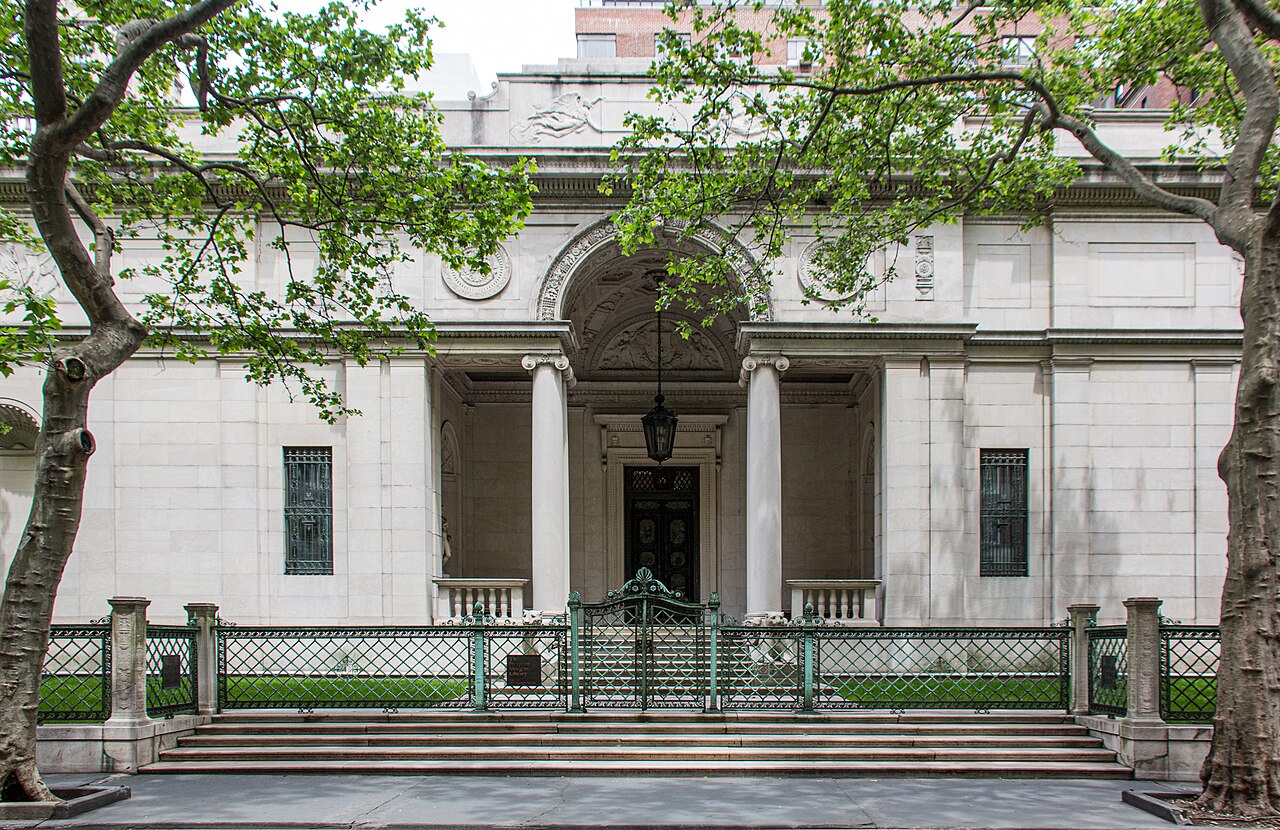
The Morgan Library & Museum is a cultural institution in New York City centered on the personal library of financier Pierpont Morgan. Established to preserve and display his collection of rare books, manuscripts, drawings, and artworks, it now operates as a public museum and research facility. The complex includes historic rooms from Morgan's original library alongside modern exhibition spaces. It serves as both a monument to Gilded Age collecting and an active contemporary museum presenting rotating exhibitions drawn from its holdings and loans. The institution maintains its founding mission of advancing knowledge and appreciation of literary and artistic heritage.
The Morgan holds significant collections of medieval and Renaissance manuscripts, rare printed books, literary and historical manuscripts, music manuscripts, and autograph letters. Drawings and prints include works by major European and American artists. The original library building features elaborate interiors designed for private study and display. Three rooms from Morgan's era remain accessible: the study, library, and rotunda. Modern gallery spaces host temporary exhibitions. The institution also maintains a performance hall and reading rooms for scholarly research. Selected highlights rotate on display while the majority of holdings remain in climate-controlled storage accessible by appointment for qualified researchers.
Visitors typically spend between ninety minutes and three hours exploring the permanent installations and any temporary exhibitions. The compact historic rooms require modest time, while dedicated visitors examining detailed manuscripts or drawings may extend considerably longer. Those attending lectures, concerts, or special programs should allocate additional time. Research visitors working with collection materials require separate scheduling and may occupy reading rooms for full days. The museum's intimate scale relative to major encyclopedic institutions permits thorough visitation without overwhelming duration. Repeat visits reward attention, as exhibition rotations change displayed materials seasonally and special installations refresh gallery content periodically throughout the programming year.
Visitors should consult the official website before planning attendance, as schedules may vary by season, day of week, or special circumstances. The institution typically observes standard museum operating patterns with possible early closure on certain days and extended hours for special events. Holiday schedules differ from regular operations. Advance planning remains advisable particularly for visitors with limited flexibility. Members and researchers may access different schedules than general public visitors. Evening programs occur independently of standard gallery hours. Verification through direct institutional contact prevents inconvenience from outdated or incorrect schedule assumptions. Check the operator's own site for the travel date before relying on a schedule or fare.
Admission structures typically distinguish between general entry, member access, and special exhibition requirements. Common categories include adult, senior, student, and youth pricing with possible free admission for children below specified ages. Members generally receive unlimited entry and priority access to programs. Certain promotional periods or community access initiatives may offer reduced or waived admission. Special exhibitions sometimes carry supplementary charges beyond general entry. Online advance purchase may be available and recommended for popular periods. Direct verification with the institution ensures accurate current pricing and identifies any applicable discounts or reciprocal admission arrangements. Check the operator's own site for the travel date before relying on a schedule or fare.
The Morgan Library & Museum occupies a location in Manhattan's Murray Hill neighborhood near Madison Avenue and East 36th Street. Multiple New York City subway lines serve nearby stations within reasonable walking distance. Bus routes traverse surrounding avenues. The area experiences typical Manhattan traffic congestion; surface transportation timing varies significantly by hour. Bicycle infrastructure exists though conditions demand experienced urban cycling confidence. Limited street parking nearby makes public transportation strongly preferable. The institution's website provides updated directions. Visitors arriving from regional rail terminals find the location accessible by subway connection or taxi. Walking from Midtown hotels or other Manhattan destinations proves feasible for many visitors.
The historic rooms maintain strict environmental controls; visitors should respect barrier placements protecting sensitive materials. Flash photography restrictions apply in designated areas. Large bags may require checking. The compact historic spaces accommodate limited visitor numbers simultaneously; congestion occurs during popular exhibitions. Wheelchair accessibility exists though some original architectural features present inherent constraints. Children require supervision near displayed objects. Security screening may occur at entry. Special exhibition popularity generates advance booking needs. The institution's residential neighborhood context means surrounding services close earlier than in commercial districts. Visitors combining multiple destinations should plan meal and rest breaks accordingly given limited immediate adjacent options.
Photography policies vary by location within the complex. The historic rooms and most galleries typically prohibit flash photography to protect light-sensitive materials. Some special exhibitions may restrict all photography due to lender requirements or copyright considerations. Visitors should observe posted signage and staff guidance in each area. Personal non-flash photography of permanent collection installations may be permitted in designated spaces. Tripods, selfie sticks, and professional equipment generally require advance institutional approval. Commercial photography and filming demand explicit authorization. Visitors seeking to document research materials face separate protocols. When uncertain, asking staff prevents policy violations that could result in equipment confiscation or visitor sanctions.
Checked 2026-08-26
Place details and sources
Address
Madison Avenue, 225, 10016, New York, NYOpenStreetMap
· Checked 2026-09-09
Is the Morgan Library & Museum the same as Pierpont Morgan's private library for The Morgan Library & Museum in New York?
The institution evolved from Pierpont Morgan's private library into a public museum and research facility. Three historic rooms from his original library remain preserved and accessible.
Can anyone view the manuscripts and rare books for The Morgan Library & Museum in New York?
General visitors see rotating displays in galleries. Qualified researchers may request access to specific collection materials through the institution's reading room procedures.
Are there dining facilities on site for The Morgan Library & Museum in New York?
Not recorded. Visitors should consult the official website for current amenity information or plan accordingly for nearby neighborhood options.
Does the museum offer guided tours for The Morgan Library & Museum in New York?
Not recorded. The institution's website or visitor services would provide current information on tour availability and scheduling.
Is the building wheelchair accessible for The Morgan Library & Museum in New York?
Wheelchair accessibility exists though original historic architecture presents some inherent constraints. Visitors with specific mobility needs should contact the institution directly.
Can I attend concerts or lectures without museum admission for The Morgan Library & Museum in New York?
Not recorded. Program access policies vary; the institution's website or box office would clarify whether separate ticketing applies for specific events.