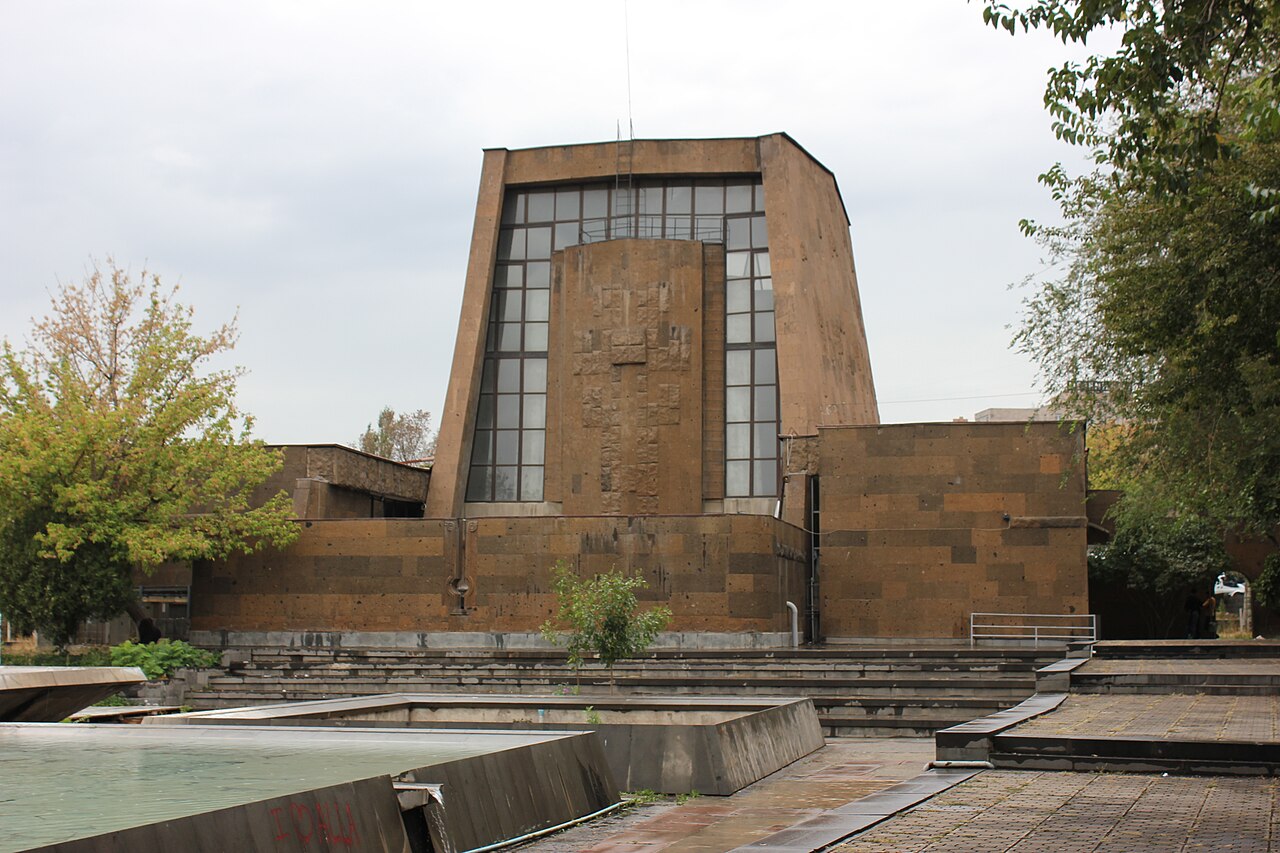
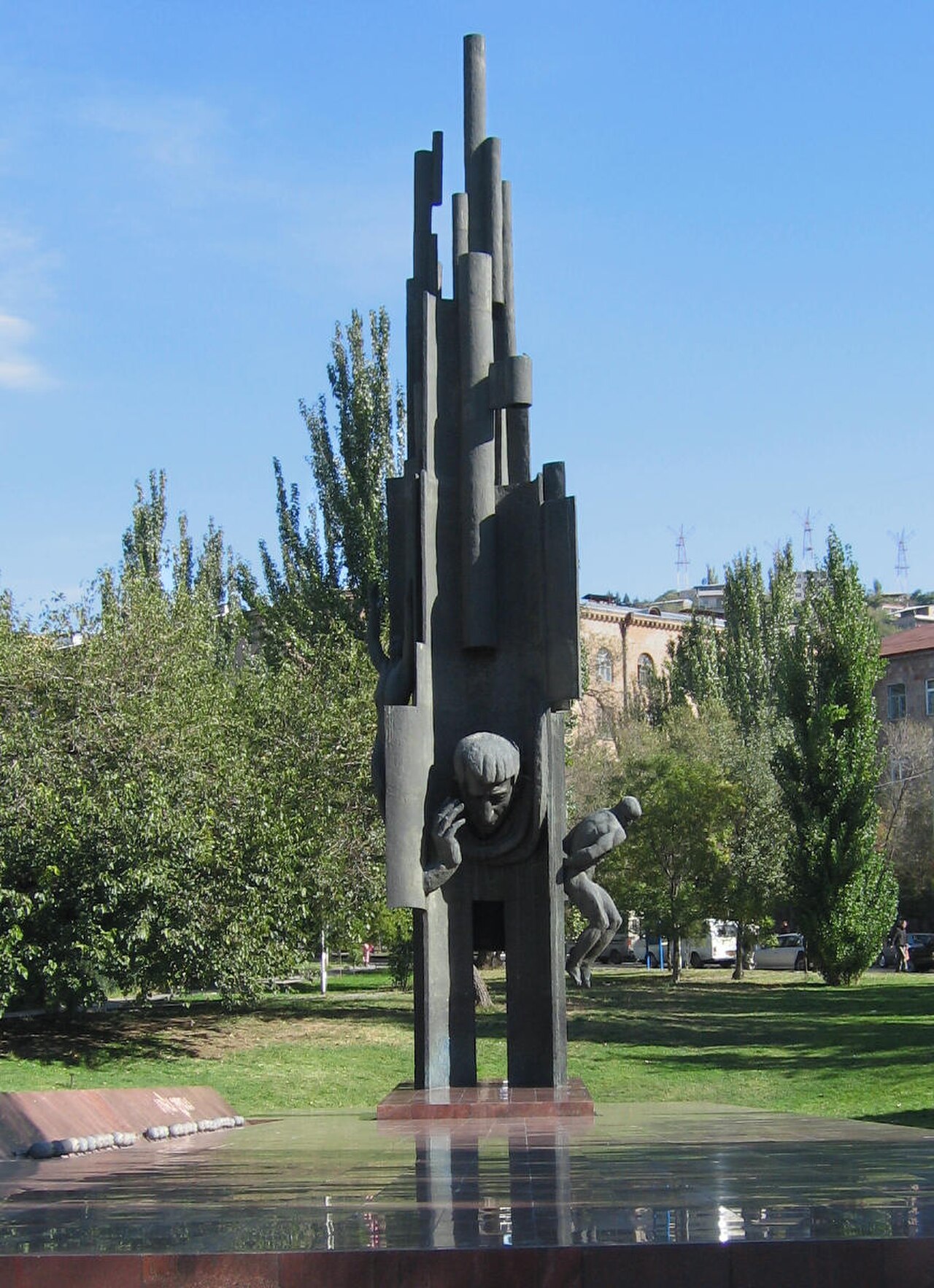
The Aram Manukian monument is an outdoor statue in Yerevan honouring Aram Manukian, a revolutionary leader and statesman connected with the establishment of the First Republic of Armenia in 1918. The memorial offers travelers a direct encounter with Armenian political history in the capital's public realm. Rather than an enclosed attraction, it is a civic sculpture whose meaning comes from the figure represented, the national story associated with him, and the surrounding city setting. The Aram Manukian is a statue monument in Yerevan, Armenia, dedicated to Aram Manukian, a pivotal figure in Armenian national history. Manukian was a revolutionary leader and statesman who played a central role in the establishment of the First Republic of Armenia in 1918. The monument commemorates his contributions to Armenian independence and statehood. Located in a public space in the capital city, the statue serves as a site of national remembrance and civic identity. Visitors encounter a formal sculptural representation typical of Armenian monumental art, positioned within the urban landscape of Yerevan for public access and contemplation. The monument is an outdoor open-air installation with no enclosed building or interior spaces.
The site is an open-air sculptural installation with no building or interior route. The main focus is the standing figure of Aram Manukian, presented as a formal public memorial. Look at the sculpture from several angles and read any plaque or inscription placed beside it. The surrounding urban space forms part of the visit, but this monument has no attached exhibition, audio programme, museum collection, or visitor centre. Travelers come for a concise historical and visual encounter.
A five-to-fifteen-minute stop is enough for most travelers. Use the time to approach the figure, observe its pose and details, read any inscription, and take a few photographs. Visitors following Armenian history may choose to linger before continuing through Yerevan. The monument is especially effective in a walking itinerary, where the short visit gains context from nearby streets and public spaces. There is no complex sequence of rooms or activity programme to extend the physical stop.
Visit in daylight for the clearest view of the sculpture and any lettering. Spring and autumn are comfortable for adding the monument to a longer city walk. Yerevan's summers can be hot and bright, while winter conditions can make outdoor pavement cold or slippery, so keep the stop brief when weather is severe. Because this is an open public monument, it can be incorporated into a flexible route through the capital rather than planned around an indoor schedule.
The monument is a public outdoor memorial and does not require an entrance ticket. There is no gate, ticket office, reservation system, or admission procedure at the statue. Travelers can include it in a free walking circuit, while budgeting separately for transport, refreshments, or a broader guided city experience. The absence of a ticket does not make the memorial insignificant: its purpose is to mark a person and a decisive period in Armenian state history.
The monument stands within Yerevan's urban fabric and can be approached as part of a city-centre walk. Buses, metro services, taxis, and ride-hailing connect the capital's districts; the final approach is on foot through public streets. Travelers staying centrally may reach it without a separate vehicle journey. A current map is useful for choosing the most convenient route, while the practical experience is straightforward: use city transport to the surrounding area, then walk to the monument.
Take ordinary care when crossing streets and moving through busy urban areas around the monument. Treat the statue as a memorial rather than a place to climb or touch. Wet or icy pavement may affect footing, and strong summer sun can make an exposed stop tiring. Keep valuables close in crowded areas and maintain a respectful manner when discussing Armenian national history. The comfort of the visit depends mainly on the surrounding pavement, traffic, weather, and pedestrian movement.
The outdoor setting is suitable for personal photographs. Use daylight to show the figure's form, and try both a frontal composition and a wider view that includes the surrounding Yerevan streetscape. Morning or late afternoon light can add definition to the monument without the strongest midday glare. Avoid blocking pedestrian movement with equipment, and be considerate when other people enter the frame. The most rewarding images connect the statue with the civic landscape rather than isolating it entirely.
Who is commemorated by the Aram Manukian monument?
The statue commemorates Aram Manukian, a revolutionary leader and statesman associated with the establishment of the First Republic of Armenia in 1918.
Is the Aram Manukian monument outdoors?
Yes. It is an open-air statue with no enclosed building or interior visitor route.
How much time should I allow for this monument?
Most travelers can see the statue, read any inscription, take photographs, and pause for five to fifteen minutes.
Is there an entrance fee?
No entrance fee is required for this public outdoor memorial.
Can I visit the monument independently?
Yes. The open-air memorial can be experienced independently and fits naturally into a walking route through Yerevan.
What should I bring for a visit?
Comfortable walking shoes, water in hot weather, and sun protection are useful for reaching and viewing the outdoor monument.
Nothing non-essential is set before you choose, in regions where consent is required. If you decline, ads still appear and analytics is switched off entirely.