
2 min walk
Block Arcade
- Must see · Heritage site
- Market
Language · 11 published
Historic monument · Melbourne
Reviewed by Elena Voss · Roavina Travel Editor
This place is a Attraction.
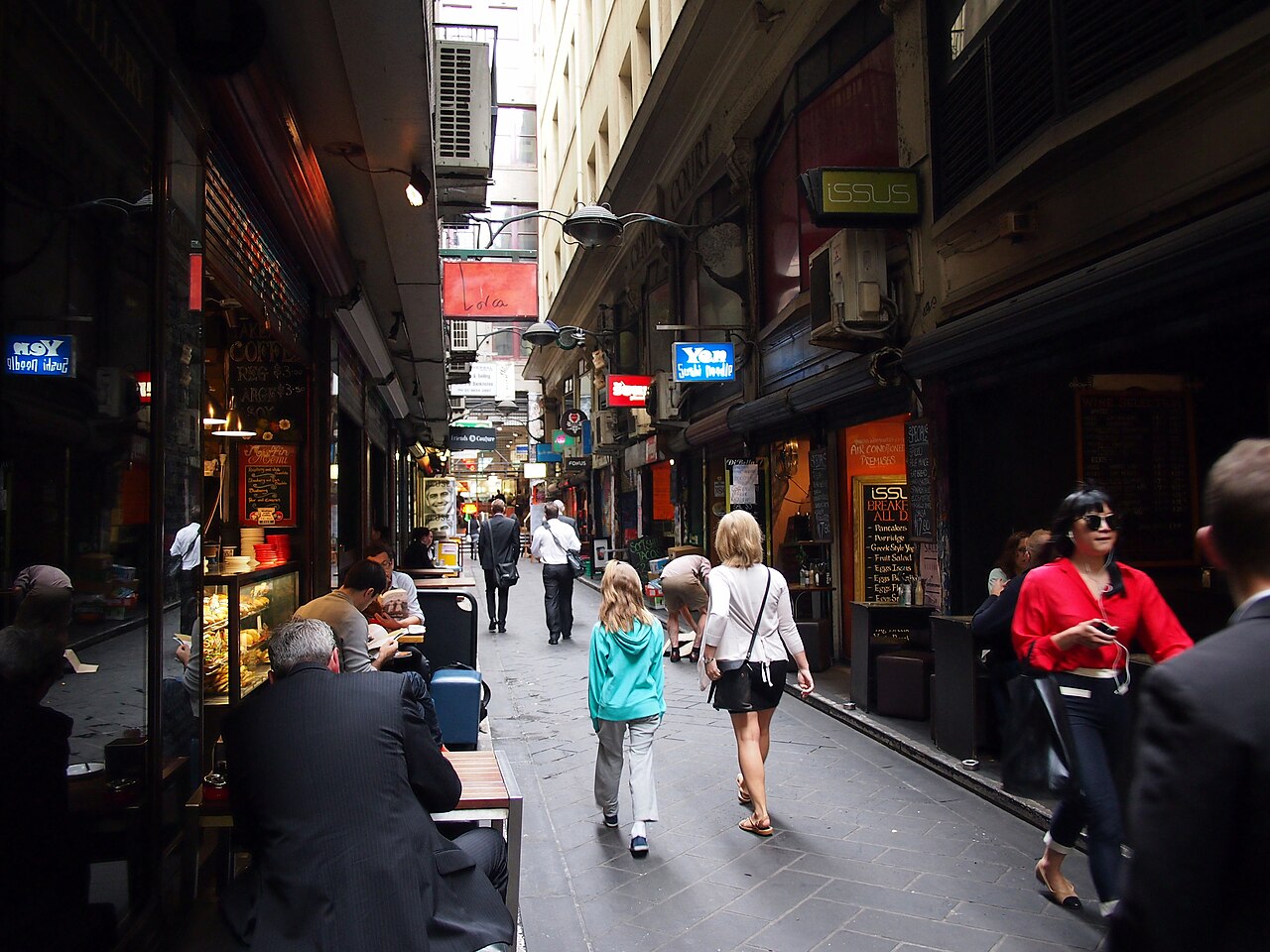
Centre Place is a narrow pedestrian laneway in central Melbourne, running between Flinders Lane and Collins Street. The laneway is part of the city’s distinctive network of compact urban passages, where movement, small businesses, signage, and close architectural views create the experience. Centre Place works best as a short atmospheric stop within a walking route, not as a large attraction requiring a separate half-day. Its position in the central business district makes it useful for travellers exploring Melbourne on foot. The place combines a practical pedestrian connection with the intimate scale and commercial character associated with inner-city laneways.
Checked 2026-08-26 · Source
Centre Place contains a compact pedestrian environment lined with small-scale retail and hospitality businesses. Cafes and specialty shops sit along the walkway, while overhead awnings and dense vertical signage shape the close, covered atmosphere. The laneway’s appeal comes from this combination of movement, business fronts, narrow proportions, and urban detail rather than from a single monument or enclosed exhibit. Tenant names and individual business operations can change, so experience Centre Place as a streetscape first. Look upward as well as ahead: the limited width brings shopfronts, signs, awnings, and upper-level views into one tightly framed city scene.
Checked 2026-08-26 · Source
A walk through Centre Place takes only a few minutes because the laneway is a short pedestrian connection between Flinders Lane and Collins Street. Add time when you want coffee, a meal, browsing, or photographs, since the businesses rather than the pavement determine the length of the stop. Centre Place is most useful as one element in a broader Melbourne laneway walk. Pause at the entrances, move through at an unhurried pace, and continue toward another central attraction once you have taken in the signage, awnings, shopfronts, and close urban perspective.
Checked 2026-08-26 · Source
Centre Place can be included whenever you are walking through Melbourne’s central business district, while the atmosphere changes with pedestrian flow and the activity of its cafes and shops. Daylight helps with reading signs and photographing the narrow streetscape. The awnings provide some cover from rain, but weather still affects the comfort of reaching and leaving the laneway. Individual businesses set their own schedules, so a quiet walk and a café visit are different plans. Centre Place also fits well between larger indoor attractions because its short length does not demand a long commitment.
Checked 2026-08-26 · Source
Walking through Centre Place is free because it is a public pedestrian laneway. There is no ticket gate or admission system for the passage itself. Cafes, restaurants, and shops charge independently for what they sell, with prices and payment methods set by each business. Separate purchases should therefore be treated as part of the commercial stop, not as an entry fee. A traveller can pass through Centre Place without spending money, pause for a drink or meal, and continue toward Collins Street or Flinders Lane according to the rest of the day’s walking route.
Checked 2026-08-26 · Source
Centre Place is located between Flinders Lane and Collins Street in Melbourne’s central business district. The named cross streets are the clearest orientation points: approach from either one, then enter the narrow pedestrian passage on foot. The laneway sits within the central network served by nearby trams, and Flinders Street railway station is within walking distance to the south. Centre Place is also within Melbourne’s Free Tram Zone, making eligible central tram journeys free. Combine the laneway with nearby city streets and attractions rather than arranging a special vehicle drop-off for a pedestrian passage.
Checked 2026-08-26 · Source
Centre Place is narrow, so keep moving space clear and watch for pedestrians travelling in both directions, especially during busy periods. Overhead awnings and signage make the passage visually dense and can reduce clearance in places. Uneven or changing surfaces call for comfortable footwear. Shops and cafes bring normal city concerns around belongings, queues, and people meeting in a confined area. Centre Place is pedestrian rather than a through road for ordinary driving. Observe temporary barriers, maintenance activity, business instructions, and any changes affecting the walkway while passing through.
Checked 2026-08-26 · Source
Centre Place is well suited to photographs that use the laneway’s narrow perspective, overhead awnings, vertical signage, and busy shopfronts as framing elements. Stand to one side where possible and keep the pedestrian route open. A wide image from an entrance shows the passage in context; closer views can isolate signs, textures, and the changing light beneath the awnings. Ask before photographing people or commercial interiors, and follow any displayed restrictions. Tripods can obstruct the confined walkway, so handheld photographs are usually more practical for recording the street’s atmosphere without interrupting movement.
Checked 2026-08-26 · Source
Centre Place is a narrow pedestrian laneway between Flinders Lane and Collins Street, lined with cafes, specialty shops, awnings, and dense signage.
Walking through the laneway takes only a few minutes. Add time for food, drinks, browsing, or photography, then continue with a wider Melbourne laneway route.
No admission fee applies to walking through Centre Place as a public pedestrian laneway. Individual cafes, restaurants, and shops charge for their own goods and services.
Centre Place runs between Flinders Lane and Collins Street in Melbourne’s central business district, with Flinders Street railway station within walking distance.
Yes. Nearby tram routes serve central Melbourne, and the laneway is within the Free Tram Zone. Flinders Street railway station is also within walking distance.
Photograph the narrow perspective, overhead awnings, vertical signage, shopfronts, and changing light. Keep the walkway clear and ask before photographing people or interiors.
Loading the interactive map…
The interactive map could not be loaded.
Last updated:
Source: OpenStreetMap contributors ·