
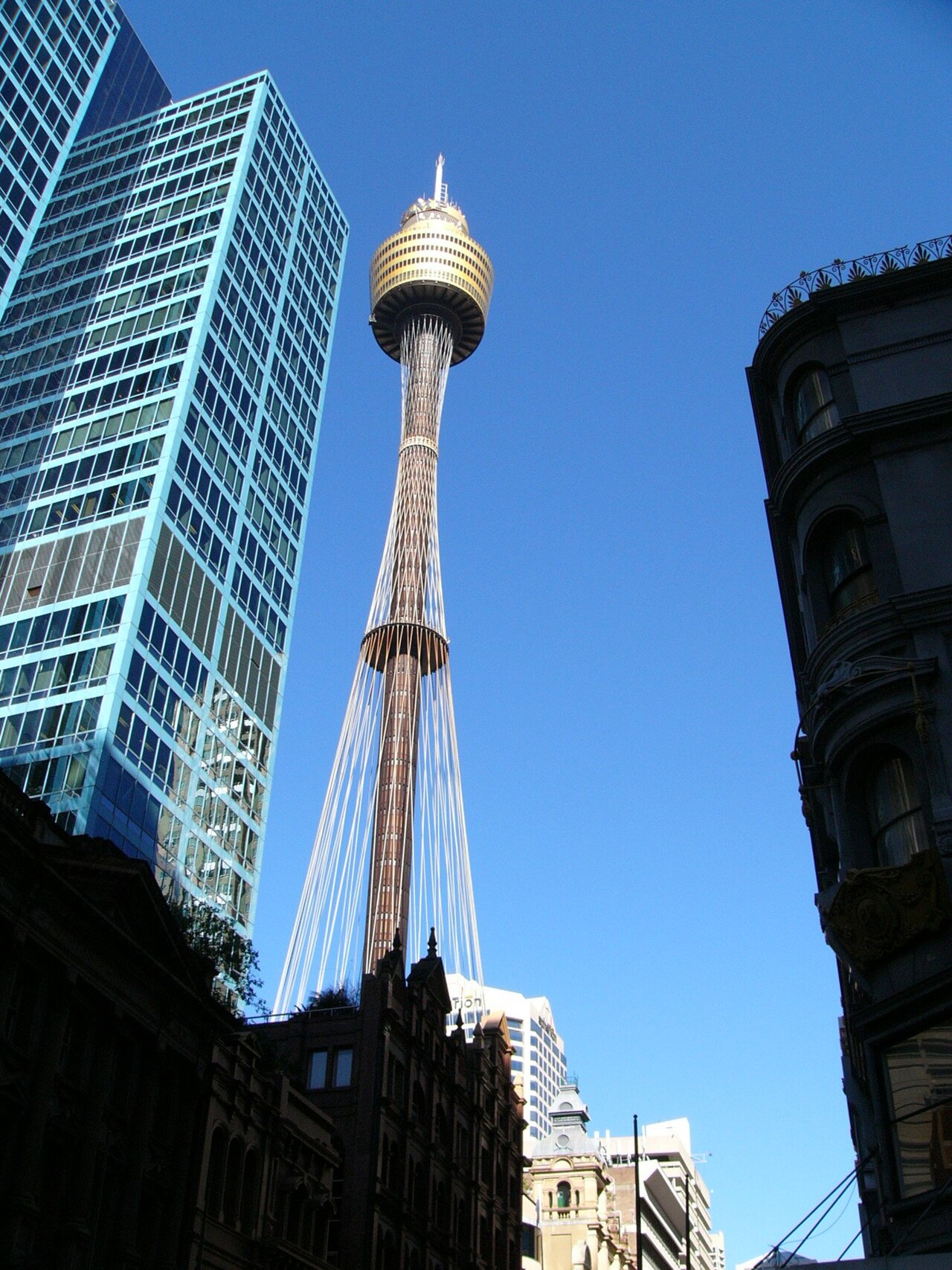
5 min walk
Sydney Tower Eye
- Must see
- Viewpoint
Language · 11 published
Art and culture venue · Sydney
Reviewed by Elena Voss · Roavina Travel Editor

This place is a Artwork. It was established in 2009. It is built of birdcage.
Angel Place Birdcages, also known as Forgotten Songs, is an outdoor artwork in Sydney’s central business district. Suspended cages fill the pedestrian laneway overhead, while recorded birdcalls recall species that once lived around the Tank Stream valley before European settlement. The work by Michael Thomas Hill turns a narrow city passage into a meditation on habitat loss, urban change and memory. It is a compact attraction with a strong visual and aural identity. Angel Place Birdcages, known locally as Forgotten Songs, is an outdoor art installation located in Sydney's central business district. The artwork commemorates the bird species that once inhabited the Tank Stream valley before European settlement. Created by artist Michael Thomas Hill, the installation consists of numerous empty birdcages suspended above the pedestrian laneway. The work serves as both a visual spectacle and an environmental meditation on urban development and habitat loss. The local name is Forgotten Songs. No, access is free as it is a public outdoor artwork. The artwork is also known as Forgotten Songs. No. It is a public outdoor artwork in a pedestrian laneway, so viewing it is free.
Checked 2026-08-26 · Source
The installation consists of many empty metal birdcages in different sizes, hanging above Angel Place. Their emptiness is deliberate: the cages represent birds no longer present in the city environment. Recorded calls create the second half of the work, surrounding pedestrians with sounds linked to the lost species. Walk through the laneway slowly enough to look upward and listen. The contrast between the delicate cages, historic surroundings and modern office buildings gives the artwork its character. The installation features multiple birdcages of varying sizes hanging overhead along Angel Place.
Checked 2026-08-26 · Source
Most travelers need ten to twenty minutes. The laneway is compact, but the experience benefits from a pause to view the cages from several points and listen to the changing birdcalls. A quick walk gives you the main visual impression; a slower visit reveals how the sound alters the atmosphere of an otherwise busy business district. Photography, conversation about the artwork and a second pass through the lane can extend the stop naturally.
Checked 2026-08-26 · Source
The physical artwork is outdoors in a pedestrian laneway and can be seen throughout the day. Daylight gives the clearest view of the cage structures, while evening brings a different mood through city lighting. Weekday business hours bring more pedestrians, particularly around lunch, so the lane may feel busier. Rain can affect both comfort and sound quality. Choose a quieter moment if listening is central to your visit, and a bright period if photography matters most.
Checked 2026-08-26 · Source
Angel Place Birdcages is a public outdoor artwork and viewing it is free. There is no ticketed entrance or reservation process for walking through the laneway. Nearby cafés, shops, parking and other Sydney attractions have their own costs, but they are separate from the installation. Because the artwork forms part of an ordinary pedestrian route, you can add it to a central-city walk without setting aside an admission budget or planning a formal museum-style visit.
Checked 2026-08-26 · Source
Angel Place lies between George Street and Pitt Street in Sydney’s central business district. Wynyard and Martin Place stations are within walking distance, and buses run along the surrounding city streets. The lane also fits a walking route between central landmarks, including the broader areas around Circular Quay and Darling Harbour. Look for Angel Place within the established street grid, then enter the pedestrian passage and look overhead rather than searching for a large freestanding monument.
Checked 2026-08-26 · Source
Angel Place remains a working pedestrian thoroughfare, not a closed gallery. Stand to one side when looking up or taking photographs so commuters can pass. Do not touch or pull at the suspended cages. Wet weather can make the lane surface slippery, and heavy rain or construction noise can make the birdcalls harder to hear. Keep belongings secure in the normal way for a busy city centre, especially during weekday lunch periods.
Checked 2026-08-26 · Source
The cages create unusual overhead compositions, especially when photographed along the length of Angel Place. Look for contrasts between the metal forms, the laneway walls and Sydney’s surrounding architecture. A wide-angle lens can include several cages at once, while a closer view emphasises repetition and empty space. Tripods are awkward in a busy passage and can obstruct pedestrians, so handheld photography is more practical. Change position as people move through the lane and keep the route clear.
Checked 2026-08-26 · Source
The artwork is also known as Forgotten Songs.
No. It is a public outdoor artwork in a pedestrian laneway, so viewing it is free.
No. The empty cages symbolise bird species that once inhabited the area.
Recorded birdcalls associated with species that once lived around the Tank Stream valley play within the laneway.
Most visitors spend about ten to twenty minutes walking through the lane, looking upward and listening to the birdcalls.
It is in Sydney’s central business district, between George Street and Pitt Street, within walking distance of Wynyard and Martin Place stations.
Loading the interactive map…
The interactive map could not be loaded.

Last updated:
Source: OpenStreetMap contributors, Wikidata ·