
5 min walk
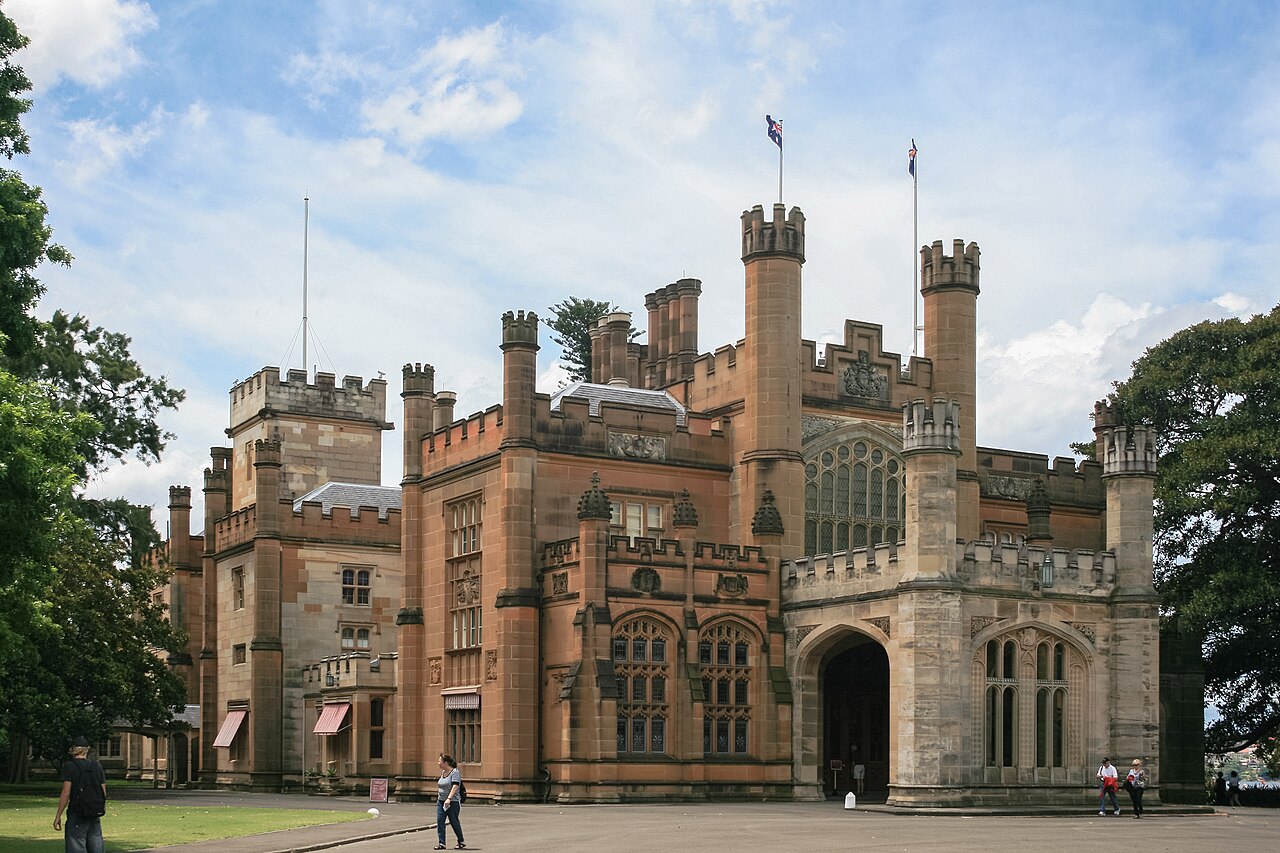
Government House
- Must see · Heritage site
- Historic monument
Language · 11 published
Nature site · Sydney
Royal Botanic Garden
Reviewed by Elena Voss · Roavina Travel Editor

| Monday | 07:00 – 17:30 |
|---|---|
| Tuesday | 07:00 – 17:30 |
| Wednesday | 07:00 – 17:30 |
| Thursday | 07:00 – 17:30 |
| Friday | 07:00 – 17:30 |
| Saturday | 07:00 – 17:30 |
| Sunday | 07:00 – 17:30 |
Checked 2026-08-31 · Source
Read from the OpenStreetMap access tags; anything not listed has no tag recorded.
Set the group type to family in the planner and the day window contracts to about three quarters of a solo day.
This place is a Garden. It was established in 1816. It carries the Heritage Act — State Heritage Register heritage designation. It is run by Royal Botanic Gardens and Domain Trust.
The Royal Botanic Garden Sydney is a major botanical garden occupying a prominent harbourside position in the Sydney central business district. Established in 1816, it is the oldest scientific institution in Australia and one of the most important historic botanical institutions in the Southern Hemisphere. The garden sits on the site of the first farm in the colony of New South Wales. It functions as a centre for botanical research, horticultural display, and public recreation, with collections focusing on Australian native plants and exotic species adapted to the local climate.
Checked 2026-08-31 · Source
The garden contains extensive plant collections arranged in thematic and geographic displays, including native rainforest vegetation, succulent gardens, and herbaceous borders. Notable features include the Palace Rose Garden, the Sydney Tropical Centre, and the Herb Garden. The Calyx is a horticultural exhibition space hosting changing displays. The garden also encompasses significant open lawns, pathways, and sculptures. The Domain, an adjoining public parkland, extends the accessible green space. Harbour vantage points offer views toward the Sydney Opera House and Sydney Harbour Bridge. The garden maintains living collections of conservation and scientific significance.
Checked 2026-08-31 · Source
Visitor duration varies considerably depending on interest level and intended activities. Casual visitors typically spend between one and two hours walking through selected garden areas and enjoying harbour views. Those with specific botanical interests, photography objectives, or attending guided walks may extend visits to half a day. The garden's extensive footprint rewards repeated visits across different seasons. Picnicking and passive recreation can extend stays indefinitely. No mandatory routing or timed entry system governs visitor flow. Self-directed exploration allows flexible pacing according to personal preference and weather conditions on the day of visit.
Checked 2026-08-31 · Source
Daily 07:00–20:00 in January, February, November and December; 07:00–19:30 in October; 07:00–18:30 in March; 07:00–18:00 in April and September; 07:00–17:30 in May and August; 07:00–17:00 in June and July. Open every day of the year, with no regular closure day. Extreme weather may cause an early closure. The garden operates as an outdoor attraction with year-round accessibility during daylight hours. Sydney's temperate climate permits visitation across all seasons, with spring and autumn generally offering moderate temperatures favourable to extended walking. Summer brings higher temperatures and stronger ultraviolet exposure, warranting sun protection and hydration planning. Winter remains mild by global standards and can provide quieter conditions.
Checked 2026-08-31 · Source
General Garden admission is free; special ticketed events charge separately. General entry to the Royal Botanic Garden Sydney has historically been free of charge as a public institution, though this policy should be verified against current operator determinations. Some special exhibitions, guided tours, or events within the garden may carry separate charges. Donation opportunities typically support conservation and educational programmes. Daily 07:00–20:00 in January, February, November and December; 07:00–19:30 in October; 07:00–18:30 in March; 07:00–18:00 in April and September; 07:00–17:30 in May and August; 07:00–17:00 in June and July. Any commercial photography permits or venue hire arrangements would involve separate fee structures administered by the garden's management authority rather than standard visitor admission processes.
Checked 2026-08-31 · Source
Bus 441 runs from the York Street side of Queen Victoria Building and stops near the Art Gallery; weekday peak-hour bus 200 stops on Macquarie Street. St James, Martin Place and Circular Quay stations are each about a 10-minute walk. Circular Quay ferry wharves are also about a 10-minute walk from the Garden. This is the named approach for an independent visit. The garden occupies a central location with multiple access points around its perimeter. Public transport connectivity is strong given the CBD position. Circular Quay railway station and ferry wharves provide nearby access to the garden's northern and eastern boundaries. Multiple bus routes service surrounding streets. Walking access integrates with the Sydney CBD pedestrian network. Limited on-street parking exists in surrounding areas; commercial parking stations operate nearby.
Checked 2026-08-31 · Source
Most Garden areas are accessible by walker or wheelchair. Accessible entrances include Morshead Fountain, Woolloomooloo, Victoria Lodge, Yurong, Opera House, Queen Elizabeth II, Conservatorium and Government House gates. Wheelchair-accessible toilets are at the Visitor Centre, Mare and Foal Lawn and The Calyx. One wheelchair is available free from Reception via Mrs Macquaries Road, daily 10:00–16:00; advance booking is requested by telephone. Guide dogs, hearing dogs and documented assistance dogs are permitted. The access description applies to the documented visitor route. Sun exposure presents a significant consideration during Australian daylight hours; hat, sunscreen, and adequate water are prudent regardless of season. Some garden paths include slopes and uneven surfaces potentially challenging for mobility-impaired visitors. Wildlife including birds and occasional water dragons inhabits the grounds; respectful observation without feeding is appropriate.
Checked 2026-08-31 · Source
The garden offers exceptional photographic opportunities combining cultivated landscapes, architectural elements, and harbour backdrops including the Sydney Opera House. Morning and late afternoon light typically provides optimal conditions for landscape and botanical subjects. Tripod use and commercial photography may require permit arrangements through garden management. The Calyx and other indoor display spaces may have specific photography policies. Crowd avoidance for clean architectural shots favours early arrival, particularly at iconic vantage points. Seasonal floral displays create time-sensitive photographic subjects. Weather considerations including overcast conditions can benefit plant photography by reducing harsh shadows while potentially diminishing harbour backdrop clarity.
Checked 2026-08-31 · Source
Yes. It is open every day of the year from 07:00, with seasonal closing times.
Yes. General Garden admission is free, although special ticketed events charge separately.
Yes. The Garden may close early during extreme weather.
No. Most areas are accessible by walker or wheelchair, and eight accessible gates are identified by the operator.
Yes. A wheelchair is available free from Reception daily 10:00–16:00, with advance booking requested.
Bicycle riding is prohibited, and pets are not permitted; documented assistance animals are allowed.
Loading the interactive map…
The interactive map could not be loaded.
Last updated:
Source: OpenStreetMap contributors, Wikidata ·