.jpg)
3 min walk
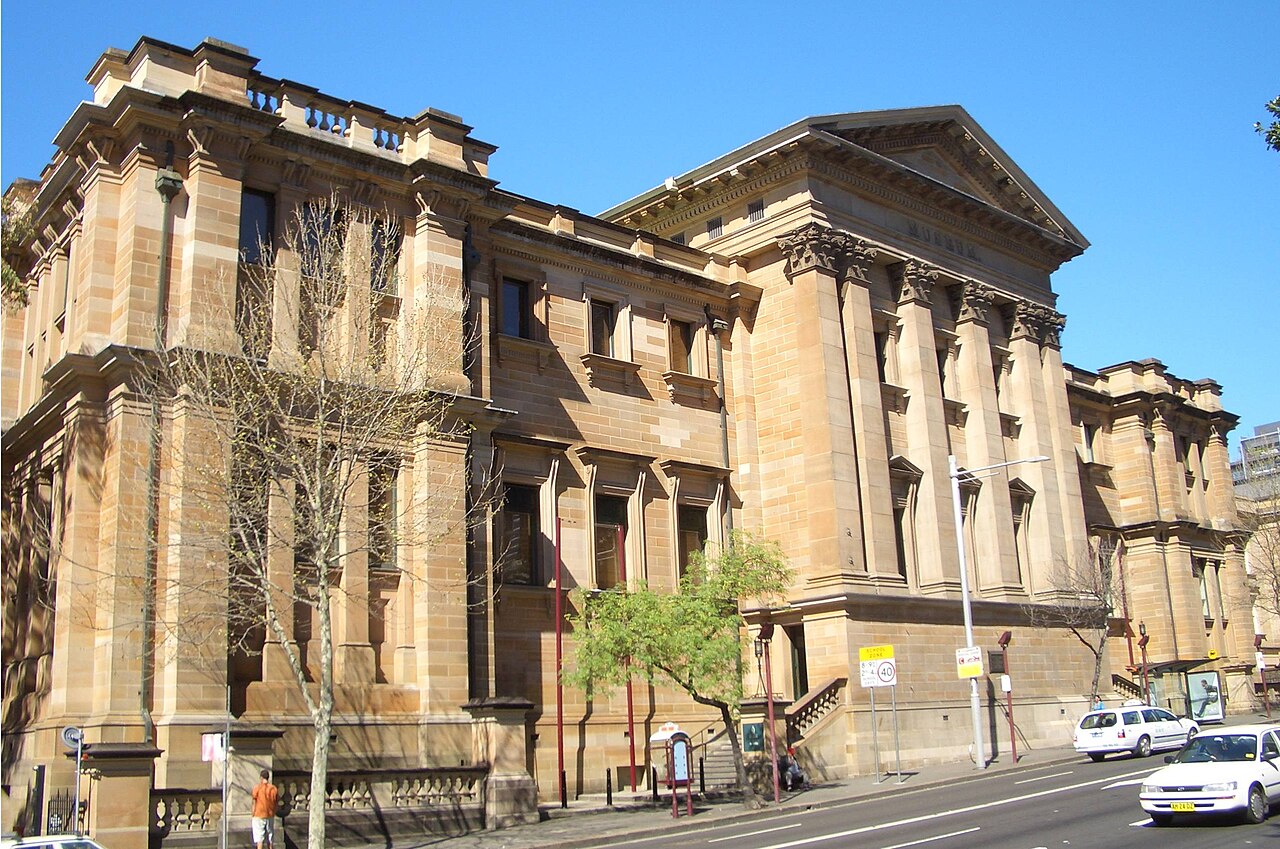
Australian Museum
- Must see · Heritage site
- Museum
Language · 11 published
Nature site · Sydney
Reviewed by Elena Voss · Roavina Travel Editor
Read from the OpenStreetMap access tags; anything not listed has no tag recorded.
Set the group type to family in the planner and the day window contracts to about three quarters of a solo day.
This place is a Park. It was established in 1810. It carries the Heritage Act — State Heritage Register heritage designation.
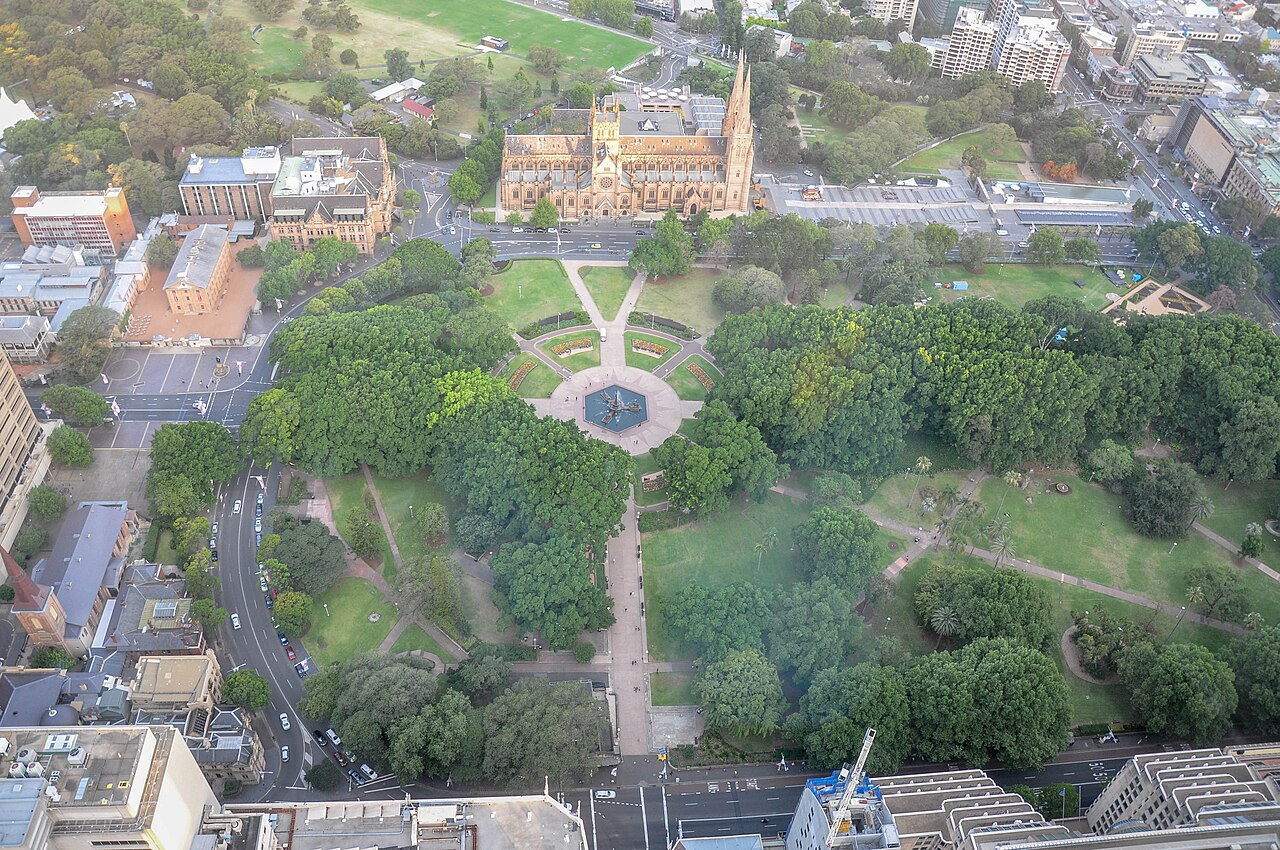
Hyde Park is a 16-hectare public park in the centre of Sydney, stretching between the city’s museum and civic precincts. Governor Macquarie proclaimed and named it in 1810, and the City of Sydney identifies it as Australia’s oldest park. Its identity is unusually legible on arrival: broad, tree-lined avenues divide lawns and memorial spaces, while city streets frame the park on every side. This is a place for an urban walk, quiet sitting, and reading Sydney’s public history through its fountain, memorial, and carefully planned open space.
Checked 2026-09-02 · Source
The park is best understood as two connected halves. Hyde Park north is the setting for the Archibald Fountain, whose formal basin and sculpture make a strong focal point along the central avenue. Hyde Park south leads towards the Anzac Memorial and its Pool of Reflection, with lawns, mature trees, and pedestrian routes shaping the approach. Public toilets and shaded places to sit add practical value. The surrounding streets connect the park to Sydney’s museum corridor, so the visit can work as a pause between indoor attractions without confusing the park with those separate venues.
Checked 2026-09-02 · Source
Allow about 60 to 90 minutes for a focused Hyde Park visit. That gives time to walk one of the principal avenues, pause at the Archibald Fountain, continue towards the Anzac Memorial, and leave room for shaded sitting or photographs. A shorter crossing is possible if the park is being used as a route between stations and museums; a longer stop suits visitors who want to read memorial details and observe the changing city frame. Treat this as planning guidance, because mobility needs, weather, temporary fencing, and the chosen entrance alter the pace.
Checked 2026-09-02 · Source
Hyde Park is an outdoor public space, so daylight and weather strongly shape the experience. City of Sydney currently reports lighting and power works, with limited sections of the north and south temporarily closed and some lawns or garden beds fenced. Choose a visit when the rest of your central Sydney route can absorb a small diversion, and allow extra time if a barrier changes the most direct path. Tree cover provides shaded areas for sitting, while heat, rain, glare, and wind can still affect comfort.
Checked 2026-09-02 · Source
Entry to Hyde Park is free, with no admission charge recorded for a person visiting the public park. The free admission applies to Hyde Park itself; nearby museums, memorial interiors, tours, performances, or separately managed events may have their own arrangements and are not included by that statement. For a straightforward park visit, no ticket purchase is needed. If your plan depends on an event or an adjacent attraction, check that destination’s responsible operator separately so its booking or fee is not mistaken for a Hyde Park charge.
Checked 2026-09-02 · Source
St James Station is beside Hyde Park north and Museum Station is beside Hyde Park south; both are on Elizabeth Street and provide lift access. Use St James for the Archibald Fountain end and Museum for the Anzac Memorial end. The City of Sydney also identifies nearby bus and light-rail services. Choose the entrance nearest your planned destination rather than navigating to the park’s centre point: the north and south landmarks are separated by the park’s length, and the wrong station can add an unnecessary walk. Check the final pedestrian segment and accessible route before departure.
Checked 2026-09-02 · Source
Access is documented as limited rather than uniformly step-free. City of Sydney describes upgraded main paths, improved College Street entrances, and more accessible links between Museum Station and the Anzac Memorial, while some areas near the Hyde Park south cafe include stairs. Temporary works fencing may restrict individual sections. Public toilets are available in the park, and accessible toilets are also available at the adjacent Museum and St James stations. Keep circulation routes clear, respect barriers, and confirm the current route if using a wheelchair, pushchair, or mobility aid.
Checked 2026-09-02 · Source
Hyde Park photographs benefit from its north–south composition: use the central avenue to create a perspective through mature trees, then choose either the Archibald Fountain or the Anzac Memorial as the image’s anchor. The Pool of Reflection offers a quieter subject in the southern half, while surrounding city buildings show how closely the park sits within Sydney’s civic core. Photograph from public visitor areas, keep paths and entrances clear, and follow any temporary notices around works. Early or later daylight can bring softer contrast to the memorial stone and fountain water.
Checked 2026-09-02 · Source
Hyde Park covers 16 hectares in central Sydney.
City of Sydney identifies Hyde Park as Australia’s oldest park; Governor Macquarie proclaimed and named it in 1810.
Hyde Park north contains the Archibald Fountain, while Hyde Park south contains the Anzac Memorial and Pool of Reflection.
Yes. City of Sydney lists public toilets in Hyde Park; accessible toilets are also available at adjacent Museum and St James stations.
Yes. City of Sydney describes ample tree cover and shaded areas for sitting and relaxing.
The Archibald Fountain was completed and installed in 1932, and the Anzac Memorial opened in 1934.
Loading the interactive map…
The interactive map could not be loaded.
Last updated:
Source: OpenStreetMap contributors, Wikidata ·