
3 min walk
Brussels Comics Figurines Museum
- Must see
- Museum
Language · 11 published
Market · Brussels
Galeries royales Saint-Hubert - Koninklijke Sint-Hubertusgalerijen
Reviewed by Elena Voss · Roavina Travel Editor
| Monday | 00:00 – 23:59 |
|---|---|
| Tuesday | 00:00 – 23:59 |
| Wednesday | 00:00 – 23:59 |
| Thursday | 00:00 – 23:59 |
| Friday | 00:00 – 23:59 |
| Saturday | 00:00 – 23:59 |
| Sunday | 00:00 – 23:59 |
Checked 2026-08-31 · Source
Read from the OpenStreetMap access tags; anything not listed has no tag recorded.
Set the group type to family in the planner and the day window contracts to about three quarters of a solo day.
This place is a Shopping mall. It opened in 1847. It was built in the eclectic architecture style. It was designed by Jean-Pierre Cluysenaar. It carries the protected monument heritage designation.
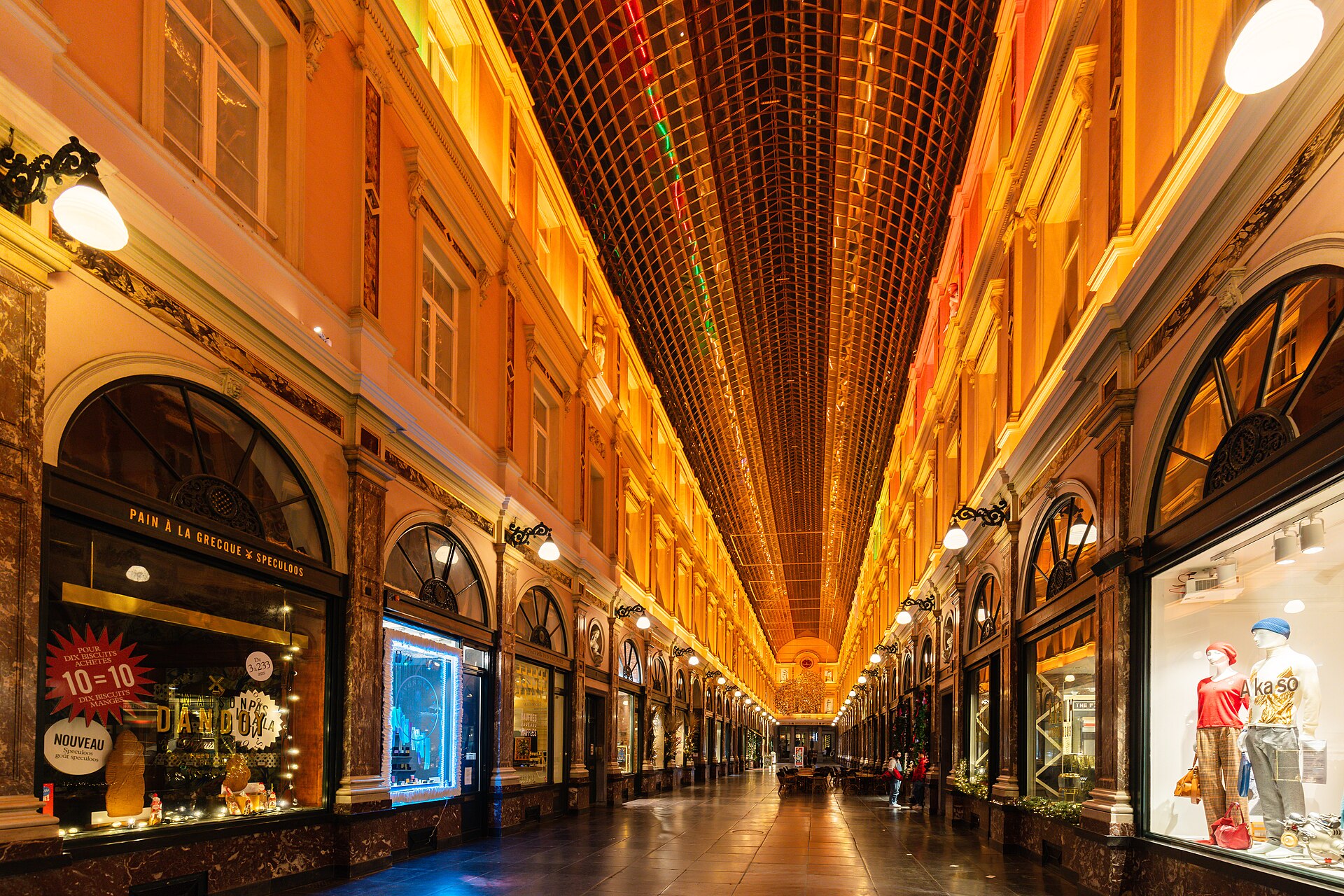
The Royal Saint-Hubert Galleries are a prestigious ensemble of glazed shopping arcades in central Brussels. Designed by architect Jean-Pierre Cluysenaer and inaugurated in 1847, they represent one of Europe's earliest covered shopping passages. The complex comprises three interconnected galleries: the Galerie du Roi, Galerie de la Reine, and Galerie des Princes. The neo-Renaissance facades and ornate cast-iron and glass roofing create an elegant atmosphere that has attracted visitors for over 175 years. Daily 00:00–24:00. The public galleries are permanently open, with no regular closure days. Individual shops, restaurants, cinema and theatres set their own hours.
Checked 2026-08-31 · Source
The galleries house luxury boutiques, chocolate shops, cafes, bookstores, and a cinema. Notable establishments include the flagship Neuhaus chocolate store and the Tropismes bookshop. The Galeries royales Saint-Hubert also contain the Theatre Royal des Galeries, a historic performance venue. The architectural details include decorative pilasters, sculptural elements, and the distinctive glazed roof that floods the pedestrian arcade with natural light. Visitors will find a concentration of Belgian specialty retailers alongside international luxury brands. The public galleries are permanently open, with no regular closure days. Individual shops, restaurants, cinema and theatres set their own hours.
Checked 2026-08-31 · Source
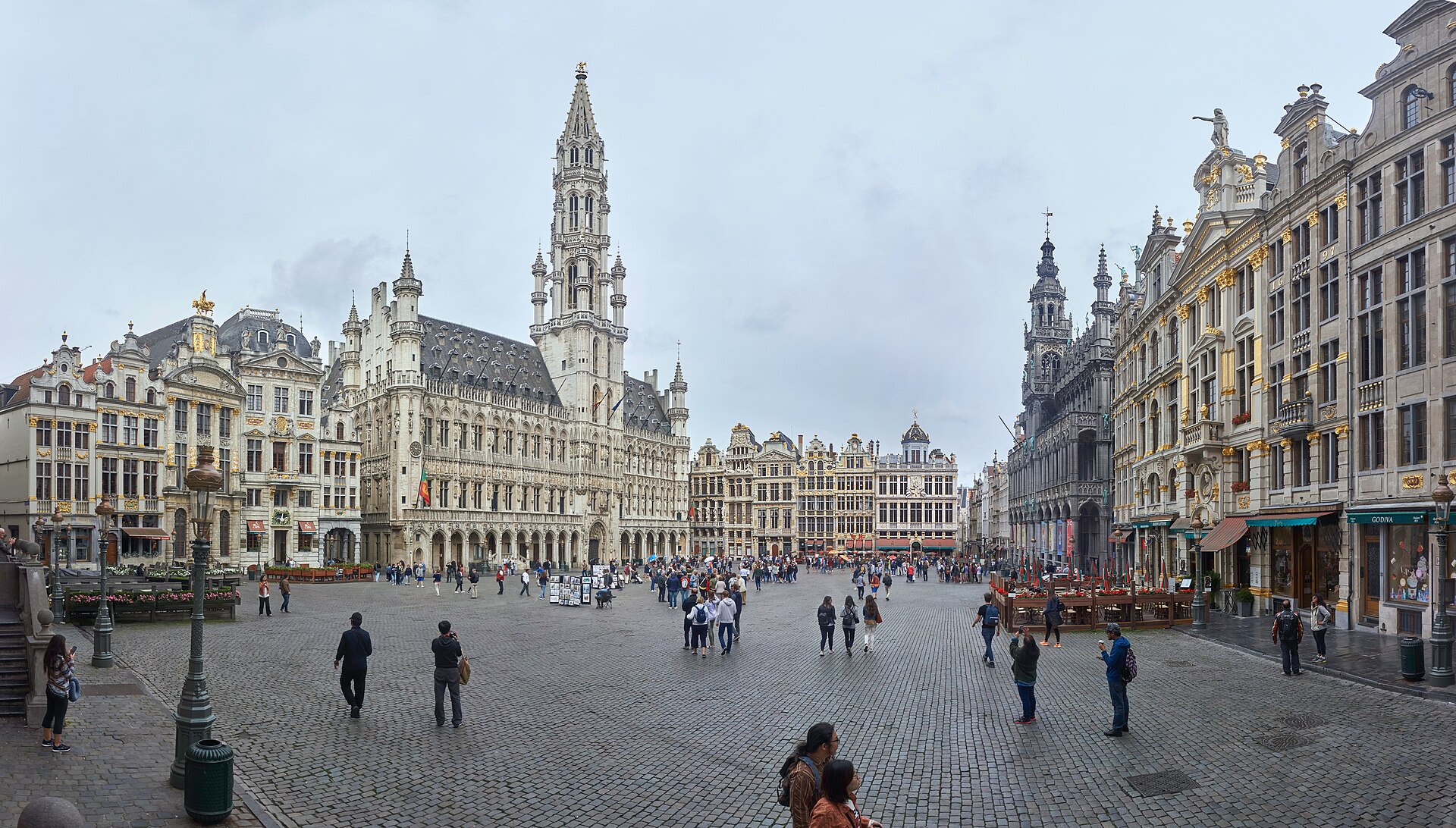
A casual walk through all three galleries takes approximately fifteen to twenty minutes without stopping. Most visitors spend between thirty minutes and one hour browsing shop windows, photographing the architecture, or purchasing goods. Those intending to shop, dine, or attend a theatre performance should allocate significantly more time. The galleries connect directly to the Grand Place area, making them convenient to incorporate into broader exploration of central Brussels. Evening visits offer different atmospheric qualities when interior lighting illuminates the glass roof. Free general entry to the permanently open pedestrian galleries; purchases, performances and other activities inside may be charged separately.
Checked 2026-08-31 · Source
The galleries function as a covered public passage accessible during standard commercial hours. Individual shop opening times vary by retailer and season. The arcades themselves provide shelter from rain and moderate temperatures, making them viable in most weather conditions. Peak visitor density typically occurs during midday hours and weekends. Daily 00:00–24:00. Level entrances are available from Rue des Bouchers and Rue du Marché aux Herbes. The Rue d’Arenberg entrance has three steps and a fixed anti-slip ramp measuring 0.75 metres wide and 1.50 metres long.
Checked 2026-08-31 · Source
Entry to the galleries as a public pedestrian thoroughfare is free of charge. Individual shops, cafes, the cinema, and the theatre set their own pricing for goods and services. No central admission fee exists for the architectural space itself. Visitors should anticipate premium pricing at luxury retailers and established chocolate houses. Free general entry to the permanently open pedestrian galleries; purchases, performances and other activities inside may be charged separately. Level entrances are available from Rue des Bouchers and Rue du Marché aux Herbes. The Rue d’Arenberg entrance has three steps and a fixed anti-slip ramp measuring 0.75 metres wide and 1.50 metres long.
Checked 2026-08-31 · Source
The galleries occupy a central location between Rue du Marche aux Herbes and Rue de l'Ecuyer, near the Grand Place. The nearest metro stations are De Brouckere and Gare Centrale, both within short walking distance. Multiple bus and tram lines serve the surrounding area. Brussels-Central railway station is a few minutes’ walk away; the operator also identifies Gare Centrale and Bourse as the nearest metro stations. Central Station is served by metro lines 1 and 5, but STIB states that step-free metro access is not guaranteed until September 2026 because the station lifts are temporarily unavailable. Street entrances are on Rue de l’Ecuyer, Rue d’Arenberg, Rue des Bouchers and Rue du Marché aux Herbes.
Checked 2026-08-31 · Source
The polished flooring can become slippery when wet; appropriate footwear is advisable. The galleries attract pickpockets due to high tourist traffic and confined spaces. Visitors should secure valuables and remain aware of surroundings. The premium retail environment may encourage unplanned spending. Photography of shop displays may be restricted by individual merchants. Emergency exits are marked throughout the complex. Level entrances are available from Rue des Bouchers and Rue du Marché aux Herbes. The main gallery route has no internal steps or obstacles, but the surface becomes harder to cross where the gallery meets Rue des Bouchers.
Checked 2026-08-31 · Source
The architectural features of the galleries, particularly the glass and iron roof structure, offer compelling photographic subjects. Natural light varies significantly by time of day and weather conditions. Tripod use may attract security attention in this commercial environment. The ornate facade from Rue des Bouchers provides an excellent exterior vantage point. Interior shots benefit from attention to exposure challenges posed by contrast between bright roof glazing and shadowed ground level. Most, but not all, businesses within the galleries are accessible. The complex consists of three covered passages: the Queen’s Gallery, the King’s Gallery and the Princes’ Gallery.
Checked 2026-08-31 · Source
The complex consists of three covered passages: the Queen’s Gallery, the King’s Gallery and the Princes’ Gallery.
They were officially inaugurated on 20 June 1847 in the presence of King Leopold I.
Belgian architect Jean-Pierre Cluysenaar designed the complex; construction began in 1846.
A metal-framed glass roof covers the passages along their full length and uses fish-scale glazing intended to improve ventilation and prevent condensation.
The galleries contain shops, chocolatiers, cafés and restaurants alongside Tropismes bookshop, Cinéma Galeries, Théâtre Royal des Galeries and the Vaudeville.
Belgium’s first public presentation of the Lumière brothers’ cinematograph took place above today’s Meert shop in the King’s Gallery on 1 March 1896.
Loading the interactive map…
The interactive map could not be loaded.
Last updated:
Source: OpenStreetMap contributors, Wikidata ·