
1 min walk
Choco-Story Brussels
- Must see
- Museum
Language · 11 published
Historic monument · Brussels
Reviewed by Elena Voss · Roavina Travel Editor
| Monday | 00:00 – 23:59 |
|---|---|
| Tuesday | 00:00 – 23:59 |
| Wednesday | 00:00 – 23:59 |
| Thursday | 00:00 – 23:59 |
| Friday | 00:00 – 23:59 |
| Saturday | 00:00 – 23:59 |
| Sunday | 00:00 – 23:59 |
Checked 2026-08-31 · Source
Read from the OpenStreetMap access tags; anything not listed has no tag recorded.
Set the group type to family in the planner and the day window contracts to about three quarters of a solo day.
This place is a Attraction. It was established in 1619. It is built of bronze. It carries the protected monument heritage designation.
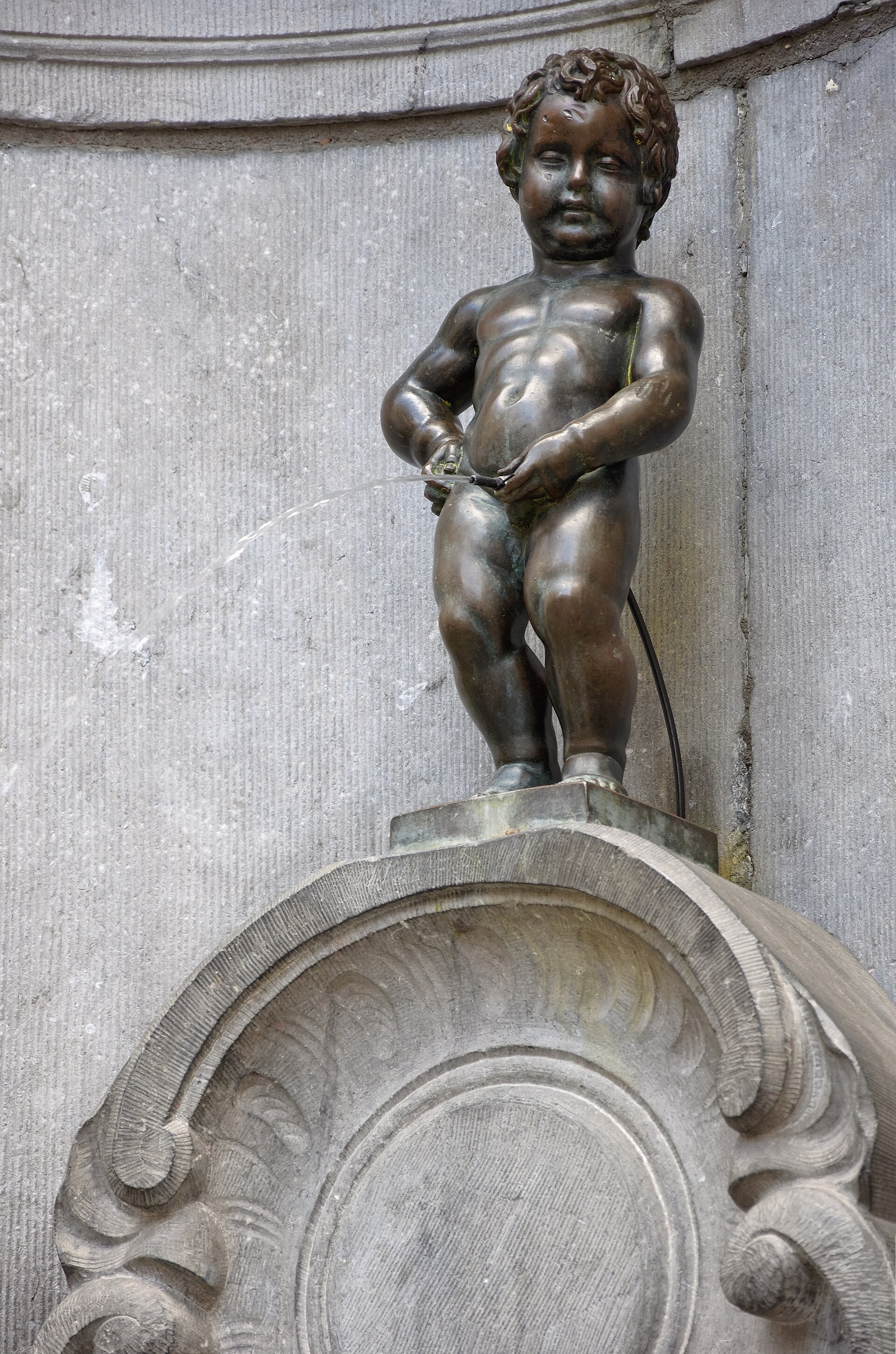
Manneken Pis is a bronze fountain figure of a small boy urinating, 55.5 centimetres tall, set in a stone niche on the corner where the Rue du Chêne meets the Rue de l'Étuve, a short walk downhill from the Grand-Place. The figure visitors see today descends from the bronze commissioned by the city council in 1619 from the Brabantine sculptor Jérôme Duquesnoy the Elder, probably cast and installed the following year. The size surprises nearly everyone. Open-air public monument with unrestricted daily street viewing; no visitor timetable or scheduled closure days.
Checked 2026-08-31 · Source
There is no interior. The fountain is a street corner, and everything there is to see stands within a few metres of it: the bronze, the blue stone niche, the railings, the basin, and whatever the boy happens to be wearing. The costume is the part worth planning around. The wardrobe now runs to more than nine hundred costumes, kept and exhibited at GardeRobe MannekenPis at Rue du Chêne 19, a few doors from the statue itself. Costume ceremonies have their own event times, but the fountain remains a street-side landmark.
Checked 2026-08-31 · Source
Ten minutes covers it, and that estimate assumes you stop, read the panel, walk once around the corner and take a photograph. There is no queue, no ticket desk, no bag check and no route to follow, so the only thing that costs time is other people: the corner is narrow, tour groups arrive as a block, and finding a clear line of sight can take two or three minutes in the middle of the day. Free to view from the public street; no admission ticket or reservation is required.
Checked 2026-08-31 · Source
Early is better. The corner stands on the walking route between the Grand-Place and the shopping streets to the south, so it fills through the middle of the day and thins again in the evening; arriving before the first tour groups is the single change that most improves the visit. Open-air public monument with unrestricted daily street viewing; no visitor timetable or scheduled closure days. The statue is visible directly from the pavement without entering a building or crossing a threshold. The surrounding historic cobblestones can make the approach difficult for wheelchair users; route suitability is rated partial.
Checked 2026-08-31 · Source
Nothing is charged. There is no ticket, no booking, no timed entry and no barrier: the fountain stands on a public street corner and is looked at from the pavement. Nobody at the corner has authority to collect money for looking at the statue, so treat any approach of that kind as what it is. Free to view from the public street; no admission ticket or reservation is required. The statue is visible directly from the pavement without entering a building or crossing a threshold. The surrounding historic cobblestones can make the approach difficult for wheelchair users; route suitability is rated partial.
Checked 2026-08-31 · Source
The statue stands at 50.8450 north, 4.3500 east, at the junction of the Rue du Chêne and the Rue de l'Étuve in the 1000 postcode, roughly 250 metres south-west of the Grand-Place. No car is needed and a car is close to useless here. Metro lines 1 and 5 serve Gare Centrale/Centraal Station; buses 48 and 95 serve Grand-Place/Grote Markt. From Grand-Place, continue along Rue Charles Buls and Rue de l’Etuve to the fountain at Rue du Chêne. Trams 4 and 10 serve Bourse/Beurs, but STIB reports that the station exits have no lift.
Checked 2026-08-31 · Source
The most common complaint about Manneken Pis is a mismatch of expectation, and it is entirely avoidable: this is a 55-centimetre figure in a niche above head height on an ordinary street corner, not a monument. Visitors who arrive expecting the second of those leave annoyed; visitors who arrive knowing the first enjoy it. The statue is visible directly from the pavement without entering a building or crossing a threshold. The fountain stands at the junction of Rue de l’Etuve and Rue du Chêne in central Brussels, postcode 1000.
Checked 2026-08-31 · Source
Two things make this a harder photograph than it looks: the figure is small and it sits above eye level behind iron railings. Shooting from directly beneath gives a steep upward angle, the railings across the frame and a bright sky behind the niche. Cross to the far pavement of the Rue de l'Étuve and shoot back at a slight angle instead. Modest telephoto framing helps more than a wide lens here. No. The figure at the fountain is a replica; the original is protected inside the Brussels City Museum on Grand-Place.
Checked 2026-08-31 · Source
The fountain stands at the junction of Rue de l’Etuve and Rue du Chêne in central Brussels, postcode 1000.
No. The figure at the fountain is a replica; the original is protected inside the Brussels City Museum on Grand-Place.
The statue is 55.5 centimetres tall.
Brussels sculptor Jérôme Duquesnoy the Elder created the original bronze figure in 1619.
Yes, it remains a fountain, although it ceased serving its original role in Brussels’ drinking-water distribution network during the 19th century.
The GardeRobe MannekenPis museum at Rue du Chêne 19 displays a rotating selection from the statue’s wardrobe, which contains more than 900 costumes.
Loading the interactive map…
The interactive map could not be loaded.
Last updated:
Source: OpenStreetMap contributors, Wikidata ·