
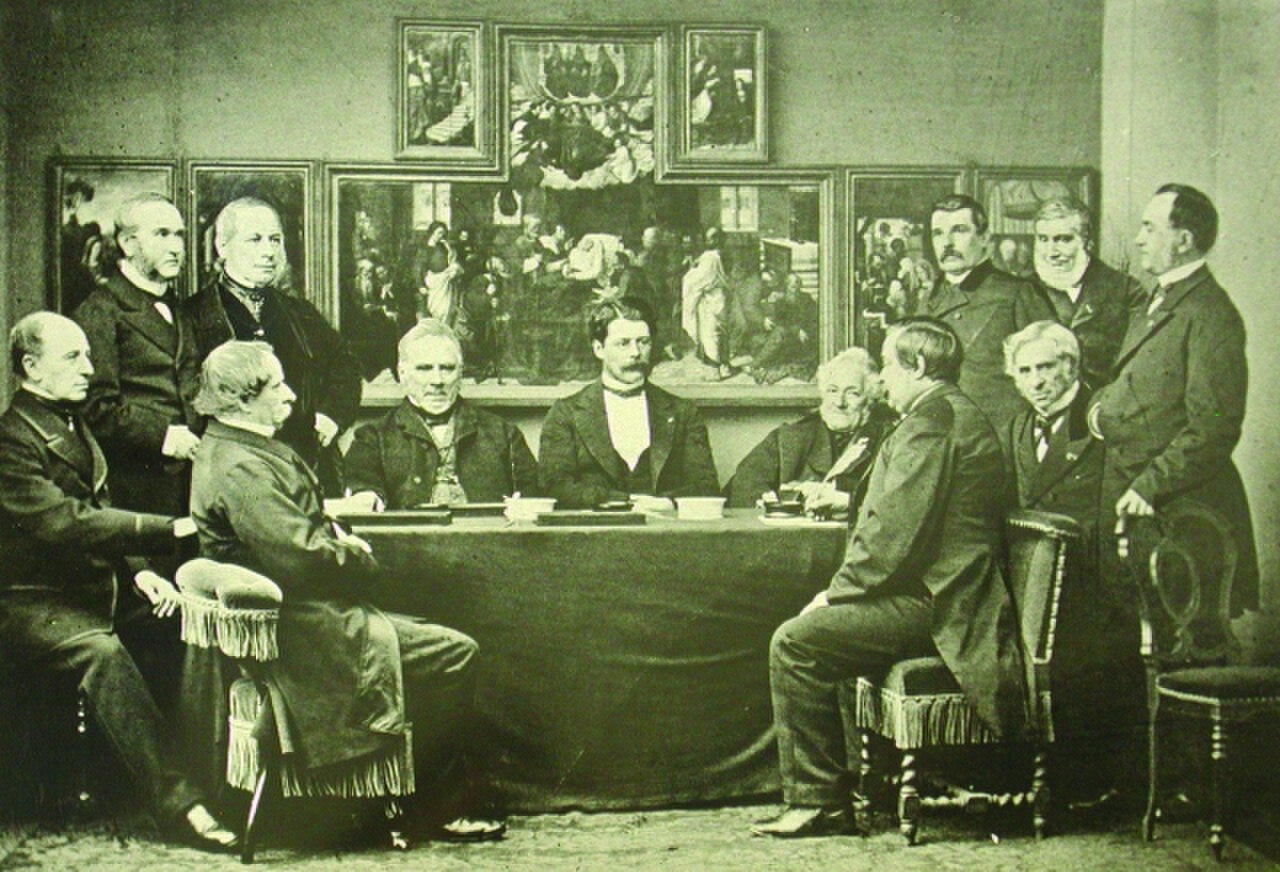
5 min walk
Museum of the Public Social Welfare Centre of Brussels
- High
- Museum
Historic monument · Brussels
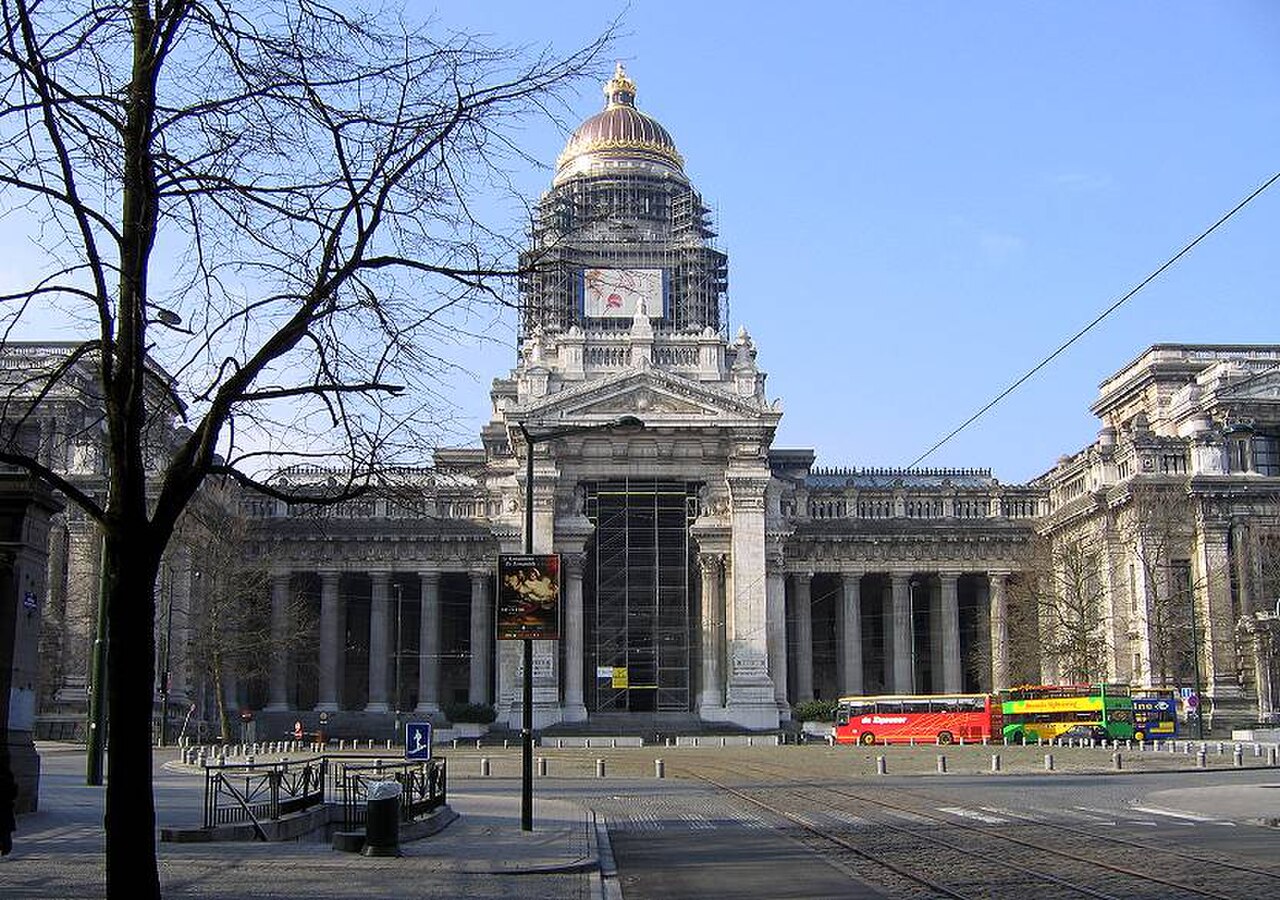
Palais de justice - Justitiepaleis
Closed today, Sunday. Next open Monday at 08:30 — the planner will not place a stop here on a Sunday.
Plan around it| Monday | 08:30 – 16:00 |
|---|---|
| Tuesday | 08:30 – 16:00 |
| Wednesday | 08:30 – 16:00 |
| Thursday | 08:30 – 16:00 |
| Friday | 08:30 – 16:00 |
| Saturday | Closed |
| Sunday | Closed |
Checked 2026-08-31 · Source
| Per person | Free entry |
|---|
Checked 2026-08-31 · Source
Read from the OpenStreetMap access tags; anything not listed has no tag recorded.
Set the group type to family in the planner and the day window contracts to about three quarters of a solo day.
The Palace of Justice of Brussels, known locally as Palais de justice or Justitiepaleis, stands as one of Belgium's most monumental law courts. Constructed in the eclectic style during the late nineteenth century, this imposing edifice dominates the Brussels skyline from its elevated position. The building serves as the country's most important court complex, housing various judicial institutions. Its grand scale and prominent location make it a significant landmark in the Belgian capital, visible from numerous points across the city centre. Monday–Friday 08:30–16:00; closed Saturday, Sunday and Belgian legal holidays.
Checked 2026-08-31 · Source
The interior contains vast ceremonial halls, courtrooms, and judicial chambers arranged across multiple floors. Visitors may observe the grand staircase and monumental spaces designed to convey institutional authority. The building accommodates the Court of Cassation, courts of appeal, and other judicial bodies. Architectural details include columns, sculptures, and decorative elements typical of its era. Public areas permit limited circulation, with most chambers restricted to those with official business. Free access to most public hearings; no ticket or prior authorization is required. Hearings involving restrictions such as youth cases or a court-ordered closed session are excluded. Guided architectural visits require separate advance booking.
Checked 2026-08-31 · Source
A brief exterior visit requires approximately fifteen to thirty minutes to appreciate the facade and panoramic views. Those entering for official purposes or permitted tours should allow longer depending on specific arrangements. The building's scale rewards unhurried observation of architectural details. Visitors combining this with the surrounding Marolles district and Place Poelaert viewpoint typically spend one to two hours in the immediate vicinity. No standardised visitor itinerary exists, so duration depends entirely on individual interest and access obtained.
Checked 2026-08-31 · Source
The building functions primarily as a working courthouse rather than a tourist attraction, so public access varies. Exterior viewing is possible at any time, with lighting conditions affecting photographic opportunities. Morning and late afternoon offer favourable illumination for the limestone facade. The elevated position provides notable sunset prospects over Brussels. Monday–Friday 08:30–16:00; closed Saturday, Sunday and Belgian legal holidays. The current step-free entrance is the left-hand side entrance at Rue aux Laines 25. The restored Place Poelaert approach includes a lifting platform connecting the left portico with the peristyle and security control.
Checked 2026-08-31 · Source
As an active judicial institution, standard admission fees do not apply in the conventional sense. Certain areas may be accessible without charge during designated times, while others remain restricted to authorised personnel. Free access to most public hearings; no ticket or prior authorization is required. Hearings involving restrictions such as youth cases or a court-ordered closed session are excluded. Guided architectural visits require separate advance booking. The current step-free entrance is the left-hand side entrance at Rue aux Laines 25.
Checked 2026-08-31 · Source
The palace occupies a prominent position near Place Poelaert, accessible by foot from the lower town via escalators or steep streets. Public transport connections serve the surrounding area, though specific routes require verification against current operator information. The Marolles neighbourhood lies immediately adjacent. From Brussels-Midi railway station, continue by public transport toward Louise. Louise station is served by metro lines 2 and 6 and tram lines 8 and 97. Trams 92 and 93 and bus 33 serve the named Poelaert stop beside the courthouse. On 31 August 2026, ordinary visitors should approach the right-hand side entrance toward Rue des Minimes; step-free entry is at Rue aux Laines 25.
Checked 2026-08-31 · Source
Security measures apply given the building's judicial function. Visitors must respect restricted zones and official signage. The surrounding streets can be busy with traffic and pedestrians. Pickpockets may operate in tourist-frequented areas nearby. The steep approaches demand appropriate footwear. Weather exposure is significant at the elevated viewpoint. Judicial proceedings require silence and decorum in proximate areas. The current step-free entrance is the left-hand side entrance at Rue aux Laines 25. All visitors pass through security screening. Most hearings are public. Visitors over 14 may attend without prior authorization; younger visitors must be accompanied by a parent or guardian. Closed hearings and certain youth proceedings are excluded.
Checked 2026-08-31 · Source
The exterior presents substantial photographic interest due to architectural scale and commanding position over Brussels. The panoramic viewpoint toward the city centre attracts numerous photographers. Tripod use may be limited in public spaces. Optimal exterior shots occur during clear conditions with favourable light. The contrast between monumental architecture and urban surroundings offers compositional possibilities. Respect for ongoing judicial activities must govern all photographic behaviour near or within this functioning institution. Yes. The courthouse remained operational throughout the façade work. The front-façade restoration was largely complete by 27 August 2026, but the Place Poelaert main entrance was scheduled to reopen during September 2026.
Checked 2026-08-31 · Source
Yes. The courthouse remained operational throughout the façade work. The front-façade restoration was largely complete by 27 August 2026, but the Place Poelaert main entrance was scheduled to reopen during September 2026.
Most hearings are public. Visitors over 14 may attend without prior authorization; younger visitors must be accompanied by a parent or guardian. Closed hearings and certain youth proceedings are excluded.
Visitors must present identification and pass through security screening comparable to an airport checkpoint.
No. The Belgian Courts and Tribunals service prohibits photography and filming inside courthouses.
Yes. The responsible federal building authority directs French-language visitors to Arkadia and Dutch- or English-language visitors to Korei; these tours require advance booking.
Joseph Poelaert designed the Palace of Justice. Construction ran from 1866 to 1883, and the building was inaugurated in 1883.
Loading the interactive map…
The interactive map could not be loaded.
Last updated:
Source: OpenStreetMap contributors, Wikidata ·