
2 min walk
Beijing Temple of Confucius
- Must see · Heritage site
- Historic monument
Language · 11 published
Historic monument · Beijing
国子监
Reviewed by Elena Voss · Roavina Travel Editor
| Monday | Closed |
|---|---|
| Tuesday | 09:00 – 17:00 |
| Wednesday | 09:00 – 17:00 |
| Thursday | 09:00 – 17:00 |
| Friday | 09:00 – 17:00 |
| Saturday | 09:00 – 17:00 |
| Sunday | 09:00 – 17:00 |
Checked 2026-08-31 · Source
This place is a Attraction. It was established in 1306. It carries the Major Historical and Cultural Site Protected at the National Level heritage designation.
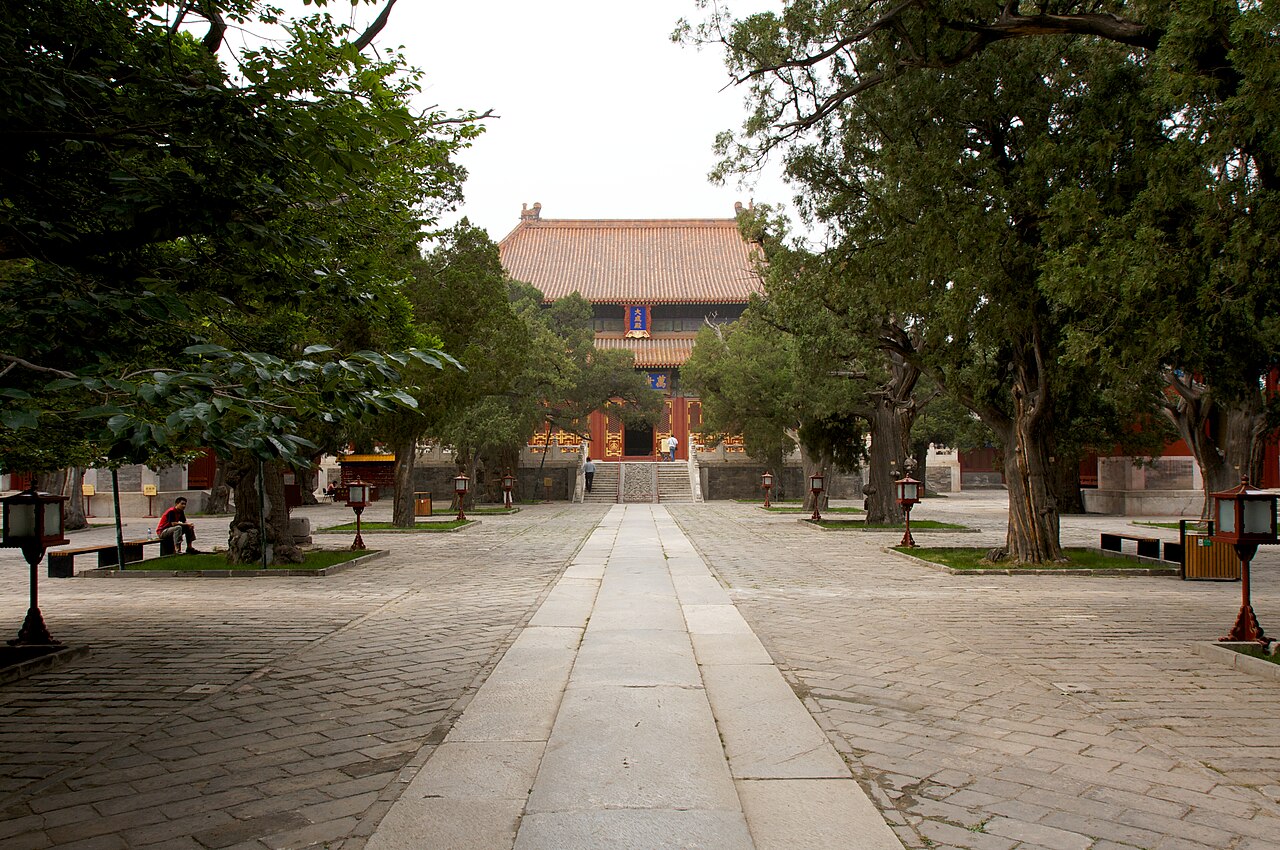
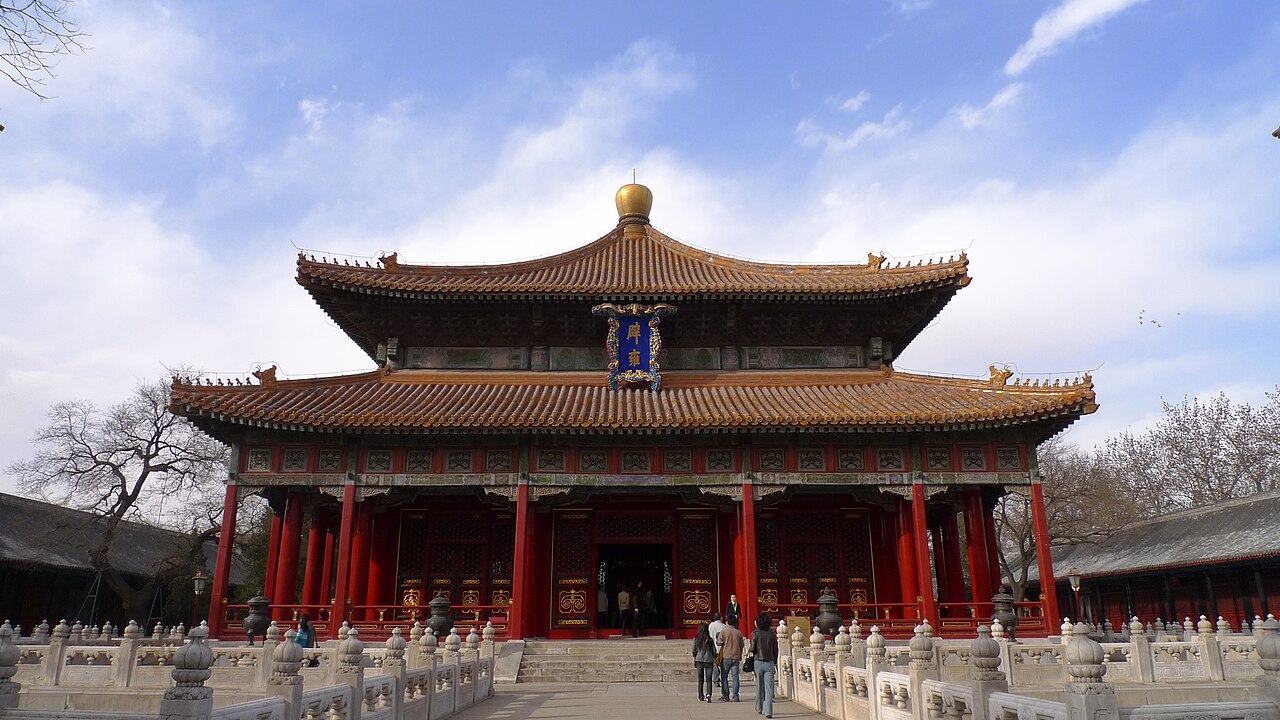
The Imperial College, or Guozijian, was the highest state educational institution and education administration of the Yuan, Ming and Qing dynasties. Founded in the late thirteenth century and expanded over subsequent reigns, it occupies the same museum complex as Beijing Confucius Temple on Guozijian Street. The academy's axial courtyards express the link between Confucian learning, imperial authority and civil administration. Its most distinctive building is Biyong Hall, the square imperial lecture hall surrounded by a circular pool. One CNY 30 ticket now connects the academy with the neighbouring temple, allowing the two institutions to be read as a single educational and ceremonial landscape.
Checked 2026-08-31 · Source
The complex contains traditional courtyard architecture with halls, stele pavilions, and ceremonial spaces arranged along a central axis. Key structures include the Biyong Hall, a square building within a circular moat symbolising heaven and earth, used for lectures by emperors. Stele corridors display stone tablets documenting institutional history. The site adjoins the Beijing Temple of Confucius, with which it shares historical and functional connections. Original architectural elements and later restorations combine to present the imperial educational environment.
Checked 2026-08-26
Allow two to three hours for the combined Imperial College and Confucius Temple route. The academy alone can be seen in about one hour, but Biyong Hall, the glazed memorial archway, Yilun Hall and the stone classics reward slower inspection. The shared ticket and entrance make separating the sites inefficient: visitors pass through the Confucius Temple gate and continue into Guozijian. Reading translated background material before arrival helps because many inscriptions are in Chinese. Add time for photographs in the courtyards, but do not occupy one point for more than 15 minutes or obstruct the public route.
Checked 2026-08-31 · Source
The combined museum is open Tuesday-Sunday 09:00-17:00, with last entry at 16:30; Monday is closed except on statutory holidays. Morning gives quieter courtyards and softer light on the painted archways. Late afternoon is useful for Guozijian Street photography, but a 16:30 arrival leaves too little time for both halves of the museum. The largely outdoor route is hot in midsummer and cold in winter, with limited shelter between halls. Wednesday includes 200 free places for individual visitors through the museum's official ticket service, so that day can attract additional demand even though ordinary tickets remain available.
Checked 2026-08-31 · Source
Adult admission is CNY 30 and covers both Imperial College and Beijing Confucius Temple. Full-time undergraduate and junior-college students pay CNY 15 with valid student identification. Eligible disabled visitors, people aged 60 and over and other groups listed by the museum enter free after document verification. Ordinary foreign visitors do not need advance reservation: Beijing's 12345 service confirms that a passport can be used for onsite purchase. Online and onsite sales stop at 16:30. The museum releases a limited allocation of 200 free individual places each Wednesday through its official WeChat ticket service.
Checked 2026-08-31 · Source
The site occupies Guozijian Street in Beijing's Dongcheng district, near Yonghegong Lama Temple. Subway Line 2 or Line 5 serves Yonghegong Lama Temple station, requiring short walking distance. Multiple bus routes operate in the vicinity. The area's hutong street network may complicate direct vehicle access; pedestrian navigation from main roads proves most reliable. Signage in Chinese predominates; visitors should prepare location names in characters. Central location permits combination with nearby cultural attractions in walking distance. A flexible visit lets travellers connect Imperial College with the rest of the day without treating one room, viewpoint or photograph as the whole experience. The useful pace depends on personal interest and conditions on arrival.
Checked 2026-08-26
The public route crosses old stone thresholds and raised hall entrances, so wheelchair access is partial even though the main courtyards are level. Enter through the Confucius Temple gate; there is no independent tourist entrance that bypasses the temple. Keep the ticket and passport available through the combined visit. Personal photography must not block passages, touch relics or occupy one position for more than 15 minutes. Flash, tripods and professional lighting are prohibited around stone inscriptions, protected buildings and exhibition rooms. The site remains a protected ceremonial complex, so climbing platforms, leaning on steles and entering roped areas are not permitted.
Checked 2026-08-31 · Source
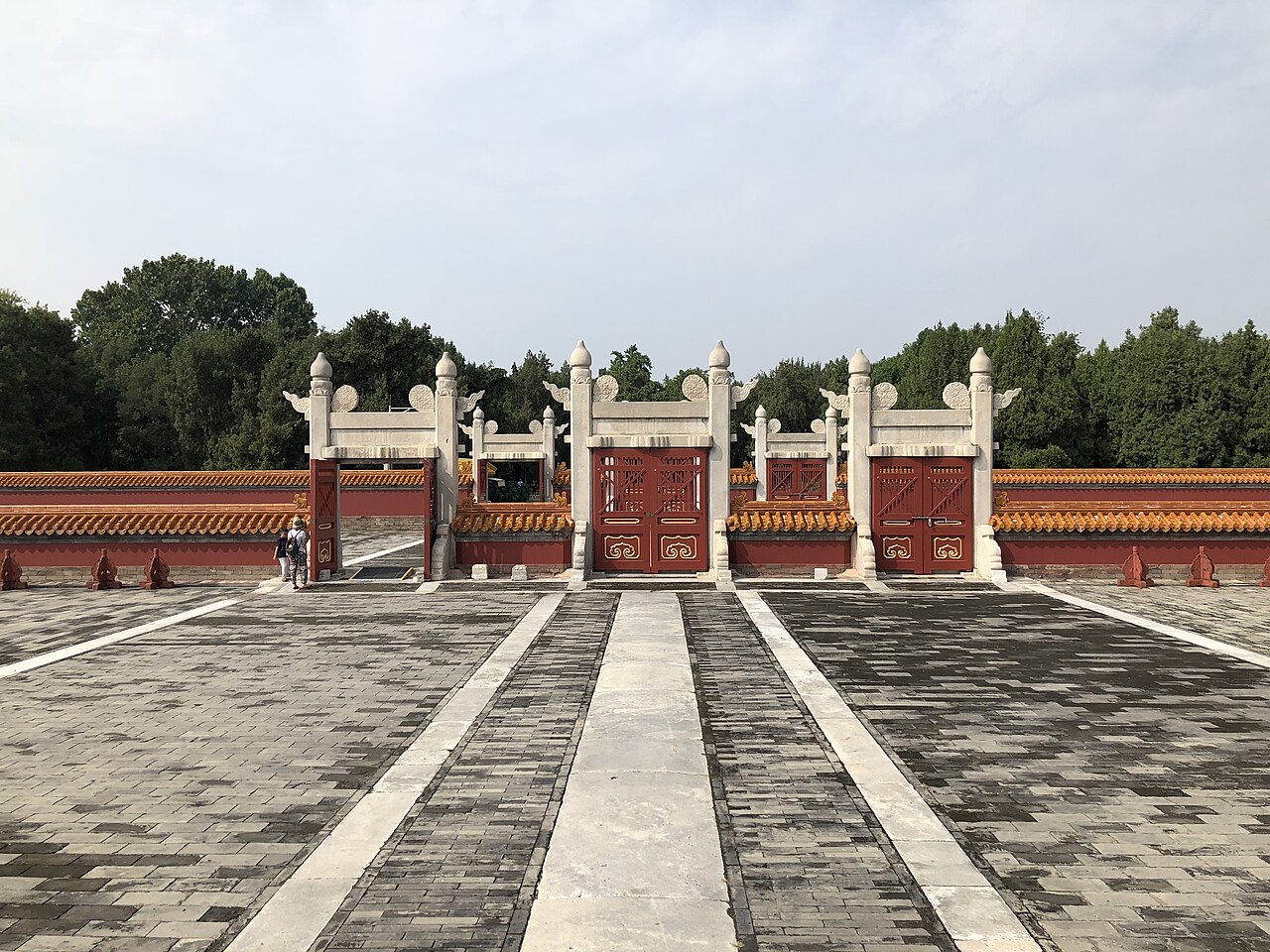
The strongest photographs follow the central axis: the glazed archway, Biyong Hall reflected in its circular pool and the rhythm of courtyard gates. Morning reduces tour-group congestion; later afternoon gives warmer light along Guozijian Street. Personal mobile-phone and camera photography is allowed when it does not obstruct visitors or affect relics. Flash, tripods, reflectors, lighting rails and other professional equipment are prohibited in exhibition rooms and around stone carvings. Commercial shoots require authorisation, and costume sessions cannot monopolise a location for repeated poses. Keep equipment clear of thresholds so the already limited accessible route remains usable.
Checked 2026-08-31 · Source
Tuesday-Sunday 09:00-17:00, last entry 16:30; Monday closed except statutory holidays.
CNY 30 for the combined Imperial College and Confucius Temple ticket.
Enter through the Confucius Temple gate on Guozijian Street; the two sites form one museum route.
Partially. Courtyards are mostly level, but stone thresholds and raised halls interrupt the route.
It is the square imperial lecture hall at the centre of the academy, surrounded by a circular pool.
No for ordinary foreign visitors; tickets can be purchased onsite with a passport.
Loading the interactive map…
The interactive map could not be loaded.
Last updated:
Source: OpenStreetMap contributors, Wikidata ·