
3 min walk
Beijing Temple of Confucius
- Must see · Heritage site
- Historic monument
Language · 11 published
Place of worship · Beijing
雍和宫
Reviewed by Elena Voss · Roavina Travel Editor
| Monday | 09:00 – 16:00 |
|---|---|
| Tuesday | 09:00 – 16:00 |
| Wednesday | 09:00 – 16:00 |
| Thursday | 09:00 – 16:00 |
| Friday | 09:00 – 16:00 |
| Saturday | 09:00 – 16:00 |
| Sunday | 09:00 – 16:00 |
Checked 2026-08-31 · Source
Read from the OpenStreetMap access tags; anything not listed has no tag recorded.
Set the group type to family in the planner and the day window contracts to about three quarters of a solo day.
This place is a Attraction. It was established in 1694. It carries the Major Historical and Cultural Site Protected at the National Level heritage designation.
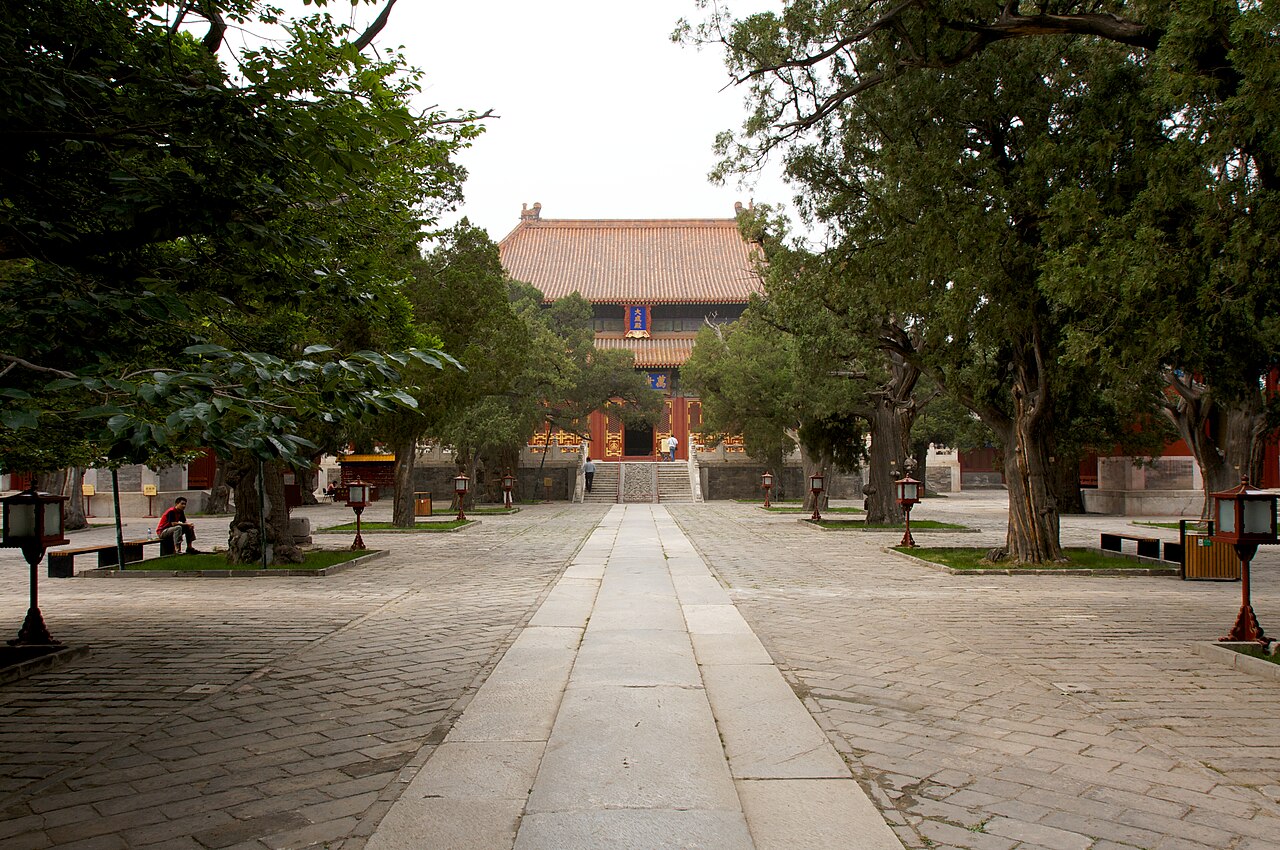
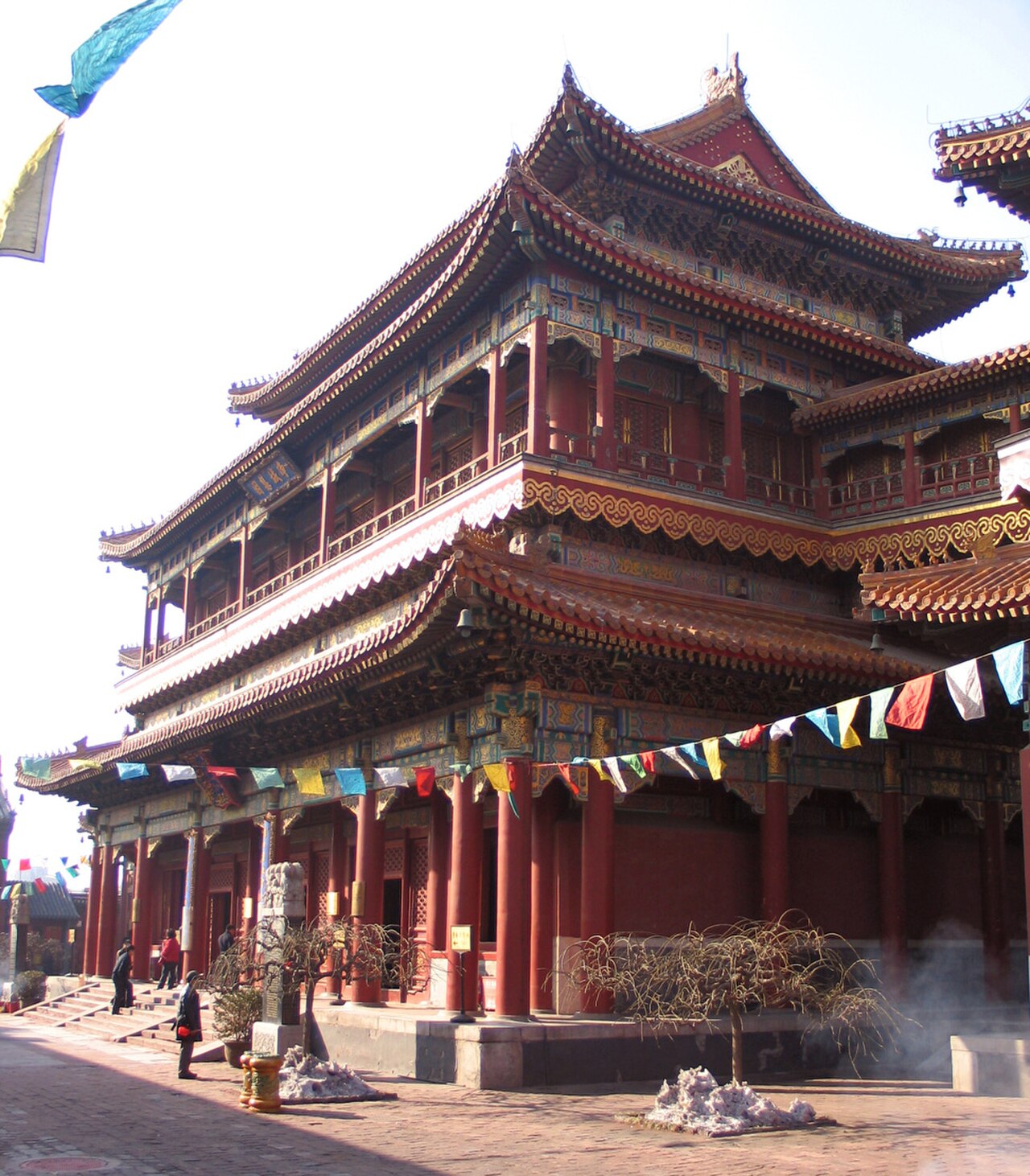
The Lama Temple, known locally as Yonghegong, stands as one of Beijing's most significant Tibetan Buddhist monasteries. Originally constructed in 1694 as an imperial residence, it was converted to a lamasery in 1744. The complex serves as an active place of worship and a preserved cultural heritage site. Its architecture blends Han Chinese and Tibetan-Mongolian styles, reflecting its historical role in religious and political unification. The site remains a functioning monastery with resident monks. The temple uses real-name ticketing through its official system, with identity details matched to the document shown at entry. The temple uses real-name ticketing through its official system, with identity details matched to the document shown at entry.
Checked 2026-08-31 · Source
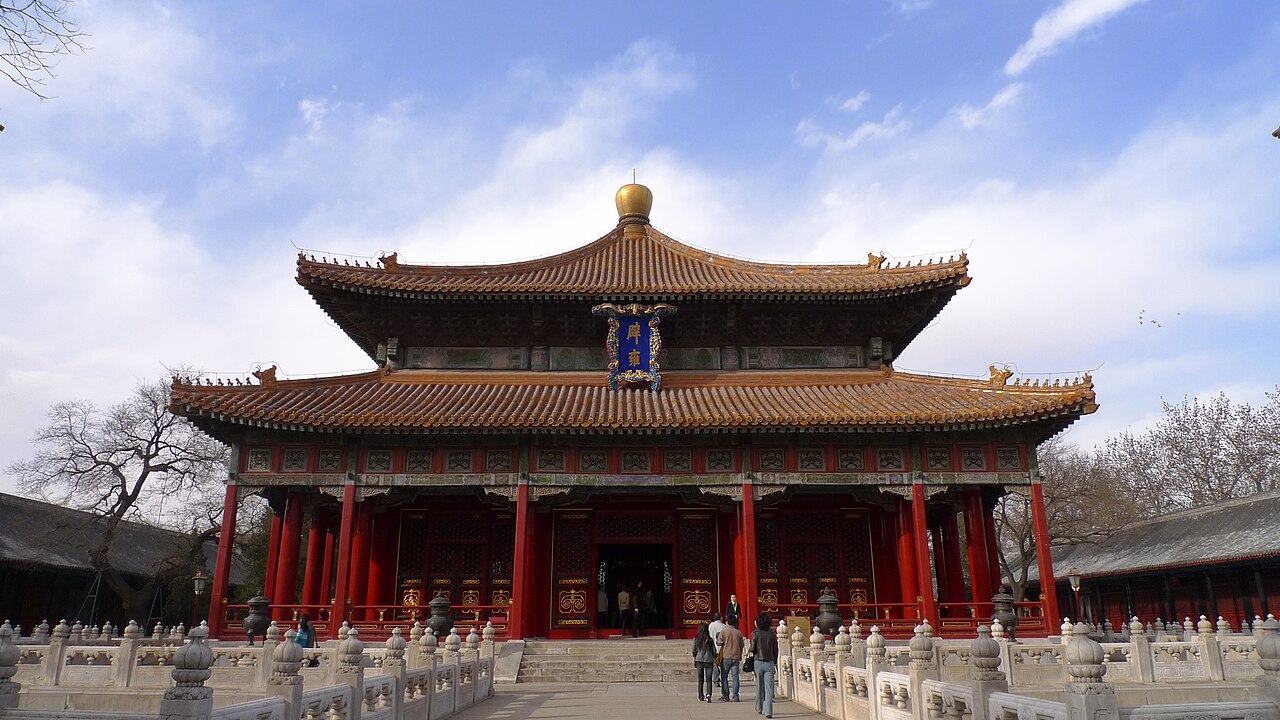
The temple complex comprises multiple halls arranged along a north-south axis. Key structures include the Hall of the Heavenly Kings, the Hall of Harmony and Peace, and the Pavilion of Ten Thousand Happinesses. The latter houses a towering Maitreya Buddha statue carved from a single sandalwood trunk. Prayer halls contain numerous Buddhist statues, thangka paintings, and religious artifacts. Incense burners and prayer wheels are positioned throughout the grounds. The architecture features elaborate roof decorations and painted corridors typical of imperial religious buildings. Treat secondary spaces as optional until their current access is confirmed. The published booking system releases admission up to ten days in advance.
Checked 2026-08-31 · Source
Visitors typically allocate between one and two hours for a comprehensive exploration of the Lama Temple grounds. The linear layout facilitates efficient movement through successive halls without backtracking. Those with particular interest in Buddhist art, architectural details, or religious practice may extend their visit. Peak periods, particularly during mornings when worship activity concentrates, may slow progression through narrower passages. Photography enthusiasts and visitors seeking contemplative observation should plan additional time. The compact site rewards unhurried examination of decorative elements and hall interiors. Keep additional Beijing stops outside this allowance unless time remains. The published system permits up to three tickets per WeChat account for one visit date.
Checked 2026-08-31 · Source
Standard visiting hours are 09:00-16:00. Lunar New Year worship dates use special schedules, including early opening and altered closing times. Allow 90 minutes for the five main courtyards and halls, with additional time for worship and incense queues. Morning is quieter than the final hour. Statutory holidays, severe weather, conservation work and special events can replace the ordinary schedule through a dated notice from the responsible body. Temple arrangements control ceremonial incense. Burning can be suspended during haze, heavy rain, snow or high winds.
Checked 2026-08-31 · Source
Full-price admission is CNY 25 and the half-price ticket is CNY 12. Real-name booking uses valid identity information and the same document is required at entry. Real-name products require the original registered identity document at entry. Transport, inner courtyards, performances, boat hire, separately controlled ruins and commercial activities are excluded unless the ticket description explicitly includes them. Yes. New Year's Eve and the first fifteen lunar days include early openings, shorter sessions and very heavy worship traffic.
Checked 2026-08-31 · Source
Use Yonghegong Lama Temple station, the interchange for Beijing Subway lines 2 and 5. Exit F is on the temple side of Yonghegong Street; the entrance is a short walk north. Use the named gate, station or district in these directions because the attraction may cover several kilometres or sit within a much larger historic neighbourhood.
Checked 2026-08-31 · Source
The principal courtyards have broad, mostly level stone routes, but historic thresholds, steps into halls and dense worship crowds prevent a fully step-free visit. Wheelchairs can use the exterior axis while many interiors remain limited. The temple uses real-name ticketing through its official system, with identity details matched to the document shown at entry. The published booking system releases admission up to ten days in advance. The published system permits up to three tickets per WeChat account for one visit date. Long distances, historic thresholds, stairs, active worship, dense crowds and independently operated sites remain relevant to the final route.
Checked 2026-08-31 · Source
Exterior architectural photography is generally permitted throughout the Lama Temple complex. Interior hall restrictions may prohibit or limit image capture, particularly around sacred statues and during active worship. Lighting conditions vary dramatically between bright courtyards and dimly lit prayer halls, challenging exposure adjustment. Morning and late afternoon exterior illumination enhances photographic quality. Respectful distance from worshippers and monks remains essential; intrusive documentation of private devotion is inappropriate. Drone operation within Beijing's controlled airspace surrounding historic sites is strictly prohibited without specific authorization. Keep equipment compact and avoid obstructing entrances, paths, or viewpoints.
Checked 2026-08-31 · Source
The temple uses real-name ticketing through its official system, with identity details matched to the document shown at entry.
The published booking system releases admission up to ten days in advance.
The published system permits up to three tickets per WeChat account for one visit date.
Temple arrangements control ceremonial incense. Burning can be suspended during haze, heavy rain, snow or high winds.
Yes. New Year's Eve and the first fifteen lunar days include early openings, shorter sessions and very heavy worship traffic.
No. The outdoor central axis is the easiest route, but raised thresholds and steps restrict entry to several historic halls.
Loading the interactive map…
The interactive map could not be loaded.
Last updated:
Source: OpenStreetMap contributors, Wikidata ·