
6 min walk
Fayuan Temple
- Must see · Heritage site
- Place of worship
Language · 11 published
Place of worship · Beijing
北京牛街礼拜寺
Closed today, Saturday. The next opening is not recorded — the planner will not place a stop here on a Saturday.
Plan around itReviewed by Elena Voss · Roavina Travel Editor
| Monday | Closed |
|---|---|
| Tuesday | Closed |
| Wednesday | Closed |
| Thursday | Closed |
| Friday | Closed |
| Saturday | Closed |
| Sunday | Closed |
Checked 2026-08-31 · Source
This place is a Place of worship. It was established in 1442. It was built in the Chinese architecture style. It carries the Major Historical and Cultural Site Protected at the National Level heritage designation.
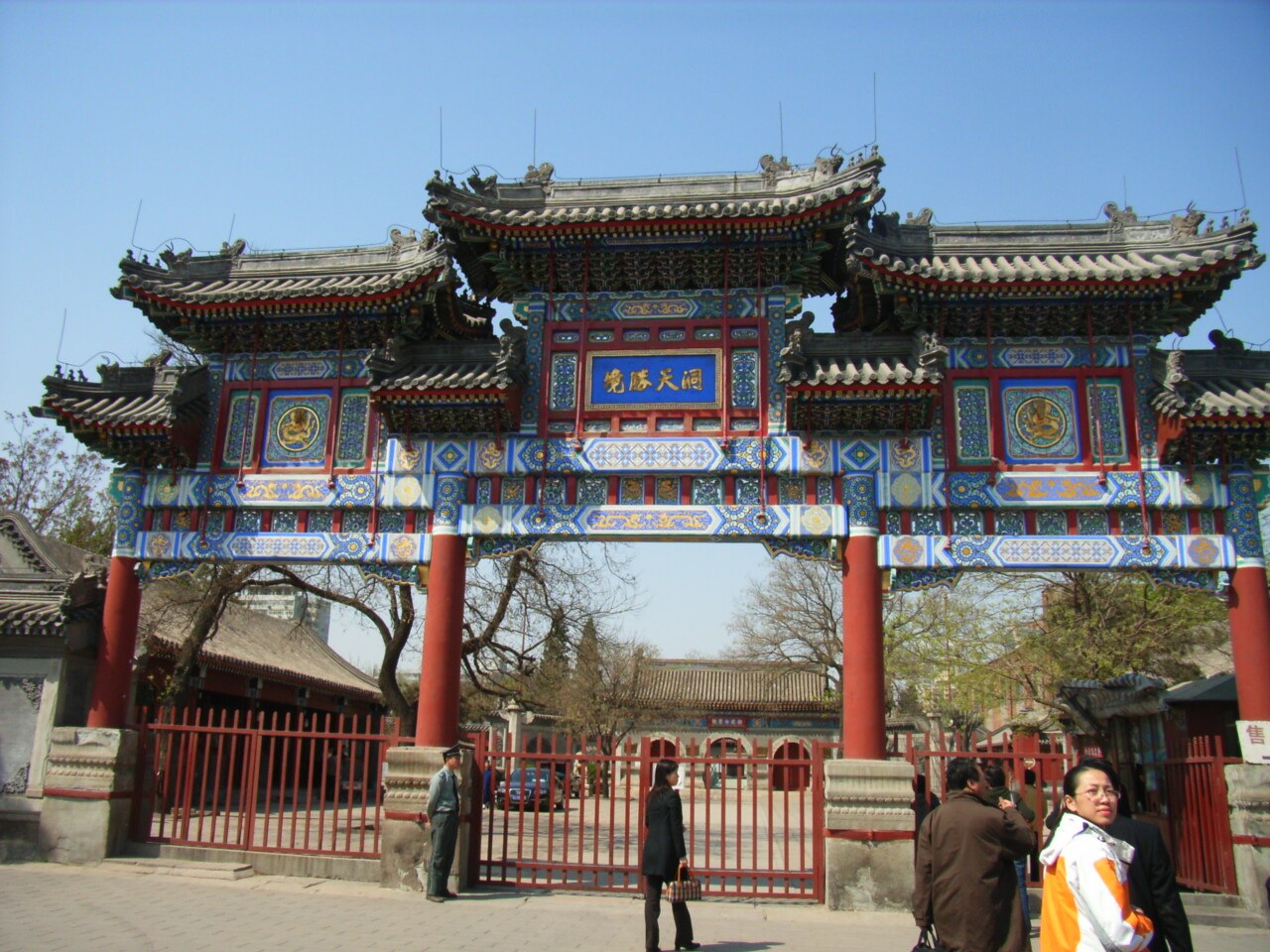
Niujie Mosque, known locally as 牛街礼拜寺, is Beijing's oldest and most important historic mosque. Founded in 996 and rebuilt across later dynasties, it combines Chinese timber halls and courtyard planning with Islamic orientation, Arabic inscriptions and worship functions. The protected complex anchors the long-established Hui Muslim neighbourhood of Niujie in Xicheng District. It is currently closed to public visits and religious activity during a major conservation programme begun in August 2024 and expected to last about three years. The closure protects foundations and historic fabric; the former CNY 10 tourist route is not operating during construction. Its Moon-Watching Tower and prayer complex can currently be understood only from historical interpretation and lawful exterior views.
Checked 2026-08-26
Niujie Mosque's protected complex normally contains three courtyards arranged on an east-west axis, with the Moon-Watching Tower, minaret, stone steles, scholars' tombs and a prayer hall combining Chinese timber architecture with Arabic calligraphy. The main prayer hall is reserved for Muslim worshippers even in ordinary operation. None of this is currently available as a public visitor route: the mosque is inside a major conservation project covering foundations and historic fabric. Hoarding and construction controls replace normal courtyard circulation until the responsible authorities and mosque announce reopening.
Checked 2026-08-31 · Source
There is currently no mosque visit duration because the restoration site has no public route. A trip to Niujie can still focus on the surrounding Hui neighbourhood, halal restaurants and shops, which can fill one or two hours without entering the compound. After reopening, the historic courtyards formerly required about 30-60 minutes, but the post-conservation route and capacity will be determined by the mosque. Friday prayer and Islamic festivals will again take priority over tourism. Until an official reopening notice appears, time at the gate should be treated only as an exterior street view, not a partial interior visit.
Checked 2026-08-26
Do not plan a sightseeing visit while the restoration closure remains active. The conservation programme began in August 2024 and was expected to run for about three years, with public visits and religious activity suspended during construction. The former visitor schedule of roughly 08:00-17:00 is historical context, not current access. The surrounding Niujie district, halal restaurants and public streets remain visitable, but the mosque gate should not be treated as an open attraction. Reopening must come from the mosque or responsible cultural-relic authority, not from an old directory listing.
Checked 2026-08-31 · Source
No admission is currently sold because Niujie Mosque is closed for restoration. The regular pre-closure visitor price was CNY 10, but that amount does not authorise entry into the work site. Do not purchase a third-party mosque ticket or accept an offer to bypass barriers. When the complex reopens, the main prayer hall will remain reserved for Muslims and the public route may differ after conservation. The former price is retained only to describe ordinary operation after reopening; today's practical admission status is unavailable.
Checked 2026-08-31 · Source
Niujie Mosque is at 88 Niujie Middle Road in Xicheng District. The mosque itself is closed, so travel here only for the surrounding Niujie neighbourhood. From Changchunjie Station on Subway Line 2, walk south or take bus 10 toward Niujie; buses 10, 48 and 88 serve the area. The Chinese name 牛街礼拜寺 helps identify the compound. Construction barriers may affect the pavement immediately around the entrance, and there is no public visitor drop-off or internal route during restoration.
Checked 2026-08-31 · Source
The closed mosque is a protected construction site and an important religious institution. Do not enter work gates, photograph through restricted openings or interfere with staff. The regular rules will still matter after reopening: modest clothing, quiet conduct, shoes removed where directed and non-Muslims excluded from the prayer hall. The surrounding Niujie community remains active, including halal shops and restaurants, so respect worshippers and residents even though services inside the mosque are suspended. Current step-free access is unavailable because no public route exists during restoration.
Checked 2026-08-31 · Source
During restoration, limit photography to lawful views from the public street and obey construction and security signs. Do not point lenses through hoarding gaps, photograph workers closely or treat the closure as an invitation to document restricted interiors. After reopening, exterior and permitted courtyard photography should remain secondary to worship: ask before photographing people, avoid the Muslim-only prayer hall and never use flash during religious activity. Commercial equipment, drones and staged costume shoots require explicit authorisation. The safest current composition is the visible gate context from Niujie Street without obstructing pedestrians.
Checked 2026-08-31 · Source
No. It is closed during a major cultural-relic restoration programme.
The regular visitor price is CNY 10, but tickets are unavailable while closed.
No. There is no public visitor route during construction.
At 88 Niujie Middle Road in Xicheng District.
No. The main prayer hall is reserved for Muslim worshippers; ordinary visitors use permitted courtyards and side areas.
Visitors must dress modestly, covering shoulders and legs; women should carry a headscarf and everyone must follow worship-area instructions.
Loading the interactive map…
The interactive map could not be loaded.
Last updated:
Source: OpenStreetMap contributors, Wikidata ·