
314 min walk
Shanghai Wild Animal Park
- Must see
- Family attraction
Language · 11 published
Museum · Shanghai
上海天文馆
Reviewed by Elena Voss · Roavina Travel Editor
| Monday | Closed |
|---|---|
| Tuesday | 09:30 – 17:00 |
| Wednesday | 09:30 – 17:00 |
| Thursday | 09:30 – 17:00 |
| Friday | 09:30 – 17:00 |
| Saturday | 09:30 – 20:00 |
| Sunday | 09:30 – 17:00 |
Checked 2026-08-31 · Source
Read from the OpenStreetMap access tags; anything not listed has no tag recorded.
Set the group type to family in the planner and the day window contracts to about three quarters of a solo day.
This place is a Museum. It was established in 2021.
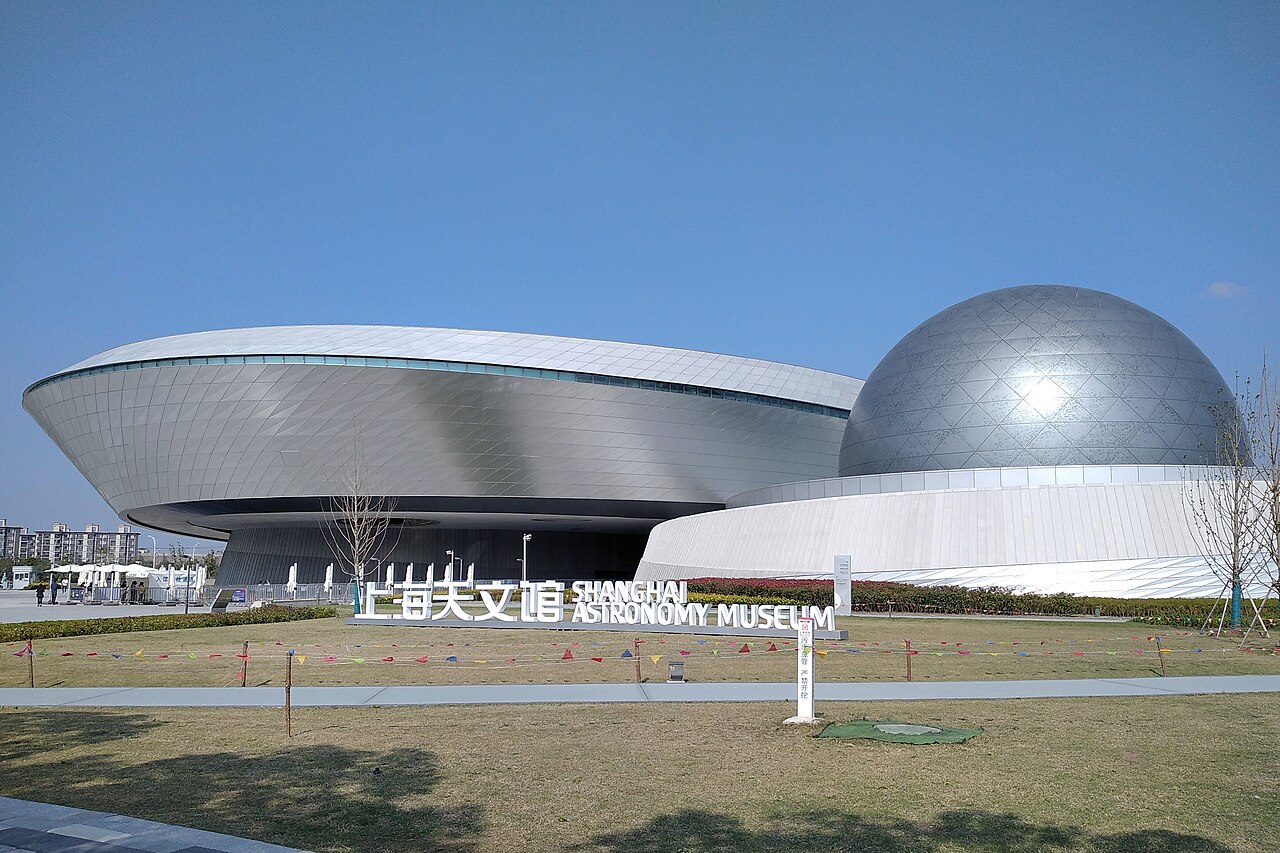
Shanghai Astronomy Museum is a dedicated astronomy and space museum in Shanghai, known locally as 上海天文馆. Its visit combines scientific storytelling with an architectural experience built around astronomical forms. The permanent route is divided into Home, Cosmos and Odyssey, while special areas include Chinese Quest for the Heavens, Curious Planet and Voyage to Mars. This is a destination for visitors who want both broad cosmic ideas and substantial exhibition spaces. The building and its galleries turn astronomy into a walk-through experience, making the museum suitable for families, students and adults who enjoy technology, observation and space science.
Checked 2026-08-31 · Source
Plan around the three permanent areas: Home, Cosmos and Odyssey. Add the special exhibition areas Chinese Quest for the Heavens, Curious Planet and Voyage to Mars if time allows. The museum also has an 8K dome theatre, a high-precision optical planetarium, the Wangshu Observatory with a one-metre telescope and the Xihe Solar Tower. Two accessible lifts reach every exhibition floor, and cinema and theatre seating includes designated wheelchair spaces. Families can use the baby-care room, which carries a three-star Shanghai public-facility rating. These distinct facilities make the museum more than a standard sequence of display cases.
Checked 2026-08-31 · Source
Allow three to four hours for the three permanent areas, special exhibitions and one major projection or observing facility. The dome theatre, optical planetarium, Wangshu Observatory and Xihe Solar Tower are separate experiences, so a full visit benefits from choosing sessions early. For a shorter two-hour visit, select one permanent area and one special facility before entering. The museum is large enough to reward a planned route, especially when timed activities shape the day. Families should leave room for slower gallery movement, while focused adults can prioritise the exhibitions most relevant to their interests.
Checked 2026-08-31 · Source
Shanghai Astronomy Museum opens Tuesday to Friday and Sunday from 09:30 to 17:00, with final entry at 16:00. Saturdays and statutory holidays run from 09:30 to 20:00. It closes on Mondays except when Monday is a statutory holiday. The extended Saturday and holiday schedule has applied since February 2026. Weekends, public holidays and school breaks can be busier, while the indoor galleries make the museum a useful choice in unsettled weather. Match your arrival to any booked projection or observing session, and leave enough time for security and the walk from the station.
Checked 2026-08-31 · Source
General adult admission costs CNY 30. Every visitor needs a real-name reservation, including visitors who qualify for free entry. Tickets are released seven days ahead through the official joint ticketing mini-program for the Shanghai Science and Technology Museum, Natural History Museum and Astronomy Museum. Reduced and free categories require the identification used for the booking. The museum does not authorise third-party sellers, bundled resellers or paid reservation services. Organise the reservation before planning a timed theatre, planetarium or observatory experience, because the gallery ticket and scheduled facility can shape the entire visit.
Checked 2026-08-31 · Source
Take Shanghai Metro Line 16 to Dishui Lake Station. The museum is about 700 metres from the station at 380 Lingang Avenue, near Huanhu North 3rd Road. Walking from Dishui Lake Station is the named independent-arrival route and avoids the site’s limited parking supply. Taxi and ride-hailing passengers should use the Lingang Avenue address because Dishui Lake covers a broad district. Allow time for the walk, particularly with children or equipment. Metro Line 16 offers the clearest route when weekend and holiday traffic makes driving less predictable.
Checked 2026-08-31 · Source
The museum’s final-entry time is 16:00 on ordinary opening days, even though the building remains open until 17:00; Saturdays and statutory holidays extend closing to 20:00. Every visitor, including free-admission visitors, needs a named reservation. Parking is limited, so the metro is the more predictable approach. Two lifts serve every exhibition floor, and wheelchair spaces are built into cinema and theatre seating. Families can use the three-star baby-care room. Check the booked session time carefully, because missing a timed projection or observing activity can change the shape of a carefully planned visit.
Checked 2026-08-31 · Source
The museum’s inverted dome, orbital building and public approach offer the strongest exterior compositions. The oculus traces a moving circle of sunlight, the inverted dome opens toward the sky and the sphere contains the planetarium theatre. Low light emphasises curved metal surfaces, while changing shadows make the same approach look different through the day. Wide views work well from the Dishui Lake side; closer frames can isolate the sphere, the oculus shadow or visitors beneath the cantilever. Keep tripods, bags and group photographs away from the timed-entry queue, accessible route and vehicle drop-off area.
Checked 2026-08-31 · Source
Tickets are released seven days ahead through the official joint Shanghai museum ticketing mini-program.
Yes. Every visitor needs a real-name reservation, including visitors entitled to free admission.
The permanent areas are Home, Cosmos and Odyssey.
Special areas include Chinese Quest for the Heavens, Curious Planet and Voyage to Mars.
Facilities include an 8K dome theatre, optical planetarium, Wangshu Observatory with a one-metre telescope and Xihe Solar Tower.
Yes. The museum has a baby-care room with Shanghai’s three-star public-facility rating.
Loading the interactive map…
The interactive map could not be loaded.

Last updated:
Source: OpenStreetMap contributors, Wikidata ·