
29 min walk
镜像柱
- Notable
- Art and culture venue
Language · 11 published
Historic monument · Xi'an
青龙寺
Reviewed by Elena Voss · Roavina Travel Editor
| Monday | 08:30 – 18:00 |
|---|---|
| Tuesday | 08:30 – 18:00 |
| Wednesday | 08:30 – 18:00 |
| Thursday | 08:30 – 18:00 |
| Friday | 08:30 – 18:00 |
| Saturday | 08:30 – 18:00 |
| Sunday | 08:30 – 18:00 |
Checked 2026-08-31 · Source
Read from the OpenStreetMap access tags; anything not listed has no tag recorded.
Set the group type to family in the planner and the day window contracts to about three quarters of a solo day.
This place is a Wayside shrine. It was built in the Chinese architecture style.
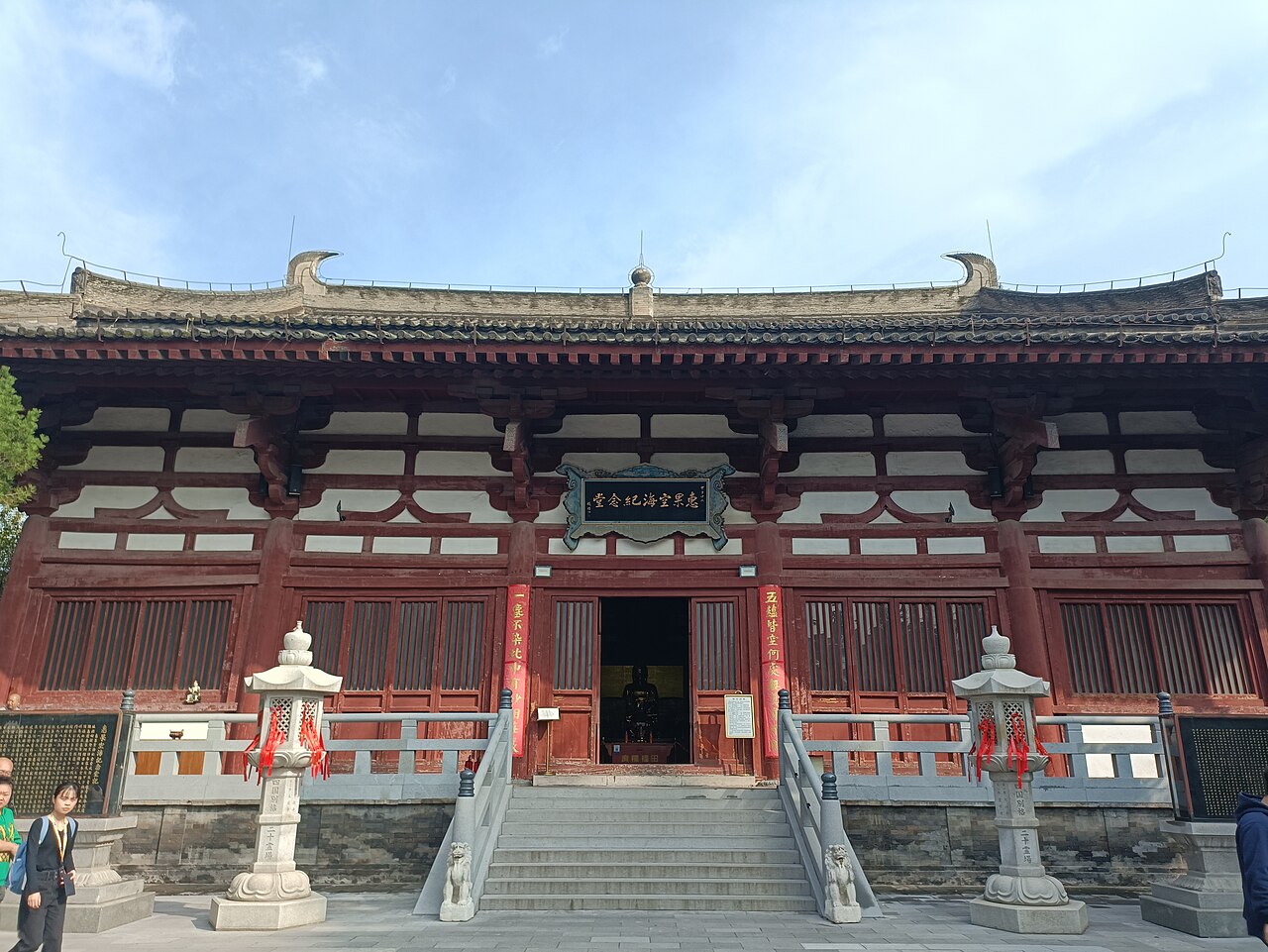
Qinglong Temple, also known as 青龙寺, is a historic Buddhist temple site in Xi’an. Its importance is closely connected with Esoteric Buddhism and the Tang dynasty, when the temple served as a centre for Buddhist learning and scripture translation. For travellers, it offers a quieter way to explore Xi’an’s religious heritage beyond the city’s best-known imperial and archaeological sights. The site brings together living Buddhist traditions, historical memory and the atmosphere of a traditional Chinese temple complex. Qinglong Temple, known locally as 青龙寺, is a historic Buddhist temple site in Xi'an, China. The temple holds significance in Chinese religious history, particularly associated with Esoteric Buddhism. It once served as an important center for Buddhist learning and translation during the Tang dynasty. The site is recognized as a distinct visitor place within Xi'an's cultural landscape, retained in breadth-first top rankings for the city. Qinglong Temple holds importance in Chinese Buddhist history, particularly as a center for Esoteric Buddhism during the Tang dynasty period when Xi'an served as imperial capital.
Checked 2026-08-26 · Source
The grounds combine reconstructed and preserved temple structures with halls, pagodas and garden spaces. Walk through the complex slowly, looking at the relationship between courtyards, rooflines and planted areas rather than treating the visit as a single monument. The setting supports quiet contemplation as well as architectural viewing. Spring cherry blossoms are an important seasonal feature and can change the character of the grounds. Because this is a religious place as well as a cultural destination, some spaces may feel more devotional than museum-like.
Checked 2026-08-26 · Source
Allow about one to two hours for a focused visit to Qinglong Temple. That gives enough time to walk through the principal grounds, pause in the garden areas and study the Buddhist architecture without rushing. Visitors especially interested in religious history or photography may stay longer. The temple also works well as part of a half-day plan with nearby Xi’an sights, particularly when spring blossoms make the grounds more rewarding for a relaxed walk.
Checked 2026-08-26 · Source
Spring is the most distinctive season because cherry blossoms draw particular attention to the temple grounds. Spring and autumn are also comfortable periods for walking outdoors. Xi’an summers can be hot and humid, while winters are cold and dry, so the season affects how long you will want to linger outside. Blossom periods can be busy, especially around attractive garden views. Visit with enough time to enjoy the courtyards at an unhurried pace rather than making the temple a quick photograph stop.
Checked 2026-08-26 · Source
The available guide information does not establish a definite admission charge for Qinglong Temple. Treat the visit as a cultural and religious outing whose entry arrangements may differ from those of Xi’an’s major ticketed monuments. Keep your plans flexible and allow time for the entrance process. Any special event or exhibition may follow its own arrangement. The temple’s value rests in its historic Buddhist setting, courtyards, gardens and seasonal blossoms, whether your visit forms part of a broader heritage day or stands alone.
Checked 2026-08-26 · Source
Qinglong Temple lies within Xi’an’s urban area and can be incorporated into the city’s public-transport network. Metro services and buses connect the city’s districts, while taxis and ride-hailing provide a direct alternative. Use the temple’s name, 青龙寺, when asking for directions or showing a destination in Chinese. Once you arrive in the surrounding area, leave time for the final approach and for walking through the grounds. Pairing the temple with other eastern Xi’an stops can make the day flow more naturally.
Checked 2026-08-26 · Source
Qinglong Temple is an active religious environment, so keep voices low and give worshippers space. Follow signs and staff directions, especially around halls used for devotion. Photography may be inappropriate in some worship areas, and the spring blossom period can bring heavier visitor traffic. Comfortable shoes are useful for walking across the grounds. Xi’an’s summer heat and winter cold also affect outdoor comfort. The best experience comes from treating the temple as a place of worship and heritage, not simply as a backdrop for photographs.
Checked 2026-08-26 · Source
Temple halls, pagodas, courtyards and gardens provide varied subjects for photography. Cherry blossoms are the most prominent seasonal feature, while softer morning or late-afternoon light can bring out roof details and garden texture. Work quietly and avoid blocking paths or disturbing people engaged in worship. Keep equipment unobtrusive in religious spaces. Exterior views can be enjoyed as part of a normal walk through the complex, but the atmosphere of the temple should guide where you raise a camera and how long you remain.
Checked 2026-08-26 · Source
It is associated with Esoteric Buddhism and served as a centre for Buddhist learning and scripture translation during the Tang dynasty.
The grounds include Buddhist halls, pagodas, courtyards and garden spaces, with cherry blossoms providing a notable spring feature.
Spring receives particular attention because cherry blossoms add a strong seasonal character to the temple grounds.
Plan around one to two hours for the main grounds, or longer if you are interested in Buddhist history, architecture or photography.
The temple is within Xi’an’s urban area and can be reached through the city’s metro and bus network, with taxis and ride-hailing also available.
Keep quiet, respect worshippers, follow posted guidance and be discreet with photography, particularly inside active religious areas.
Loading the interactive map…
The interactive map could not be loaded.
Last updated:
Source: OpenStreetMap contributors, Wikidata ·