
1 min walk
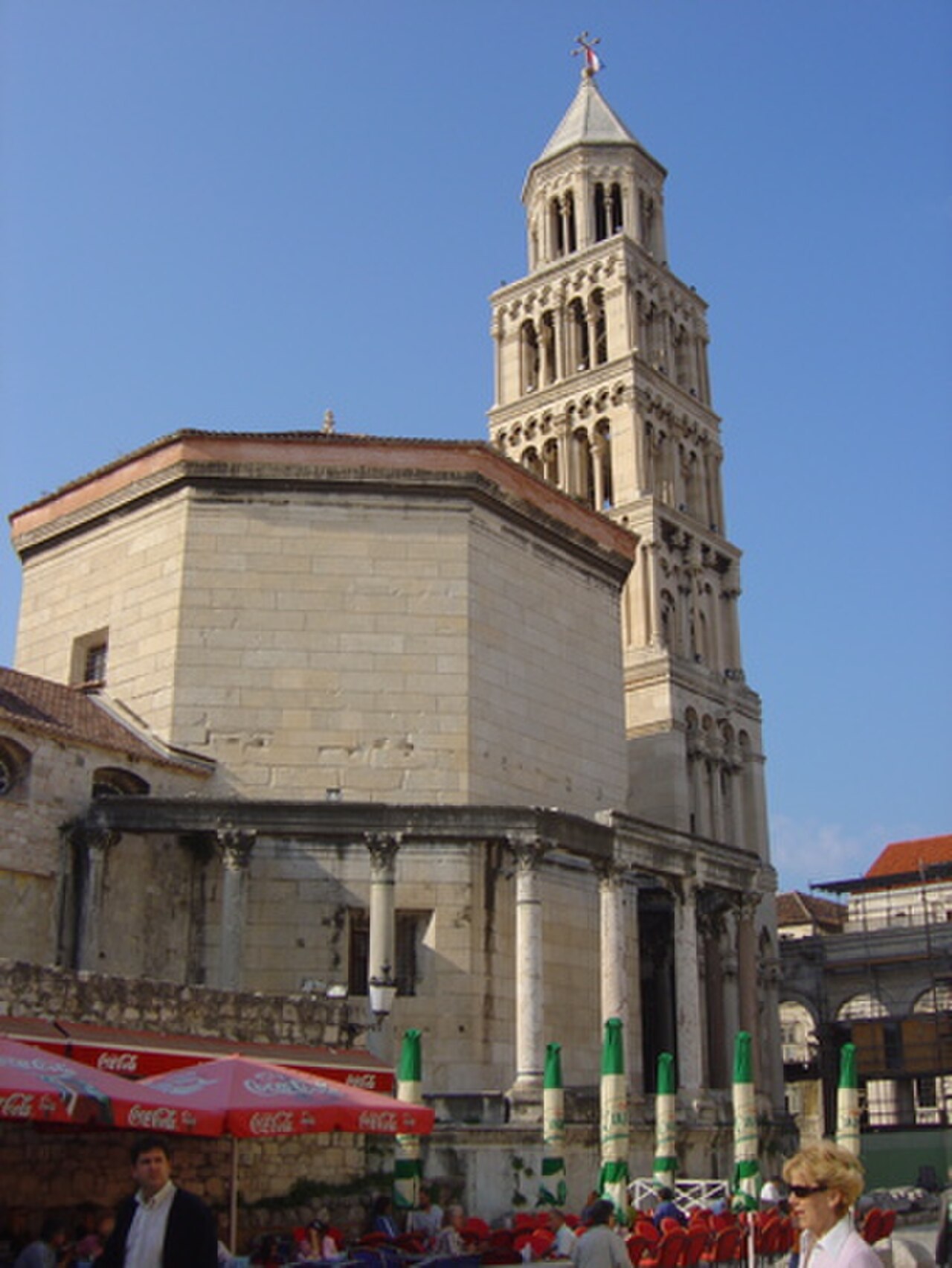
Cathedral of Saint Domnius
- Must see · Heritage site
- Place of worship
Language · 11 published
Viewpoint · Split
Reviewed by Elena Voss · Roavina Travel Editor
Read from the OpenStreetMap access tags; anything not listed has no tag recorded.
Set the group type to family in the planner and the day window contracts to about three quarters of a solo day.
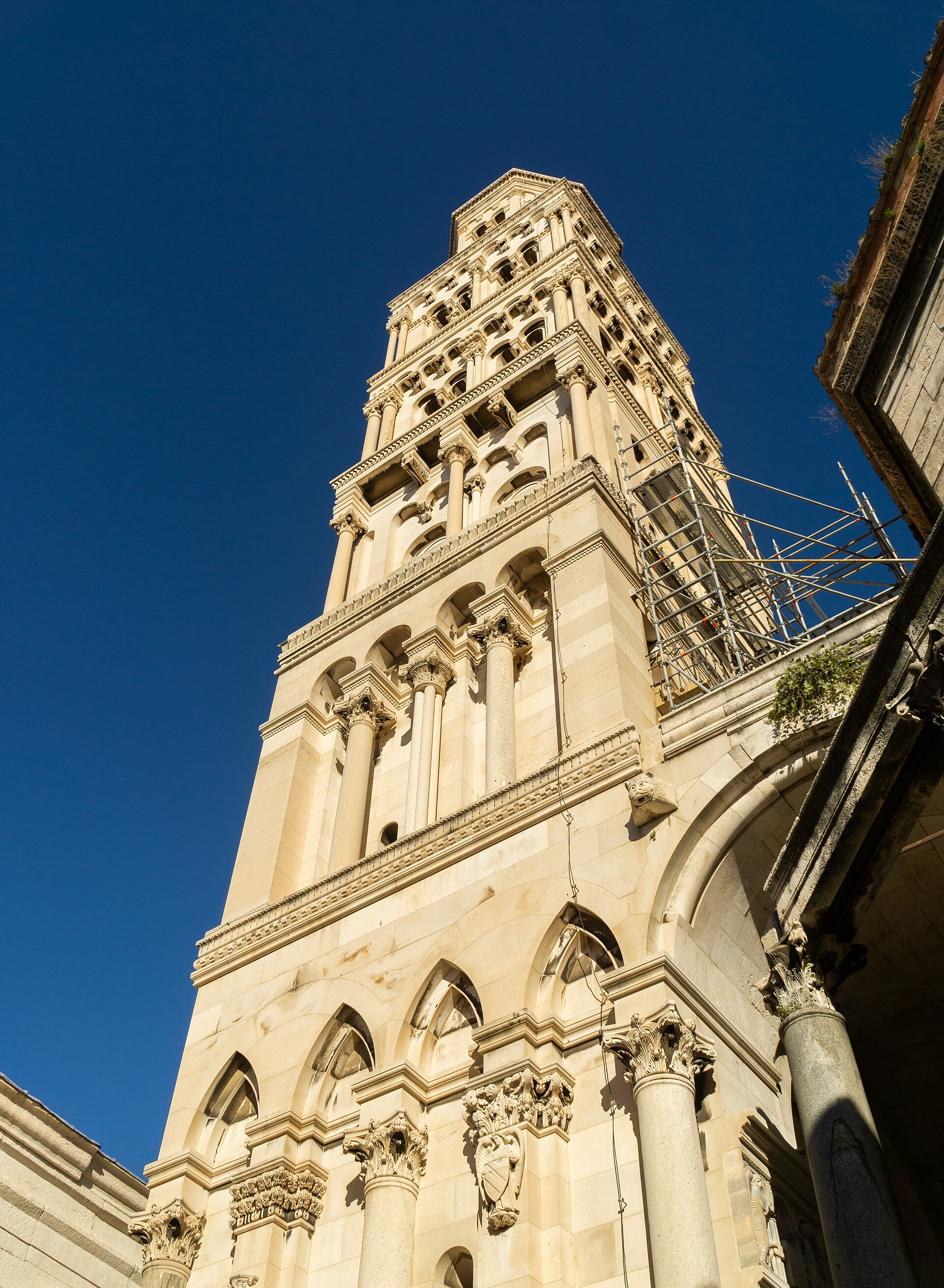
Saint Domnius Bell Tower rises beside the Cathedral of Saint Domnius in the Peristyle area of Diocletian’s Palace. The medieval campanile is both a working religious structure and one of Split’s most recognisable viewpoints. Its height opens views over the palace’s stone roofs, the Riva waterfront, the city and the surrounding landscape. The tower’s changing fabric reflects reconstruction and repair across several historical periods. The Saint Domnius Bell Tower stands beside the Cathedral of Saint Domnius within Diocletian's Palace in Split's historic core. This medieval campanile rises above the Peristyle, the palace's central square. The structure has undergone reconstruction over centuries, with significant work following damage. Visitors climb the tower for elevated perspectives across the palace complex, the Riva waterfront, and surrounding cityscape. The tower serves both as a functioning religious structure and as a prominent visitor destination within the UNESCO-listed palace ensemble. Access requires climbing a steep, narrow staircase on foot. No elevator is present. Visitors with significant mobility limitations may find the ascent impractical.
Checked 2026-08-26 · Source
The visit follows a vertical route through a narrow stone interior. A staircase leads upward past openings at different levels, eventually reaching the belfry and upper viewing platform. Bells remain part of the tower’s religious function, while stone and brickwork show its multiple construction phases. There is no elevator, so every visitor reaches the viewpoint by climbing. The confined stairway leaves limited room for passing and makes the ascent feel more like a compact architectural adventure than a conventional lift-accessed lookout. The tower contains a staircase ascending to its upper levels. The climb proceeds through the stone interior, with openings at various heights. Near the summit, the belfry houses bells that continue to mark hours and religious observances.
Checked 2026-08-26 · Source
Allow around thirty minutes to one hour for the tower itself. The climb and descent are brief for a confident stair climber, but narrow traffic, pauses and time at the summit can extend the visit. Bring the adjacent cathedral and wider palace into the same outing rather than allocating the tower an isolated half-day. Visitors who want photographs from several sides of the platform should leave more room than those making a quick ascent.
Checked 2026-08-26 · Source
Early morning and later afternoon can provide softer light over Split and may feel easier than the busiest summer middle hours. The upper platform is exposed to sun and rain, so weather affects comfort once you reach the top. Summer brings both heat and heavy visitor numbers, which can slow movement on the staircase. The tower works especially well as part of a morning palace walk or an evening return for changing views over the historic centre.
Checked 2026-08-26 · Source
The bell tower is a distinct experience beside the cathedral and may be entered under a separate or combined arrangement. Treat it as a paid sight within the larger palace, whose ordinary streets remain open for walking. The climb itself is the central commitment: visitors exchange the ground-level Roman courtyard for a narrow ascent and elevated view. Leave flexibility for crowding, since a confined stairway can make the pace slower than the distance suggests.
Checked 2026-08-26 · Source
The tower stands in the pedestrian heart of Diocletian’s Palace, directly beside the Cathedral of Saint Domnius. Walk from the Riva, the ferry port or the main bus station through one of the palace gates, then use the Peristyle as your reference point. Vehicles cannot reach the immediate entrance. Local buses serve the surrounding centre, but the final approach is on foot through narrow historic passages where map positioning can be less precise.
Checked 2026-08-26 · Source
The staircase is steep, narrow and worn, so firm footwear and careful footing matter. Passing other climbers can be awkward, and children need close supervision. The upper platform is exposed and may feel uncomfortable in strong sun, rain or wind. Bell sounds can be sudden and loud. Expect little space for resting or large bags. The ascent is not suitable for visitors who cannot manage repeated stairs, and the tower has no elevator.
Checked 2026-08-26 · Source
From the summit, frame the Peristyle, palace rooftops, Riva waterfront, hills and sea-facing horizon. Early and late daylight brings shape to the stone and creates stronger separation between the old centre and the modern city. The staircase is too confined for bulky equipment, and a tripod may obstruct other climbers or become unsafe on the platform. Photograph the bells and masonry with care, and give other visitors space when the viewpoint is crowded.
Checked 2026-08-26 · Source
The tower requires a steep, narrow staircase and has no elevator, making the ascent impractical for visitors unable to manage repeated stairs.
It stands beside the Cathedral of Saint Domnius at the Peristyle in the centre of Diocletian’s Palace.
The upper platform looks across the Peristyle, Diocletian’s Palace, Split’s rooftops, the Riva waterfront and the surrounding hills and sea.
Most visitors spend thirty minutes to one hour, including the climb, descent and time at the viewpoint.
Yes. It forms part of the cathedral complex within the pedestrian historic core of Diocletian’s Palace.
Wear stable shoes and carry only manageable belongings, since the staircase is narrow and the upper platform is exposed to changing weather.
Loading the interactive map…
The interactive map could not be loaded.
Last updated:
Source: OpenStreetMap contributors ·