
2 min walk
Amaliehaven
- Notable
- Nature site
Language · 11 published
Historic monument · Copenhagen
Reviewed by Elena Voss · Roavina Travel Editor
| Monday | 10:00 – 16:00 |
|---|---|
| Tuesday | 10:00 – 16:00 |
| Wednesday | 10:00 – 16:00 |
| Thursday | 10:00 – 16:00 |
| Friday | 10:00 – 16:00 |
| Saturday | 10:00 – 16:00 |
| Sunday | 10:00 – 16:00 |
Checked 2026-08-31 · Source
Read from the OpenStreetMap access tags; anything not listed has no tag recorded.
Set the group type to family in the planner and the day window contracts to about three quarters of a solo day.
This place is a Attraction. It was established in 1760. It was built in the Rococo style. It was designed by Nicolai Eigtved. It carries the monument on Kulturstyrelsen register heritage designation.
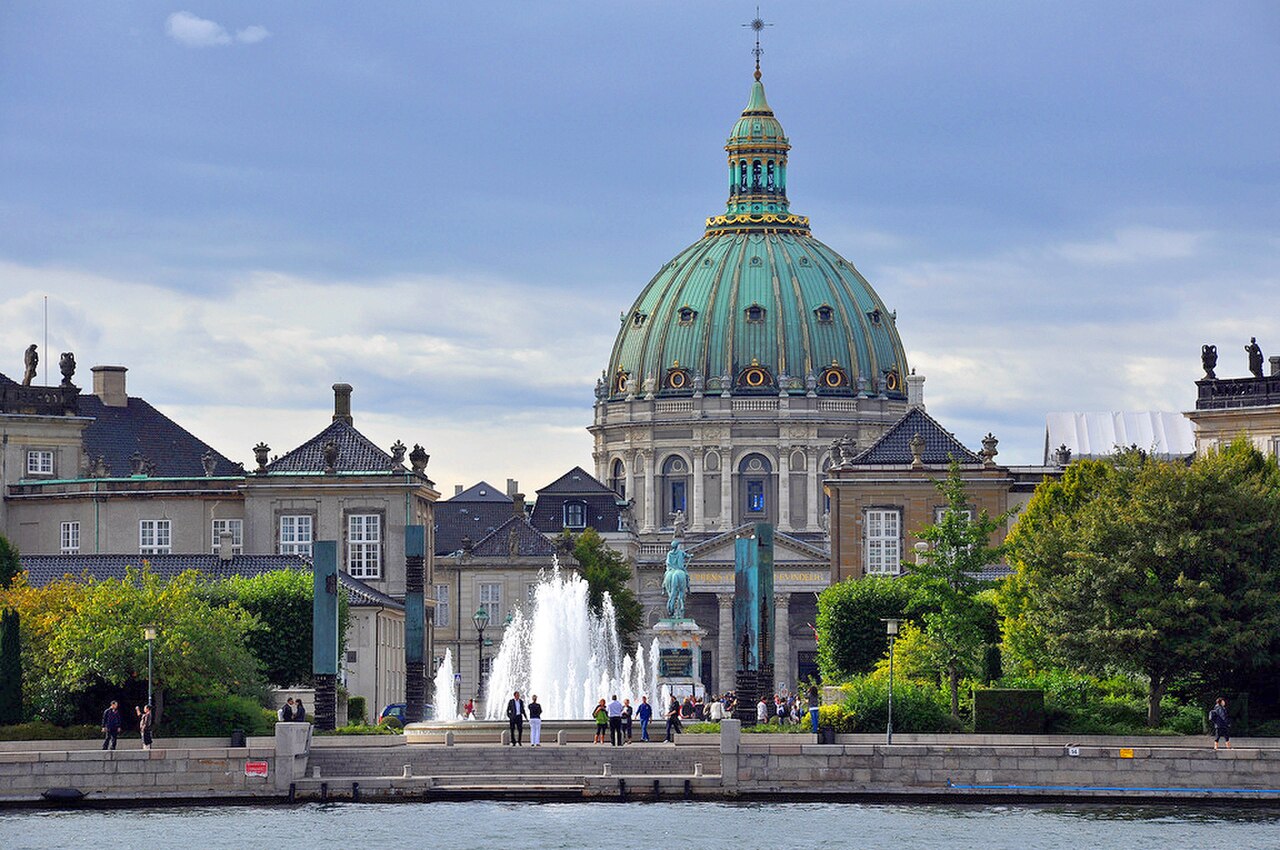
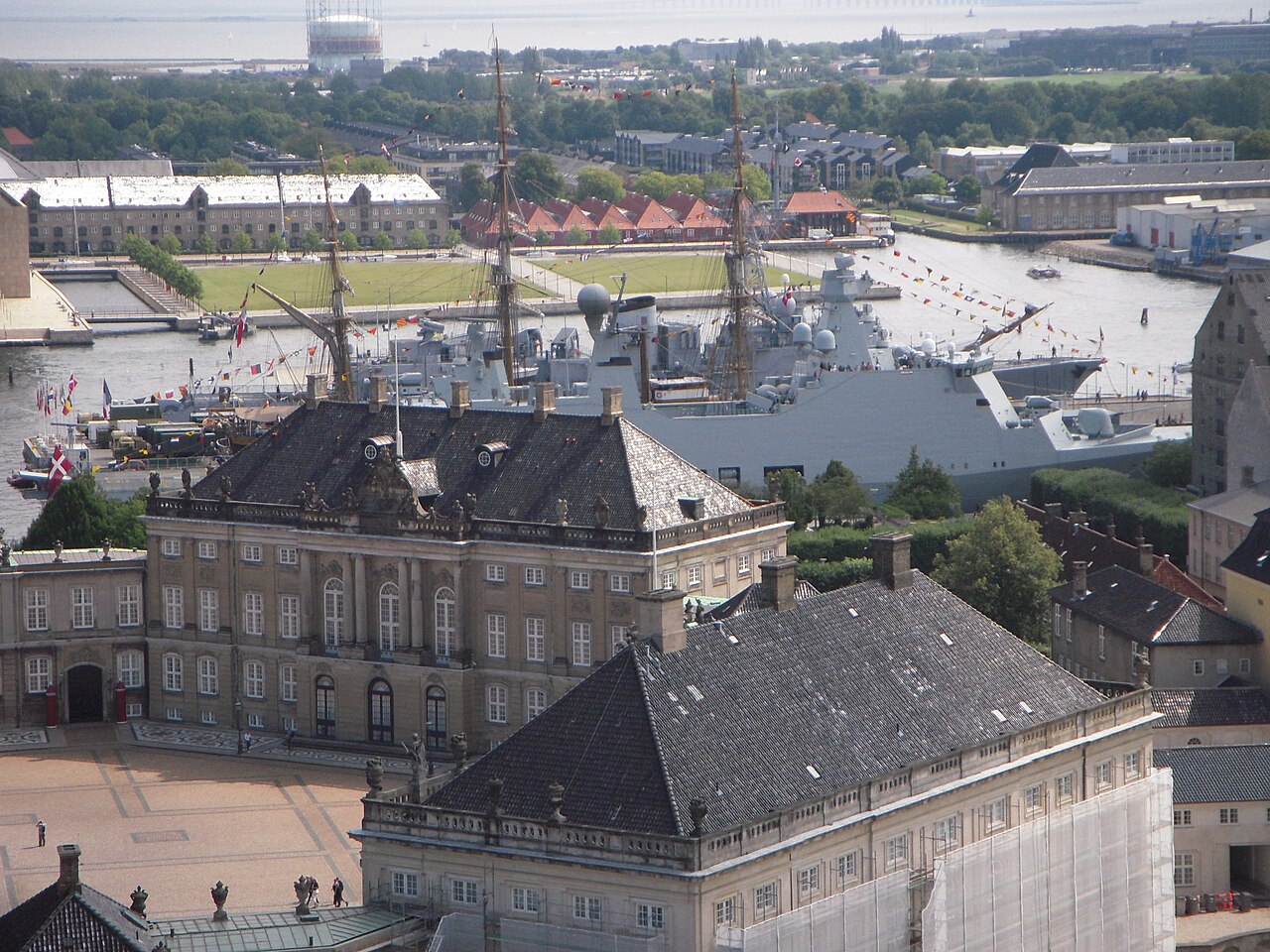
Amalienborg is the Danish royal family's home in Copenhagen: four almost identical rococo palaces set around an octagonal square, with Frederik V's equestrian statue at the centre and the dome of the Marble Church closing one axis. The complex went up from 1750 as the centrepiece of the new Frederiksstaden district, laid out to mark the Oldenburg dynasty's three hundredth anniversary on the Danish throne, and the royal family moved in during 1794 after the first Christiansborg Palace burned. 31 August–1 November 2026: daily 10:00–16:00. 2 November–23 December: Tuesday–Sunday 10:00–16:00; Monday closed. 24–25 December: closed. 26–30 December: 10:00–16:00. 31 December: 10:00–14:00. 1 January 2027: 11:00–19:00.
Checked 2026-08-31 · Source
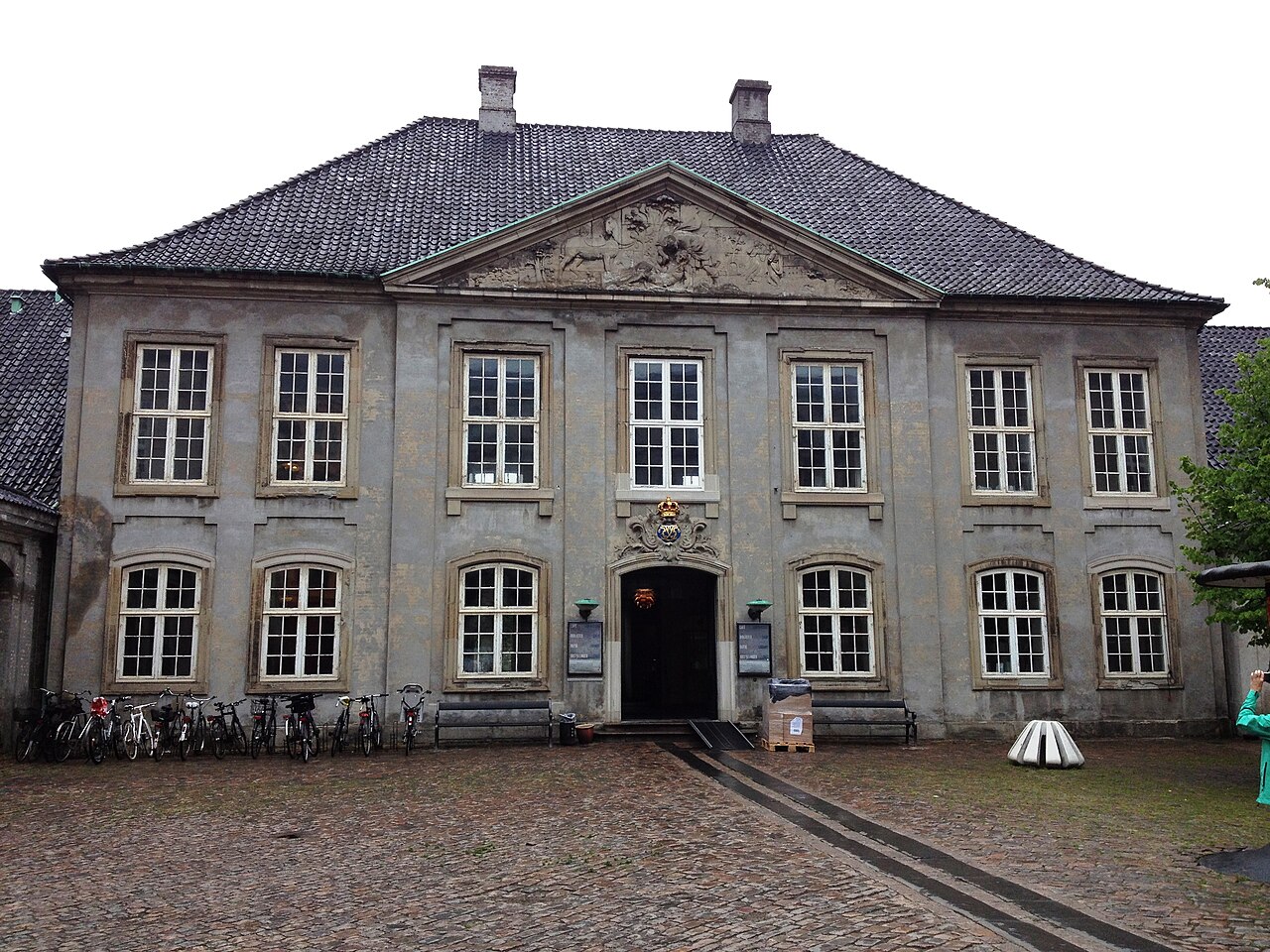
The museum occupies Christian VIII's Palace and is arranged as a walk through the private and working rooms of the monarchs of the Glücksborg line — the studies and offices where four generations of kings actually did their paperwork, kept much as they were left, down to desks, pipes and family photographs. The set piece is the Gala Hall, still used by the royal family for official occasions rather than retired into display. The palace's piano nobile is used for temporary exhibitions. These visitor hours apply to the Amalienborg Museum in Christian VIII’s Palace. Amalienborg also remains a working royal residence.
Checked 2026-08-31 · Source
The Royal Danish Collection does not publish an expected visit length for the Amalienborg Museum; its ticket page says only that a visitor is welcome to stay until closing time. On the museum's own scale, plan about seventy-five minutes inside. An hour is enough if the royal studies are read quickly; two hours is easy if the object labels are read properly, the audio guide is used, or a temporary exhibition happens to be on the piano nobile. Adult admission to the Amalienborg Museum is DKK 125 online or DKK 135 at the door.
Checked 2026-08-31 · Source
Two published exceptions widen that. From 28 March to 1 November the museum opens every day of the week, Monday included, at the same 10.00–16.00; from 1 November to 23 December it returns to the Monday closure. 31 August–1 November 2026: daily 10:00–16:00. 2 November–23 December: Tuesday–Sunday 10:00–16:00; Monday closed. 24–25 December: closed. 26–30 December: 10:00–16:00. 31 December: 10:00–14:00. 1 January 2027: 11:00–19:00. A platform lift and a conventional lift provide step-free access to every museum gallery. Staff assist visitors with operating the platform lift. Both lifts have a maximum load of 225 kg; some electric wheelchairs may be too large.
Checked 2026-08-31 · Source
The square costs nothing and is never ticketed. The museum charges 125 kroner for an adult who books online and 135 kroner at the door, and the ten-kroner difference is the operator's own stated reason for buying in advance. A student pays 80 kroner online or 90 at the door and must carry valid identification. Adult admission to the Amalienborg Museum is DKK 125 online or DKK 135 at the door. A platform lift and a conventional lift provide step-free access to every museum gallery. Staff assist visitors with operating the platform lift.
Checked 2026-08-31 · Source
No car is needed and a car is a positive hindrance: The Royal Danish Collection states plainly that the Amalienborg Museum has no parking facilities of its own, and vehicles are not allowed onto Amalienborg Palace Square at all, so there is no kerbside drop-off at the door. The museum entrance is in Christian VIII’s Palace, through the gate nearest Frederiksgade. Marmorkirken is the nearest Metro station and is served by lines M3 and M4. Amalienborg has no visitor parking; vehicles cannot enter the palace square, so accessible drop-off and pickup use Frederiksgade, about 50 metres from the entrance.
Checked 2026-08-31 · Source
The bag rules are stricter than most museums and are enforced at the door. Backpacks are not permitted inside at all, and a handbag or purse may not exceed 15 × 23 × 15 centimetres and must be worn on the front of the body. A platform lift and a conventional lift provide step-free access to every museum gallery. Both lifts have a maximum load of 225 kg; some electric wheelchairs may be too large. The conventional lift door is 80 cm wide and its cabin is 145 cm long.
Checked 2026-08-31 · Source
Inside the museum, photography is allowed with handheld equipment only. Tripods and monopods are not permitted anywhere in the palace, which rules out long exposures in the darker royal studies — the rooms are lit for conservation rather than for cameras, so a fast lens or a steady hand matters more here than a good sensor. The Fabergé Chamber is glass-cased and reflective; approaching the case at an angle rather than square on removes most of it. The conventional lift door is 80 cm wide and its cabin is 145 cm long.
Checked 2026-08-31 · Source
The Amalienborg Museum occupies Christian VIII’s Palace; enter through the gate nearest Frederiksgade.
The guard changes daily at Amalienborg, with the incoming parade entering the palace square just before 12:00.
Backpacks are prohibited. Handbags and purses may be no larger than 15 × 23 × 15 cm and must be worn in front; free lockers are available, but suitcases and large luggage cannot be stored.
Pushchairs, buggies and prams are not allowed inside and must be left in the cloakroom beside the museum shop; carry cots and sleep carriers are also prohibited.
Handheld photography is allowed, but tripods and monopods are prohibited.
Eating and drinking are not allowed inside the museum.
Loading the interactive map…
The interactive map could not be loaded.
Last updated:
Source: OpenStreetMap contributors, Wikidata ·