

2 min walk
Bayt al-Suhaymi
- Must see
- Historic monument
Language · 11 published
Historic monument · Cairo
جامع الأقمر
Reviewed by Elena Voss · Roavina Travel Editor
| Monday | 09:00 – 16:00 |
|---|---|
| Tuesday | 09:00 – 16:00 |
| Wednesday | 09:00 – 16:00 |
| Thursday | 09:00 – 16:00 |
| Friday | 09:00 – 16:00 |
| Saturday | 09:00 – 16:00 |
| Sunday | 09:00 – 16:00 |
Checked 2026-08-31 · Source
Read from the OpenStreetMap access tags; anything not listed has no tag recorded.
Set the group type to family in the planner and the day window contracts to about three quarters of a solo day.
It was established in 1125. It was built in the Fatimid architecture style. It is built of brick.
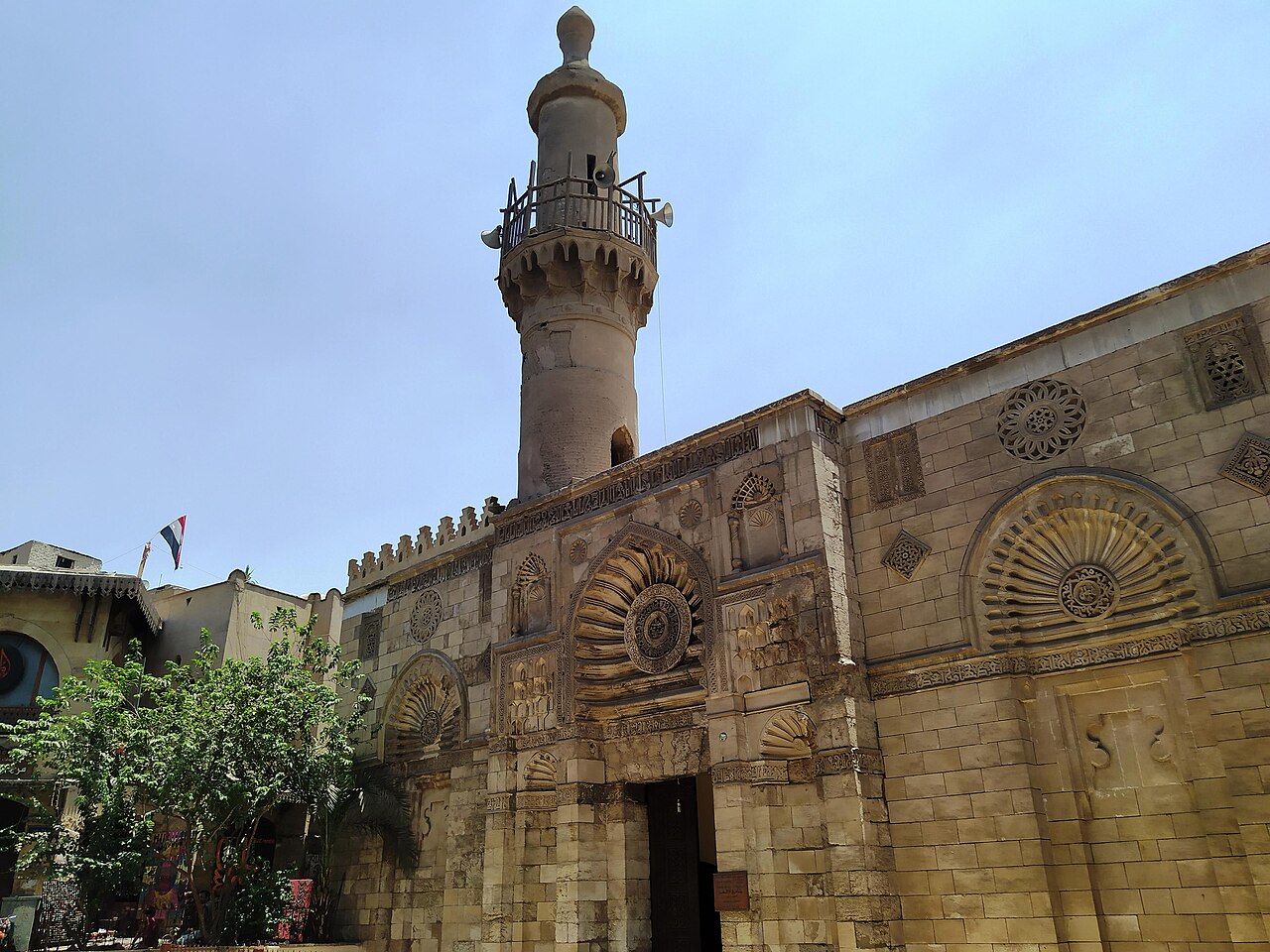
Al-Aqmar Mosque is a small Fatimid-era mosque located on al-Muizz Street in Cairo's historic Islamic quarter. Built during the Fatimid caliphate, it represents an important example of medieval Islamic architecture in Egypt. The structure is particularly noted for its richly carved stone facade facing the street, which displays intricate decorative elements characteristic of the period. The mosque stands as a significant monument within the UNESCO World Heritage listed Historic Cairo area, contributing to the exceptional universal value of this designated site. Sunday–Saturday 09:00–16:00. The Ministry lists identical hours for all seven days and no weekly closure day.
Checked 2026-08-31 · Source
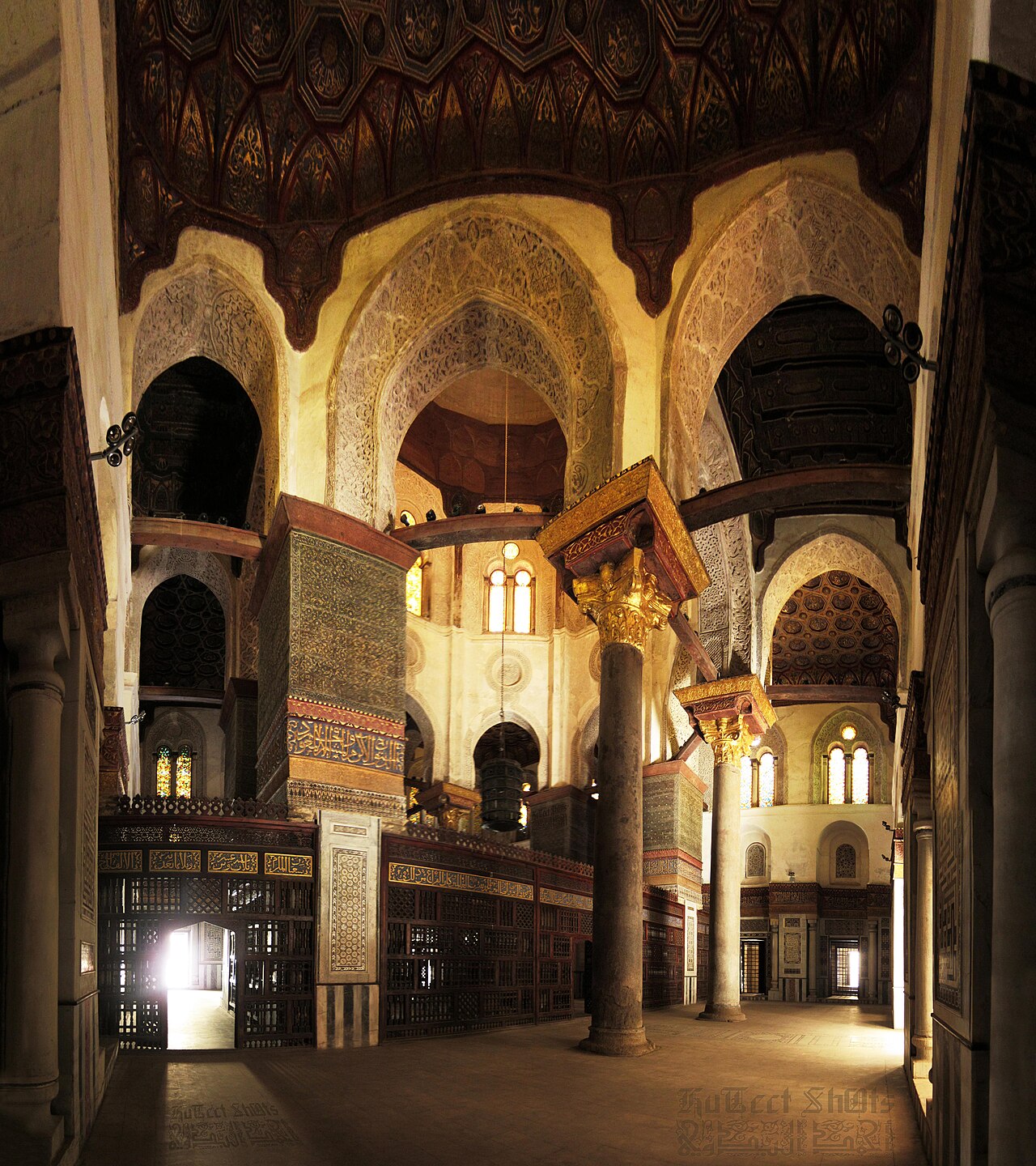
The interior of Al-Aqmar Mosque contains prayer halls and architectural features typical of Fatimid religious construction. The mosque's most distinctive element remains its elaborately decorated exterior facade, which scholars have studied for its carved inscriptions and geometric patterns. The compact scale of the building reflects its function as a neighborhood mosque. Visitors should observe that conditions may vary and respect the sacred nature of the space as an active place of worship. The Ministry lists identical hours for all seven days and no weekly closure day. Entry is free of charge.
Checked 2026-08-31 · Source
A visit to Al-Aqmar Mosque typically requires a brief stop rather than an extended stay, given the building's modest dimensions. Most visitors combine this site with exploration of al-Muizz Street and surrounding monuments in Islamic Cairo. The duration depends on individual interest in architectural details, photography, and appreciation of historical context. Travelers often allocate fifteen to thirty minutes here before continuing along the historic street. Entry is free of charge. A 2024 architectural study describes the mosque as being reached by a flight of steps. The visitor route into the historic interior is therefore not step-free.
Checked 2026-08-31 · Source
Visitors should be aware that as an active mosque, prayer times will affect accessibility regardless of formal opening schedules. Early morning or late afternoon may offer preferable lighting for viewing the facade and photography. The hot Egyptian summer makes spring and autumn generally more comfortable for walking al-Muizz Street. Sunday–Saturday 09:00–16:00. Take Cairo Metro Line 3 to Bab El Shaaria station, which Cairo Metro identifies as the closest station to Islamic Cairo from the north. Continue into Historic Cairo to Al-Muizz Street; the mosque stands directly on Al-Muizz Street. A 2024 architectural study describes the mosque as being reached by a flight of steps.
Checked 2026-08-31 · Source
The mosque's status within the Historic Cairo UNESCO World Heritage site does not automatically determine whether individual admission fees apply. Some monuments in this district operate under various management arrangements with different fee structures. Visitors should carry small denominations of Egyptian currency for potential entry fees, donations, or tipping. Official ticketing policies may change without advance notice. Entry is free of charge. A 2024 architectural study describes the mosque as being reached by a flight of steps. The visitor route into the historic interior is therefore not step-free. It was commissioned in 519 AH/1125 AD.
Checked 2026-08-31 · Source
Al-Aqmar Mosque sits on al-Muizz li-Din Allah Street in the heart of Islamic Cairo, accessible from multiple directions within the historic district. The area is pedestrian-friendly but involves navigating narrow medieval streets unsuitable for private vehicles. The nearest Cairo Metro stations require additional walking through the historic quarter. Take Cairo Metro Line 3 to Bab El Shaaria station, which Cairo Metro identifies as the closest station to Islamic Cairo from the north. Continue into Historic Cairo to Al-Muizz Street; the mosque stands directly on Al-Muizz Street. The visitor route into the historic interior is therefore not step-free.
Checked 2026-08-31 · Source
Visitors must respect the mosque's function as an active religious site, dressing modestly and behaving appropriately. The surrounding al-Muizz Street area involves navigating busy commercial activity, traffic, and uneven historic pavements. Petty harassment of tourists occurs in popular Cairo districts; maintaining confident awareness reduces vulnerability. Street-level distractions while examining architectural details may create trip hazards. A 2024 architectural study describes the mosque as being reached by a flight of steps. It was commissioned in 519 AH/1125 AD. Fatimid Caliph al-Amir bi-Ahkam Allah commissioned the mosque, and Vizier al-Ma’mun al-Bata’ihi supervised its construction.
Checked 2026-08-31 · Source
The celebrated street facade of Al-Aqmar Mosque presents significant photographic interest, particularly the carved stonework and architectural details. The narrow street environment creates challenging lighting conditions, with shadows and contrast varying throughout the day. Tripods may attract attention or obstruction in the busy thoroughfare. Flash photography should be avoided as a matter of respect and conservation. The best facade views may require positioning across the street amid pedestrian and vehicle movement. Patience yields optimal conditions for documenting this remarkable Fatimid exterior. Fatimid Caliph al-Amir bi-Ahkam Allah commissioned the mosque, and Vizier al-Ma’mun al-Bata’ihi supervised its construction.
Checked 2026-08-31 · Source
It was commissioned in 519 AH/1125 AD.
Fatimid Caliph al-Amir bi-Ahkam Allah commissioned the mosque, and Vizier al-Ma’mun al-Bata’ihi supervised its construction.
The façade follows Al-Muizz Street, while the interior retains the qibla direction; a transitional section reconciles the two alignments.
It is among Egypt’s oldest surviving stone mosque façades and carries intricate carvings, Kufic Qur’anic inscriptions, and repeated references to Muhammad and Ali.
An open central courtyard is surrounded by four riwaqs covered by shallow domes; the largest riwaq marks the qibla.
Prince Yalbugha al-Salmi renewed it under Sultan Barquq in 799 AH/1397 AD; a further state restoration was completed and inaugurated in August 2023.
Loading the interactive map…
The interactive map could not be loaded.
Last updated:
Source: OpenStreetMap contributors, Wikidata ·