
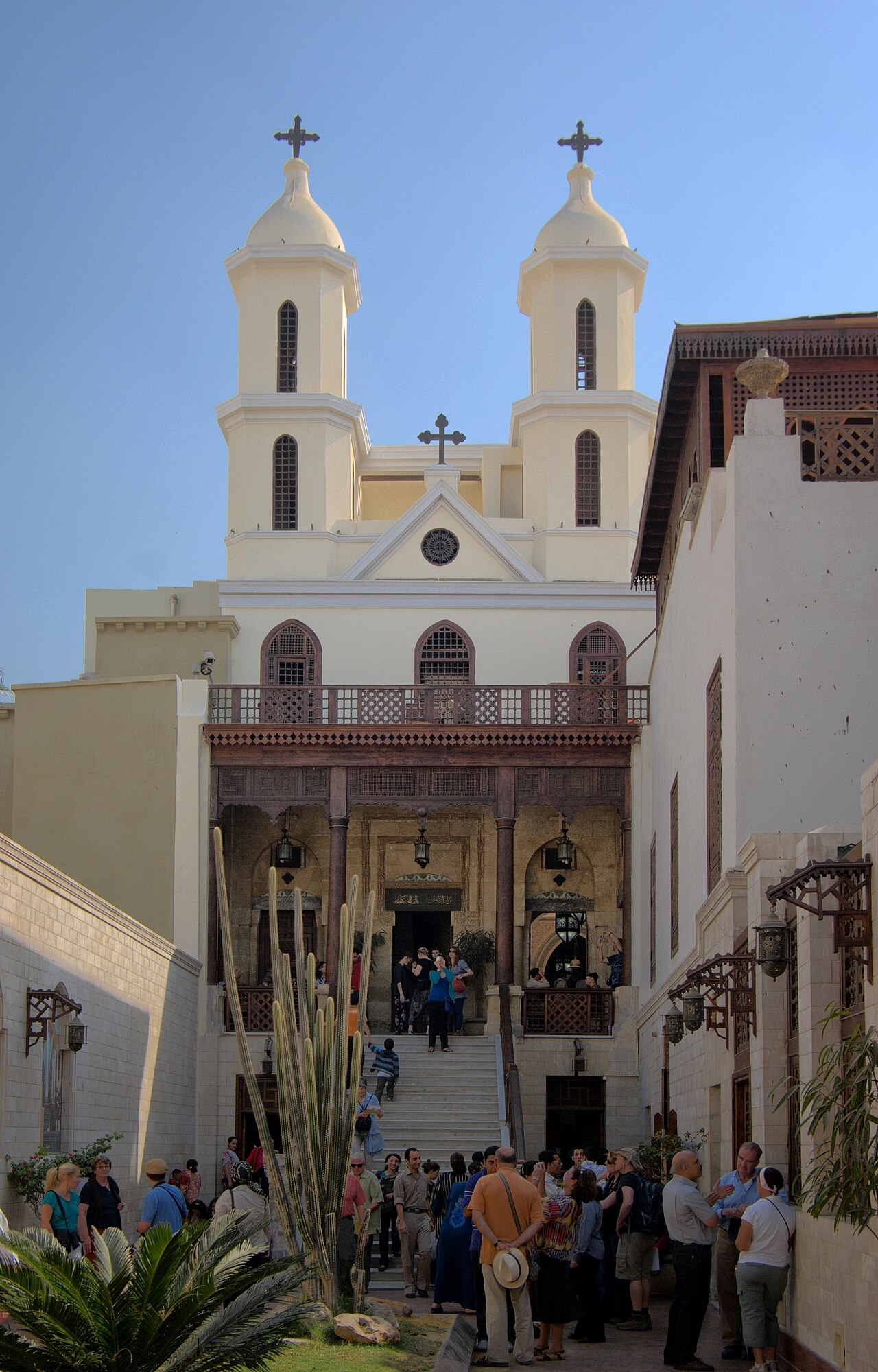
2 min walk
Coptic Cairo
- Must see
- Historic monument
Language · 11 published
Place of worship · Cairo
المعبد اليهودى
Reviewed by Elena Voss · Roavina Travel Editor
| Monday | 09:00 – 16:00 |
|---|---|
| Tuesday | 09:00 – 16:00 |
| Wednesday | 09:00 – 16:00 |
| Thursday | 09:00 – 16:00 |
| Friday | 09:00 – 16:00 |
| Saturday | 09:00 – 16:00 |
| Sunday | 09:00 – 16:00 |
Checked 2026-08-31 · Source
Read from the OpenStreetMap access tags; anything not listed has no tag recorded.
Set the group type to family in the planner and the day window contracts to about three quarters of a solo day.
This place is a Attraction. It was established in 1892.
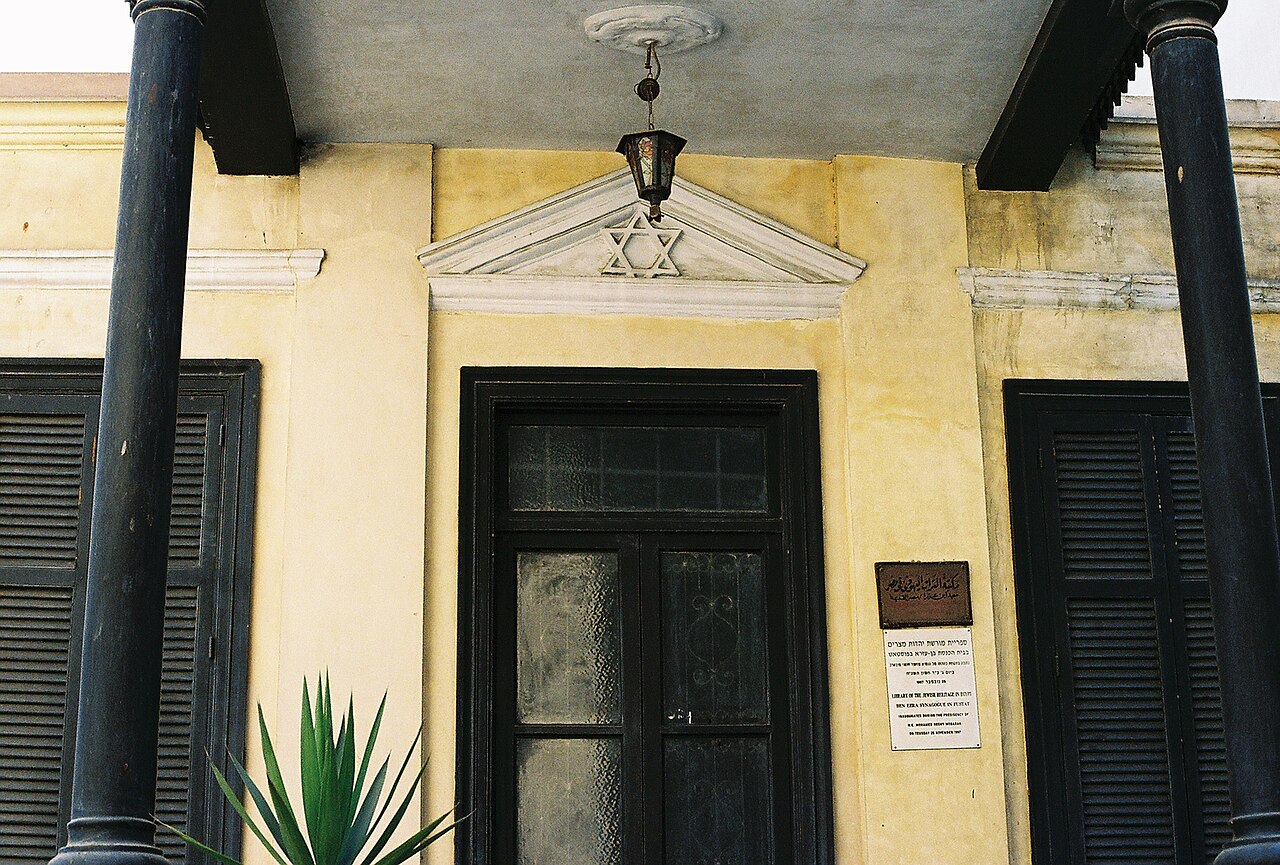
Ben Ezra Synagogue is a historic Jewish place of worship in Old Cairo, locally known as معبد بن عزرا. It stands in the Fustat area, which was among Egypt's earliest Islamic settlements. The synagogue holds deep significance for Cairo's Jewish heritage and is internationally recognized for its connection to the Cairo Geniza, a remarkable collection of Jewish manuscript fragments discovered in its storeroom. The building represents an important layer of the city's multi-religious history alongside Coptic and Islamic monuments nearby. Daily 09:00–16:00, including Ramadan; last admission 15:00.
Checked 2026-08-31 · Source
The interior of Ben Ezra Synagogue reflects traditional Jewish synagogue architecture adapted to local Egyptian conditions. The space contains prayer halls with characteristic furnishings including an ark for Torah scrolls and reader's platforms. The structure's historical fabric has undergone various phases of development and restoration over centuries. The most celebrated aspect remains the former Geniza chamber where manuscript fragments accumulated for centuries before their rediscovery. Decorative elements and inscriptions within the building connect to Jewish liturgical traditions. Free entry. The Ministry tariff shows no charge for Egyptian or foreign adult and student categories.
Checked 2026-08-31 · Source
Visitors should allocate approximately forty-five minutes to one hour for a meaningful visit to Ben Ezra Synagogue. This duration allows adequate time to appreciate the architectural features, understand the historical context of the space, and contemplate its significance in the Geniza manuscript story. Those with particular interest in Jewish history or medieval manuscript studies may wish to extend their stay. Combining this visit with nearby Coptic and Islamic sites in Old Cairo makes for a fuller day of exploration. Free entry. The Ministry tariff shows no charge for Egyptian or foreign adult and student categories.
Checked 2026-08-31 · Source
Visitors should independently verify current opening times before planning their visit, as schedules for historic religious sites in Cairo may vary and are subject to change without notice. Religious observances and holidays in the Jewish calendar could potentially affect accessibility. Morning visits may help avoid peak heat and crowds at neighboring attractions. Daily 09:00–16:00, including Ramadan; last admission 15:00. Take Cairo Metro Line 1 to Mar Girgis station, which Cairo Metro identifies as the station for Coptic Cairo and the Religious Complex. Enter the Religious Complex and continue through the Coptic-church area to the synagogue at its far end.
Checked 2026-08-31 · Source
Historic sites in Egypt may have variable pricing policies including differential rates for foreign visitors, students, or other categories. Some religious buildings may request donations rather than charge fixed admission. Payment methods accepted and currency requirements should be confirmed in advance. Budget-conscious travelers should prepare for possible entry costs while recognizing that financial arrangements may change. Free entry. The Ministry tariff shows no charge for Egyptian or foreign adult and student categories. The building has two storeys; the former women’s gallery occupies the upper level. Six marble steps lead to the raised wooden sanctuary, so not every interior feature is step-free.
Checked 2026-08-31 · Source
Ben Ezra Synagogue occupies a location in Old Cairo accessible through the city's established transportation networks. The Fustat area lies near the Mar Girgis metro station on Cairo's Line 1, providing public transit access. Take Cairo Metro Line 1 to Mar Girgis station, which Cairo Metro identifies as the station for Coptic Cairo and the Religious Complex. Enter the Religious Complex and continue through the Coptic-church area to the synagogue at its far end. Six marble steps lead to the raised wooden sanctuary, so not every interior feature is step-free.
Checked 2026-08-31 · Source
Visitors should exercise standard precautions appropriate for historic religious sites and urban Egypt. The building's age means that floor surfaces and steps may be uneven or worn, requiring careful footing. Modest dress is advisable as a sign of respect for religious heritage, with shoulders and knees covered. Photography policies should be confirmed on arrival as restrictions may apply to certain areas. The building has two storeys; the former women’s gallery occupies the upper level. The principal visitor space is the lower-floor hall. No. The Ministry describes it as a former center of celebrations, gatherings and prayer that is no longer in religious use.
Checked 2026-08-31 · Source
Many historic religious sites impose restrictions on interior photography, sometimes permitting non-flash imaging while prohibiting tripods or professional equipment. Flash photography can damage sensitive materials and disturb atmospheric conditions, making it commonly restricted in manuscript-related heritage sites. Visitors should observe any posted guidance and respect staff instructions. Exterior photography of the building and its setting in Old Cairo is generally less restricted though local sensitivities should inform practice. When in doubt, seeking explicit permission demonstrates appropriate respect for this significant heritage place. No. The Ministry describes it as a former center of celebrations, gatherings and prayer that is no longer in religious use.
Checked 2026-08-31 · Source
No. The Ministry describes it as a former center of celebrations, gatherings and prayer that is no longer in religious use.
It is named after Abraham ibn Ezra, the Jewish religious scholar and philosopher.
It has a three-aisled basilican plan with two levels along each side; the upper level served as the women’s gallery.
The bimah is the centrally positioned platform from which prayers and scripture were read.
The prayer-direction shrine is decorated in an Arabesque style, inlaid with mother-of-pearl and bears the Ten Commandments in Hebrew.
A large collection of documents discovered here in 1888 preserves evidence about the economic, social and religious history of Egypt’s Jewish community.
Loading the interactive map…
The interactive map could not be loaded.
Last updated:
Source: OpenStreetMap contributors, Wikidata ·