
17 min walk
Al-Azhar Park
- Must see
- Nature site
Language · 11 published
Place of worship · Cairo
المقبرة الشمالية
Reviewed by Elena Voss · Roavina Travel Editor
Read from the OpenStreetMap access tags; anything not listed has no tag recorded.
Set the group type to family in the planner and the day window contracts to about three quarters of a solo day.
The Northern Cemetery, known locally as Al-Qarafa al-Shamaliya, constitutes one of the most significant Islamic necropolises globally. Often called the City of the Dead, this vast burial ground stretches across eastern Cairo and contains an extraordinary concentration of Mamluk funerary architecture. No single production district identity exists for this sprawling area. The cemetery has evolved over centuries into a complex landscape where burial traditions, religious practices, and contemporary life intersect. Public streets are accessible daily; no site-wide opening time or weekly closure day applies.
Checked 2026-08-31 · Source
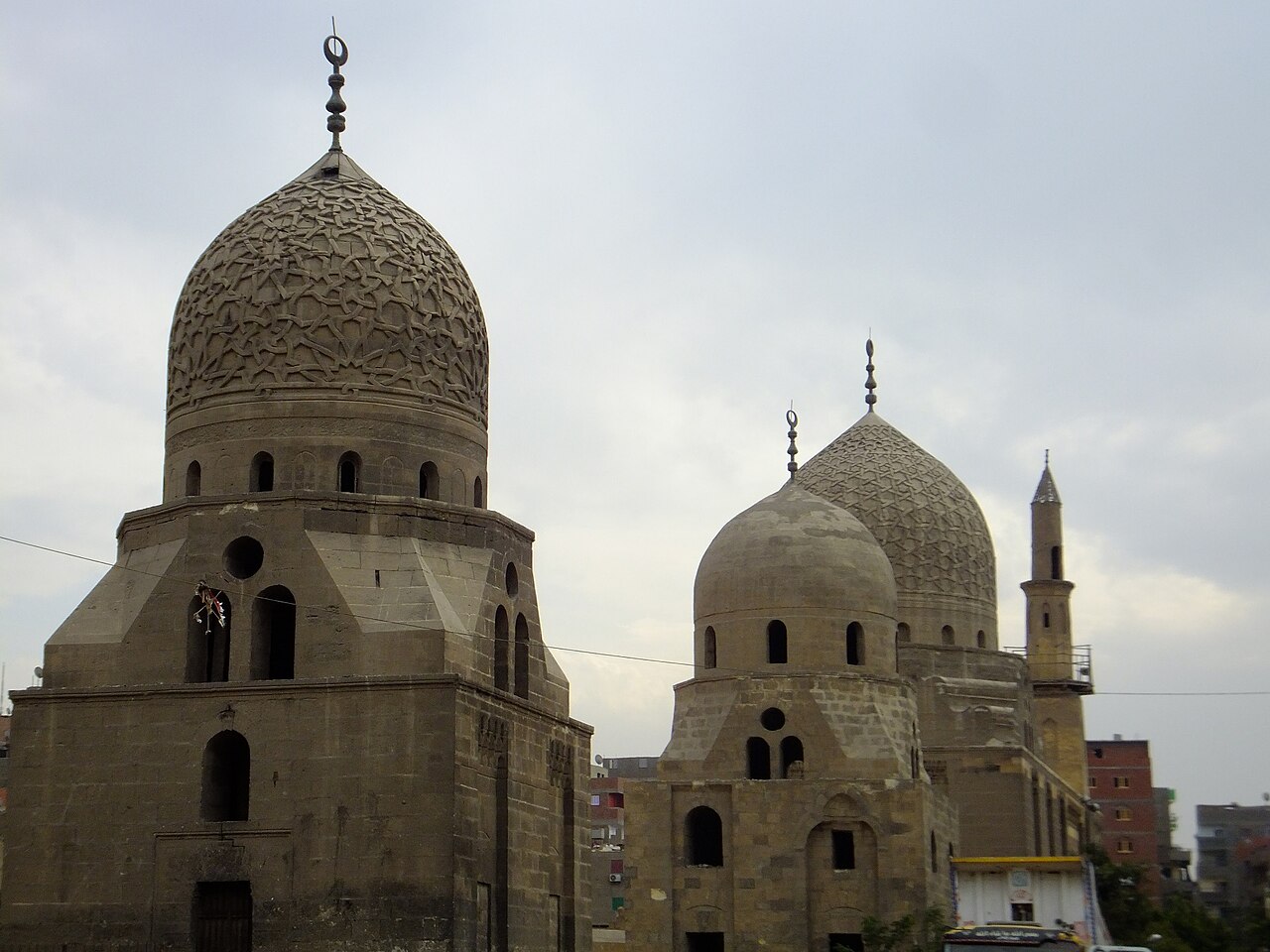
The cemetery contains numerous mausoleums, mosques, and religious structures built as funerary monuments by Mamluk sultans and emirs. Notable architectural elements include domed tombs, minarets, and elaborately decorated prayer halls. The area encompasses both historic monuments and contemporary burial grounds. Residential communities have developed within the cemetery over time, creating a distinctive urban environment. The concentration of Mamluk funerary architecture represents an exceptional surviving ensemble from this medieval Islamic power that ruled Egypt from 1250 to 1517. Northern Cemetery is an active cemetery district, not one gated attraction. Interior monuments have separate schedules; the Faraj ibn Barquq complex, for example, opens daily 09:00–16:00.
Checked 2026-08-31 · Source
Visitors should allocate substantial time to explore even a portion of this extensive site. The Northern Cemetery covers a large geographical area that cannot be comprehensively visited in a single excursion. A focused visit to selected monuments might require several hours. Those wishing to appreciate the architectural variety and historical significance more fully would benefit from multiple visits or an extended day. The dispersed nature of major monuments necessitates considerable walking between sites. Free access to the cemetery district’s public streets; there is no site-wide admission ticket. Separately managed monuments may have their own entry arrangements.
Checked 2026-08-31 · Source
Visitors should verify current access conditions before planning their visit. Cairo experiences extremely hot summers that make extended outdoor exploration uncomfortable and potentially hazardous. The cooler months from late autumn through early spring generally offer more favorable conditions for walking through this extensive outdoor site. Public streets are accessible daily; no site-wide opening time or weekly closure day applies. Take Cairo Metro Line 3 to El Geish, then continue by taxi or another road vehicle to the Sultan Qayitbay complex in the Mamluk Cemetery. The cemetery’s main roads accept motor traffic, but UNESCO’s area survey describes the cemetery itself as lacking direct public transport.
Checked 2026-08-31 · Source
Individual monument sites within the broader cemetery area may have separate fee structures or may not charge admission at all. Some religious structures may permit entry only for worship purposes. Visitors should carry small denominations of Egyptian currency for any incidental fees. The absence of unified management means no standard ticket applies across the entire necropolis. Free access to the cemetery district’s public streets; there is no site-wide admission ticket. Separately managed monuments may have their own entry arrangements. The main roads are asphalted and accessible to motor vehicles, allowing step-free arrival by taxi or private vehicle.
Checked 2026-08-31 · Source
The Northern Cemetery lies east of central Cairo, beyond the historic city walls. The cemetery's vast extent means visitors should identify specific monuments or areas before departing. Engaging a knowledgeable local guide may facilitate access and orientation. Visitors should establish clear return transportation arrangements. Take Cairo Metro Line 3 to El Geish, then continue by taxi or another road vehicle to the Sultan Qayitbay complex in the Mamluk Cemetery. The cemetery’s main roads accept motor traffic, but UNESCO’s area survey describes the cemetery itself as lacking direct public transport.
Checked 2026-08-31 · Source
The cemetery functions as an active burial ground and residential area requiring respectful conduct. Visitors should dress modestly covering shoulders and knees. Some areas may have limited infrastructure including uneven surfaces and inadequate lighting. Solo exploration, particularly for unfamiliar visitors, presents navigation challenges. The residential population deserves privacy and should not be treated as tourist attractions. Photography of individuals requires explicit permission. The main roads are asphalted and accessible to motor vehicles, allowing step-free arrival by taxi or private vehicle. El Geish station on Metro Line 3 is marked PRM-accessible, and Mobility Cairo states that Green Line 3 underground stations have lifts and escalators.
Checked 2026-08-31 · Source
The architectural monuments offer significant photographic interest, particularly the domes, minarets, and decorative stonework of Mamluk structures. Morning and late afternoon light enhance the visual qualities of the stone surfaces. Photography of active religious sites and worshippers demands particular sensitivity and often requires permission. Tripods and professional equipment may attract attention or restrictions at specific locations. The residential nature of portions of the cemetery means photographers must exercise judgment and obtain consent before photographing inhabitants or domestic spaces. Yes. The Qayitbay Necropolis is a component of Historic Cairo, which was inscribed on the World Heritage List in 1979.
Checked 2026-08-31 · Source
Yes. The Qayitbay Necropolis is a component of Historic Cairo, which was inscribed on the World Heritage List in 1979.
The cemetery lies east of historic Cairo, and its major development and monumental character were shaped by Mamluk rulers and patrons.
Principal monuments include the complexes of Sultan Qayitbay, Sultan Faraj ibn Barquq and Sultan al-Ashraf Barsbay.
It was established in 877–879 AH/1472–1474 and includes a madrasa, sabil, kuttab and the Qayitbay family burial ground.
Built between 1398 and 1411, it contains a mosque, Sufi khanqah, madrasa, two sabils and the burial place of Sultan Barquq and his family.
Historic Cairo remains inscribed. In 2026 UNESCO welcomed continuing conservation work while requesting closer assessment of urban-regeneration and transport projects affecting the property.
Loading the interactive map…
The interactive map could not be loaded.

Last updated:
Source: OpenStreetMap contributors, Wikidata ·