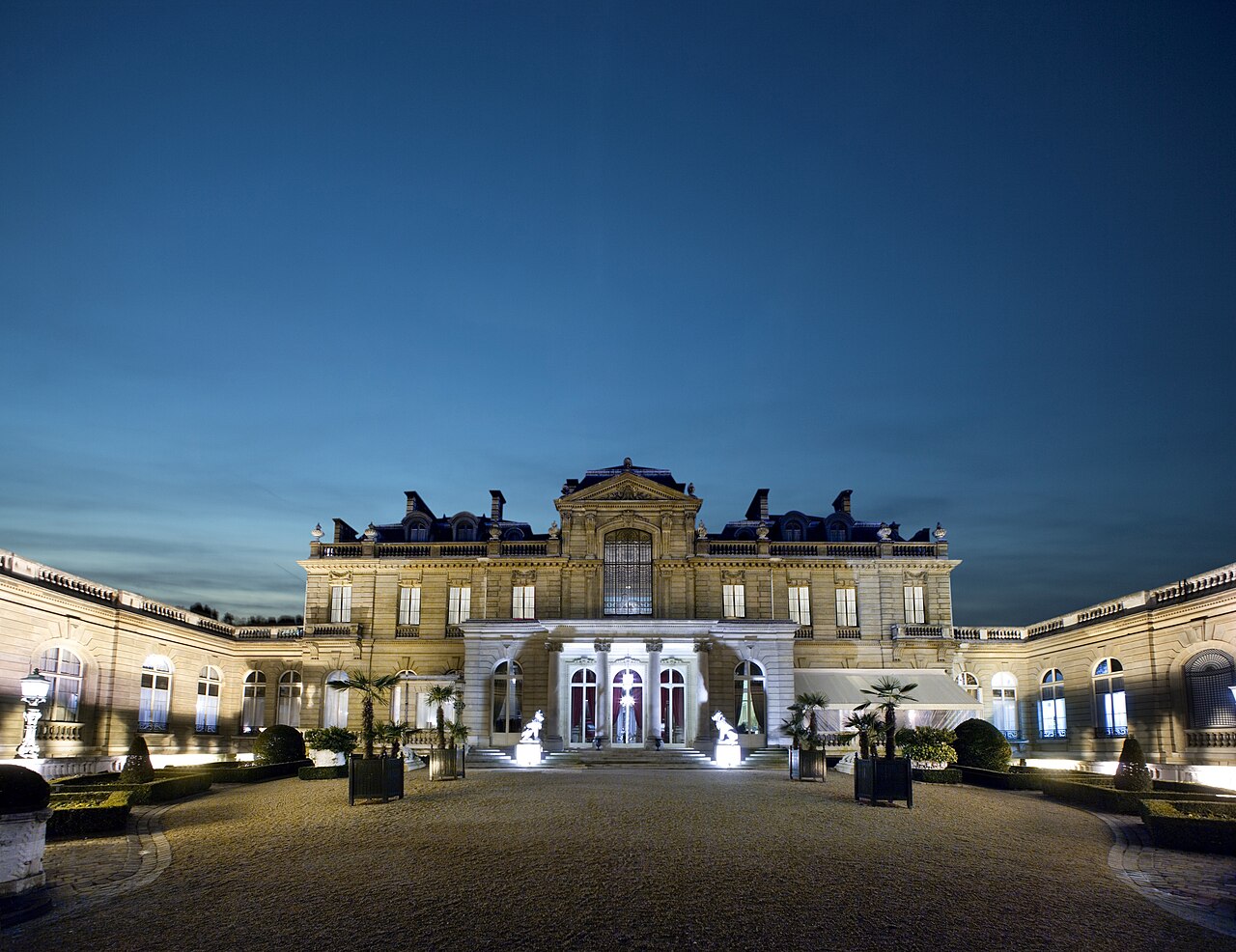
Musée Jacquemart-André is a Paris museum housed in the former private mansion of Édouard André and Nélie Jacquemart. The building is part of the experience: a 19th-century hôtel particulier whose rooms and decorative scheme remain connected to the collection assembled by its owners. The museum belongs to the Institut de France and presents art within the setting created for that collection. Its Boulevard Haussmann location makes it a useful stop in the 8th arrondissement for travelers who enjoy historic interiors, European painting, and an intimate museum scale. Musée Jacquemart-André is a museum in Paris, France. It occupies a mansion constructed during the Second Empire period. The building was designed as a private residence for Édouard André and Nélie Jacquemart, a collector couple who assembled significant art holdings. No. The museum belongs to the Institut de France, a learned society managing numerous foundations and properties.
The collection includes Italian Renaissance paintings, Dutch and Flemish works, and 18th-century French decorative arts. Visitors move through a mansion rather than neutral galleries, so paintings, furniture, tapestries, and sculptures remain tied to reception rooms and period interiors. The winter garden, grand staircase, and formal rooms show how the residence was arranged. Works attributed to Botticelli, Rembrandt, and other European masters appear within this domestic presentation. The result combines architecture, furnishings, and art history, with the rooms themselves forming an important part of the visit.
Allow roughly one and a half to two and a half hours for a considered visit to the permanent collection. This gives time to move through the period rooms, pause at major paintings, and notice decorative details that disappear during a quick circuit. The mansion is more compact than Paris's largest museum complexes, but its dense interiors reward an unhurried pace. If a temporary exhibition is part of your visit, leave additional time for that programme rather than trying to fit the entire museum into a rushed hour.
The museum works well as a daytime cultural stop in the 8th arrondissement. A morning visit suits travelers who prefer to examine the rooms before the busiest part of the day, while the interior setting remains useful in wet or changeable Paris weather. Plan Musée Jacquemart-André alongside nearby Boulevard Haussmann sights rather than treating it as an isolated destination. The rooms are the main attraction in every season, and the visit does not depend on outdoor light. The compact scale also makes the museum easy to place between other central Paris activities.
Entry takes you into a museum managed by the Institut de France, with access focused on the mansion, its collection, and any exhibition presented during your visit. Treat the stop as a planned museum admission rather than an open public interior that you can enter casually. The historic rooms are the reason to make time for the museum, so allow enough of your day to enjoy them after arriving. If you combine the permanent collection with a temporary exhibition, plan for a longer and slower route through the building.
Musée Jacquemart-André stands on Boulevard Haussmann in Paris's 8th arrondissement. Miromesnil and Saint-Augustin are nearby Métro stations, and buses run along the surrounding boulevard network. From either station, continue on foot through dense Haussmann-era streets until the museum's mansion frontage comes into view. The district combines naturally with shops, cafés, and other cultural destinations around the grands boulevards. Wide pavements make the approach straightforward, although boulevard traffic means travelers should use marked crossings.
This is a historic mansion, not a purpose-built modern gallery. Staircases, narrow passages, original flooring, and compact rooms shape the experience and can slow movement when visitor numbers rise. Keep to the established route and give others space around doorways and display barriers. Furnishings and artworks are protected carefully, so do not lean on surfaces or cross barriers. If you have mobility needs, the building's original layout is an important practical consideration when planning this museum visit.
The mansion offers photographs of period rooms, decorative details, staircases, and the relationship between architecture and collection. Interior spaces can be visually tight, so frame carefully and keep clear of doorways and other visitors. Flash, tripods, and selfie sticks are poor choices for confined historic rooms and may be restricted. Temporary exhibitions can introduce additional rules for individual works. Use the building's details as your subject rather than interrupting the visit, and follow staff directions wherever photography is limited.
The museum belongs to the Institut de France, which received the property after the deaths of Édouard André and Nélie Jacquemart.
Does the museum preserve its original interior decoration?
Yes. The mansion retains the decorative scheme and room arrangements established by its founders.
What kinds of art are shown there?
The collection includes Italian Renaissance paintings, Dutch and Flemish works, and 18th-century French decorative arts, with works attributed to Botticelli and Rembrandt.
What should I expect from the building's layout?
Expect a historic mansion with period rooms, a winter garden, a grand staircase, and compact interior spaces connected by the original residential layout.
How long should I spend there?
Allow about one and a half to two and a half hours for the permanent collection, with more time for a temporary exhibition.
Where is Musée Jacquemart-André?
It is on Boulevard Haussmann in Paris's 8th arrondissement, near the Miromesnil and Saint-Augustin Métro stations.
Nothing non-essential is set before you choose, in regions where consent is required. If you decline, ads still appear and analytics is switched off entirely.