
25 min walk
Schiller Theater
- Must see
- Art and culture venue
Language · 11 published
Historic monument · Berlin
AEG Turbinenfabrik
Reviewed by Elena Voss · Roavina Travel Editor
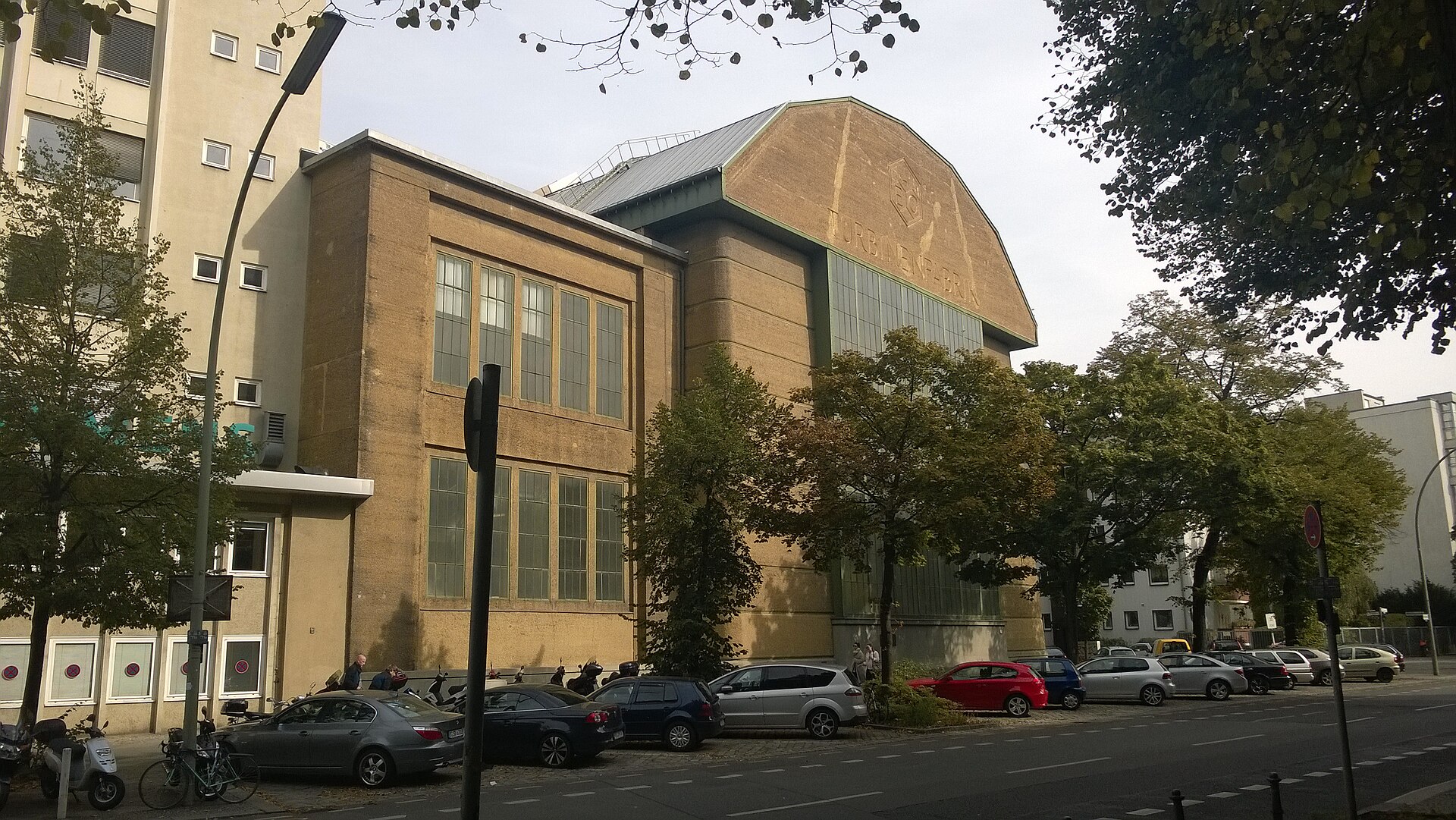
This place is a Attraction. It opened in 1909. It was built in the industrial architecture style. It was designed by Peter Behrens. It carries the cultural heritage ensemble heritage designation.
AEG’s Turbine factory, known as the AEG Turbinenfabrik, is a landmark of Berlin’s industrial architecture in Moabit. Peter Behrens designed the building for AEG, and it was completed in 1909. Its monumental steel structure and broad glazed front give an industrial building the visual confidence of a civic monument. The factory is important for travelers interested in architecture, engineering, and the history of manufacturing because it shows how practical production spaces became a defining part of modern design. Its significance is best understood from the building’s scale, structure, and urban setting.
Checked 2026-08-26 · Source
The original industrial purpose remains legible in the vast hall spaces, steel framework, repeated structural bays, and extensive glazing. The building was designed to support turbine manufacture, yet Behrens gave the functional requirements a strong architectural order. From outside, study the rhythm of the facade, the corner treatment, and the characteristic gabled glass front. Interior views depend on the site’s current use and permitted areas, so the most dependable experience for a traveler is an architectural reading of the exterior. Look for the relationship between the heavy frame, transparent surfaces, and the long production hall behind them.
Checked 2026-08-26 · Source
Allow fifteen to thirty minutes for an exterior stop focused on the facade, structural details, and photographs. Architecture students, industrial-design enthusiasts, and photographers may want longer to study the proportions and changing views along the street. If an authorized interior opportunity forms part of your visit, add roughly thirty to sixty minutes for the hall spaces and steel-and-glass construction. This is a focused heritage stop rather than a full museum circuit, so it works well alongside other Moabit sights or as part of a wider tour of Berlin’s industrial architecture.
Checked 2026-08-26 · Source
Daylight is the most useful time for reading the building’s exterior and photographing the glass front. Morning and late afternoon light can bring out the depth of the steel frame and the rhythm of the facade, while overcast conditions create a softer, more even view. Berlin’s changing daylight makes the building feel different across the seasons: long summer days support careful observation, while winter visits benefit from arriving earlier. The surrounding district is an active urban environment, so choose a time when you can stand safely and give the facade your attention without obstructing people or vehicles.
Checked 2026-08-26 · Source
Exterior observation from public areas is a free architectural experience. The building is not presented here as a conventional museum with a standard visitor route, and interior access is separate from viewing the facade. Travelers should therefore plan around what can be seen from permitted public areas rather than building a day around guaranteed indoor admission. The main reward is the opportunity to encounter a major work of early modern industrial architecture in its urban context. Treat any interior area as part of the site’s operating environment, not as an open gallery.
Checked 2026-08-26 · Source
The AEG Turbine factory is in Berlin’s Moabit district, an urban area with public transport connections and a mixture of industrial and commercial uses. Use Berlin’s current network map to choose a nearby U-Bahn or bus connection, then allow walking time for the final approach. Cycling can suit visitors touring Moabit because the district is relatively flat and spread across broad city streets. If arriving by car, treat parking as a practical constraint rather than part of the attraction. A map is useful for orientation because the building’s scale and active surroundings are easier to appreciate from several viewpoints.
Checked 2026-08-26 · Source
The AEG Turbine factory stands in an active urban and industrial setting, not an enclosed visitor park. Stay on public routes and respect signs, gates, private property, and operational boundaries. Heavy vehicles, service activity, uneven surfaces, and maintenance areas can affect the immediate surroundings. Heritage importance does not make every part of the building open to visitors. Keep clear of entrances and work areas, and take photographs without blocking movement. The glass and steel construction is most rewarding when seen carefully from safe positions, with attention to the building rather than risky attempts to reach a closer angle.
Checked 2026-08-26 · Source
The gabled glass front is the essential image, especially when the light reveals both transparency and the structural rhythm behind it. Step back far enough to show the building’s monumental scale, then move along the facade for corner details and repeating bays. Morning or late afternoon light can give the steel frame greater dimensionality; overcast weather produces a quieter architectural study. A wide lens helps in the constrained urban setting, but the building also rewards simple straight-on compositions. Interior photography belongs only in areas where access and permission are explicit, and equipment should remain discreet around active operations.
Checked 2026-08-26 · Source
Peter Behrens designed the factory, completed in 1909, as an influential early modern industrial building using monumental steel construction and a prominent glazed front.
Yes. The exterior can be observed from permitted public areas, where the gabled glass front, steel framework, structural bays, and industrial scale are the main attractions.
Allow fifteen to thirty minutes for an exterior visit. Architecture enthusiasts and photographers may stay longer to study the facade and surrounding industrial context.
It is in Berlin’s Moabit district, an active urban area reached by public transport and suitable for combining with a wider architectural or industrial-heritage walk.
Focus on the gabled glass front, the steel frame, the repeated structural bays, the corners, and the contrast between the monumental facade and the active Moabit streets around it.
No. It is an industrial heritage building rather than a standard museum circuit, so the main traveler experience is architectural observation from permitted public areas.
Loading the interactive map…
The interactive map could not be loaded.
Last updated:
Source: OpenStreetMap contributors, Wikidata ·