
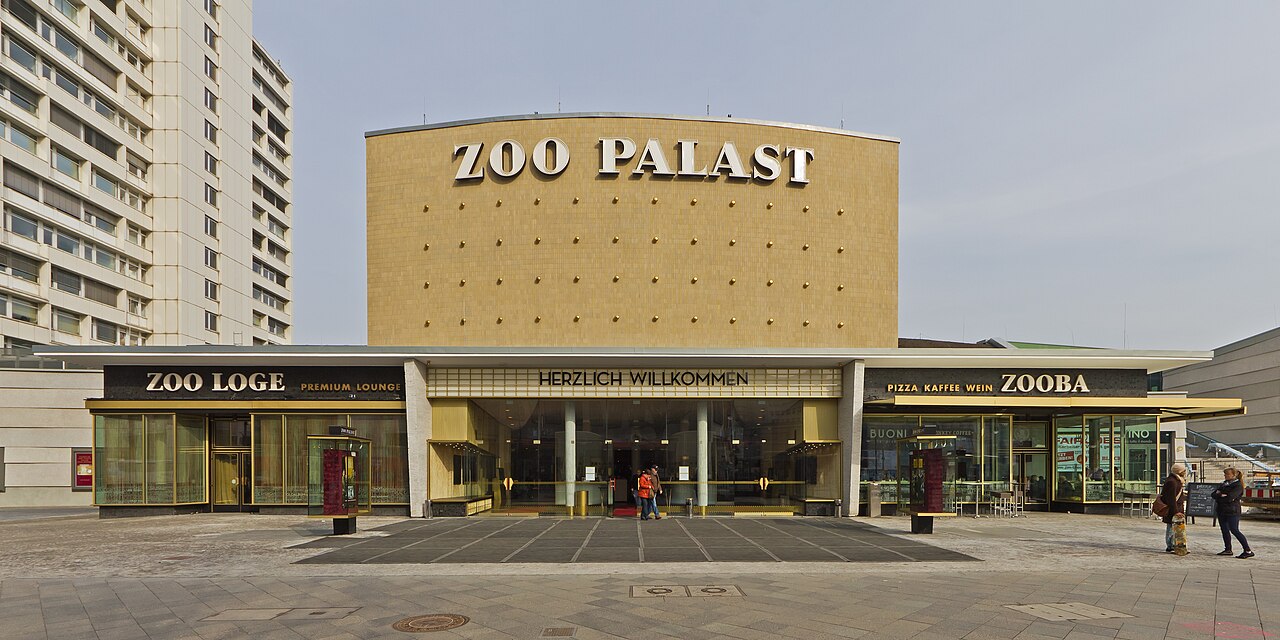
2 min walk
Zoo Palast
- Must see · Heritage site
- Entertainment venue
Language · 11 published
Place of worship · Berlin
Neue Kaiser-Wilhelm-Gedächtniskirche
Reviewed by Elena Voss · Roavina Travel Editor
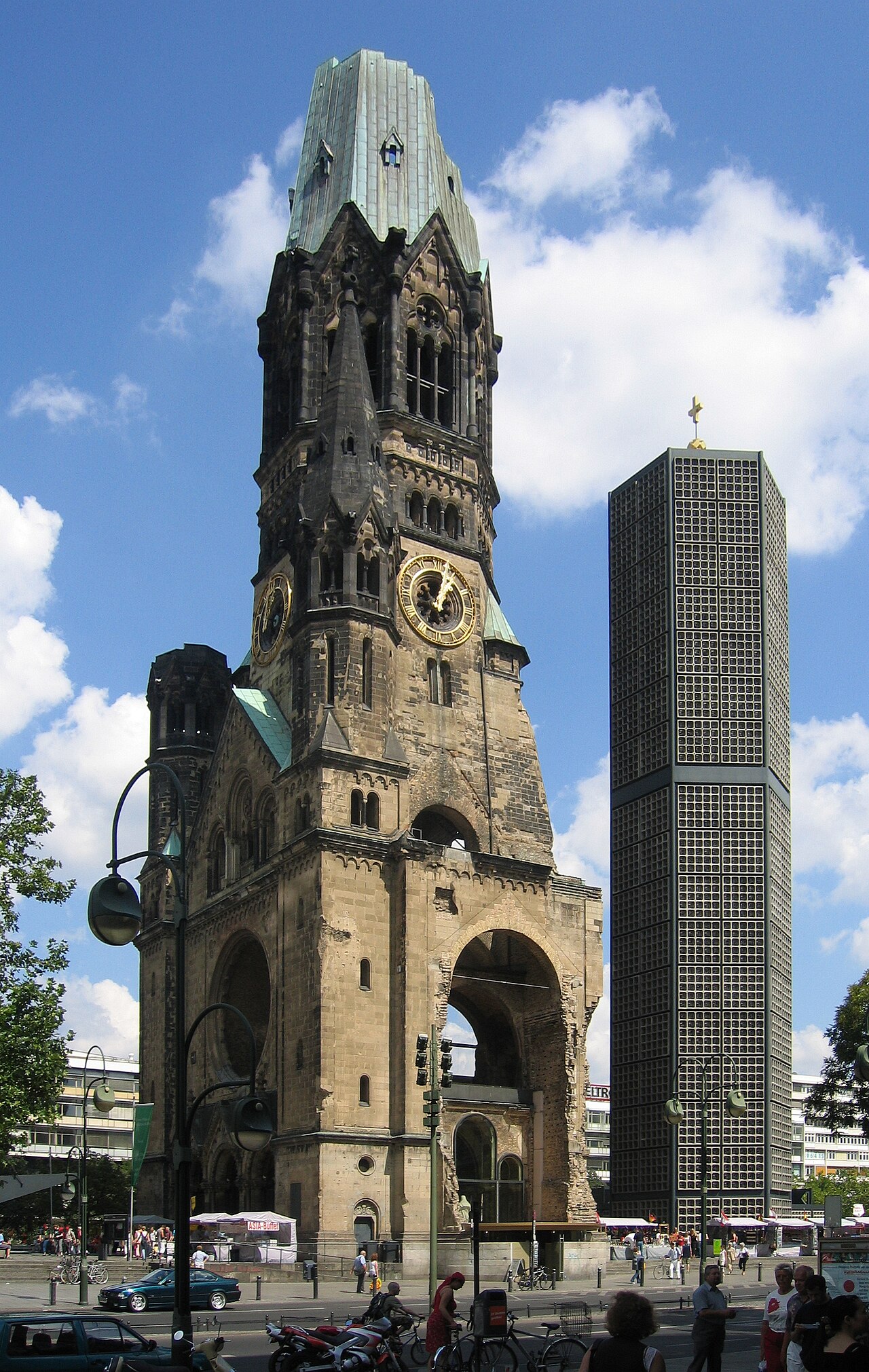
This place is a Place of worship. It was established in 1891. It was built in the Romanesque Revival architecture style. It was designed by Egon Eiermann. It is built of concrete. It carries the Kulturdenkmal heritage designation.
Kaiser-Wilhelm-Gedächtniskirche stands on Breitscheidplatz as a memorial church where a damaged historic tower meets a modern blue-glass sanctuary. The wartime ruin was preserved rather than rebuilt, allowing the broken structure to remain a visible reminder of destruction. The newer church, completed in the 1960s, creates a deliberate contrast of colour, texture and form. Together, the buildings serve as an active place of worship and a powerful Berlin landmark centred on peace and reconciliation. The Kaiser-Wilhelm-Gedächtniskirche, locally known as the Neue Kaiser-Wilhelm-Gedächtniskirche, stands as a prominent landmark in Berlin. The original church was severely damaged during World War II, and its ruined tower remains preserved as a poignant memorial. Adjacent to this haunting remnant, a modern church building was constructed in the 1960s, creating a striking architectural dialogue between destruction and renewal. The complex serves both as a place of worship and as a powerful symbol of peace and reconciliation, drawing visitors who seek to understand Berlin's layered history. Yes, the modern building functions as an active place of worship alongside its role as memorial and tourist destination.
Checked 2026-08-26 · Source
The complex brings together the preserved tower ruin, the modern sanctuary and historical information about the church’s destruction and rebuilding. Inside the newer building, blue stained-glass panels fill the worship space with a distinctive coloured light. Liturgical furnishings and the quiet geometry of the sanctuary reward a slow look. The ruined tower provides the strongest exterior impression, while the modern interior shows how post-war Berlin translated memory into a functioning place of prayer rather than a reconstructed replica. The interior contains significant elements worth observing. The ruined tower, left deliberately unreconstructed, exposes its shattered structure to the elements.
Checked 2026-08-26 · Source
A focused visit usually takes thirty to sixty minutes. That gives enough time to stand outside with the ruined tower, enter the modern church, observe the blue glass and read the historical material. Visitors interested in twentieth-century history, memorial architecture or religious art may want longer for reflection. The site is emotionally powerful, so rushing through it can flatten the contrast between destruction and renewal. Treat it as a contemplative stop rather than a quick photograph alone.
Checked 2026-08-26 · Source
The church’s central position makes it practical throughout the year, while the surrounding Breitscheidplatz changes with shopping traffic, seasonal activity and the Christmas market period. Weekday mornings can feel more measured than busy shopping hours, giving visitors better space for quiet observation. Late afternoon and evening bring a different relationship between the grey ruin, city lights and blue glass. Allow extra time around major public events in the square, when movement can become crowded.
Checked 2026-08-26 · Source
The church traditionally welcomes visitors without an entrance charge to the principal worship space, and donations support the care of the complex. The most meaningful experience is therefore available as a free architectural and memorial visit. Keep the distinction between ordinary entry and any separately arranged activity in mind when planning a longer programme. Bring a respectful attitude rather than expecting a conventional museum environment: this remains a working religious site as well as one of Berlin’s best-known memorials.
Checked 2026-08-26 · Source
Kaiser-Wilhelm-Gedächtniskirche is prominently located at Breitscheidplatz beside Kurfürstendamm in western Berlin. Zoologischer Garten station provides regional rail, S-Bahn and U-Bahn connections within walking distance, and buses serve the surrounding streets. From the station, the preserved tower is an easy visual reference as you approach the square. The central setting makes the church simple to pair with shopping, urban architecture and other Charlottenburg sights during the same outing.
Checked 2026-08-26 · Source
This is an active religious site, so keep voices low and give worshippers space, especially during services or moments of prayer. Breitscheidplatz is a busy commercial and tourist area with constant pedestrian movement, street activity and traffic around the square. The preserved ruin can be emotionally difficult because its damage is visible rather than softened by restoration. Remember the site’s memorial character and the victims connected with the square’s later history. Keep valuables close in crowded areas.
Checked 2026-08-26 · Source
The contrast between the weathered tower and the blue-glass sanctuary is the central photographic opportunity. From the square, frame both structures together to show the dialogue between ruin and renewal; inside, the stained glass rewards careful exposure and patience in low light. Use the surrounding geometry of Breitscheidplatz for wider city context. Keep cameras unobtrusive, avoid interrupting worship and follow any signs within the sanctuary. The strongest images usually leave room for the architecture to carry the emotion.
Checked 2026-08-26 · Source
Yes. The modern church continues to function as a place of worship alongside its memorial and visitor role.
The damaged historic tower was preserved as a memorial instead of being rebuilt after wartime destruction.
The sanctuary contains striking blue stained glass, liturgical furnishings and a quiet modern interior designed for worship and reflection.
Allow thirty to sixty minutes for the ruin, modern sanctuary and historical information, with extra time for quiet reflection.
It stands at Breitscheidplatz beside Kurfürstendamm in western Berlin, within walking distance of Zoologischer Garten station.
Keep voices low, respect worshippers and treat the sanctuary as an active religious space as well as a historic landmark.
Loading the interactive map…
The interactive map could not be loaded.
Last updated:
Source: OpenStreetMap contributors, Wikidata ·