
3 min walk
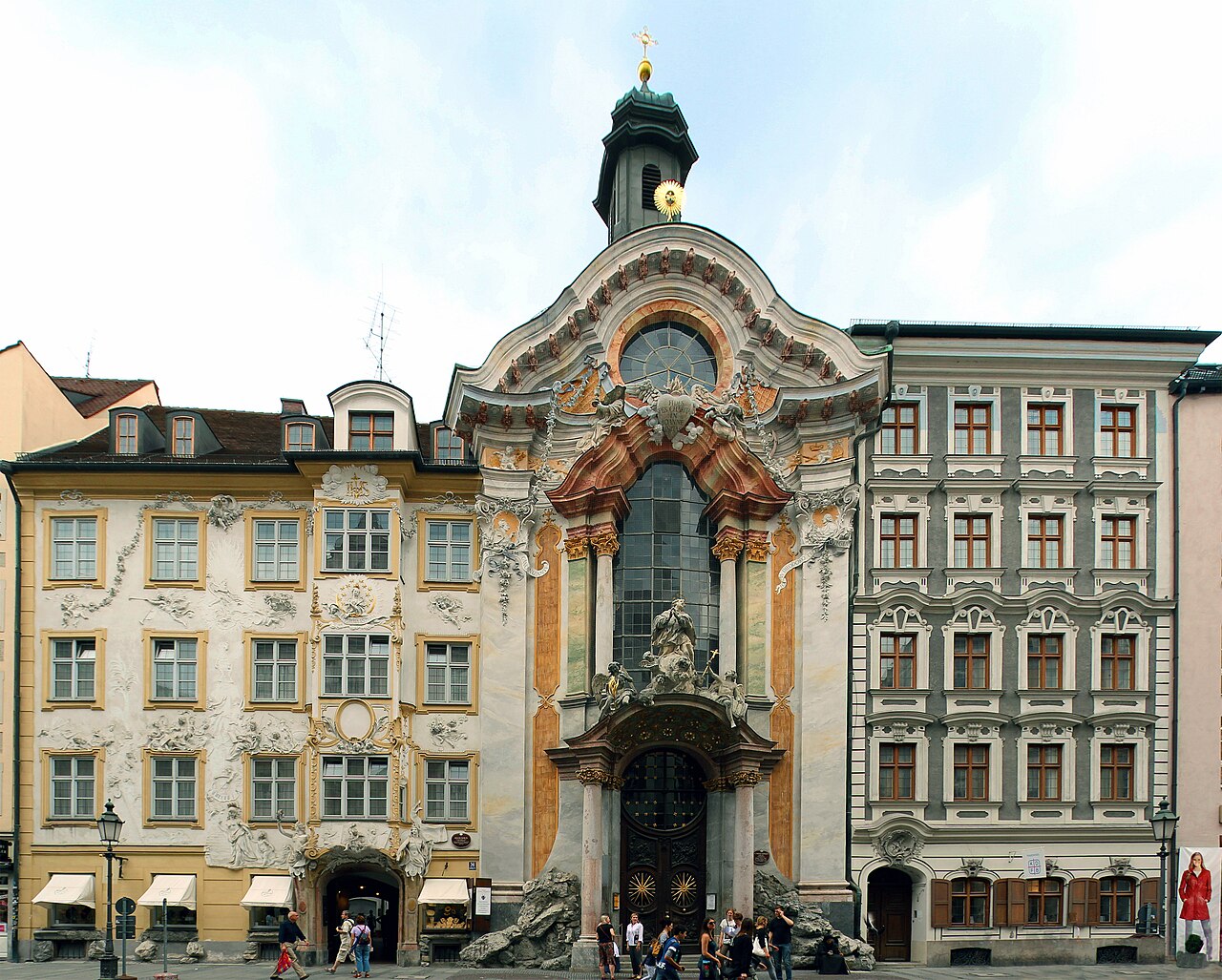
Asam Church
- Must see · Heritage site
- Place of worship
Language · 11 published
Historic monument · Munich
Reviewed by Elena Voss · Roavina Travel Editor
| Monday | 00:00 – 23:59 |
|---|---|
| Tuesday | 00:00 – 23:59 |
| Wednesday | 00:00 – 23:59 |
| Thursday | 00:00 – 23:59 |
| Friday | 00:00 – 23:59 |
| Saturday | 00:00 – 23:59 |
| Sunday | 00:00 – 23:59 |
Checked 2026-08-31 · Source
Read from the OpenStreetMap access tags; anything not listed has no tag recorded.
Set the group type to family in the planner and the day window contracts to about three quarters of a solo day.
It was established in 1308. It was designed by Wilhelm Bertsch. It carries the architectural heritage monument in Bavaria heritage designation.
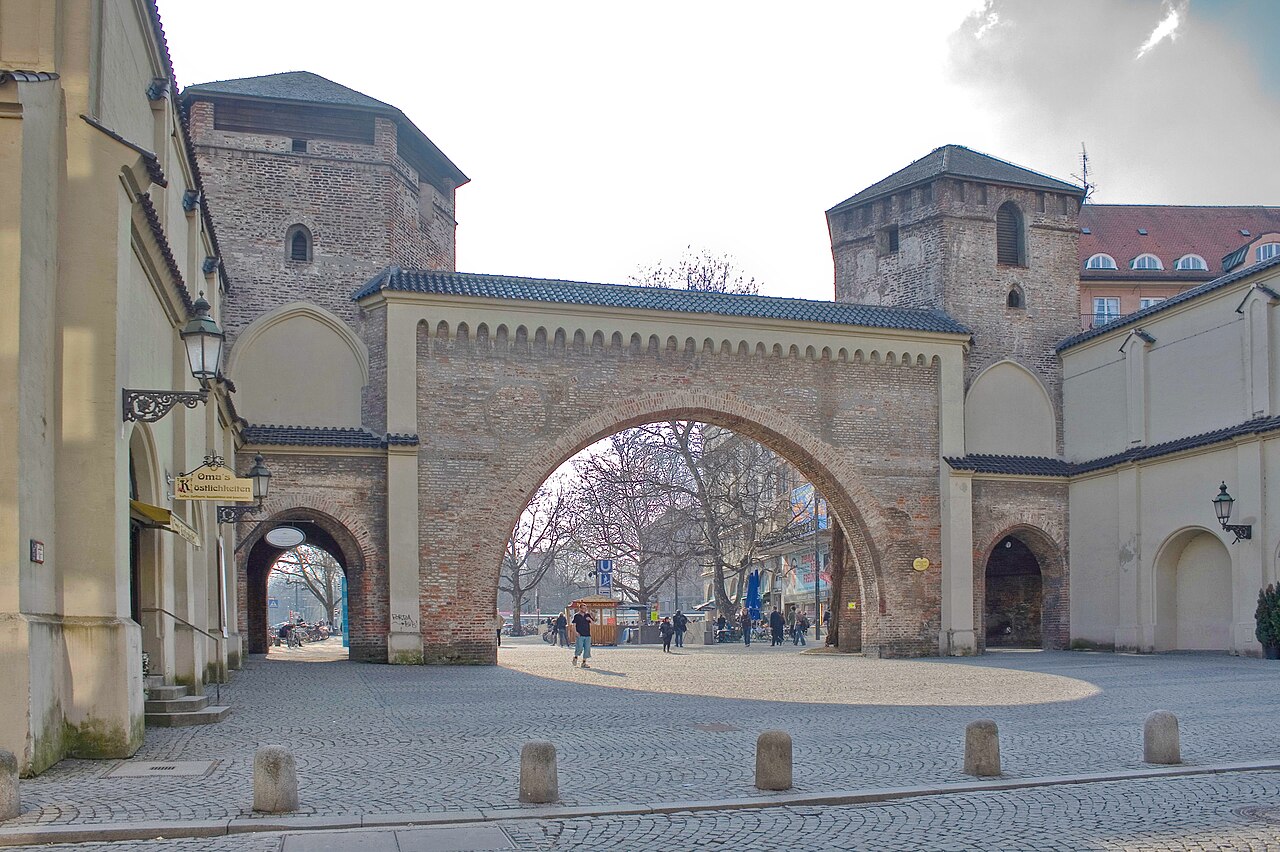
Sendlinger Tor is one of Munich's three remaining medieval city gates, standing at the southern end of the historic old town. Built in the 14th century as part of the city's defensive fortifications, it represents a significant surviving element of Munich's medieval urban fabric. The structure features a distinctive central tower with two flanking round towers, characteristic of late medieval gate architecture. Today it serves as a prominent landmark and traffic junction where Sendlinger Straße meets the old town ring road, marking a clear transition point between the historic core and the surrounding districts.
Checked 2026-08-26
The gate itself is an exterior monument without interior spaces accessible to visitors. The structure comprises the central passage arch and the two rounded side towers, all constructed from brick and stone in the medieval period. There are no museums, exhibitions, or visitor facilities within the gate. The architectural interest lies entirely in the external form and historical significance of the surviving fortification element. Visitors examine the monument from the public spaces at its base, observing the construction details, proportions, and its relationship to the surrounding streetscape and traffic patterns.
Checked 2026-08-26
A visit to Sendlinger Tor requires minimal time commitment, typically five to fifteen minutes for observation and photography from the surrounding pavements. The experience consists entirely of viewing the exterior monument from various angles and appreciating its historical context within the city layout. It naturally combines with walks through the old town or along Sendlinger Straße, where the gate marks either a starting or ending point. Many visitors encounter it incidentally while moving between other destinations rather than making a dedicated journey.
Checked 2026-08-26
The monument is publicly visible at all hours as it stands in open street space. The gate presents different qualities across day and evening, with daylight offering clearer appreciation of architectural details and materials, while artificial lighting after dark creates a distinct atmosphere. Seasonal variations in surrounding foliage and pedestrian activity affect the experience. The adjacent streets remain busy with traffic throughout most hours, so quieter observation may be easier during early morning periods when pedestrian and vehicle flows diminish. Check the operator's own site for the travel date before relying on a schedule or fare.
Checked 2026-08-26
No admission fee applies to viewing Sendlinger Tor from public thoroughfares. The monument stands in open street space without controlled access. No ticketing infrastructure exists at the site. Visitors should be aware that any commercial tours incorporating the gate into their routes operate independently, and any charges would relate to tour services rather than monument access itself. The surrounding area contains various businesses where incidental spending may occur, but these are entirely separate from the monument experience. Check the operator's own site for the travel date before relying on a schedule or fare.
Checked 2026-08-26
Sendlinger Tor sits at a major transport junction served by U-Bahn lines U1, U2, U3, U6, U7, and U8 at Sendlinger Tor station, with exits leading directly to the adjacent plaza. Multiple tram and bus routes serve nearby stops. The location marks the southern boundary of Munich's pedestrianised old town core, making it naturally accessible on foot from central accommodations and attractions. Cyclists should note heavy traffic circulation around the gate itself, though dedicated infrastructure exists on surrounding streets. Driving to the immediate vicinity is impractical due to pedestrian zones and congestion.
Checked 2026-08-26
The primary consideration is traffic, as the gate stands amid busy road junctions with vehicles, trams, and numerous cyclists passing continuously. Pedestrians should remain on designated crossings and pavements rather than stepping into roadways for photographs. The plaza areas experience significant pedestrian congestion, particularly during peak hours and commercial periods. Weather exposure is complete with no shelter at the monument itself. Visitors with mobility considerations should note uneven surfaces in the historic surroundings and the general bustle of a major urban intersection with multiple transport modes converging.
Checked 2026-08-26
The gate presents strong photographic subjects from multiple angles, though achieving unobstructed views requires patience due to constant traffic and pedestrian movement. The symmetrical facade facing north toward the old town offers the most composed perspective. Side angles reveal the rounded tower forms. Evening illumination produces dramatic effects against dark skies, though tripod use in busy pedestrian areas requires courtesy and safety awareness. Wide-angle lenses accommodate the confined street spaces. The surrounding commercial signage and modern infrastructure intrude on attempts at purely historical framing, representing the authentic contemporary context.
Checked 2026-08-26
No. The gate has no visitor access to upper levels or interior spaces. It is an exterior monument only.
No admission fee is required. The monument stands in public street space freely viewable from surrounding pavements.
The gate was constructed in the 14th century as part of Munich's medieval city fortifications. Precise construction dates are Not recorded pending review.
The gate marks the southern edge of the old town pedestrian zone. The structure itself sits at the boundary where pedestrianised streets meet regular traffic roads.
No dedicated tours operate specifically for this monument. It may feature in general city walking tours of the old town area.
The gate receives artificial lighting after dark, creating a distinctly different appearance from daytime viewing. Specific lighting schedules are Not recorded pending review.
Loading the interactive map…
The interactive map could not be loaded.

Last updated:
Source: OpenStreetMap contributors, Wikidata ·