
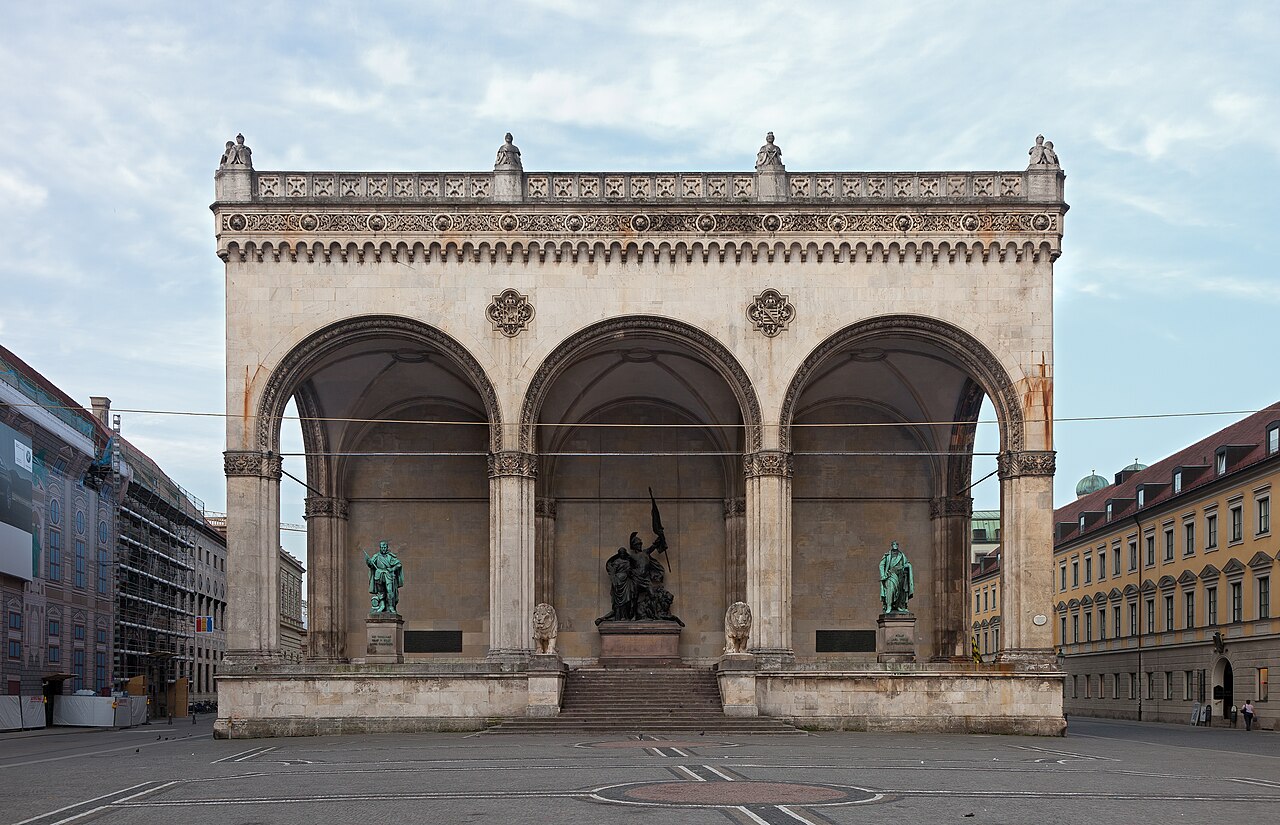
1 min walk
Feldherrnhalle
- Must see · Heritage site
- Historic monument
Language · 11 published
Historic monument · Munich
Theatinerkirche St. Kajetan
Reviewed by Elena Voss · Roavina Travel Editor
| Monday | 06:30 – 19:30 |
|---|---|
| Tuesday | 06:30 – 19:30 |
| Wednesday | 06:30 – 19:30 |
| Thursday | 06:30 – 19:30 |
| Friday | 06:30 – 19:30 |
| Saturday | 06:30 – 19:30 |
| Sunday | 06:30 – 19:30 |
Checked 2026-08-31 · Source
Read from the OpenStreetMap access tags; anything not listed has no tag recorded.
Set the group type to family in the planner and the day window contracts to about three quarters of a solo day.
This place is a Attraction. It opened in 1675. It was built in the baroque architecture style. It was designed by Agostino Barelli. It carries the architectural heritage monument in Bavaria heritage designation.
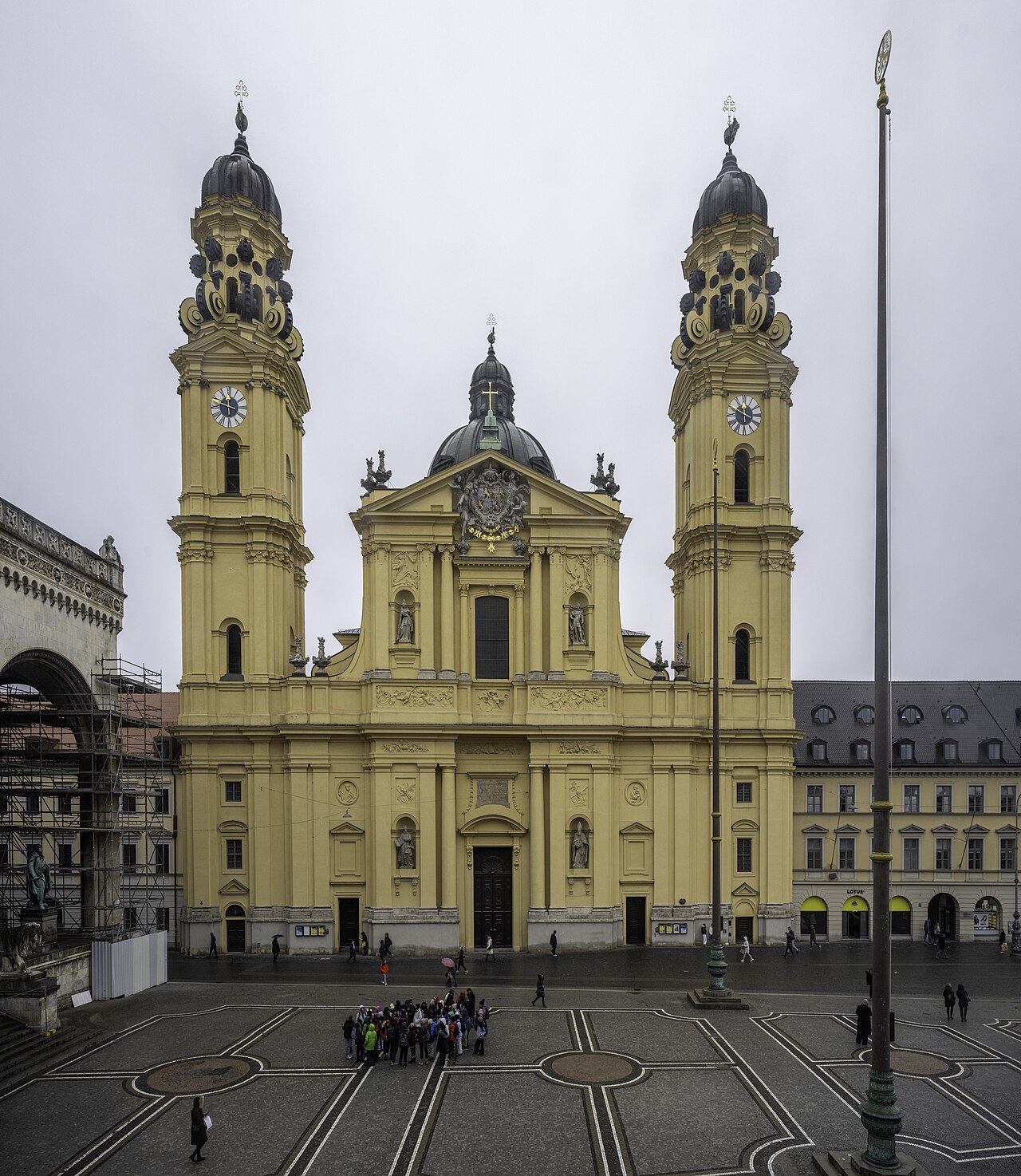
Theatine Church of St. Cajetan is a prominent Catholic church beside Odeonsplatz in central Munich. Built in the Italian Baroque style during the seventeenth century, it is recognised by its pale yellow facade, monumental proportions, and ornate interior. Elector Ferdinand Maria and Henriette Adelaide founded the church in gratitude for the birth of their long-awaited heir. It remains an active place of worship, so its importance is both architectural and religious. Include it in a walking route through Munich's historic centre. The Theatine Church of St. Cajetan is a prominent Catholic church in Munich, Germany. Built in the Italian Baroque style during the seventeenth century, it stands near Odeonsplatz in the city centre. The church was founded by Elector Ferdinand Maria and his consort Henriette Adelaide as a gesture of thanks for the birth of their long-awaited heir. Its distinctive yellow facade and elaborate architectural character make it one of Munich's most recognisable ecclesiastical buildings. The church functions as an active place of worship.
Checked 2026-08-26 · Source
The interior shifts from the restrained yellow exterior to a richly decorated Baroque space. Look for elaborate stucco, sculptural details, side chapels, devotional objects, and the church's strong vertical scale. Tombs of important Bavarian figures, including members of the Wittelsbach dynasty, add historical depth to the architecture. The high altar and chapels are arranged for worship as well as visual impact. Move slowly enough to notice how ornament, light, and the long interior perspective work together.
Checked 2026-08-26 · Source
Allow about twenty to forty minutes for a focused visit. That is enough for a general look at the architecture, stucco, chapels, altar, and dynastic tombs. Travelers with a strong interest in Baroque art, Bavarian history, or Catholic architecture can stay longer without needing a separate programme. Its position near Odeonsplatz makes it easy to combine with the Munich Residenz, Feldherrnhalle, and other central sights. Keep your pace quiet and flexible because worship may continue during your visit.
Checked 2026-08-26 · Source
Theatine Church is most rewarding when you can enter calmly and spend time observing the contrast between its simple exterior colour and ornate Baroque interior. It is an active church, so religious services and feast days shape the atmosphere and can limit tourist movement. The facade is also worth seeing from Odeonsplatz, where it forms part of a major historic urban setting. Add the church to a central Munich walk when you want architecture, dynastic history, and a living religious site in one stop.
Checked 2026-08-26 · Source
General entry for visiting the church is without charge, consistent with its role as an active place of worship. The visit is therefore easy to add to a Munich walking day without a museum admission budget. Voluntary contributions may be welcomed, but the church is not organised primarily as a ticketed attraction. Any visit remains subordinate to worship, ceremonies, and the needs of the congregation. Treat the space as a church first and an architectural landmark second while exploring the interior.
Checked 2026-08-26 · Source
Theatine Church stands at Odeonsplatz in Munich's central historic area, next to the Feldherrnhalle and close to the Munich Residenz. Its location is well suited to walking from other Altstadt sights, while Munich's public transport network serves Odeonsplatz and the surrounding centre. The broad square makes the yellow facade easy to identify on arrival. Build the church into a pedestrian route rather than making it a separate cross-city journey; the nearby concentration of landmarks supports an efficient half-day circuit.
Checked 2026-08-26 · Source
Remember that this is a functioning Catholic church. Keep voices low, dress respectfully, and give worshippers priority, especially during services, funerals, or ceremonies. Some areas may be unavailable while liturgy is taking place. The historic entrance and older construction may be difficult for some visitors with limited mobility. Odeonsplatz is busy, with pedestrians, cyclists, and traffic around the approaches, so take care when crossing and when pausing for photographs. Inside, keep a respectful distance from altars, tombs, and furnishings.
Checked 2026-08-26 · Source
The yellow facade photographs strongly from Odeonsplatz, especially when framed with the square and the neighbouring historic buildings. Inside, the Baroque stucco, side chapels, altar, and vertical perspective provide detailed subjects, although church lighting can be subdued. Keep photography discreet and never let it interrupt prayer or a service. Avoid flash, large equipment, and positions that block movement. Exterior compositions can include the contrast between the bright facade and the urban setting around Munich's historic centre.
Checked 2026-08-26 · Source
The church is built in the Italian Baroque style and is known for its yellow facade and richly decorated interior.
Ferdinand Maria and Henriette Adelaide founded it as a gesture of gratitude for the birth of their long-awaited heir.
The interior includes Baroque stucco, sculptural details, side chapels, devotional objects, a high altar, and tombs of Wittelsbach dynasty members.
A focused visit generally takes about twenty to forty minutes, with more time useful for visitors interested in Baroque art or Bavarian history.
General visitation is without charge because the building remains an active place of worship.
It stands beside Odeonsplatz in central Munich, next to the Feldherrnhalle and near the Munich Residenz.
Loading the interactive map…
The interactive map could not be loaded.
Last updated:
Source: OpenStreetMap contributors, Wikidata ·