
2 min walk
Culture House
- Must see
- Museum
Language · 11 published
Nature site · Reykjavik
Reviewed by Elena Voss · Roavina Travel Editor
This place is a Park.
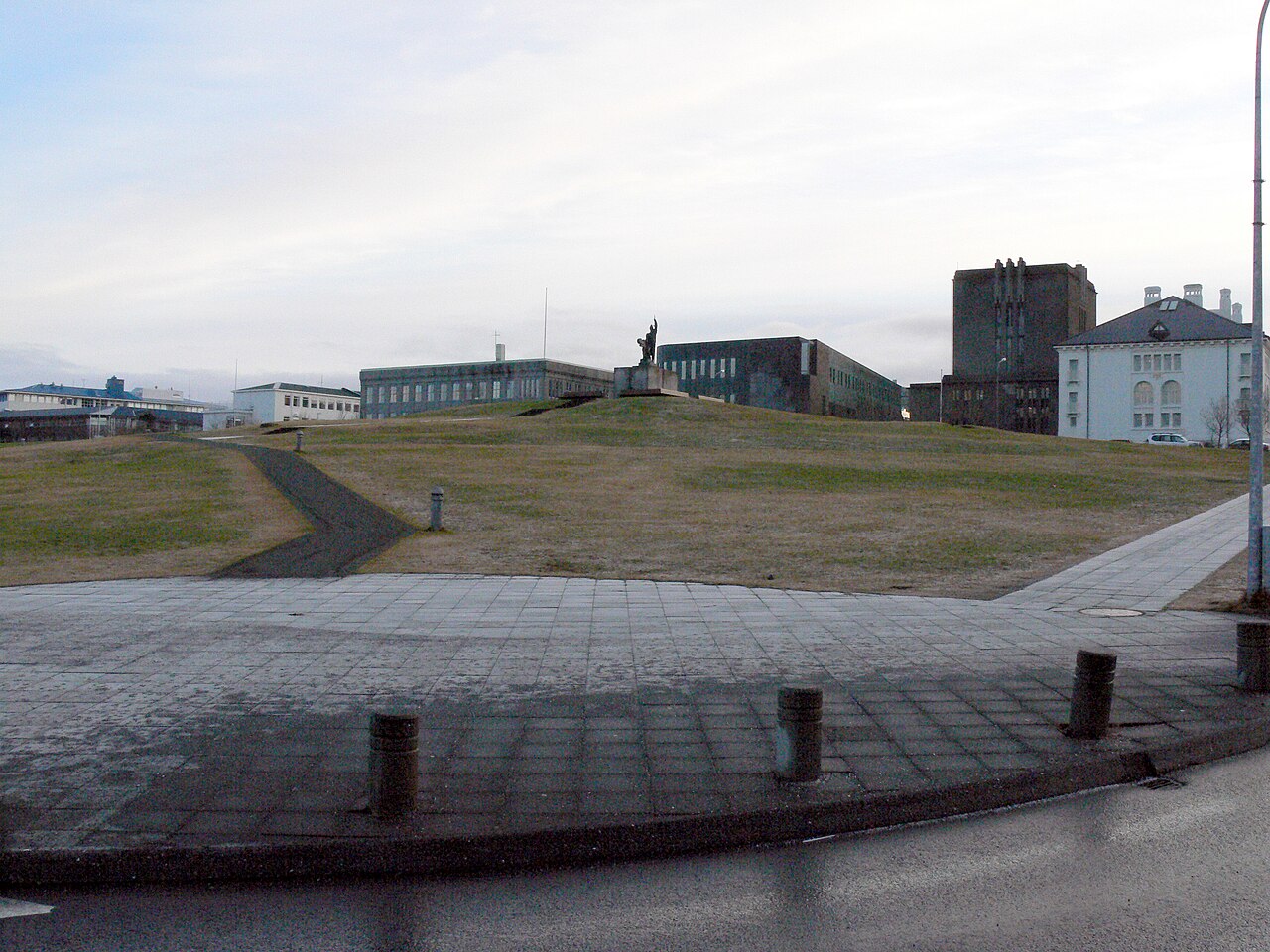
Arnarhóll is a municipal outdoor recreation area above Kvosin and Lækjargata in central Reykjavík. Reykjavík City describes the hill as an old farm site that is now an open area with walking paths and benches. Its elevated position provides a view over the city centre and the straits, while the summit holds Einar Jónsson’s statue of Ingólfur Arnarson, identified by the city as Reykjavík’s settler. The city records occupation at Arnarhóll from at least the 16th century. Farming ended in 1828, the farm was demolished soon afterwards, and the land passed to Reykjavík in 1835. The statue was ceremonially unveiled in February 1924. Arnarhóll was then first designated as a public outdoor area in Reykjavík’s 1927 city planning. Together, the former farm site, municipal landscape, outlook and monument explain the hill’s present role as both an open urban space and a named historical landmark in the centre of the capital.
Checked 2026-09-06 · Source
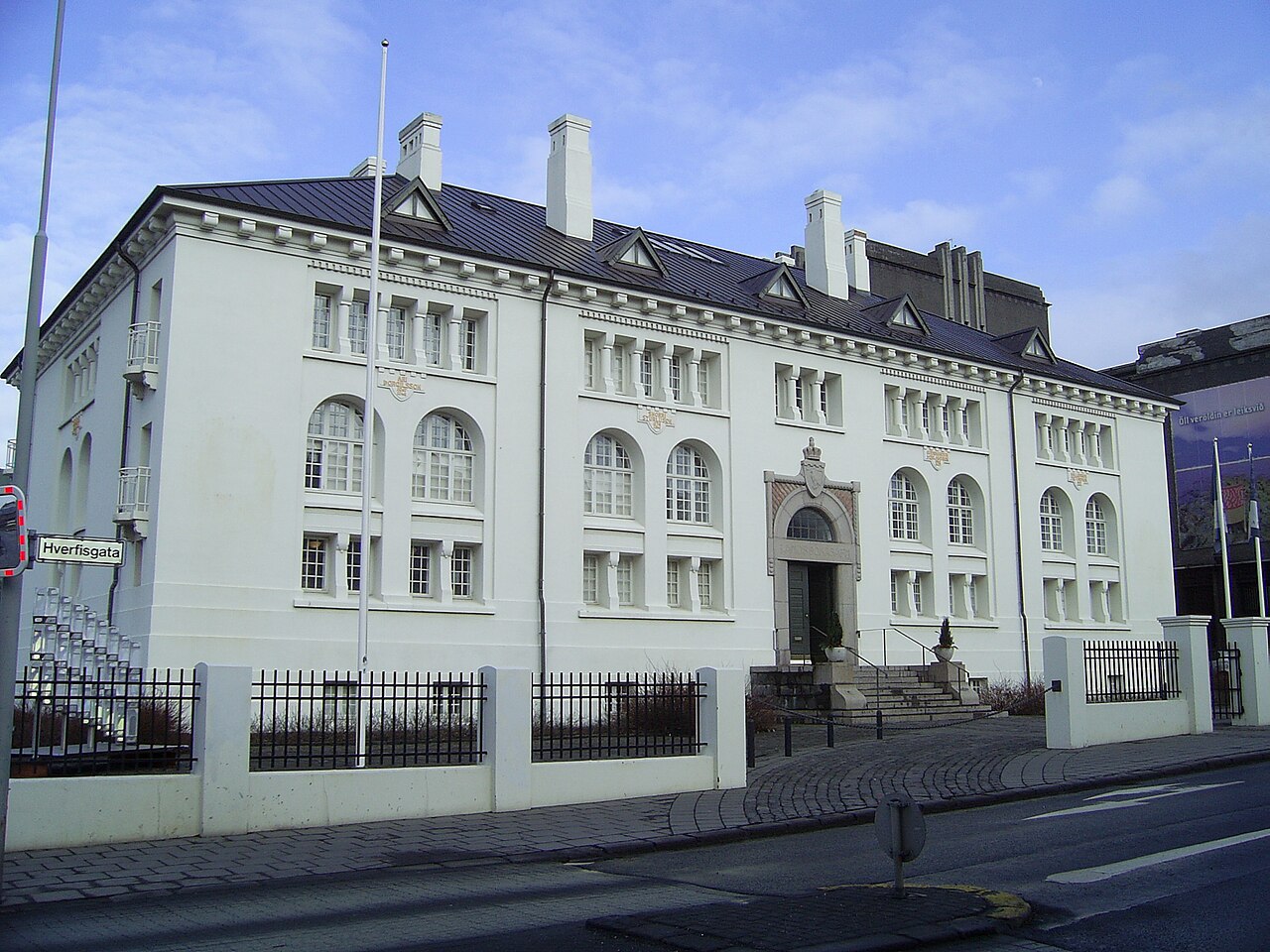
The principal features recorded by Reykjavík City are the open hill, its walking paths and benches, the view, and the Ingólfur Arnarson statue at the top. Sculptor Einar Jónsson created the monument, which was ceremonially unveiled in February 1924. The city identifies the figure as Reykjavík’s settler and calls the statue one of the capital’s main landmarks. Arnarhóll’s setting is also part of what visitors see: the Culture House, Central Bank of Iceland, Supreme Court of Iceland, Ministry of Finance and Economic Affairs, and Ministry of Education and Culture stand north or east of the hill. The official description does not present an indoor collection, visitor centre or interpretive exhibition. Read the hill as an outdoor civic site whose paths, monument, outlook and surrounding institutions form the visit, rather than expecting galleries or a staffed attraction inside it.
Checked 2026-09-06 · Source
Reykjavík City does not publish a recommended visit duration for Arnarhóll. Its official description names walking paths, benches, the view and the summit monument, but it gives no route length, guided-tour time, timed entry, queue estimate or average stay. A fixed fifteen-minute or forty-five-minute recommendation would therefore be an invention rather than an operator-backed fact. Let the focus of the stop determine its length. One visit may centre on the view over the city centre and straits; another may spend more time placing the former farm and the Ingólfur Arnarson statue in Reykjavík’s history. The recorded timeline spans settlement at the site from at least the 16th century, the end of farming in 1828, municipal ownership from 1835, the statue’s unveiling in 1924 and public-space designation in 1927. None of those facts establishes a prescribed duration, so keep the stop flexible within the day.
Checked 2026-09-06 · Source
No opening or closing times are published on Reykjavík City’s Arnarhóll page. The absence of posted hours should not be read as a twenty-four-hour access guarantee or a fixed daily schedule. The official listing instead distinguishes the site by use: people often gather there on holidays, especially Iceland’s Independence Day on 17 June, to watch concerts and other entertainment. That event context matters because a civic programme can make the experience different from an ordinary visit to the paths, benches, view and monument. The city page does not publish a predictable quiet period, seasonal timetable, last-entry time or routine closure day. Choose a date according to whether the 17 June gathering is part of the intended visit, then check Reykjavík City’s notices for programme details or temporary arrangements. A missing timetable is not a promise of unrestricted access at every time or during every event.
Checked 2026-09-06 · Source
Reykjavík City’s official Arnarhóll page does not publish an admission price, ticket requirement, reservation system or booking procedure. Calling the hill an open municipal outdoor area is not enough evidence for a permanent zero-price ticket, so admission is best treated as not recorded rather than free or paid. The listing also does not describe concessions, a box office, a city-card benefit or a separate charge for the Ingólfur Arnarson monument. The city notes that concerts and entertainment take place at Arnarhóll during holiday gatherings, particularly on 17 June. Any conditions attached to a specific programme belong to that event and should be checked in its notice; they must not be generalized into a standing ticket policy for the hill. Budget decisions that depend on a definite cost should therefore use date-specific information from Reykjavík City rather than an assumed zero amount.
Checked 2026-09-06 · Source
The official address is Arnarhóll, 101 Reykjavík. Reykjavík City places the hill over Kvosin and Lækjargata and identifies several buildings on its northern and eastern sides: the Culture House, Central Bank of Iceland, Supreme Court of Iceland, Ministry of Finance and Economic Affairs, and Ministry of Education and Culture. Those named landmarks provide a reliable way to recognize the immediate setting without assuming a particular entrance. The official Arnarhóll page does not prescribe a bus route, bus stop, station exit, walking time, parking facility or vehicle approach. It also does not identify a step-free route to the top. Use a current local map to reach the stated address, then follow current signs and conditions on site. Confirm public-transport and walking estimates for the actual starting point instead of treating a route through surrounding streets or a fifteen-minute walk from central accommodation as a verified standard journey.
Checked 2026-09-06 · Source
Reykjavík City publishes specific accessibility arrangements for Culture Night at Arnarhóll. The event notice places wheelchair platforms in front of the Arnarhóll stage and an accessible toilet beside Arnarhóll, next to the Central Bank parking garage. These provisions describe Culture Night infrastructure, not permanent amenities guaranteed at the hill on an ordinary day. Visitors attending Culture Night should consult the city’s latest accessibility notice before arrival, because the event layout and services are date-specific. Anyone planning a different date should not use the festival provision as proof that the same platform or toilet will be present. Confirm the arrangements needed for the actual visit rather than extending a temporary event measure to the site throughout the year. This distinction preserves the useful access information published for the festival without turning it into a general accessibility promise for Arnarhóll.
Checked 2026-09-06 · Source
Reykjavík City confirms that Arnarhóll overlooks the city centre and straits and identifies the Ingólfur Arnarson statue as a major landmark, but its official page does not publish a photography policy. It does not state whether personal photographs, commercial work, tripods, lighting equipment or drone operations are permitted. The view and monument are therefore documented subjects, not evidence of permission to use any particular equipment or make any particular kind of image. Follow current signs and instructions at the site, especially when the hill is hosting a 17 June concert or another civic gathering. A rule for an event may differ from the general situation and should not be treated as permanent. No official basis is published there for assuming unrestricted tripod use, the absence of a commercial permit requirement, or preferred conditions for photography. Keep those questions separate from the city’s factual description of what can be seen from the hill.
Checked 2026-09-06 · Source
No entrance fee applies. The hill operates as free public open space with no ticketing infrastructure.
The unrestricted public space theoretically permits access at all times, though practical visiting depends on daylight and weather conditions.
No specific public transport stop serves the hill directly. Multiple city bus routes operate through surrounding central streets, and the hill remains walkable from most downtown locations.
The open grassy slopes may appeal to children, though parents should supervise given exposed edges, wind conditions, and absence of safety barriers or facilities.
No facilities exist on the hill itself. Visitors must use services available in surrounding commercial and public buildings.
Winter visiting is possible but requires caution. Limited daylight, potential ice, strong winds, and absence of lighting infrastructure present challenges requiring appropriate preparation.
Loading the interactive map…
The interactive map could not be loaded.
Last updated:
Source: OpenStreetMap contributors, Wikidata ·