
1 min walk
Dublin Castle
- Must see
- Historic monument
Language · 11 published
Museum · Dublin
Reviewed by Elena Voss · Roavina Travel Editor
Read from the OpenStreetMap access tags; anything not listed has no tag recorded.
Set the group type to family in the planner and the day window contracts to about three quarters of a solo day.
This place is a Museum. It was established in 1950.
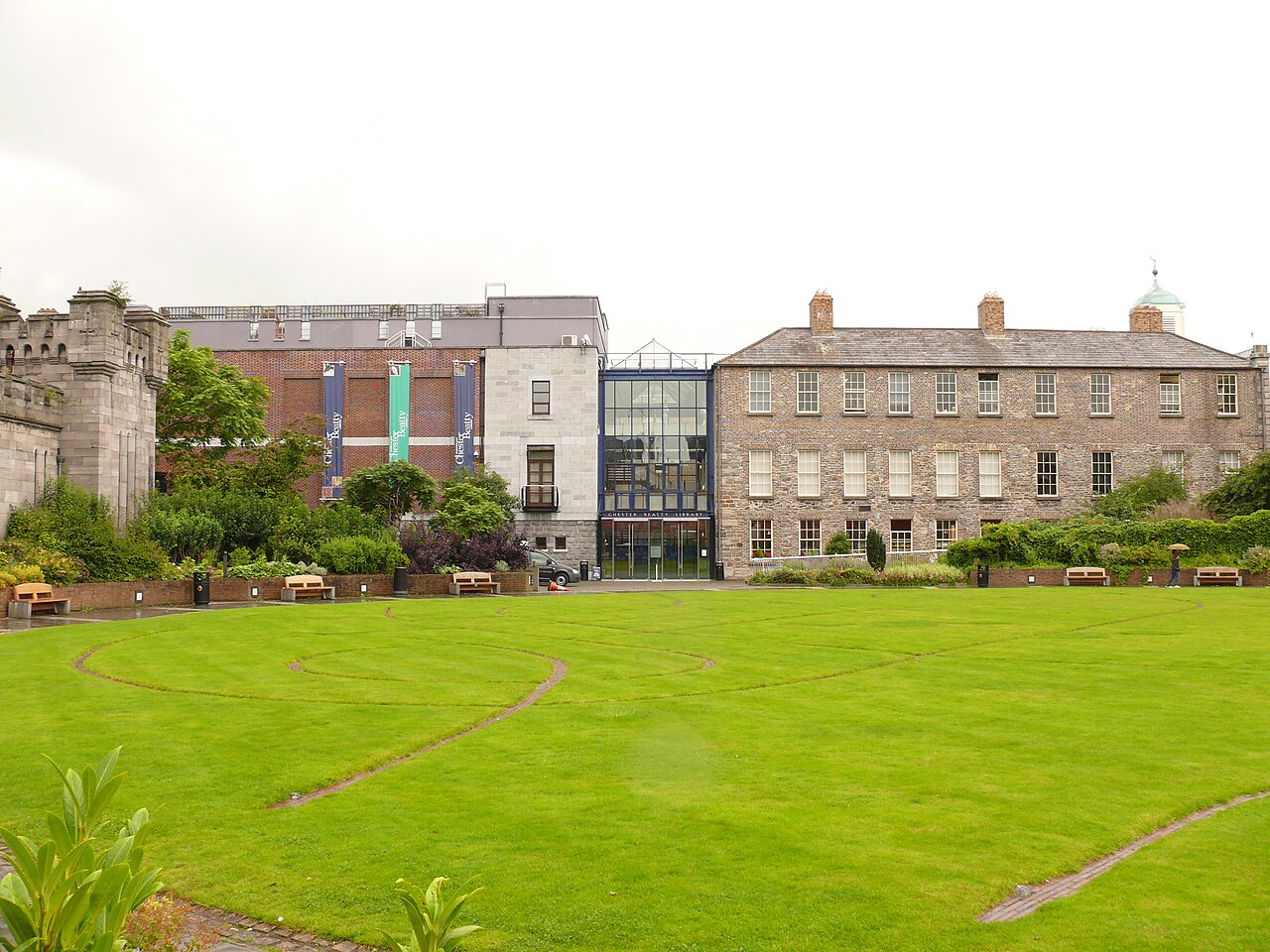
Chester Beatty Library is a museum and library in Dublin, Ireland. It houses the collection of Sir Alfred Chester Beatty, a mining magnate and collector. The institution holds manuscripts, prints, drawings, rare books, and decorative arts from Asia, the Middle East, North Africa, and Europe. It is located on the grounds of Dublin Castle in the city centre. The library is a public institution and has been described as one of Ireland's national cultural institutions. 15 June–end of December 2026: closed to the public every day.
Checked 2026-08-31 · Source
The collections include religious texts, illuminated manuscripts, and miniature paintings. Notable holdings feature Islamic manuscripts, Chinese jade books, Japanese printed books, and papyrus texts. The library contains early biblical material and documents from ancient Egypt. Decorative arts encompass ceramics, textiles, and snuff bottles. Temporary exhibitions rotate through gallery spaces. A reading room serves researchers by appointment. The library also maintains conservation studios. Audio guides and printed materials assist visitor interpretation. The building includes a gift shop and a café space for visitors.
Checked 2026-08-31 · Source
Visitor duration depends on individual interest in manuscript and decorative arts collections. A general visit typically allows time for the permanent galleries and any temporary exhibitions. Researchers may require extended access through the reading room. The compact site layout permits efficient circulation between display areas. Visitors with specialised interests in Islamic, East Asian, or biblical materials may prefer longer stays. School groups and guided tours follow structured timelines. Self-directed visitors control their own pace. Free general admission; the suggested donation is €10. Admission is unavailable during the temporary closure.
Checked 2026-08-31 · Source
Seasonal tourist patterns affect Dublin generally, with summer bringing higher visitor volumes. Weekday mornings may offer quieter conditions for detailed examination of exhibits. Rainy weather, common in Dublin, makes indoor cultural attractions practical choices year-round. Special exhibitions may draw additional visitors during opening periods. Research appointments operate on separate scheduling from public gallery hours. 15 June–end of December 2026: closed to the public every day. The operator lists wheelchair access among the visitor facilities. Baby-changing facilities are available. The free digital guide provides selectable languages, captions and audio transcripts. On-site parking is restricted to Disabled Person’s Parking Permit or Card holders.
Checked 2026-08-31 · Source
The institution has historically operated with free admission to permanent collections, though donations are encouraged. Temporary exhibitions may carry separate charges. Research access follows different protocols from visitor admission. Group arrangements may require advance coordination. Membership or patron programmes may exist for supporters. Visitors should verify current policies directly before visiting. Free general admission; the suggested donation is €10. Admission is unavailable during the temporary closure. The operator lists wheelchair access among the visitor facilities. Baby-changing facilities are available. The free digital guide provides selectable languages, captions and audio transcripts.
Checked 2026-08-31 · Source
The library sits within Dublin Castle grounds in central Dublin. The location is walkable from city centre accommodation and Grafton Street retail area. Public transport options serve the general vicinity, with multiple Dublin Bus routes operating nearby. The site lacks dedicated visitor parking, consistent with central Dublin constraints. There is no public access to the Dublin Castle campus during the temporary closure, including no through route between the Palace Street and Ship Street gates. For public visits after reopening, the operator names Jervis on the Luas Red Line; Trinity and St Stephen’s Green on the Luas Green Line; Tara Street DART station; and bus routes 27, 49, 54a, 56a, 77a, 123, 150 and 151. Bike stands are outside the entrance, with a Dublin Bikes station outside City Hall. There is no general on-site parking; Christchurch Car Park is the nearest named public car park.
Checked 2026-08-31 · Source
The Castle grounds setting requires navigation through historic site entrances. Security screening may apply given the location. Bag size restrictions or cloakroom requirements are common in manuscript museums. The collections demand low light levels for preservation, affecting visibility and photography conditions. Sensitive materials prohibit flash and certain equipment. Crowding concentrates around notable individual exhibits. Reading room access differs from visitor gallery protocols. The operator lists wheelchair access among the visitor facilities. The free digital guide provides selectable languages, captions and audio transcripts. On-site parking is restricted to Disabled Person’s Parking Permit or Card holders.
Checked 2026-08-31 · Source
Photography policies in manuscript and rare book institutions typically restrict flash use, tripods, and selfie equipment to protect light-sensitive materials. Visitors should observe posted signage and staff instructions. Some exhibitions may prohibit all photography due to lender requirements. Commercial or publication photography requires separate permission processes. Mobile telephone cameras may face same restrictions as dedicated equipment. Copyright considerations apply to collection images beyond personal use. Staff can clarify permissible practices upon arrival. Respect for preservation needs and other visitors should guide behaviour. On-site parking is restricted to Disabled Person’s Parking Permit or Card holders.
Checked 2026-08-31 · Source
No. It is closed to the public from 15 June through the end of December 2026.
The closure accommodates Ireland’s 2026 Presidency of the Council of the European Union.
The operator’s closure runs through the end of December 2026, and Dublin Castle expects to welcome visitors back in January 2027.
Yes. General admission is free, with a suggested donation of €10.
Yes. Chester Beatty provides online collections and virtual 3D tours.
Yes. During the closure, the Education Team is running programmes at locations including Dublin City Libraries and city parks.
Loading the interactive map…
The interactive map could not be loaded.
Last updated:
Source: OpenStreetMap contributors, Wikidata ·