
1 min walk
St Patrick's Cathedral
- Must see
- Place of worship
Language · 11 published
Nature site · Dublin
Saint Patrick's Park
Reviewed by Elena Voss · Roavina Travel Editor
| Monday | 10:00 – 21:30 |
|---|---|
| Tuesday | 10:00 – 21:30 |
| Wednesday | 10:00 – 21:30 |
| Thursday | 10:00 – 21:30 |
| Friday | 10:00 – 21:30 |
| Saturday | 10:00 – 21:30 |
| Sunday | 10:00 – 21:30 |
Checked 2026-08-31 · Source
Read from the OpenStreetMap access tags; anything not listed has no tag recorded.
Set the group type to family in the planner and the day window contracts to about three quarters of a solo day.
This place is a Park. It was established in 1901.
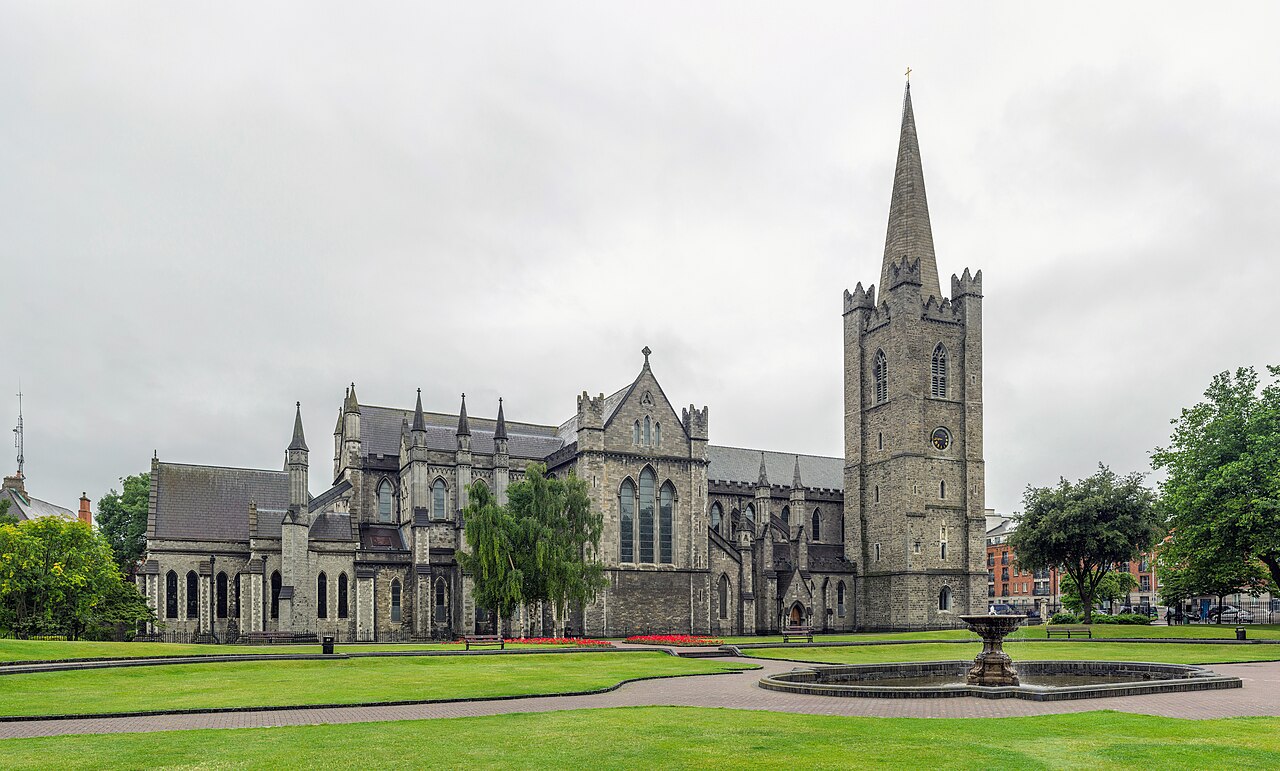
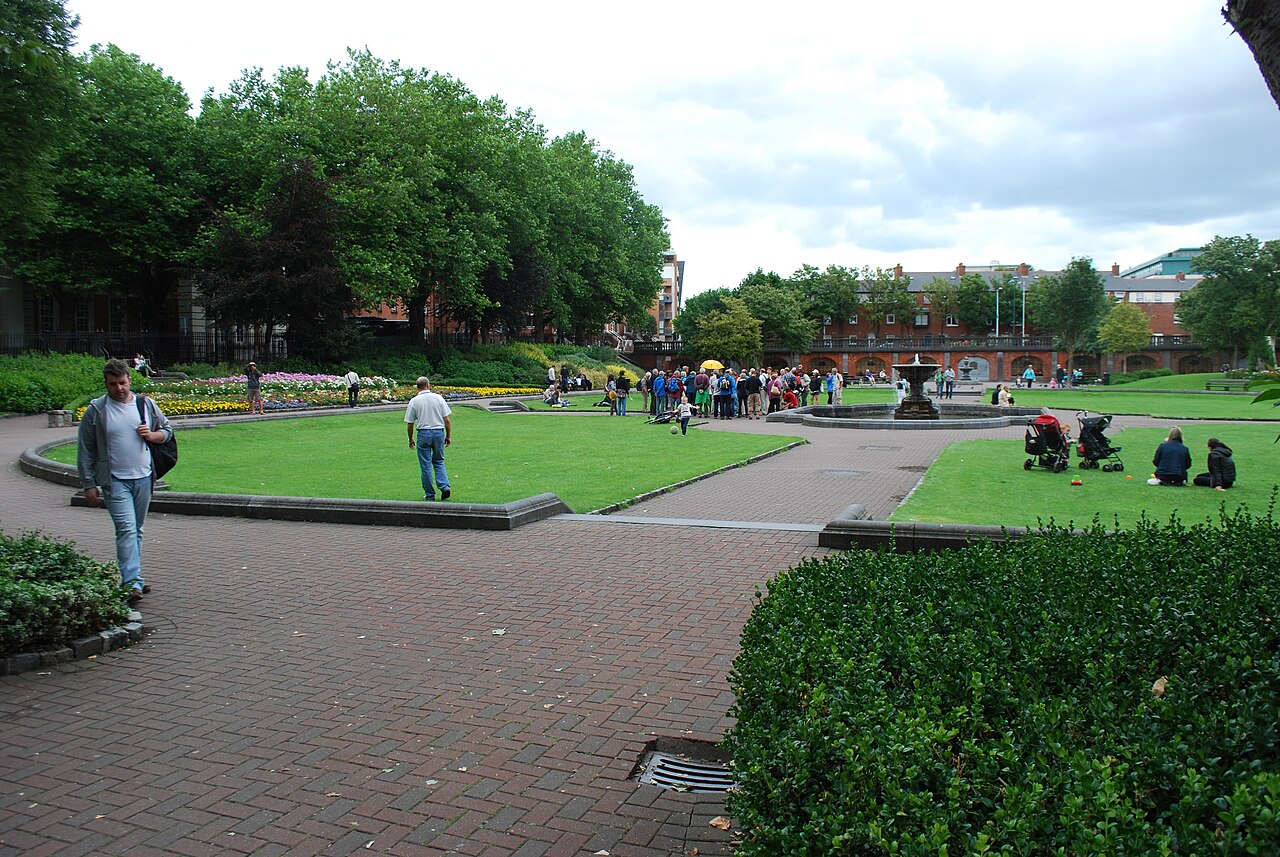
Saint Patrick's Park is a public park situated adjacent to St. Patrick's Cathedral in Dublin, Ireland. The green space provides a setting for the historic cathedral and serves as a recreational area for visitors and residents. The park lies in the Liberties area of the city, one of Dublin's oldest quarters. Its proximity to Ireland's national cathedral makes it a significant heritage location. The park contributes to the cultural and historical landscape surrounding this major religious and architectural landmark in the capital.
Checked 2026-08-31 · Source
The park contains landscaped grounds with grassed areas, pathways, and tree planting typical of urban park design. Visitors will find open space suitable for walking and relaxation. The dominant visual feature is the presence of St. Patrick's Cathedral itself, which forms a dramatic backdrop to the park. The park's contents should be verified through direct observation or official sources before planning a detailed visit. Dublin City Council states that parks with many gates may begin closing them 30 minutes before the designated closing time. Free general admission to the public park; no entrance ticket or booking is required.
Checked 2026-08-31 · Source
A visit to Saint Patrick's Park can range from a brief pause of fifteen minutes to a more extended stay of approximately one hour, depending on individual interest. Those combining the park with a cathedral visit should allow additional time accordingly. The compact urban nature of the space suggests it does not require half-day or full-day commitment. Visitors seeking a peaceful moment between sightseeing activities will find the duration flexible. Free general admission to the public park; no entrance ticket or booking is required.
Checked 2026-08-31 · Source
Weather in Dublin is variable throughout the year, with rainfall possible in any season. Visitors may prefer drier months for comfort, though this remains personal preference without verified operational data to guide timing decisions. St. The entry-specific source identifies this exact visitor POI. Daily: January 10:00–17:00; February 10:00–17:30; March 10:00–18:30 before the clocks go forward and 10:00–19:30 afterward; April 10:00–20:30; May 10:00–21:30; June–July 10:00–22:00; August 10:00–21:30; September 10:00–20:30; October 10:00–19:30 before the clocks go back and 10:00–18:30 afterward; November 10:00–17:30; December 10:00–17:00. No weekly closure day.
Checked 2026-08-31 · Source
Visitors should verify current financial requirements through official channels before arrival. Separate ticketing for St. Patrick's Cathedral, which stands beside the park, would apply independently should visitors wish to enter the cathedral building itself rather than remaining in the park area. Free general admission to the public park; no entrance ticket or booking is required. Dublin City Council identifies the park as wheelchair accessible. Lord Iveagh, Edward Cecil Guinness, developed the park after acquiring and clearing buildings on the site. The work was completed in 1904 to a layout by Arthur Dudgeon.
Checked 2026-08-31 · Source
Saint Patrick's Park is located in central Dublin near St. Patrick's Cathedral. The area is served by Dublin Bus routes with stops in the vicinity. Walking from the city centre takes approximately fifteen to twenty minutes depending on starting point. The park is beside Saint Patrick’s Cathedral at Merchants Quay, Dublin. Dublin Bus routes 27 and 77a serve Saint Patrick’s Cathedral, with bus stops outside the cathedral beside the park. Lord Iveagh, Edward Cecil Guinness, developed the park after acquiring and clearing buildings on the site. The work was completed in 1904 to a layout by Arthur Dudgeon.
Checked 2026-08-31 · Source
Visitors should exercise standard urban park awareness regarding personal belongings and surroundings. Weather conditions in Dublin change frequently; appropriate clothing is advisable. Path surfaces may become slippery in wet conditions. The park's proximity to a busy road and tourist destination means pedestrian traffic varies. No specific hazards are documented, but visitors should remain attentive to general public space considerations. Dublin City Council identifies the park as wheelchair accessible. The work was completed in 1904 to a layout by Arthur Dudgeon. Dublin Corporation assumed full responsibility for the park during the 1920s.
Checked 2026-08-31 · Source
The park offers exterior views of St. Patrick's Cathedral, presenting photographic opportunities of this significant building. The combination of green space and historic architecture may appeal to visitors seeking composition variety. No specific restrictions are recorded, though drone operation would typically require separate permissions. Lighting conditions vary throughout the day and seasons. Visitors intending commercial photography should seek appropriate clearances. Dublin Corporation assumed full responsibility for the park during the 1920s. The park contains Vivienne Roche’s Sentinel and Liberty Bell, together with The Literary Parade by Colm Brennan and John Coll.
Checked 2026-08-31 · Source
Lord Iveagh, Edward Cecil Guinness, developed the park after acquiring and clearing buildings on the site.
The work was completed in 1904 to a layout by Arthur Dudgeon.
Dublin Corporation assumed full responsibility for the park during the 1920s.
The park contains Vivienne Roche’s Sentinel and Liberty Bell, together with The Literary Parade by Colm Brennan and John Coll.
Its bronze portrait plaques honour twelve writers: Samuel Beckett, Austin Clarke, Brendan Behan, James Joyce, Seán O’Casey, J. M. Synge, W. B. Yeats, George Bernard Shaw, Oscar Wilde, James Clarence Mangan, Eilís Dillon and Jonathan Swift.
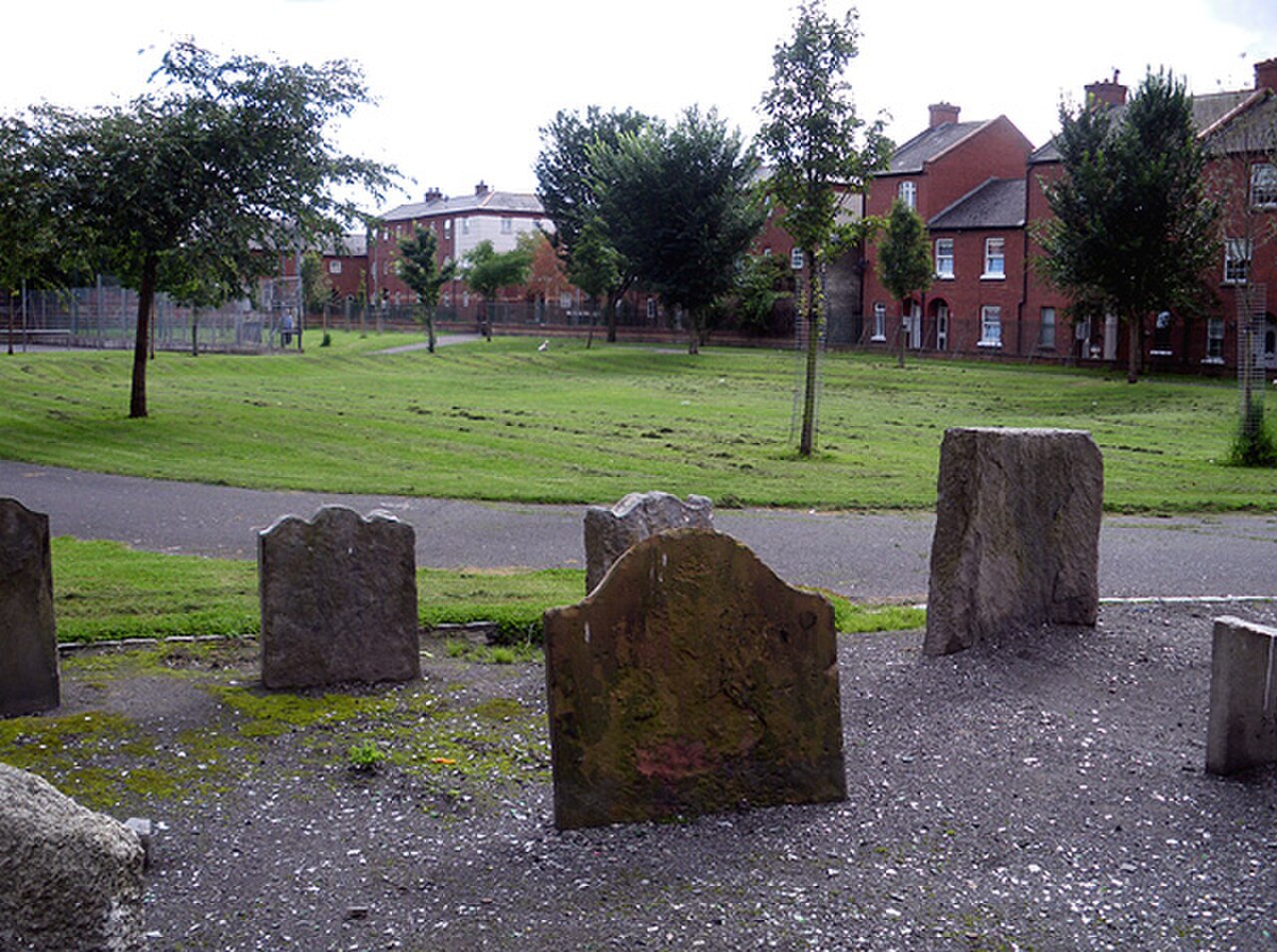
Tradition holds that Saint Patrick baptised early Irish Christians here using water from the River Poddle, which now flows underground.
Loading the interactive map…
The interactive map could not be loaded.
Last updated:
Source: OpenStreetMap contributors, Wikidata ·