

1 min walk
Cimitero Monumentale
- Notable
- Historic monument
Historic monument · Milan
Cimitero Monumentale
Closed today, Monday. Next open Tuesday at 08:00 — the planner will not place a stop here on a Monday.
Plan around it| Monday | Closed |
|---|---|
| Tuesday | 08:00 – 17:30 |
| Wednesday | 08:00 – 17:30 |
| Thursday | 08:00 – 17:30 |
| Friday | 08:00 – 17:30 |
| Saturday | 08:00 – 17:30 |
| Sunday | 08:00 – 17:30 |
Checked 2026-08-31 · Source
| Per person | Free entry |
|---|
Checked 2026-08-31 · Source
Read from the OpenStreetMap access tags; anything not listed has no tag recorded.
Set the group type to family in the planner and the day window contracts to about three quarters of a solo day.
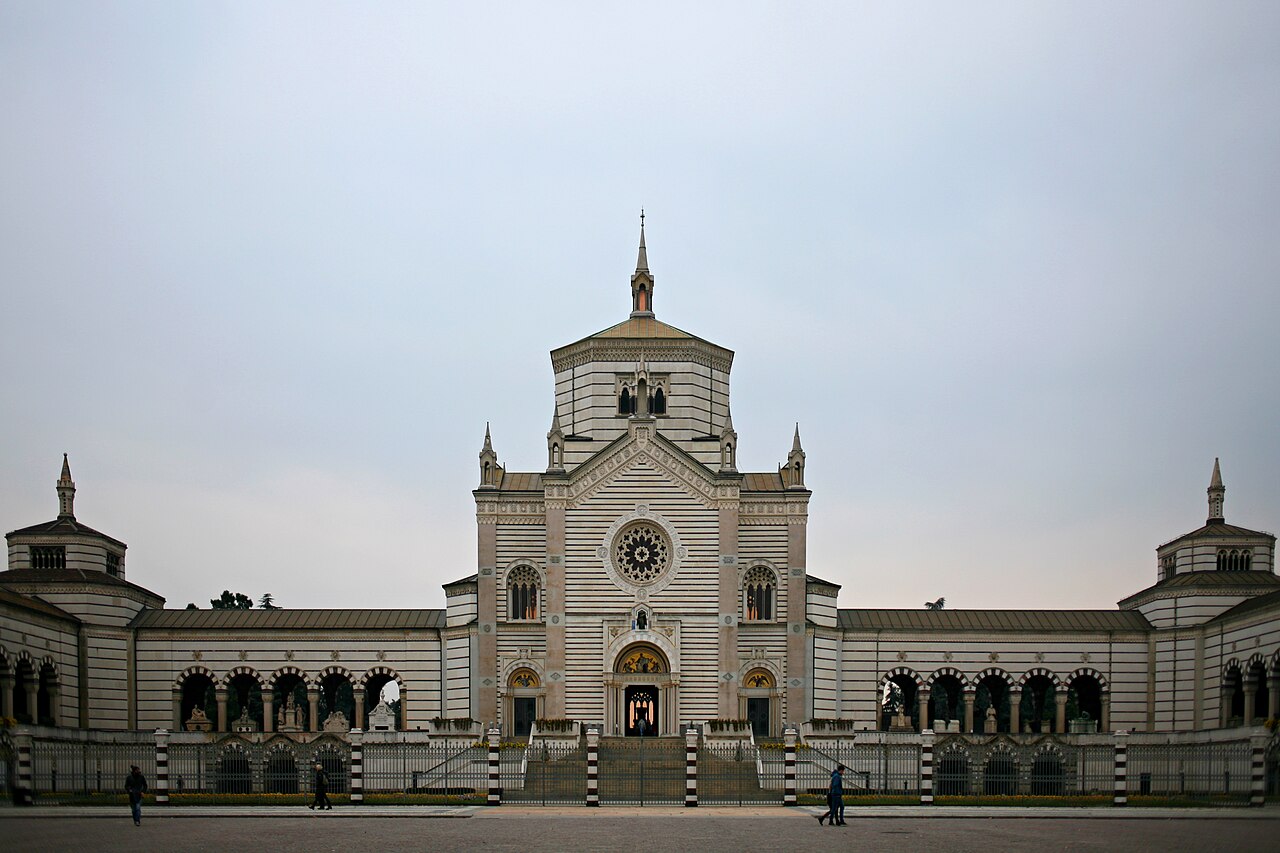
Cimitero Monumentale is Milan’s monumental cemetery and an open-air collection of sculpture, architecture and memorial art. Founded in 1866, it remains an active burial ground while welcoming visitors interested in Italian artistic heritage. The grounds bring together grand tombs, family chapels and memorials from different periods, making the cemetery a distinctive cultural stop for travelers who want to explore Milan beyond its major galleries and churches. The Cimitero Monumentale is a major cemetery in Milan, Italy. Established in 1866, it serves as both an active burial ground and an open-air museum of sculpture and architecture. The site is renowned for its elaborate tombs, monuments, and artistic memorials created by prominent Italian sculptors and architects. It occupies a significant area in the city and represents an important chapter in Milan's cultural and artistic heritage, attracting visitors interested in art history, sculpture, and commemorative architecture. The site contains funerary art and memorials to deceased persons. Parental discretion is advised based on individual children's sensitivity to such environments.
Checked 2026-08-26 · Source
The principal landmark is the Famedio, a neoclassical hall honoring distinguished Milanese citizens. Around it, broad avenues lead past elaborate tombs, sculpted figures, mosaics and family chapels. The memorials move from nineteenth-century classical designs through Art Nouveau and modernist interpretations. Look closely at the contrast between restrained geometric forms and highly expressive sculpture: together they show how Milanese families used architecture and art to commemorate their dead. The cemetery contains numerous monumental tombs and chapels representing diverse architectural styles from the late nineteenth century to contemporary periods. Notable sections include the Famedio, a neoclassical hall of fame honoring distinguished Milanese citizens. The grounds display works by noted sculptors and artists, with family chapels demonstrating wealth and social status through elaborate design. The artistic quality of memorials ranges from classical to Art Nouveau and modernist styles, creating a comprehensive survey of Italian funerary art and commemorative traditions.
Checked 2026-08-26 · Source
Plan on roughly ninety minutes to two and a half hours. A shorter walk can cover the Famedio and the most prominent avenues, while a slower visit rewards travelers who pause at individual sculptures and chapels. The site is large enough for an unhurried circuit rather than a quick room-by-room museum visit. Wear comfortable shoes and leave time to stop, look upward and compare the changing styles of memorial architecture.
Checked 2026-08-26 · Source
Daylight is the natural setting for this outdoor visit because it brings out the details of stone, metalwork and mosaics. Spring and autumn are comfortable seasons for walking through the grounds. Summer can be hot, especially on exposed avenues, while rain makes a long cemetery walk less pleasant. Earlier daytime visits usually provide a calmer atmosphere and softer light for observing the monuments without turning the visit into a rushed procession.
Checked 2026-08-26 · Source
The cemetery is a civic burial ground rather than a conventional art museum, so the experience centers on walking through its monumental spaces instead of entering a ticketed gallery. Treat the visit as an outdoor cultural stop and allow your time for the grounds, the Famedio and the memorial sculpture. Special events or organized visits may follow separate arrangements, but the core appeal is the public encounter with Milan’s funerary architecture.
Checked 2026-08-26 · Source
The cemetery lies in northwestern Milan and is served by the Monumentale metro station on Line 5. Metro access makes it straightforward to reach from the city center and connect with other neighborhoods. Buses also serve the surrounding streets. Once there, expect an urban approach followed by extensive walking inside the grounds. If you drive, remember that central Milan has limited parking and traffic restrictions, so public transport is the simpler choice.
Checked 2026-08-26 · Source
This is an active cemetery, so keep voices low and give funerals, mourners and recent graves privacy. Stay on established paths and take care on uneven surfaces. The grounds offer limited protection from sun and rain, making water, sun protection and suitable footwear useful. Some areas can be closed for ceremonies or maintenance. The atmosphere is contemplative rather than recreational, and respectful behavior matters more than seeing every monument.
Checked 2026-08-26 · Source
The cemetery offers strong subjects for architectural and sculpture photography, from the Famedio to intimate details on family chapels. Photograph quietly and avoid intrusive angles near mourners or active ceremonies. Follow signs governing interior areas and any restricted sections. Keep equipment compact on narrow paths, and do not let a photograph block other visitors. The best images often come from comparing monumental forms with the surrounding avenues rather than isolating one grave.
Checked 2026-08-26 · Source
It is known for its Famedio, monumental tombs, family chapels and concentration of Italian funerary sculpture and architecture.
Allow about ninety minutes to two and a half hours, depending on how closely you study the memorials and sculptures.
Take Milan Metro Line 5 to Monumentale station, then continue on foot to the cemetery entrance.
Comfortable walking shoes are useful because the grounds are extensive and include varied outdoor paths.
Yes. It remains an active burial ground, so visitors should keep quiet and give ceremonies, mourners and graves privacy.
Start with the Famedio, then walk the principal avenues to compare the cemetery’s classical, Art Nouveau and modernist memorials.
Loading the interactive map…
The interactive map could not be loaded.
Last updated:
Source: OpenStreetMap contributors, Wikidata ·