

2 min walk
Middle market
- High
- Historic monument
Language · 11 published
Historic monument · Wadi Musa
Reviewed by Elena Voss · Roavina Travel Editor
| Monday | 06:30 – 17:30 |
|---|---|
| Tuesday | 06:30 – 17:30 |
| Wednesday | 06:30 – 17:30 |
| Thursday | 06:30 – 17:30 |
| Friday | 06:30 – 17:30 |
| Saturday | 06:30 – 17:30 |
| Sunday | 06:30 – 17:30 |
Checked 2026-08-31 · Source
Read from the OpenStreetMap access tags; anything not listed has no tag recorded.
Set the group type to family in the planner and the day window contracts to about three quarters of a solo day.
This place is a Attraction.
Nymphaeum is a monumental fountain on Petra’s main colonnaded street in southern Jordan. It belongs to the central urban area, where public architecture, movement and water management once came together. The remains help visitors read Petra as a functioning city rather than a collection of isolated facades. Its position beside the principal thoroughfare makes it an easy landmark to include while walking between the Treasury area and the wider central ruins. Pause here to study how a civic water feature fitted into the streetscape, then continue along the avenue for a broader sense of the ancient city. The Nymphaeum is a monumental fountain structure situated along the main colonnaded street of Petra, Jordan. As a named monument within the Petra archaeological park, it represents a significant example of Nabataean hydraulic engineering integrated with public architecture. No separate fee exists. Access to the Nymphaeum is included with general Petra archaeological park admission.
Checked 2026-08-26 · Source
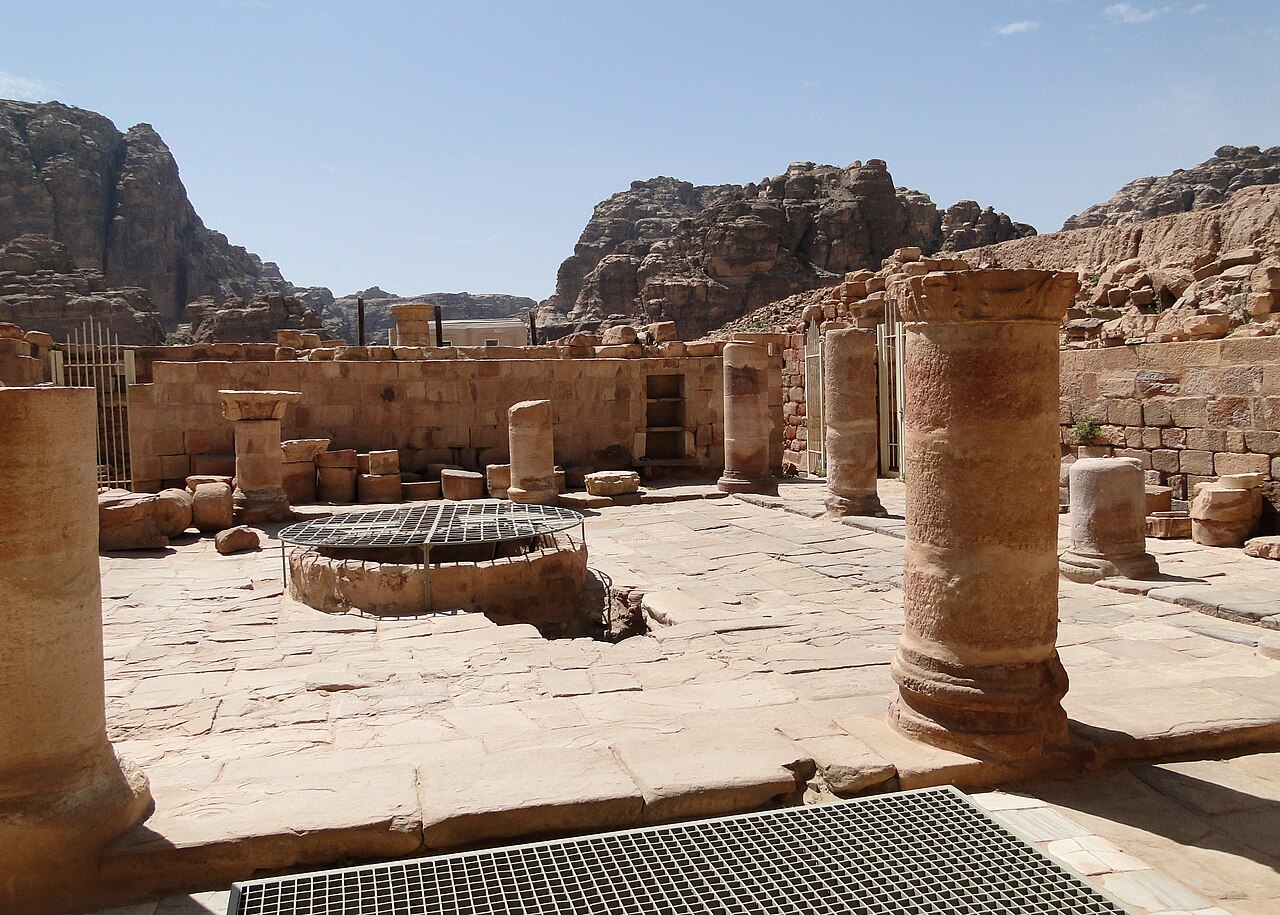
The monument consists of the remains of a semicircular fountain installation, with stonework, basins and water channels visible around the structure. Nearby pavement from the colonnaded street and fragments of adjoining buildings give the fountain its strongest context. Look for the relationship between carved masonry and the routes that carried people through Petra’s centre. The surviving fabric is more valuable as part of the street scene than as a complete standalone building. Compare its practical, urban character with the grander tombs and temples elsewhere in the park.
Checked 2026-08-26 · Source
Allow about fifteen to twenty minutes for a focused stop at Nymphaeum. That is enough time to examine the fountain remains, trace the visible channels and take photographs from the surrounding path. Most visitors encounter it during a longer walk through Petra, so the stop fits naturally between other central monuments. Add more time if you enjoy architectural details or want to compare the fountain with the colonnaded street, nearby fragments and the changing views along the wadi.
Checked 2026-08-26 · Source
Morning and late afternoon are comfortable choices for spending time along Petra’s exposed central avenue, and the lower-angle light can bring out texture in the stone. Midday sun is stronger and offers less relief on the colonnaded street. Spring and autumn generally suit outdoor exploration, while summer heat can make a long archaeological walk tiring. Winter visits may bring cooler conditions and wet surfaces. Plan Nymphaeum as part of the day’s main route so the stop does not require a separate detour.
Checked 2026-08-26 · Source
Nymphaeum stands inside the Petra archaeological park, and the visit belongs to the general park experience rather than a separate monument visit. Entry is handled through the park’s main access system, while individual ruins along the route do not function as independent ticketed attractions. Build this stop into a day of walking through the central zone, including the Treasury approach, the theatre and the colonnaded street. The value of the visit comes from seeing the fountain in its urban setting alongside the surrounding Petra remains.
Checked 2026-08-26 · Source
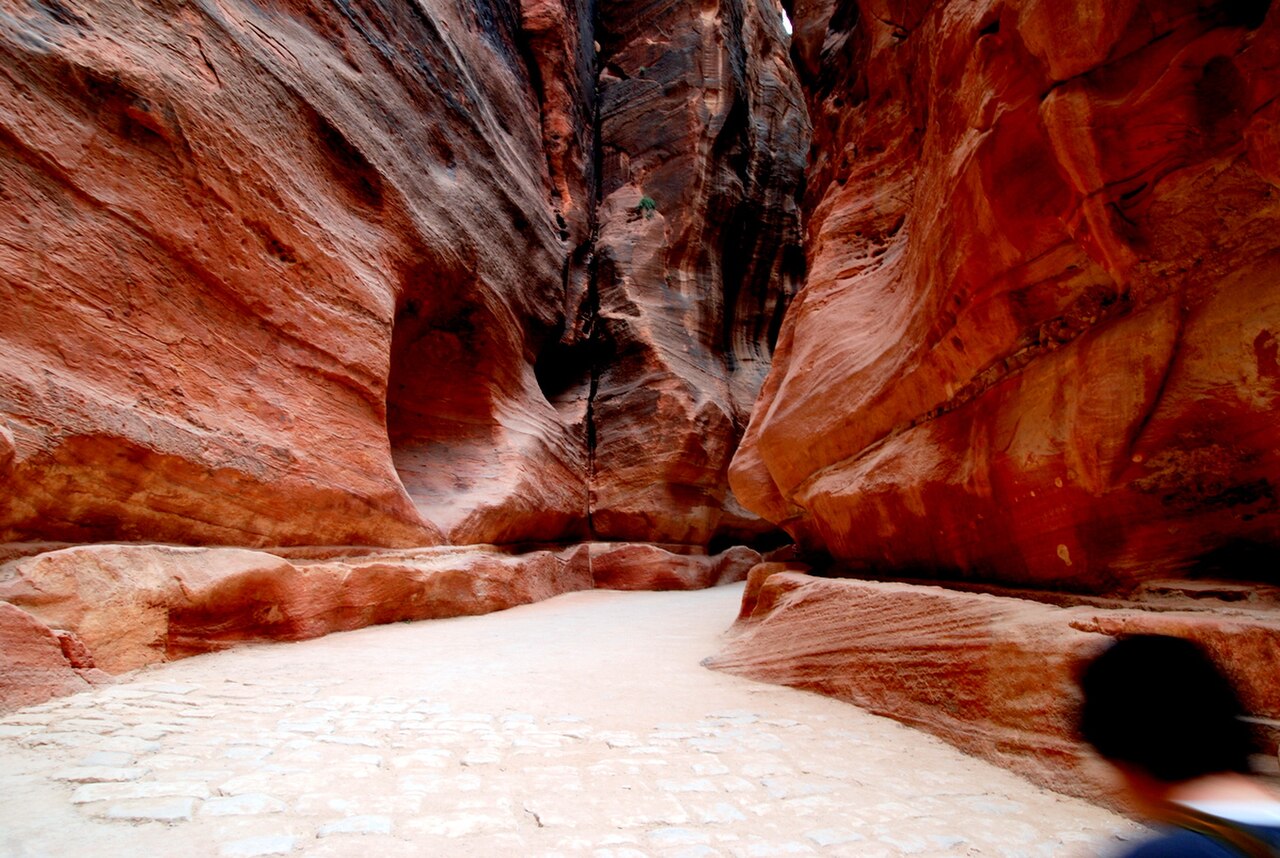
Walk through the Siq and continue beyond the Treasury along Petra’s principal route. After passing the Street of Facades and the theatre, follow the central wadi toward the colonnaded street; Nymphaeum stands beside this avenue. The approach is pedestrian within the archaeological park. The monument is positioned on the main walking corridor, so it can be combined with other central stops without a dedicated excursion. Ancient paving and desert ground make comfortable, supportive shoes useful for the route.
Checked 2026-08-26 · Source
The ancient surfaces around Nymphaeum are uneven, and visitors can lose footing while looking up at the architecture. Stay on the walking route and avoid placing weight on fragile masonry. The colonnaded street has limited shade, so sun exposure builds quickly during a long Petra day. Carry drinking water and protect yourself from the desert sun. Crowds can gather along the main corridor, especially during busy periods, so leave room for other walkers and pause where the route remains clear.
Checked 2026-08-26 · Source
Photograph Nymphaeum as part of the colonnaded street rather than isolating it from its setting. The fountain’s masonry, the avenue and Petra’s surrounding sandstone create useful layers in a single frame. Morning light can reveal surface detail, while later light adds warmth to the stone. The narrow route means visitors may enter the composition, so patience helps. Keep equipment stable on uneven ground and give passing groups space. Detail shots of channels, basins and carved blocks complement wider contextual views.
Checked 2026-08-26 · Source
Nymphaeum stands on Petra’s main colonnaded street in the central archaeological zone, beyond the Treasury, the Street of Facades and the theatre.
A focused visit takes about fifteen to twenty minutes, usually as part of a longer walk through Petra’s central ruins.
You can see the remains of a semicircular fountain, associated basins and water channels, together with sections of the colonnaded street and nearby architectural fragments.
Yes. It lies beside the main pedestrian route through the central zone and fits naturally into a walk along the colonnaded street.
Bring drinking water, sun protection and supportive footwear because the monument stands along an exposed route with uneven ancient surfaces.
Use the fountain, colonnaded street and surrounding sandstone together, with morning or late-afternoon light for stronger texture and warmer colour.
Loading the interactive map…
The interactive map could not be loaded.
Last updated:
Source: OpenStreetMap contributors ·