A photograph of Jordan

Country guide

Places to visit in Jordan — page 3

Jordan is 89,342 km2 and held 11,484,805 people in 2023, and for a visitor the country is arranged along one line. It runs south from Amman, the most populous c...

Photograph · Diego Delso · CC BY-SA 3.0

154 Places
1Cities

Reviewed by Elena Voss · Roavina Travel Editor

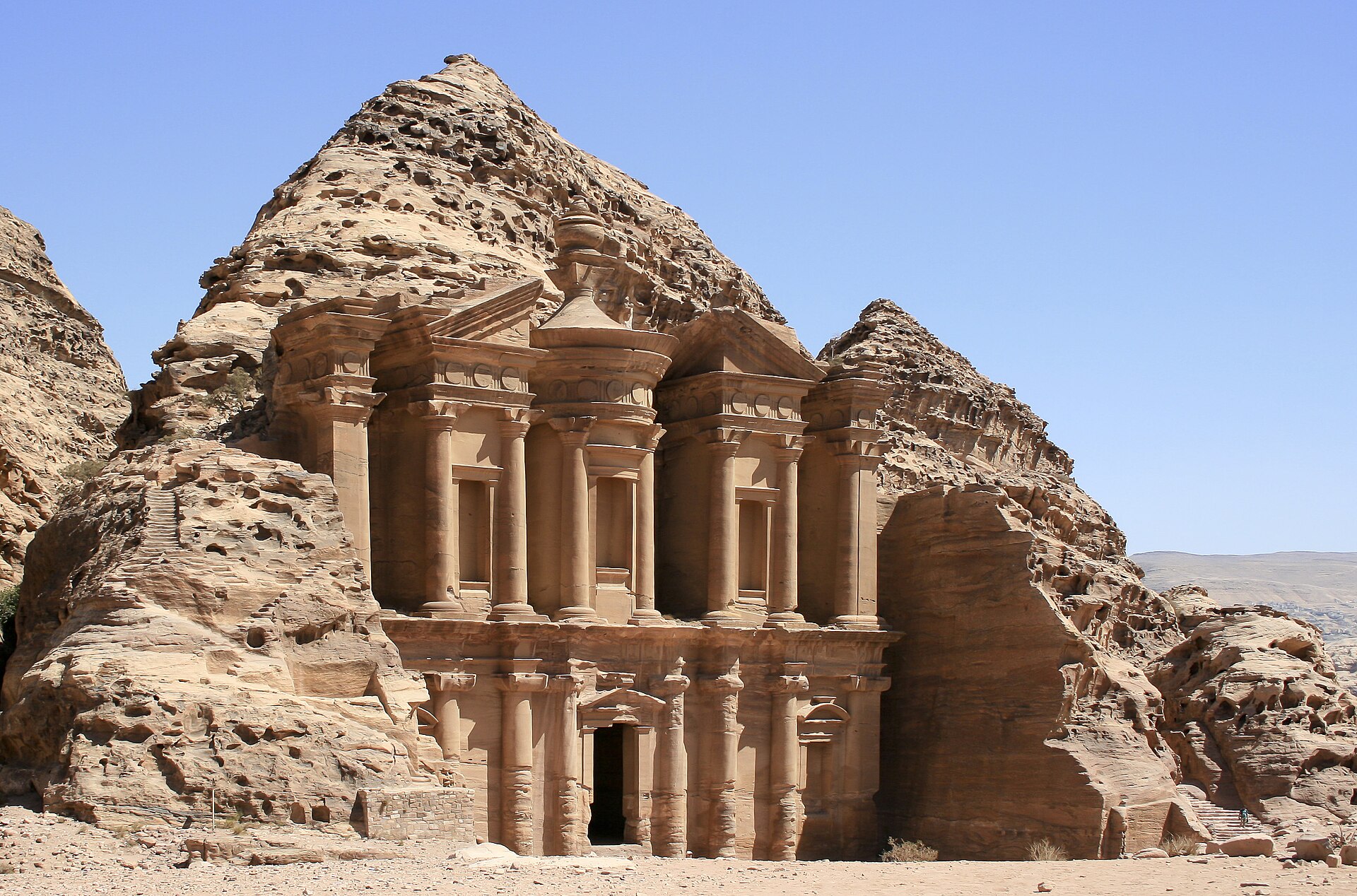
Jordan is 89,342 km2 and held 11,484,805 people in 2023, and for a visitor the country is arranged along one line. It runs south from Amman, the most populous city in the Levant, through the Jordan Rift Valley and past the Dead Sea to Petra, then ends at the short stretch of Red Sea coast in the far south-west. Petra, one of the New 7 Wonders of the World, is the reason most people come, and it is a long drive from the capital rather than an excursion from it. East of that line the country is semi-arid and thinly settled.

Checked 2026-08-25

Cities

Every city catalogued in this country so far, ranked by how much there is to see.

Practical information

Language spoken
Arabic; English is widely used in visitor services
National practical orientation; regional and minority languages may also be used
Dialling code
+962
International calling code; local area and mobile prefixes still apply
Currency
Jordanian dinar (JOD)
Use the official local currency; card acceptance varies by place
Emergency number
911
Use only for an emergency; tourist assistance may use a separate number
Plug type
Type C, F and G · 230 V
Check that chargers support the recorded voltage before using an adapter
Tap water
Not recorded
No verified nationwide visitor drinking-water statement was recorded

Top things to see

Ranked by importance — sitelinks, pageviews and heritage status, not editor preference.

  1. Snake Monument Snake Monument
    32 45 min

    Snake Monument

    Snake Monument is a named feature within Petra's archaeological park in southern Jordan. Its name gives the stop a distinctive identity among the ancient city's carved facades, tombs, trails and natural sandstone formations.

    • Must see
    • Historic monument
    • Wadi Musa
  2. Ba'ja Ba'ja
    33 45 min

    Ba'ja

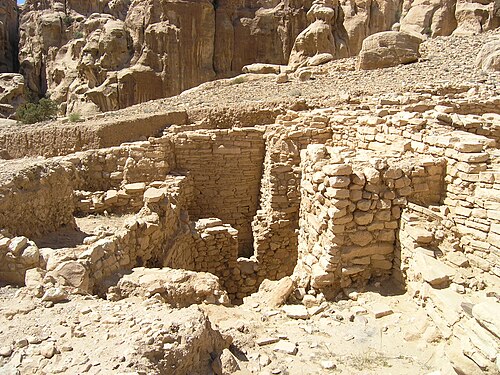
    Ba'ja is an archaeological site located near Petra in southern Jordan. The local name is بعجة. It represents a prehistoric settlement that predates the famous Nabataean city, offering evidence of early human occupation in the region.

    • Must see
    • Historic monument
    • Wadi Musa
  3. Moghar Annassara - Christian Tombs at Petra
    34 45 min

    Moghar Annassara - Christian Tombs at Petra

    Mughar an-Nasara

    Moghar Annassara, known as the Christian Tombs, forms part of the extensive burial architecture within the Petra archaeological park in southern Jordan. These rock-cut tombs reflect the later Christian presence at Petra after the city's Nabataean and Roman periods.

    • Must see
    • Historic monument
    • Wadi Musa
  4. Jabal Harun
    35 20 min

    Jabal Harun

    جبل النبي هارون

    Mount Hor, also called Jabal al-Nabi Harun, is a prominent mountain in the Petra visitor area of southern Jordan. Its name connects the summit with Aaron, the brother of Moses, and gives the landscape religious meaning for several traditions.

    • Must see
    • Viewpoint
    • Wadi Musa
  5. Corinthian Tomb at Petra Corinthian Tomb at Petra
    36 45 min

    Corinthian Tomb at Petra

    Corinthian Tomb

    The Corinthian Tomb is a rock-cut facade within the Petra archaeological park in southern Jordan. It forms part of the Street of Facades, a dense cluster of Nabataean tombs carved into the sandstone cliffs east of the Treasury.

    • Must see
    • Historic monument
    • Wadi Musa
  6. Jebel al-Madhbah Jebel al-Madhbah
    37 20 min

    Jebel al-Madhbah

    جبل المذبح

    Jebel al-Madhbah is a mountain in or beside Petra’s archaeological landscape in southern Jordan. Its Arabic name means “altar mountain,” and the rugged sandstone summit gives the site a strong connection with Petra’s elevated terrain and religious associations.

    • Must see
    • Viewpoint
    • Wadi Musa
  7. Palace Tomb (Petra) Palace Tomb (Petra)
    38 45 min

    Palace Tomb (Petra)

    Palace Tomb

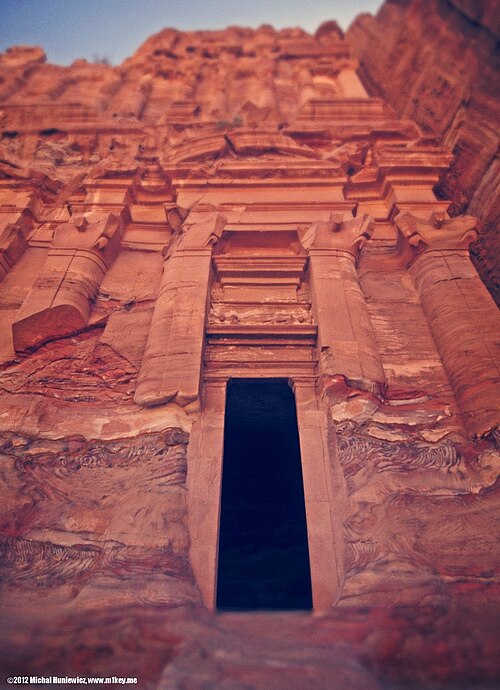
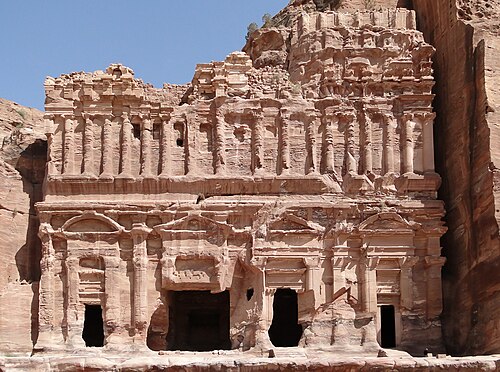
    The Palace Tomb stands among the Royal Tombs in Petra's archaeological park, a Nabataean rock-cut facade distinguished by its three-story architectural composition. Its upper level resembles a palace structure, giving the monument its modern name.

    • Must see
    • Historic monument
    • Wadi Musa
  8. Jabal Um el Biyar
    39 20 min

    Jabal Um el Biyar

    Umm al Biyara

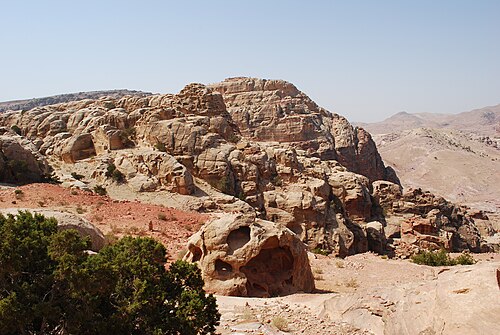
    Jabal Um el Biyar is a named summit in the mountainous landscape around Petra and Wadi Musa. It is part of the rugged high terrain surrounding the ancient Nabataean city, offering a quieter alternative to Petra’s celebrated valley monuments.

    • Must see
    • Viewpoint
    • Wadi Musa
  9. Silk Tomb at Petra Silk Tomb at Petra
    40 45 min

    Silk Tomb at Petra

    Silk Tomb

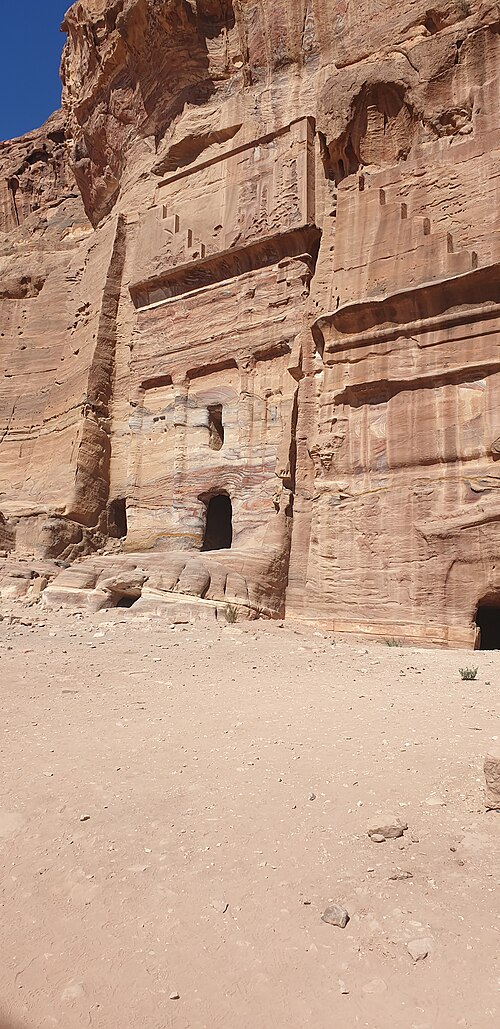
    The Silk Tomb is a rock-cut facade within the Petra archaeological park in southern Jordan. It earns its name from the richly colored, banded sandstone surface that resembles flowing silk fabric.

    • Must see
    • Historic monument
    • Wadi Musa

Source: OpenStreetMap contributors, Wikidata ·

Common questions

How long should a first trip to Jordan be?

Seven to ten days allows Amman, Petra, Wadi Rum and the Dead Sea to form a workable north-to-south route. Give Petra at least two nights in Wadi Musa if the visit should extend beyond the Treasury approach, and treat Wadi Rum as a separate stay.

What entry documents are needed for Jordan?

Jordan’s Ministry of Interior e-services should be checked for the passport, entry point and intended stay. Visa-on-arrival assumptions are risky because eligibility can depend on nationality and border crossing; confirm the rule before purchasing a land or air connection.

What is the best way to travel around Jordan?

Queen Alia Airport serves the main arrival flow. Scheduled coaches link several visitor centres, but a rental car, licensed driver or organised transfer provides more control for Petra, Wadi Rum and the Dead Sea; Amman itself relies on road transport.

When is a practical time to visit Jordan?

Spring and autumn reduce the temperature extremes between Amman, Petra and Wadi Rum. Winter nights in the highlands and desert can be cold, while summer exposure is severe at archaeological sites, so choose dates around the longest outdoor day.

What money and payment basics apply in Jordan?

Jordanian dinar is the recorded currency. Carry dinars for small purchases and road stops, verify whether Petra or tour products are prepaid, and use banks or authorised exchange counters rather than relying on an informal quoted conversion.

What practical safety details should I save for Jordan?

Save 911 for emergencies; Jordan’s recorded sockets include Types C, F and G at 230 V. Tap-water guidance is Not recorded, so obtain current advice from the accommodation or local authority, particularly when moving between Amman, Wadi Musa and desert camps.