.jpg)
1 min walk
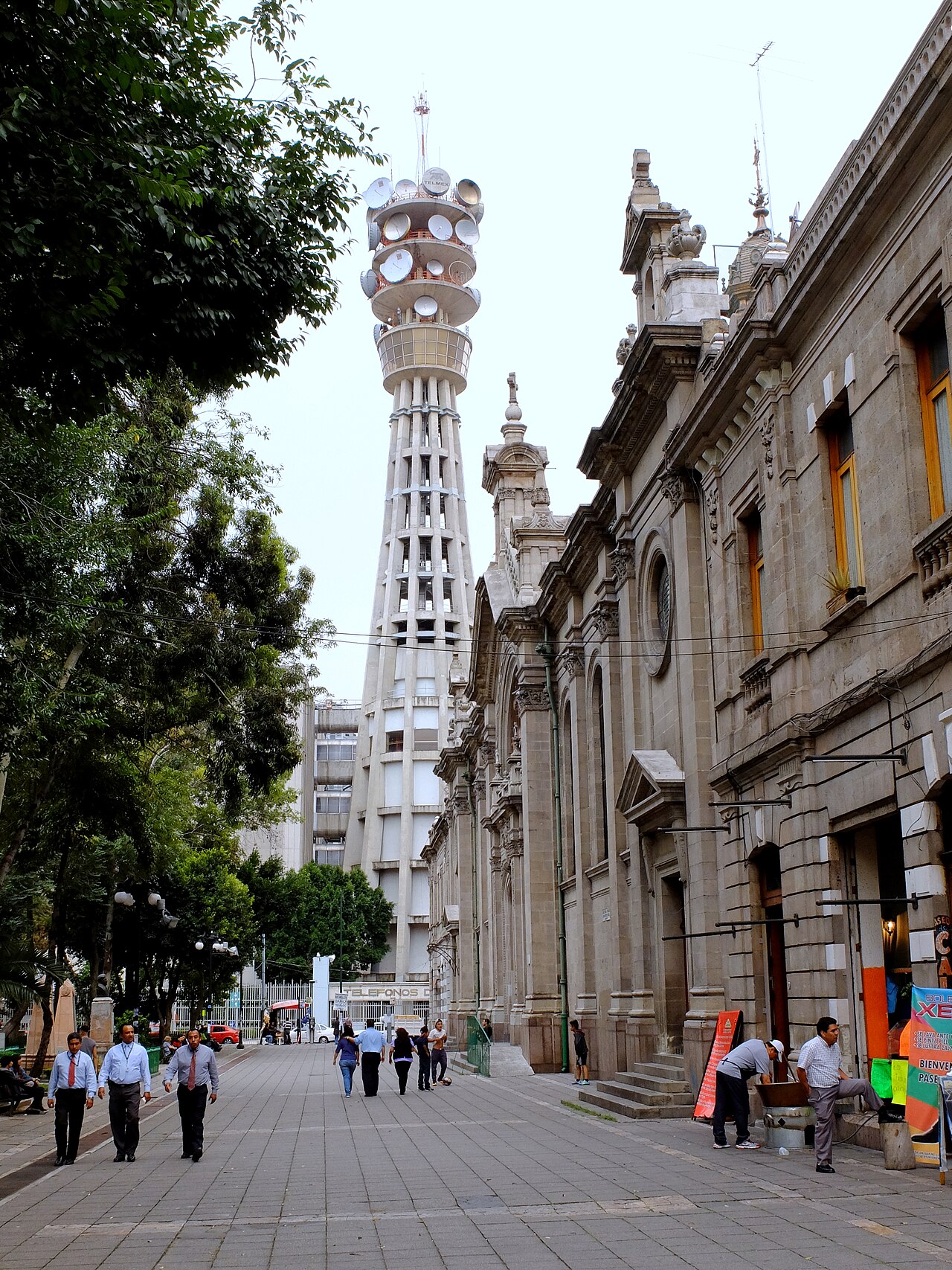
Torre a Telmex
- High
- Historic monument
Language · 11 published
Activity · Cancún
Zona Hotelera de Cancún
Reviewed by Elena Voss · Roavina Travel Editor
Read from the OpenStreetMap access tags; anything not listed has no tag recorded.
Set the group type to family in the planner and the day window contracts to about three quarters of a solo day.
It was established in 1974.
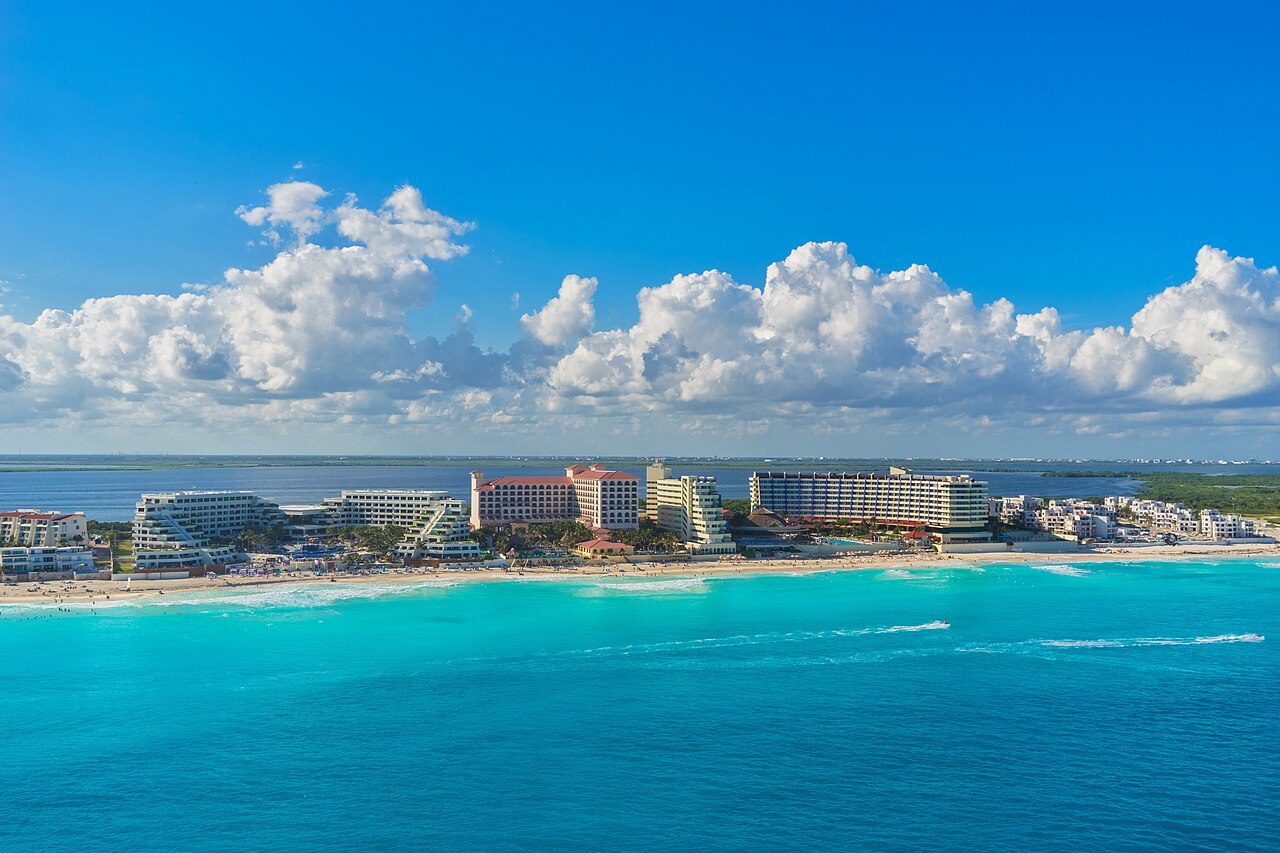
Zona Hotelera de Cancún is the principal tourist district of Cancún, Mexico, situated on a narrow barrier island shaped like the number seven. This 22.5-kilometer strip separates the Nichupté Lagoon from the Caribbean Sea. It functions as the city's primary hospitality and entertainment corridor, hosting the majority of international visitors to the destination. The area was developed beginning in 1970 as part of a planned tourism project by the Mexican government, transforming a previously undeveloped coastal zone into a concentrated resort environment.
Checked 2026-08-31 · Source
The Hotel Zone contains numerous all-inclusive resorts, hotels, and condominiums arranged along both lagoon and oceanfront. Commercial plazas including La Isla Shopping Village, Plaza La Fiesta, and Kukulcán Plaza provide retail and dining options. Several public beaches are accessible along the strip. Nightclubs and entertainment venues operate in the vicinity of the Punta Cancún area. The Cancún Convention Center and a small Maya archaeological site, El Rey, are also located within this zone. Golf courses and marinas serve recreational visitors.
Checked 2026-08-31 · Source
Visitors typically allocate between three days and two weeks for stays within the Hotel Zone, depending on the purpose of travel. Beach resort vacations commonly extend five to seven nights. Those combining Cancún with excursions to nearby destinations such as Isla Mujeres, Tulum, or Chichén Itzá may adjust duration accordingly. The compact linear geography permits efficient movement between accommodations and activities. Day trips to attractions outside the zone do not necessarily require extended stays, though transportation logistics should be considered in planning. Free. The district has no admission charge, and Cancún's seven municipal Blue Flag beaches provide free public access and free parking.
Checked 2026-08-31 · Source
Cancún experiences a tropical climate with distinct wet and dry seasons. December through April generally offers drier conditions and is considered peak visitor season. May through November corresponds with higher temperatures, humidity, and increased rainfall probability, overlapping with Atlantic hurricane season from June to November. Individual hotels and venues maintain independent operational schedules. The Hotel Zone is an open urban district without attraction-style visiting hours. At the seven municipal Blue Flag beaches, visitor facilities operate 09:00–18:30; current municipal lifeguard coverage is 09:00–19:00 and may be extended for sea conditions or visitor numbers.
Checked 2026-08-31 · Source
The Hotel Zone itself has no general admission fee as it is a public thoroughfare with commercial and residential properties. Individual attractions, resorts, restaurants, and entertainment venues establish their own pricing structures. All-inclusive resort packages typically bundle accommodation, meals, and selected activities. Beach clubs may charge access fees or minimum consumption requirements. Free. The district has no admission charge, and Cancún's seven municipal Blue Flag beaches provide free public access and free parking. The municipality reports universal accessibility at its seven Blue Flag public beaches. Certified beach facilities include universal-access ramps, adapted toilets with showers, and designated accessible parking spaces.
Checked 2026-08-31 · Source
Cancún International Airport serves as the primary air gateway, located approximately 20 kilometers south of the Hotel Zone. The airport receives domestic and international flights. Ground transportation options include authorized taxi services, pre-arranged hotel shuttles, and public bus routes. Rental vehicles are available at the airport. ADO operates a direct bus from Cancún International Airport terminals 2, 3 and 4 to the fixed Zona Hotelera de Cancún–Punta Cancún stop at Plaza Fiesta, near kilometre 9 of Boulevard Kukulcán. The scheduled journey takes about 45 minutes, with up to nine departures on selected days. The stop does not serve individual hotels; for accommodation farther south, continue by local R1 or R2 bus or taxi.
Checked 2026-08-31 · Source
Ocean conditions vary along the Caribbean-facing beaches; flag warning systems indicate swimming safety levels, and visitors should observe posted advisories. Strong currents may occur in certain areas. Sun exposure intensity is significant; protective measures are advisable. The wet season brings afternoon thunderstorms and potential tropical weather systems requiring monitoring. Petty theft in tourist areas warrants standard precautions with valuables. The municipality reports universal accessibility at its seven Blue Flag public beaches. These provisions cover the certified municipal beaches, not every pavement, business, hotel, or beach approach throughout the long district.
Checked 2026-08-31 · Source
The Hotel Zone offers Caribbean coastal scenery with turquoise water, white sand, and resort architecture. Sunrise views face the ocean along eastern beaches; sunset perspectives are available toward the Nichupté Lagoon on the western side. El Rey archaeological site permits photography of Maya ruins in a non-jungle setting. Aerial and drone photography may be subject to Mexican aviation regulations and individual property restrictions. Commercial photography within resorts typically requires advance permission. Lighting conditions vary seasonally. Playa del Niño, Las Perlas, Chac Mool, Marlín, Ballenas, Delfines and Coral. Facilities including toilets, showers, information modules, universal-access ramps and parking are available from 09:00 to 18:30.
Checked 2026-08-31 · Source
Playa del Niño, Las Perlas, Chac Mool, Marlín, Ballenas, Delfines and Coral.
Facilities including toilets, showers, information modules, universal-access ramps and parking are available from 09:00 to 18:30.
Green indicates safe swimming conditions, yellow warns of currents or moderate conditions and requires caution, and red prohibits entering the sea.
No. The municipal public beaches are smoke-free, and glass containers are prohibited.
The ADO bus arrives at the fixed Plaza Fiesta–Punta Cancún stop near kilometre 9 of Boulevard Kukulcán, close to Plaza Caracol, Cancún Convention Center and Playa Forum.
The official Mexican Caribbean tourism body places the airport 16 kilometres from the Hotel Zone; airport transport options include buses, taxis, shuttles, private transfers and rental cars.
Loading the interactive map…
The interactive map could not be loaded.

Last updated:
Source: OpenStreetMap contributors, Wikidata ·